Why Attachment to the World Must End
Even after repeated disappointment, the mind continues seeking happiness within Māyā. This inquiry explains why attachment persists and why true detachment becomes necessary for spiritual freedom.
The minds of mayābaddha jīvs constantly fluctuate under the influence of the guṇas. Thus worldly relationships, praise, emotional support, and favorability can never remain permanently stable.
Worldly affection remains mixed with attachment, expectation, and personal fulfillment. Thus it can provide temporary emotional comfort, but never permanent peace to the soul.
Material desire endlessly regenerates itself. Fulfillment temporarily removes agitation, but new desires immediately arise, keeping the mind trapped in constant restlessness.
Worldly objects do not inherently contain happiness. The mind projects happiness onto them through attachment, desire, and imagination, creating temporary pleasure but never lasting fulfillment.
The true bondage of the soul is not merely the external world, but the internal world of attachment, craving, imagination, and desire continuously sustained within the mind.
The soul seeks eternal fulfillment, yet the materially conditioned mind remains absorbed in Maya. This creates the inner conflict of material bondage.
The soul is eternal, conscious, subtle, and Divine in nature. As an eternal part of God, it can never be fully satisfied by material happiness.
The body changes, the senses become active and inactive, and the mind fluctuates constantly. Yet the conscious self remains. Then who are we really?
If the self were material, material happiness should completely satisfy it. Yet dissatisfaction continues. This inquiry becomes the beginning of understanding the true nature of the soul.
The material mind and the material world are both formed from Maya. This creates natural worldly attraction and becomes the root of spiritual misidentification.
Why does the mind continue clinging to the world? Explore how worldly attachment blocks surrender and why detachment becomes essential on the spiritual path.
In the rich spiritual history of India, Jaidev is acknowledged as a great saint and devotee of Shri Radha Krishna. He has composed many devotional songs elaborating the highest form of divine bliss called the Madhurya bhav. Once, as Jaidev was travelling through the forests, he was held captive by
King Raghu, grandfather of Lord Shri Ram was a very respectable king of Avadh (current Ayodhya) dynasty. The subjects of his kingdom were very proud of their king Raghu due to his generosity. One day he, dressed as an ordinary man, was passing by through the village with the entourage.
In Mahabani Ji’s home, in the afternoon people used to visit Shri Maharaj Ji and he used to casually explain spiritual topics. Once in a while when someone important came to visit him and wanted to hear a lecture then Shri Maharaj Ji would give a lecture. But those
One fine morning a generous king ordered his messengers to beat the drums and announce, “tomorrow morning when the palace gates open, everyone is free to touch any object of their choice in the palace. Whichever object they touch, will be gifted to them”. Hearing the news, all residents of
Jagannath Mishra was a very learned scholar. He was always engrossed in thoughts of God. He wrote a commentary on 100,000 shlokas of Mahabharat. But when he was writing the commentary on Gita he came across the verse – अनन्याश्चिन्तयन्तो मां ये जना: पर्
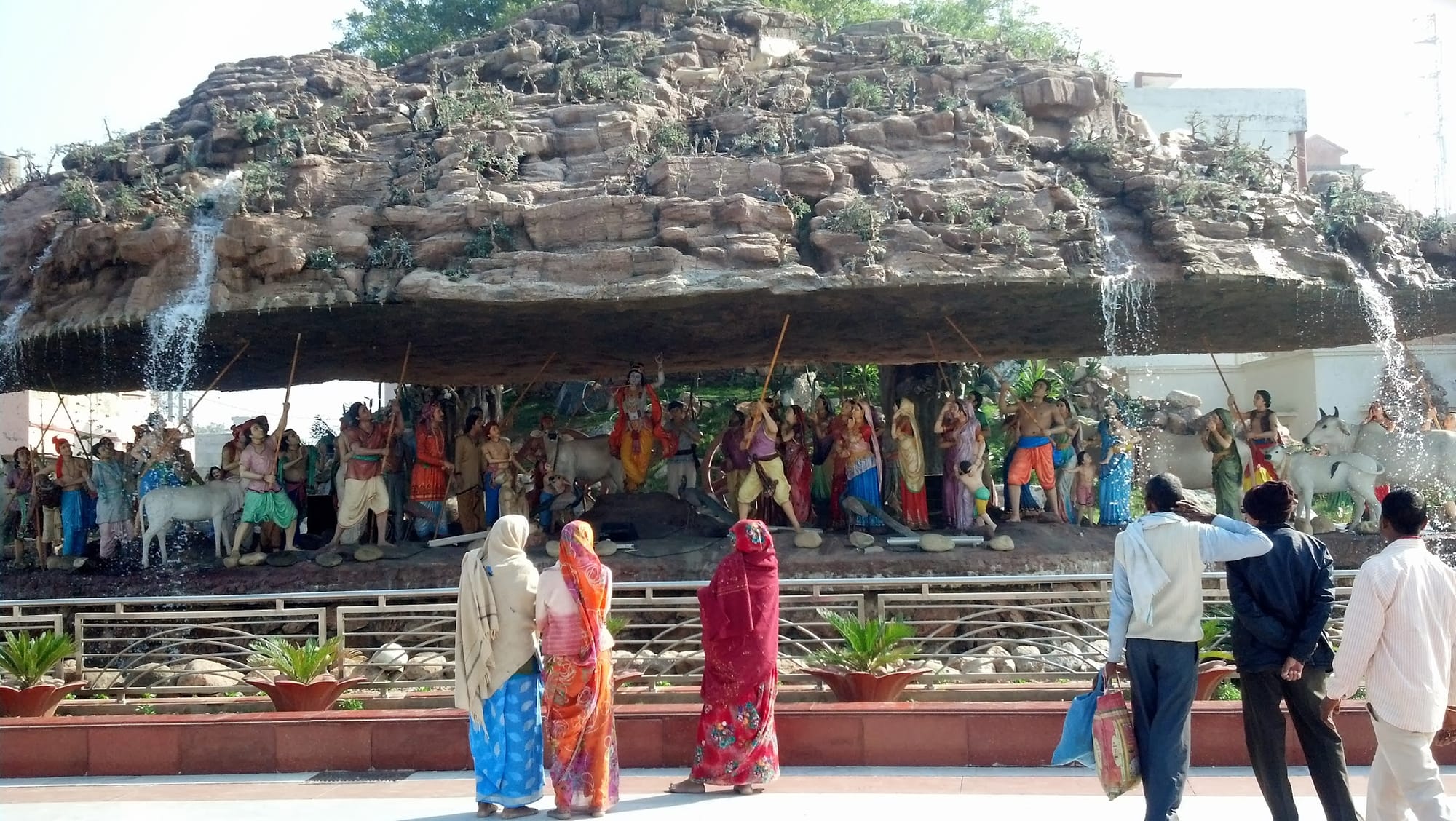
Seeing the cowherd men busily arranging for a fire-sacrifice (यज्ञ ) to Indra, Lord Krishna humbly inquired from the elders, headed by His father, Nand Maharaj, the reason for all these rituals. Nand Maharaj explained that the great celestial being ( devata ) Indra is the controller of the rain. Rain clouds