Did Adi Shankaracharya Reject Bhakti?
Did Adi Shankaracharya reject Bhakti, or has his complete teaching been misunderstood?
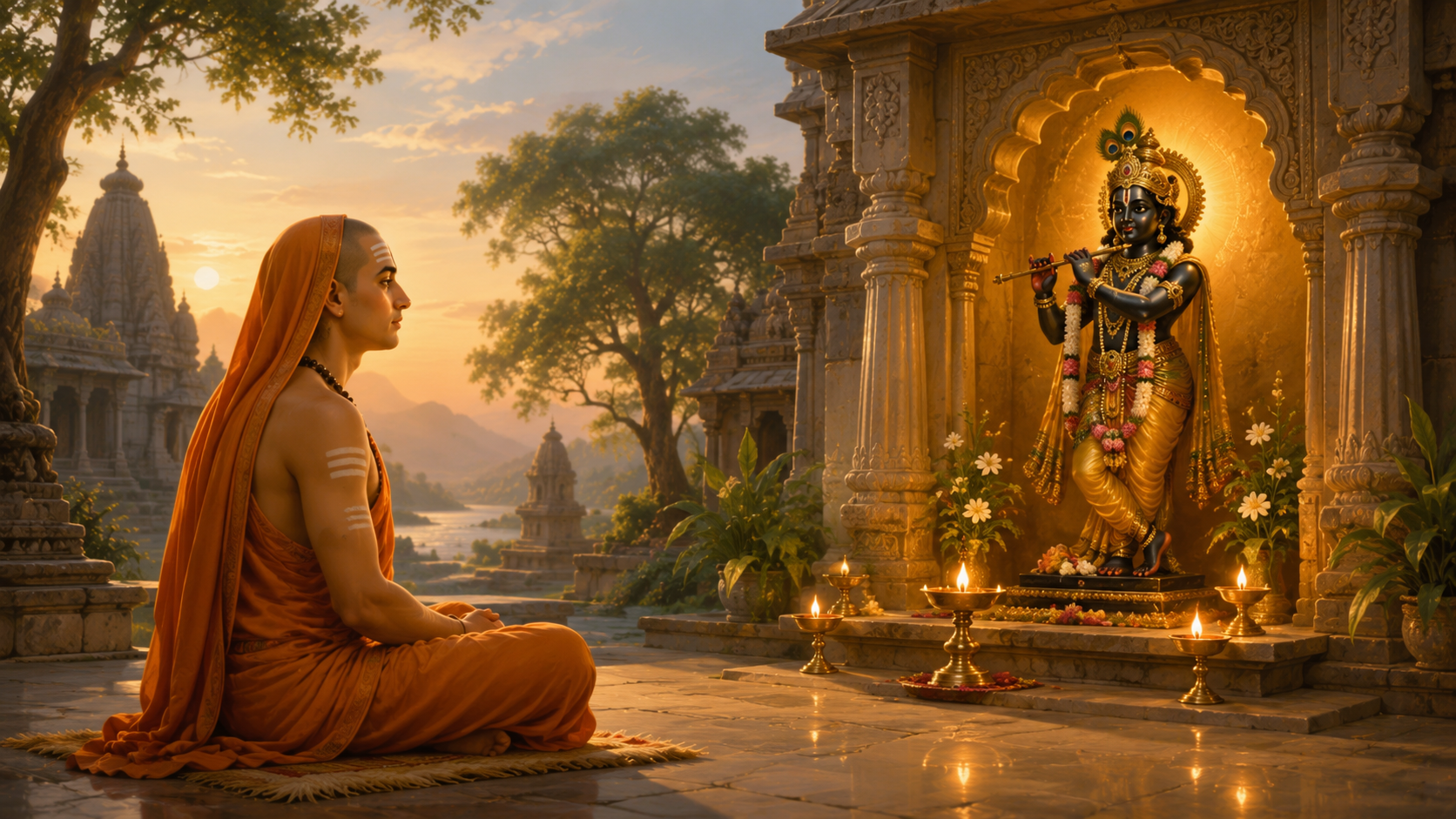
Introductory Summary
Adi Jagadguru Shankaracharya is widely associated with Advaita Vedanta. Because of this, many seekers assume that he rejected Bhakti or regarded devotion to the personal form of God as unnecessary for the highest realization.
But Shri Maharaj Ji points us to an important distinction: one should not understand Shankaracharya only through simplified slogans about Advaita. We must also examine his own devotional life, his prayers, and his direct instructions.
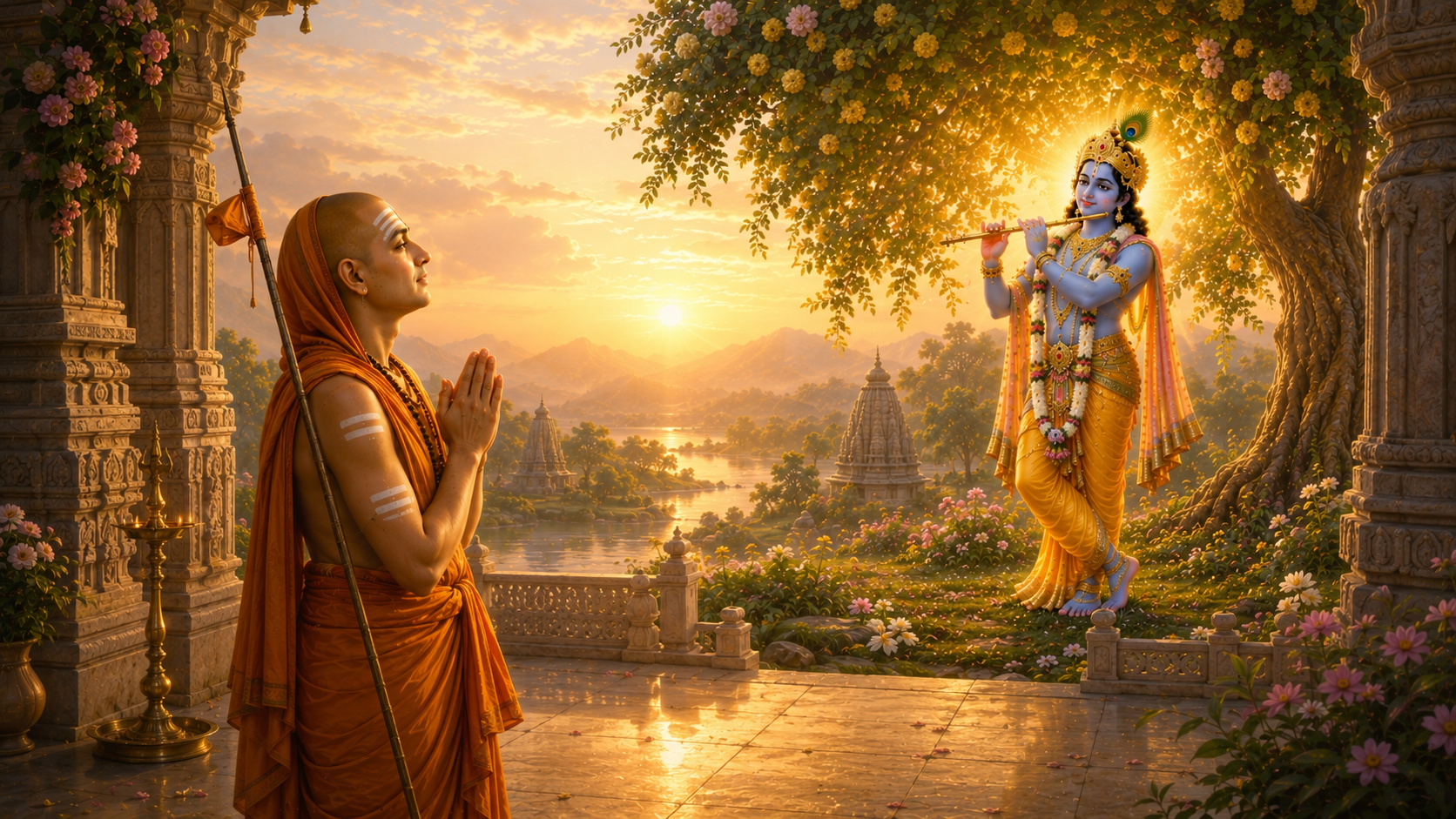
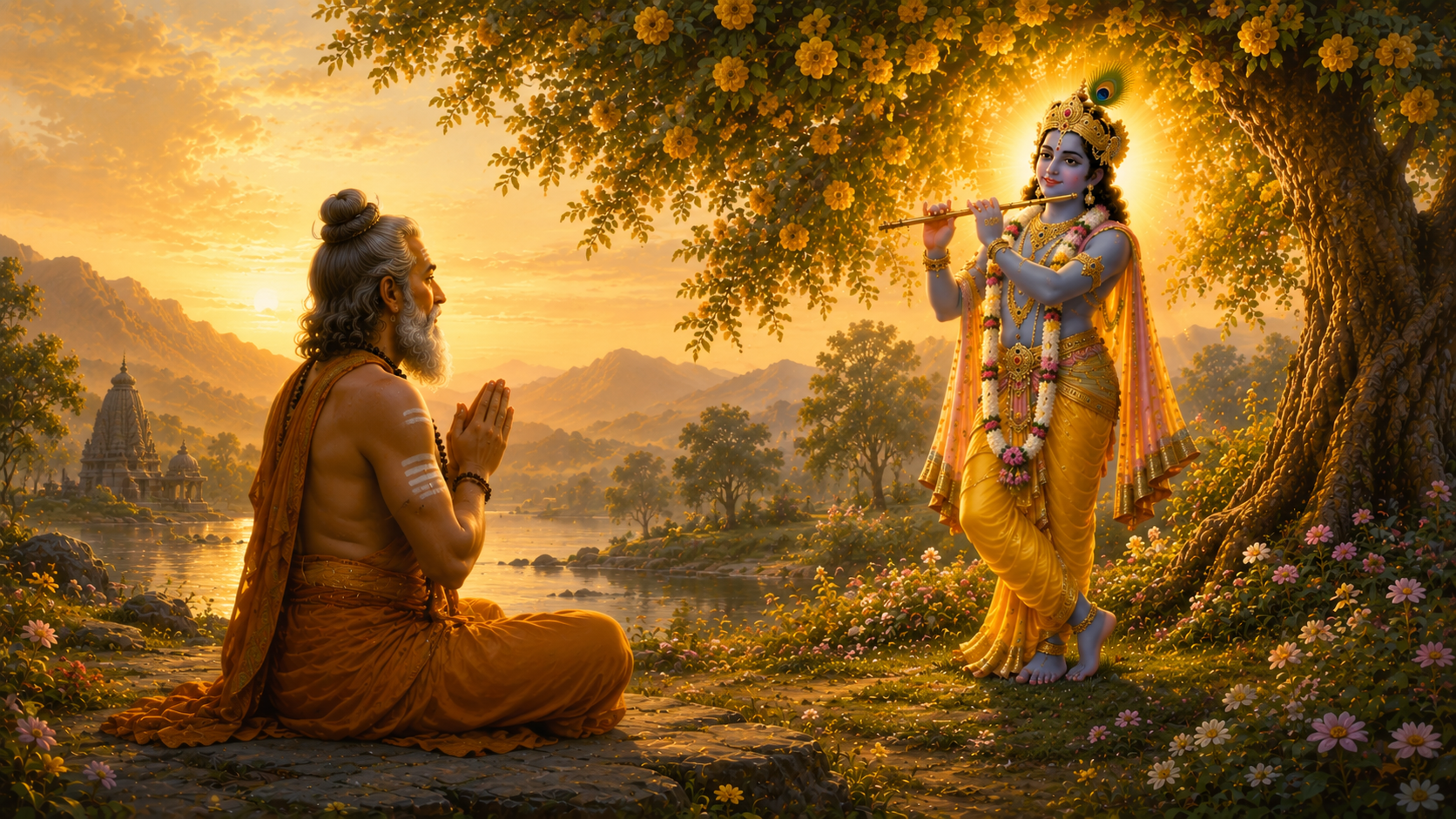
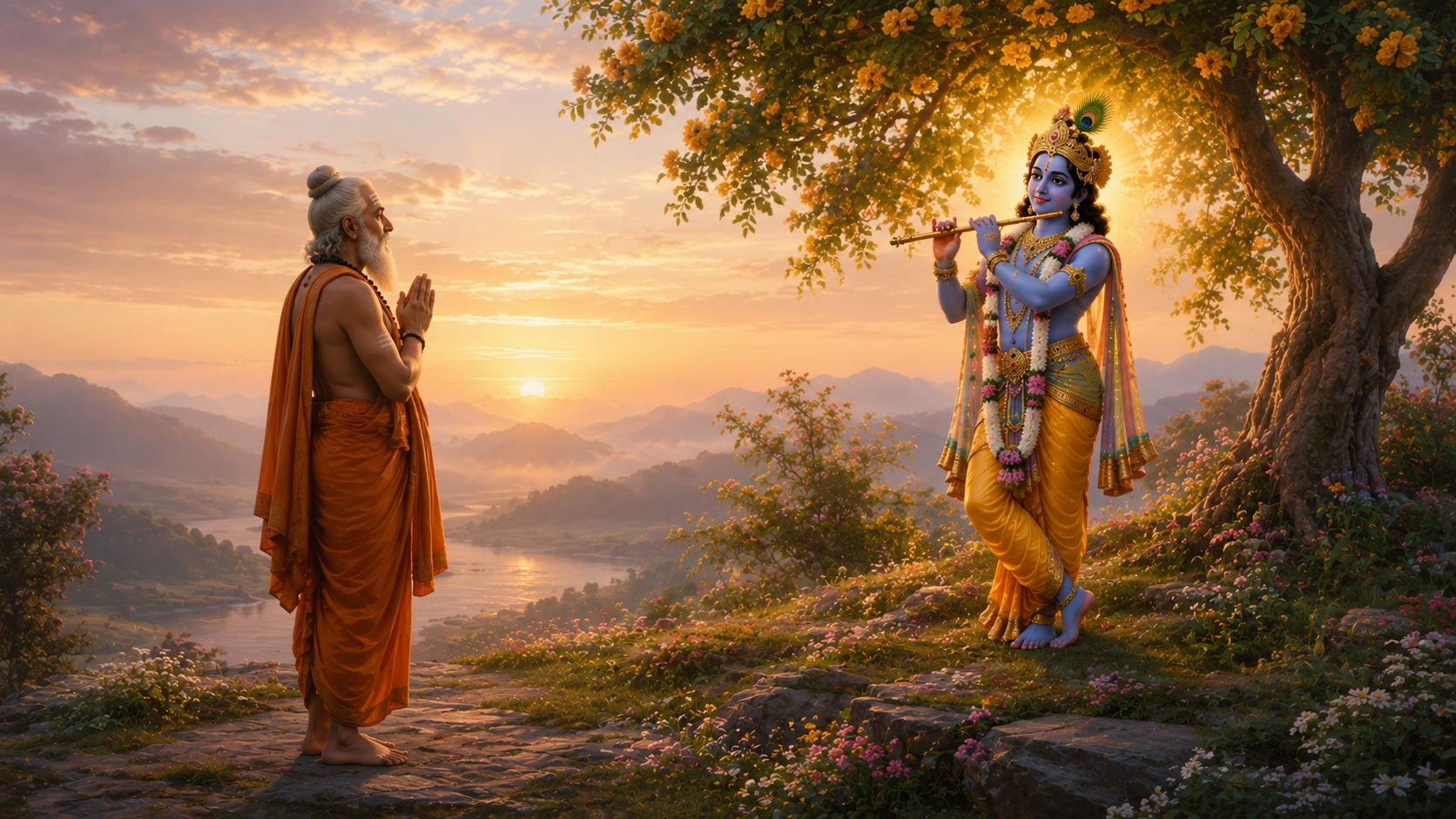
When we do so, a different picture emerges. Shankaracharya did not reject Bhakti. He personally practiced Krishna Bhakti, praised devotion to Shri Krishna, and instructed seekers to take shelter of devotion.
📍 Where You Are in the Inquiry
In the previous article, we examined why the great Vedic Acharyas seem to contradict one another.
We saw that most Vedantic traditions explicitly teach devotion, surrender, Divine Grace, and the eternal relationship between God and the soul. But Shankaracharya’s Advaita Vedanta appears to stand apart because it emphasizes the oneness of the soul and Brahm.
This naturally raises the next question:
Did Shankaracharya reject Bhakti?
Before moving further into the relationship between Gyan and Bhakti, this doubt must be addressed. If Shankaracharya himself did not reject Bhakti, then the common assumption that Gyan and Bhakti are opposed begins to weaken.
Shankaracharya’s Own Words Praise Krishna Bhakti
Shankaracharya is often remembered for Advaita, but Shri Maharaj Ji highlights that Shankaracharya himself praised devotion to Shri Krishna.
He said:
शुद्ध्यति हि नान्तरात्मा कृष्णपदाम्भोजभक्तिमृते ॥
śuddhyati hi nāntarātmā kṛṣṇa-padāmbhoja-bhaktim ṛte
(Prabodh Sudhakar)
“The heart cannot be purified without devotion to the lotus feet of Krishna.”
This statement is direct. It does not present Bhakti as unnecessary. It says the heart cannot be purified without Krishna Bhakti.
This is important because purification of the heart is essential for God-realization.. If Bhakti were merely a lower or optional path, Shankaracharya would not have spoken of it in this way.
Shankaracharya Accepted a Relationship of Dependence
Shankaracharya also prayed:
सत्यपि भेदापगमे नाथ! तवाहं न मामकीनस्त्वम् ।
सामुद्रो हि तरंगः क्वचन समुद्रो न तरंगः ॥
saty api bhedāpagame nātha! tavāhaṁ na māmakīnas tvam |
sāmudro hi taraṅgaḥ kvacana samudro na taraṅgaḥ ||
“O Lord! Even if difference is removed, I belong to You; You do not belong to me. A wave belongs to the ocean, but the ocean never belongs to the wave.”
Shri Maharaj Ji draws attention to the word Nath—Lord. To call God “Nath” naturally implies dependence, reverence, and surrender.
Even while speaking of non-difference, Shankaracharya did not erase the relationship between God and soul. The wave may arise from the ocean, but the ocean does not arise from the wave.
The soul depends upon God. God does not depend upon the soul.
Shankaracharya Prayed for God’s Protection
Shankaracharya also addressed God as the Supreme Lord who descends again and again:
मत्स्यादिभिरवतारैरवतारवता सदा वसुधाम् ।
परमेश्वर परिपाल्यो भवता भवतापभीतोऽहम् ॥
matsyādibhir avatārair avatāravatā sadā vasudhām |
parameśvara paripālyo bhavatā bhavatāpa-bhīto ’ham ||
“O Supreme God! You have descended in many forms such as Matsya, Kachchhap, and Varah to protect the earth. Will You not also deliver me from the terrifying afflictions of Maya?”
A personality with a form can descend into this world and later depart from it. But how could one who exists only as an all-pervading, formless, attributeless, actionless reality come or go from anywhere?
This prayer shows humility and dependence. Shankaracharya asks God for protection from Maya. Such a prayer is not the language of someone who rejects God’s personal form or denies the need for Divine Grace.
Shankaracharya Instructed Seekers to Do Krishna Bhakti
When a disciple asked what a person longing for liberation should immediately do, Shankaracharya answered:
मुमुक्षुणां किं त्वरितं विधेयम् ॥
mumukṣuṇāṁ kiṁ tvaritaṁ vidheyam ||
“What should a person longing for liberation immediately do?”
His answer was:
सत्संगतिनिर्ममोभक्तिः ॥
satsaṅgati-nirmamo-bhaktiḥ ||
“One should associate with true Saints, give up worldly attachment, and practice devotion.”
When asked what action one would never regret, he answered:
कामारि-कंसारि समर्चनाख्यम् ॥
kāmāri-kaṁsāri samarcanākhyam ||
“One never regrets worshipping Shri Krishna, the destroyer of Kansa.”
Thus, Shankaracharya did not merely compose abstract philosophy. He instructed seekers to seek the association of true Saints, cultivate detachment from worldly attachment, and practice Krishna Bhakti.
Shankaracharya’s Life Also Reflected Devotion
Shri Maharaj Ji explains that Shankaracharya taught Krishna Bhakti to his mother and graced her with the Divine vision of Krishna.
He also composed deeply devotional descriptions of Shri Krishna in Vrindavan—seated on the bank of the Yamuna, wearing yellow garments, adorned with ornaments, smiling beautifully, surrounded by cows and cowherd boys, and radiating Divine Bliss.
Such descriptions are not dry philosophical statements. They reveal devotional absorption in the personal form of God.
Therefore, Shankaracharya’s life cannot honestly be described as a rejection of Bhakti.
Why Did Shankaracharya Emphasize Advaita?
This raises another question. If Shankaracharya personally practiced Krishna Bhakti, why did he emphasize Advaita in his commentaries?
Shri Maharaj Ji explains that great Divine personalities sometimes teach according to the needs of a particular time and place.
During Shankaracharya’s time, atheistic Buddhism and Godless Mimansa were widespread. To re-establish the authority of the Vedas and refute those philosophies, Shankaracharya emphasized non-dual Brahm in his commentaries.
This does not mean his personal devotional life disappeared. It means his public philosophical mission must be understood in its historical context.
His circumstantial teaching and his own devotional life must both be considered.
Final Conclusion
Adi Shankaracharya did not reject Bhakti. His own prayers, instructions, devotional writings, and personal life demonstrate deep devotion to Shri Krishna. His emphasis on Advaita must therefore be understood in the historical context of his mission to re-establish Vedic authority and refute competing philosophies.
Understanding Shankaracharya's life removes one common misunderstanding. He did not reject Bhakti, nor did he consider devotion to Shri Krishna unnecessary.
However, another important question still remains.
If Shankaracharya taught the soul's oneness with Brahm, does that mean the liberated soul actually becomes God?
To answer this, we must now examine what the scriptures themselves teach about Brahm-realization, Maya, and the nature of liberation.
Go Deeper
- Atma-Gyan, Brahm-Gyan, and Gyan Yog
- Knowledge Without Bhakti Is Ignorance
- Do Liberated Souls Become God?
Continue the Inquiry
(Part 2 of 7 — Gyan and Bhakti: The Culmination of All Spiritual Paths)
If Adi Shankaracharya himself practiced Krishna Bhakti, another important question naturally arises.
What did he actually mean when he taught the soul's oneness with Brahm? Does Advaita teach that a liberated soul becomes the Supreme Lord, or do the scriptures teach something more nuanced?