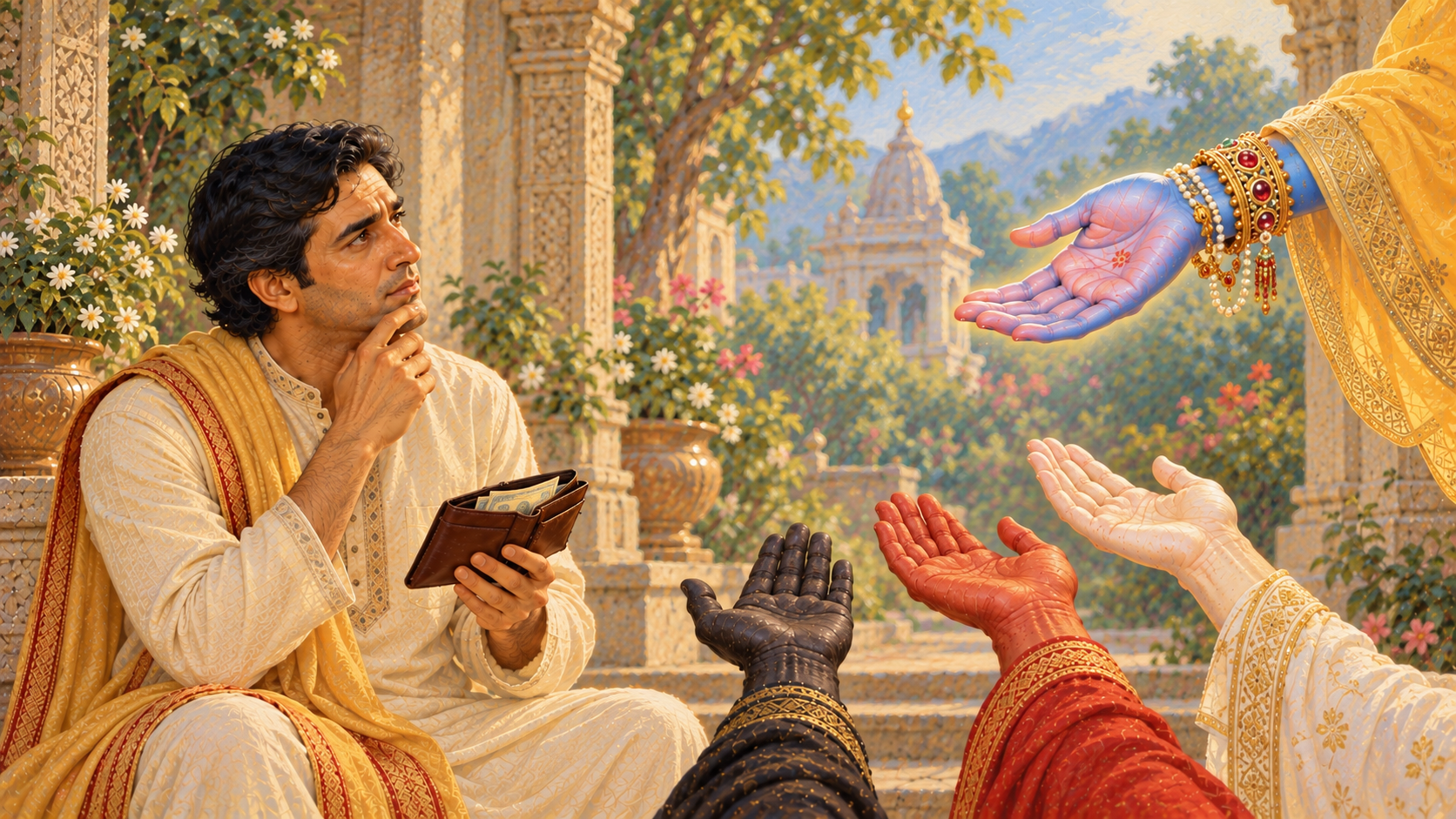
Why Did the Greatest Brahm-Gyanis Become Devotees?
If Brahm realization is complete, why did some of the greatest Brahm-gyanis embrace devotion to the Personal Form of God?
📍 Where You Are in the Inquiry
In the previous article, we examined whether the individual soul becomes Brahm in the absolute sense. Logic and scripture established that the soul may attain Brahmanand (bliss of Brahm), become free from Maya, and experience Divine Bliss forever, but it does not become the Supreme Lord.
This raises another important question.
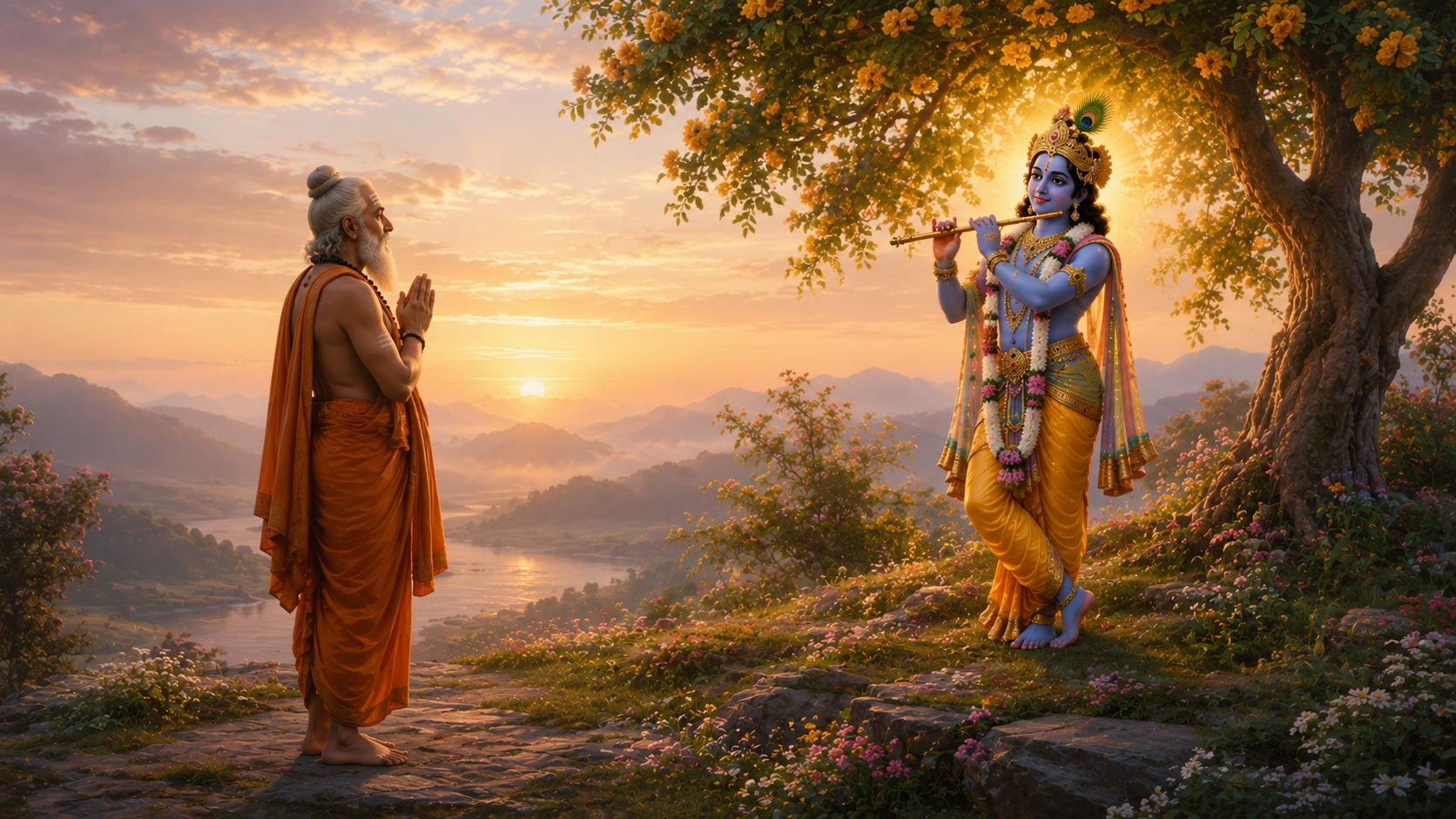
If bliss of Brahm is genuine and Divine, why did the greatest Brahm-Gyanis become absorbed in loving devotion to Bhagavan?
To answer this, we must understand the distinction between the Bliss of impersonal Brahm and the Bliss of Divine Love.
Brahm-Bliss Is Not Material or Limited
The scriptures do not teach that Brahm is material, limited, or false. Brahm is Divine, eternal, unlimited, and Bliss.
Therefore, Shri Maharaj Ji explains that it would be wrong to say that the Bliss experienced by Gyan Yogis in Nirvikalp Samadhi is material or incomplete.
God is one. Whoever attains any form of God becomes Divinely blissful forever.
So the question is not whether Brahm-realization is real. It is real. The question is different:
If Brahm-Bliss is Divine and eternal, why did liberated Paramhansas become absorbed in Divine Love?
The Personal Form Has a Unique Sweetness
The same God is realized in different ways.
A mango tree has branches, leaves, and fruit. All belong to the same tree. Yet no one chews the branch and rejects the fruit. The fruit has a special sweetness that is not experienced in the branch.
Similarly, Brahm and Bhagavan are not two separate Gods. Brahm is Divine. Yet the personal form of God possesses a unique sweetness that is not experienced in the impersonal realization of Brahm.
Shri Maharaj Ji explains that this unique sweetness is why liberated souls become attracted to Divine Love.
Scripture Confirms That a Select Few Liberated Souls Become Devotees
The Bhagavatam teaches that even among liberated souls, those who become fully devoted to Narayan are exceedingly rare.
मुक्तानामपि सिद्धानां नारायणपरायणः ।
सुदुर्लभः प्रशान्तात्मा कोटिष्वपि महामुने ॥
muktānām api siddhānāṁ nārāyaṇa-parāyaṇaḥ |
sudurlabhaḥ praśāntātmā koṭiṣv api mahāmune ||
(Bhāgavatam 6.14.5)
"Among millions of liberated and perfected souls, one who is fully devoted to Narayan is extremely rare."
This verse shows that liberation and devotion are not the same experience. A soul may become liberated, yet devotion to the personal form of God is still exceedingly rare.
The Bhagavatam also states:
आत्मारामाश्च मुनयो निर्ग्रन्था अप्युरुक्रमे ।
कुर्वन्त्यहैतुकीं भक्तिमित्थंभूतगुणो हरिः ॥
ātmārāmāś ca munayo nirgranthā apy urukrame |
kurvanty ahaitukīṁ bhaktim ittham-bhūta-guṇo hariḥ ||
(Bhāgavatam 1.7.10)
"Even self-contented sages, free from worldly bondage, perform causeless devotion to Hari, because His qualities are so extraordinary."
Shri Maharaj Ji explains that this proves a special truth. Even those who are self-contented in Brahm-Bliss become drawn toward the sweetness of Hari.
One God Is Realized in Three Ways
The Bhagavatam explains that the same one God is realized in three ways:
वदन्ति तत्त्वविदस्तत्त्वं यज्ज्ञानमद्वयम् ।
ब्रह्मेति परमात्मेति भगवानिति शब्द्यते ॥
vadanti tat tattva-vidas tattvaṁ yaj jñānam advayam |
brahmeti paramātmeti bhagavān iti śabdyate ||
(Bhāgavatam 1.2.11)
"Knowers of the Truth describe the one nondual reality as Brahm, Paramatma, and Bhagavan."
The scriptures do not teach three separate Gods. They teach one Divine reality experienced in three ways.
Brahm is the omnipresent, non-doer Divine existence realized by Gyanis.
Paramatma is the indwelling form of God realized by Yogis.
Bhagavan is the personal form of God, full of name, form, qualities, pastimes, and Divine Love, realized by Bhakts.
The Difference Is Closeness of Experience
The Bhagavad Gita teaches:
तपस्विभ्योऽधिको योगी ज्ञानिभ्योऽपि मतोऽधिकः ।
कर्मिभ्यश्चाधिको योगी तस्माद्योगी भवार्जुन ॥
tapasvibhyo 'dhiko yogī jñānibhyo 'pi mato 'dhikaḥ |
karmibhyaś cādhiko yogī tasmād yogī bhavārjuna ||
(Bhagavad Gita 6.46)
"The yogi is greater than ascetics, greater than Gyanis, and greater than ritualists. Therefore, become a yogi, Arjun."
Then Shri Krishna says:
योगिनामपि सर्वेषां मद्गतेनान्तरात्मना ।
श्रद्धावान्भजते यो मां स मे युक्ततमो मतः ॥
yoginām api sarveṣāṁ mad-gatenāntar-ātmanā |
śraddhāvān bhajate yo māṁ sa me yuktatamo mataḥ ||
(Bhagavad Gita 6.47)
"Among all yogis, the one who worships Me with faith and whose mind is absorbed in Me is the highest."
Shri Maharaj Ji explains that the Gyani, Yogi, and Bhakt all attain God. All are liberated. All experience unlimited Divine Bliss forever.
The difference is not that one attains God and the others do not. The difference is closeness of experience.
Seeing, Smelling, and Tasting the Mango
This can be understood through a simple example.
If a person only sees a mango, that is one kind of experience. If he sees and smells it, the experience becomes closer. If he sees, smells, and tastes it, the experience becomes complete.
Similarly, the Gyani experiences Brahm. The Yogi experiences Paramatma. The Bhakt experiences Bhagavan.
God is one, but the intimacy of experience differs.
The Mother and Child
Shri Maharaj Ji gives another example.
A mother feels joy when the child is still in her womb. That joy is real. Yet when the child is born, she sees the child, touches the child, hears the child, and loves the child directly.
The child is not different. But the experience of relationship becomes far more intimate.
Similarly, Brahm-Bliss is real and Divine. But the Bliss of Divine Love for the personal form of God has a unique sweetness because it includes loving relationship with Bhagavan.
Final Conclusion
Brahm-realization is genuine. Brahm-Bliss is Divine, unlimited, and eternal. A Brahm-Gyani who attains Brahm becomes liberated and experiences Divine Bliss forever.
Yet the scriptures also teach that liberated Paramhansas become absorbed in devotion to Hari. This is because Bhagavan, the personal form of God, possesses a unique sweetness not experienced in the impersonal realization of Brahm.
Brahm, Paramatma, and Bhagavan are not three separate Gods. They are three realizations of the same one God. The difference lies in closeness, intimacy, and the experience of Divine Love.
Thus, the greatest Brahm-Gyanis become devotees not because Brahm is false, but because Bhagavan’s Divine Love is irresistibly sweet.
Go Deeper
- Atma-Gyan, Brahm-Gyan, and Gyan Yog
- Knowledge Without Bhakti Is Ignorance
- Do the Vedas Teach That the Soul Is Brahm?
Continue the Inquiry
(Part 4 of 7 — Gyan and Bhakti: The Culmination of All Spiritual Paths)
This article established that Brahm-realization is real and Divine, yet the personal form of God possesses a unique sweetness that attracts even liberated Brahm-Gyanis. This leads to the next question: if Bhakti is so supreme, why do scriptures still emphasize Gyan, and how does true Gyan prepare the soul for devotion?
- ⬅️ Previous: Do the Vedas Teach That the Soul Is Brahm?
➡️ Next: Why Did Brahma and Shiv immerse in Divine Love? - 🔙 Back to Hub: Gyan and Bhakti: The Culmination of All Spiritual Paths