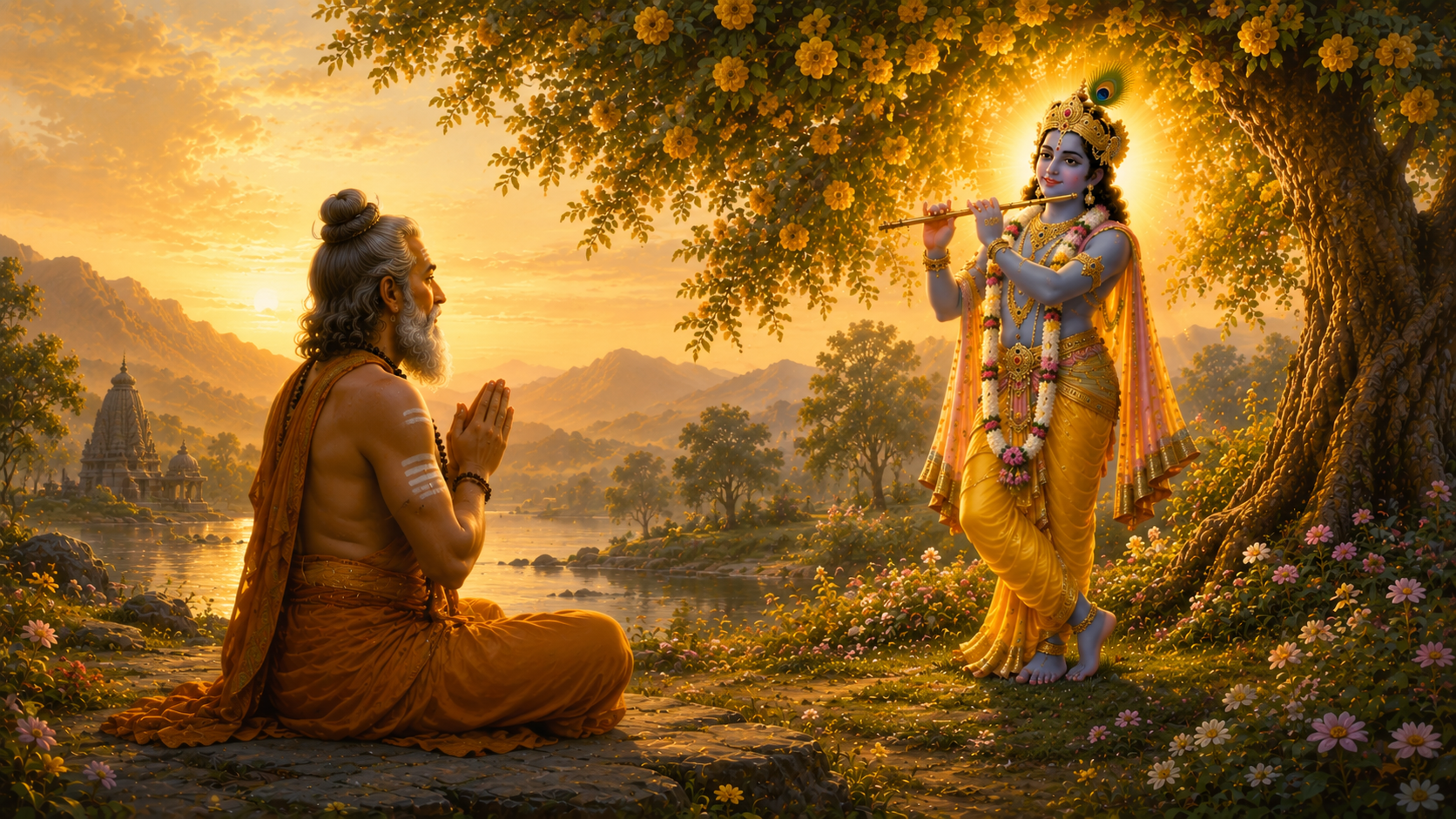
Why Did Shankaracharya Himself Worship Shri Krishna?
Why do some liberated Paramhansas become absorbed in the bliss of Shri Krishna?
📍 Where You Are in the Inquiry
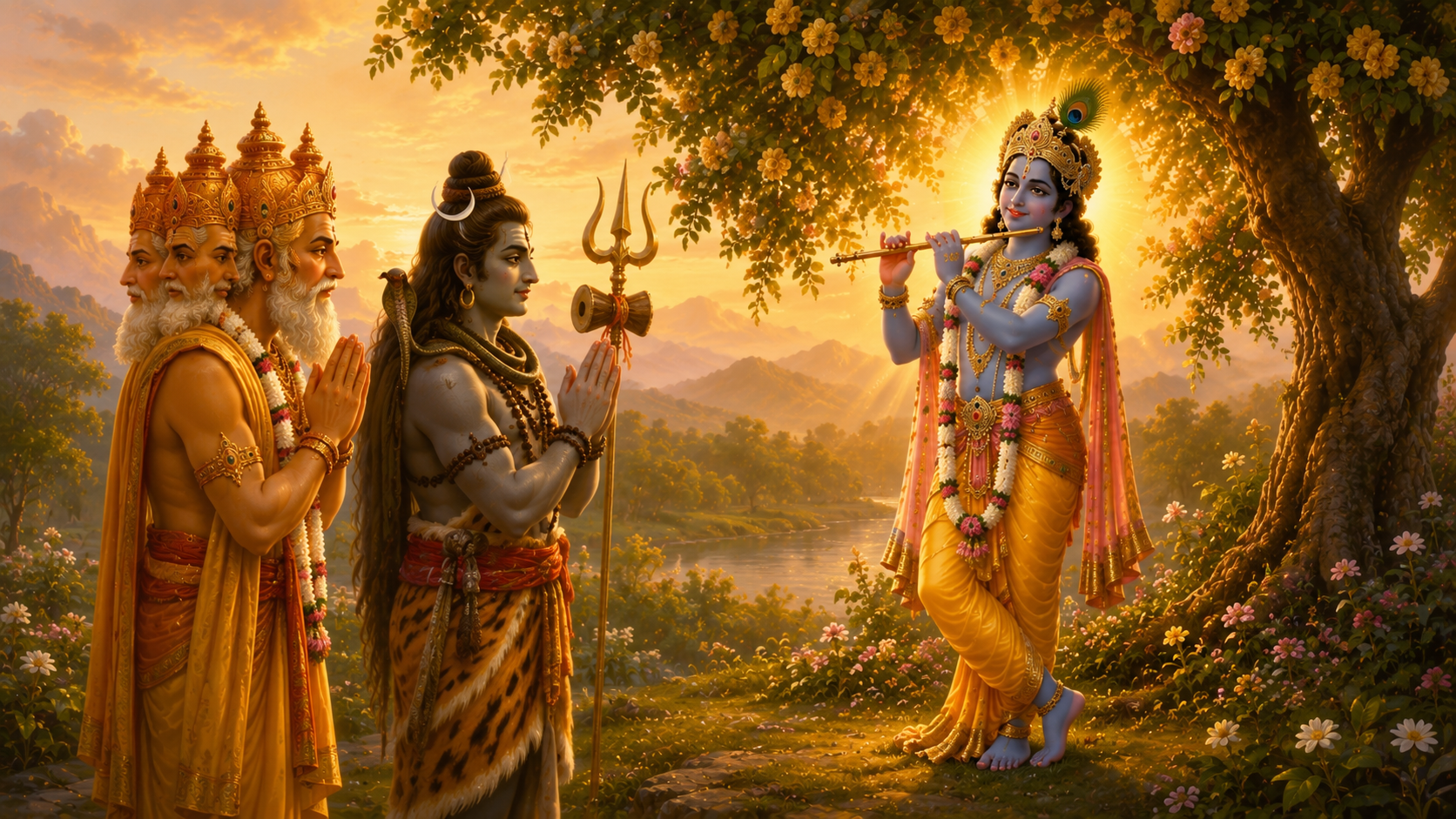
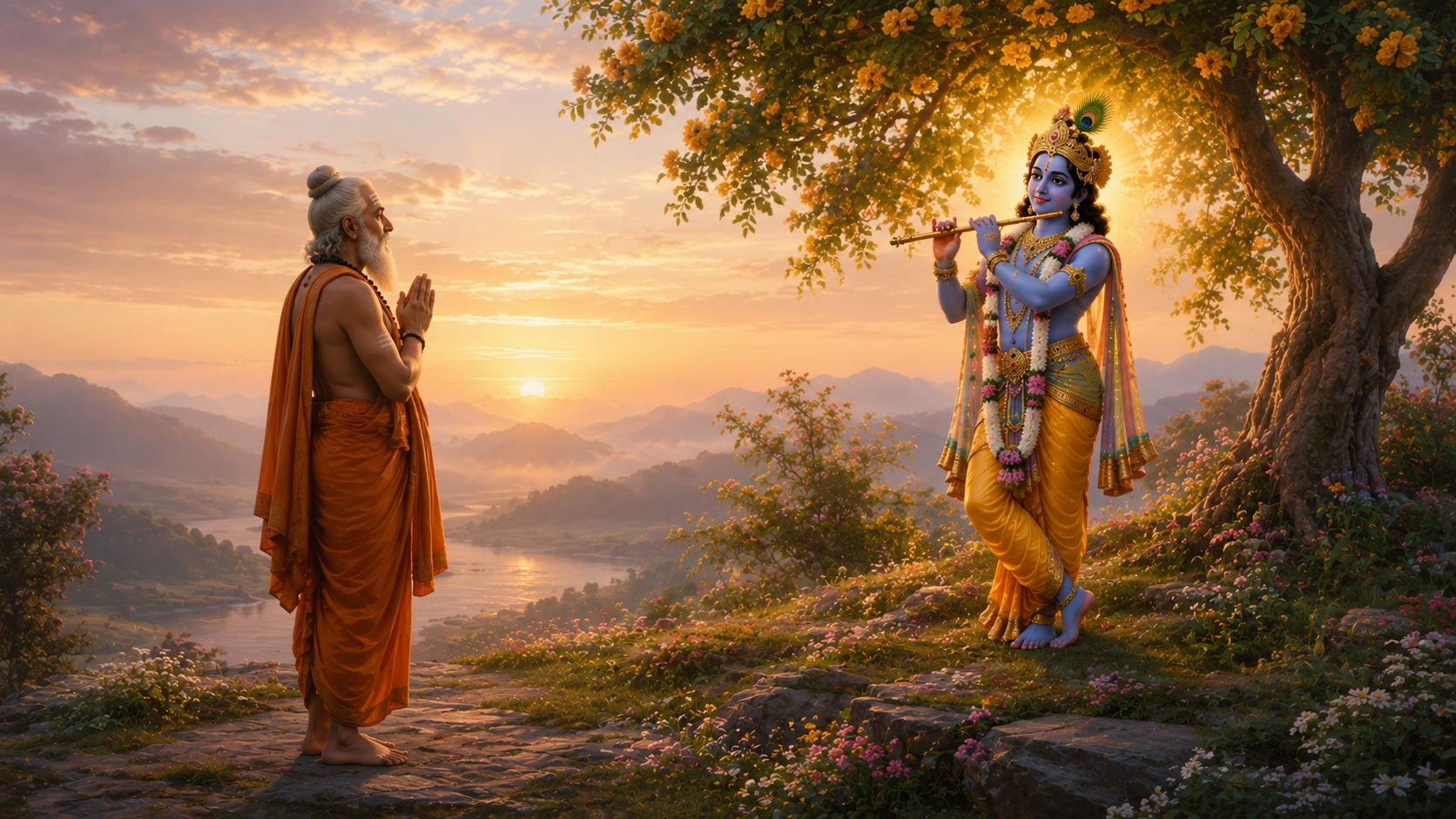
In the previous articles, the scriptures showed that even Brahma and Lord Shiv became irresistibly attracted to Shri Krishna's Divine Love. We then saw that liberated Paramhansas belonging to the class of individual souls reached the same conclusion. Again and again, the greatest gyanis (knowers of Brahm) were drawn toward Bhakti.
Yet one final question may still remain.
All of these examples belong to the scriptures. Does this same pattern continue into Kaliyug?
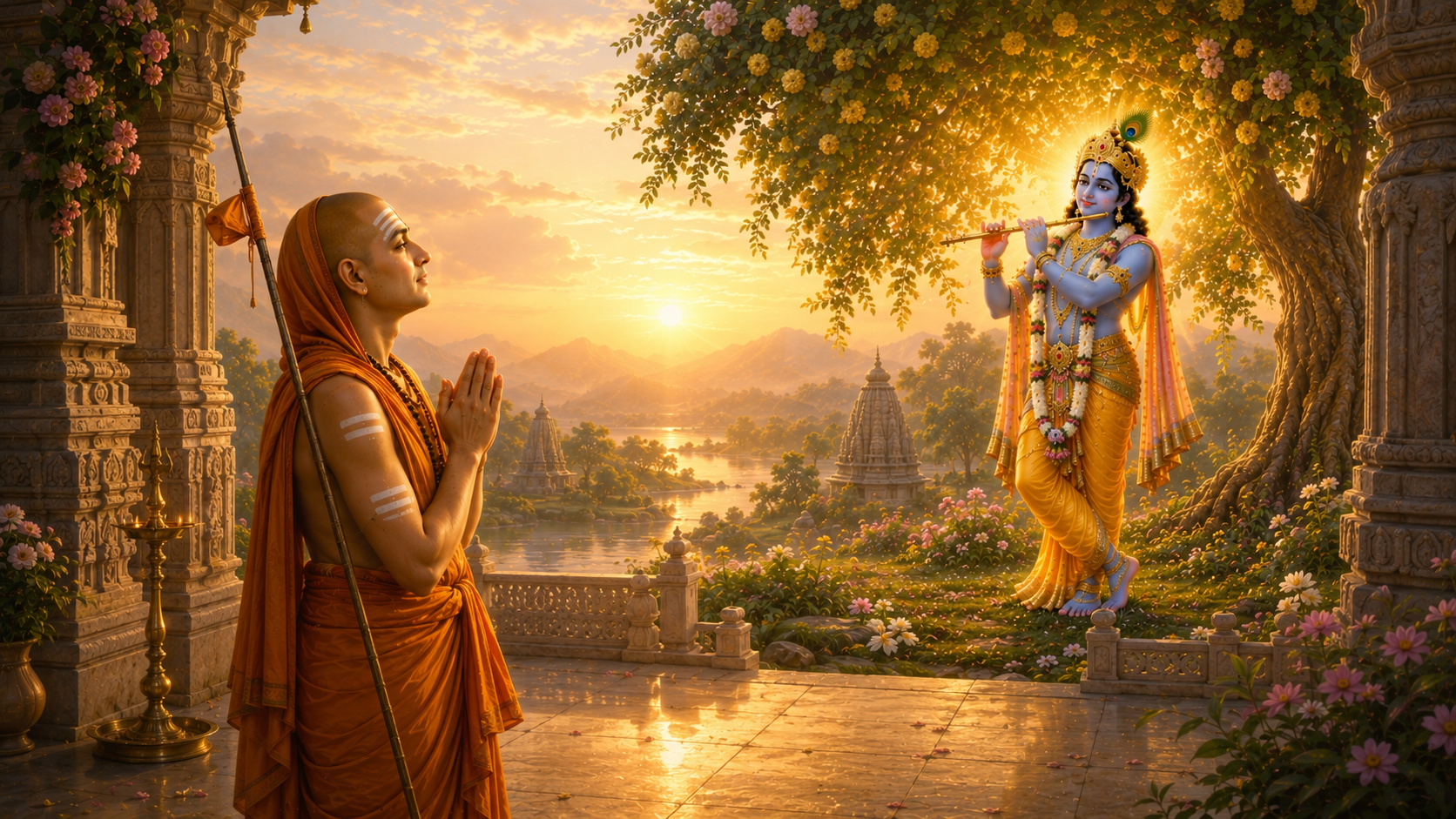
So, let us now turns to the foremost Gyani of Kaliyug, Adi Jagadguru Shankaracharya, before bringing the inquiry into Gyan to its conclusion.
The Final Witness
Earlier in this inquiry we saw Shankaracharya wrote commentaries on several Vedic scriptures that strongly emphasized non-duality, yet he also composed devotional hymns glorifying Shri Krishna and lived a life of devotion to Shri Krishna.
How can both of these be true?
Shankaracharya ultimately teach gyan and did he himself embraced Bhakti. That is a dichotomy!
Rather than dismissing either aspect of his life, Shri Maharaj Ji teaches us to understand both within their proper context.
Why Did Shankaracharya Teach Advaita?
Shri Maharaj Ji explains that Shankaracharya's commentaries must be understood in light of the spiritual needs of his time.
During his lifetime, Buddhism and the Godless school of Mimamsa Karma had become deeply influential. To re-establish faith in the authority of the Vedas and turn people away from philosophies that denied or neglected Vedas, Shankaracharya emphasized Advaita in his philosophical writings.
His intellectual mission, however, should not be confused with the devotional state of his own heart.
Shri Maharaj Ji therefore establishes an important principle:
A saint's philosophical method and a saint's inner devotional realization are not always identical.
A realized saint may outwardly teach different aspects of truth according to the needs of the people before him, while inwardly remaining established in Divine Love.
Understanding this principle prevents us from drawing conclusions based solely on one part of a saint's work while ignoring the rest.
A Saint's Actions Must Be Understood by Their Purpose
To illustrate this principle, Shri Maharaj Ji directs our attention to the lives of God and His saints.
Shri Krishna performs many different kinds of Divine pastimes. At one time He stands upon the battlefield of Kurukshetra, guiding Arjun through the Mahabharat war. At another, He performs the Maharas with the Gopis of Braj. These actions differ outwardly, yet each serves a Divine purpose.
Similarly, the actions of great saints cannot be understood merely by examining their external form.
A saint may teach philosophy in one circumstance, devotional practice in another, or even appear to emphasize different aspects of the scriptures at different times. These outward differences do not indicate contradiction. They reflect the particular purpose for which the saint is acting.
This teaches us not to judge a saint's inner realization merely from one portion of his public work. Instead, we must seek the intention behind his actions rather than drawing conclusions from isolated statements.
With this principle established, we can now turn from philosophical debate to what captivated the hearts of the greatest lovers of God—including Shankaracharya himself.
What Continually Amazes the Greatest Devotees?
Again and again, the saints marvel at the same astonishing reality.
The One whom the Vedas proclaim to be the all-knowing, all-powerful Governor of countless universes chooses to spend His childhood in the simple village of Braj.
The Lord before whom the celestial beings bow plays happily in the dust of Nandgaon.
The Supreme Brahm, praised through profound Vedic hymns, allows Mother Yashoda to bind Him with ropes of affection.
He who seems beyond the reach of even great scholars lovingly speaks with calves, cowherd boys, and the simple residents of Braj.
These are not limitations upon God.
They reveal a unique sweetness of His Divine personality.
His infinite greatness does not disappear when He accepts the love of His devotees. Rather, His greatness becomes even more wonderful because He freely chooses intimacy over majesty.
This sweetness is what captivated the hearts of the greatest saints.
The Joy of Being Noticed by God
To help us understand this Divine Love, Shri Maharaj Ji narrates the story of a Muslim fakir.
For many years, the fakir faithfully offered his daily prayers to God. One day, another devotee who claimed to converse with God offered to ask whether those prayers had pleased Him.
The following day he returned with an unexpected answer.
"God said that He was not pleased with any of your prayers."
Instead of becoming discouraged, the fakir immediately began dancing with overwhelming joy.
The other fakir was astonished.
"If God was not pleased," he asked, "why are you celebrating?"
The fakir replied,
"If God said that He was not pleased, then He must have listened to every one of my prayers. How compassionate He is that He paid attention to someone as insignificant as me."
Shri Maharaj Ji explains that this is the nature of genuine Divine Love.
Love does not rejoice merely because God grants a desired result.
Love rejoices because God is so gracious that he notices.
Even His attention becomes an immeasurable blessing.
This helps us understand why the devotees of Braj experience a sweetness beyond ordinary spiritual attainment.
The greatest scholars would consider themselves blessed if God merely spoke a single word in response to their prayers.
Yet in Braj, Shri Krishna lovingly serves the simple Gopis, plays with the cowherd boys, and freely accepts their ordinary offerings.
This naturally raises another question.
Why does the Supreme Lord relate to His devotees in such an astonishing way?
The scriptures themselves now provide the answer.
Why Does Krishna Love His Devotees So Deeply?
The extraordinary sweetness of Krishna's relationship with His devotees is not merely the greatness of saints. The scriptures themselves reveal it.
The Shrimad Bhagavatam declares:
न तथा मे प्रियतम आत्मयोनिर्न शङ्करः ।
न च सङ्कर्षणो न श्रीर्नैवात्मा च यथा भवान् ॥
na tathā me priyatama ātmayonir na śaṅkaraḥ |
na ca saṅkarṣaṇo na śrīr naivātmā ca yathā bhavān ||
(Śrīmad Bhāgavatam 11.14.14)
"Neither Brahma, nor Shiv, nor My brother Balram, nor even Lakshmi is as dear to Me as My devotee."
Shir Krishna Himself revealed the extent of His love for His devotees to Sage Durvasa in Bhagavat:
अहं भक्तपराधीनो ह्यस्वतन्त्र इव द्विज ।
साधुभिर्ग्रस्तहृदयो भक्तैर्भक्तजनप्रियः ॥
ahaṁ bhakta-parādhīno hy asvatantra iva dvija |
sādhubhir grasta-hṛdayo bhaktair bhakta-jana-priyaḥ ||
(Śrīmad Bhāgavatam 9.4.63)
"I become dependent upon My devotees. Their love has captured My heart."
Shri Maharaj Ji explains that these statements reveal the unique glory of Bhakti.
God remains completely independent, yet He willingly allows Himself to be conquered by the selfless love of His devotees. This is not because His supremacy has diminished, but because His love and graciousness is unlimited.
The most respected Bhagavat proclaims Him as lovingly following behind such devotees, desiring the dust of their feet.
These astonishing declarations reveal a relationship that cannot be understood merely through philosophical reasoning.
Even the Gyanis Marvel at This Divine Love
Having heard the testimony of the scriptures, the gyanis themselves express wonder rather than explanation.
One Paramhans beautifully observes that the same Brahm sought throughout the Vedas is found in Braj, lovingly bound by the affection of the Gopis.
Another praises the incomparable fortune of the Gopis, whose eyes are eternally adorned by the presence of Krishna Himself.
Narad also confesses that he cannot adequately describe the fortune of Mother Yashoda.
The Supreme Brahm, whose gracious glance even Brahma, Shiv, Indra, and the celestial beings long to receive, became her little son. He cried to be held in her lap, rolled upon the ground, and accepted her loving chastisement as only a mother can give.
Again and again, the saints arrive at the same conclusion.
They do not merely praise God's greatness.
They marvel at His sweetness.
The Infinite Lord freely becomes intimate with those who love Him.
What Does This Reveal About Gyan and Bhakti?
The scriptures now bring the inquiry to its conclusion.
The Bliss experienced in the realization of the impersonal aspect of God is genuine Divine Bliss.
The Bliss experienced through loving devotion to the personal form of God is also Divine Bliss.
Both arise from the one Supreme Brahm.
Both are eternal.
Both are Divine.
Yet the scriptures repeatedly reveal that Divine Love possesses a unique sweetness.
It is this sweetness that irresistibly attracts liberated Paramhansas and immerses them in Krishna's Divine ecstasy.
From Brahma and Shiv to the liberated Paramhansas and finally Adi Jagadguru Shankaracharya, the testimony remains remarkably consistent. Again and again, the greatest knowers of Brahm become irresistibly attracted to the sweetness of Shri Krishna's Divine Love.
The journey of Gyan Yog culminates in Mukti. Yet the scriptures repeatedly reveal that the bliss of Krishna Bhakti possesses a unique sweetness that even liberated souls long to receive.
Where This Inquiry Leads
Throughout this inquiry, we have followed the path of Gyan from its beginning to its highest culmination.
We saw that spiritual knowledge progresses from Atma-Gyan to Brahm-Gyan and finally reaches its fulfillment in Gyan Yog.
We discovered that even after attaining Brahm-Gyan, liberated souls do not lose themselves in philosophical satisfaction. Again and again, the scriptures show them becoming irresistibly attracted to the sweetness of Shri Krishna's Divine Love.
That is why although the realization of the impersonal aspect of God and loving devotion to His personal form both arise from the same Supreme Brahm, Bhakti possesses a unique sweetness that captivates even the greatest knowers of Brahm.
He then leaves us with a humbling reflection.
Out of countless aspirant of gyan, only a rare person becomes qualified for the path of Gyan.
Many fall before reaching its culmination.
Even among those who attain Brahm-Gyan, only a few exceptionally fortunate souls receive the priceless gift of selfless Krishna Bhakti.
The inquiry into Gyan therefore reaches its natural conclusion.
It now opens into the path that the greatest Gyanis themselves ultimately embraced: Bhakti Yoga.
Go Deeper
- Why Did Liberated Paramhansas Become Absorbed in Krishna's Bliss?
- God Loves Love
- Why Pursue Pure Bhakti?
Continue the Inquiry
(Part 7 of 7 — Gyan and Bhakti: The Culmination of All Spiritual Paths)
The inquiry into Gyan has now reached its conclusion. The scriptures have shown that the greatest knowers of Brahm ultimately became attracted to the sweetness of Shri Krishna's Divine Love. The journey now turns from understanding the culmination of knowledge to exploring the path that these liberated souls themselves embraced: Bhakti Yoga.
- ⬅️ Previous: Why Did Liberated Paramhansas Become Absorbed in Krishna's Bliss?
/why-did-liberated-paramhansas-become-absorbed-in-krishnas-bliss - ➡️ Next: Bhakti Yoga — The Path
/doctrine/bhakti/ - 🔙 Back to Hub: Gyan and Bhakti — The Culmination of All Spiritual Paths