
Gyan and Bhakti
If Brahm-Gyan is the highest spiritual realization, why do the scriptures repeatedly portray great Brahm-gyanis immersed in devotion to God? Explore how the relationship between Gyan and Bhakti unfolds through the lives of the greatest spiritual authorities.
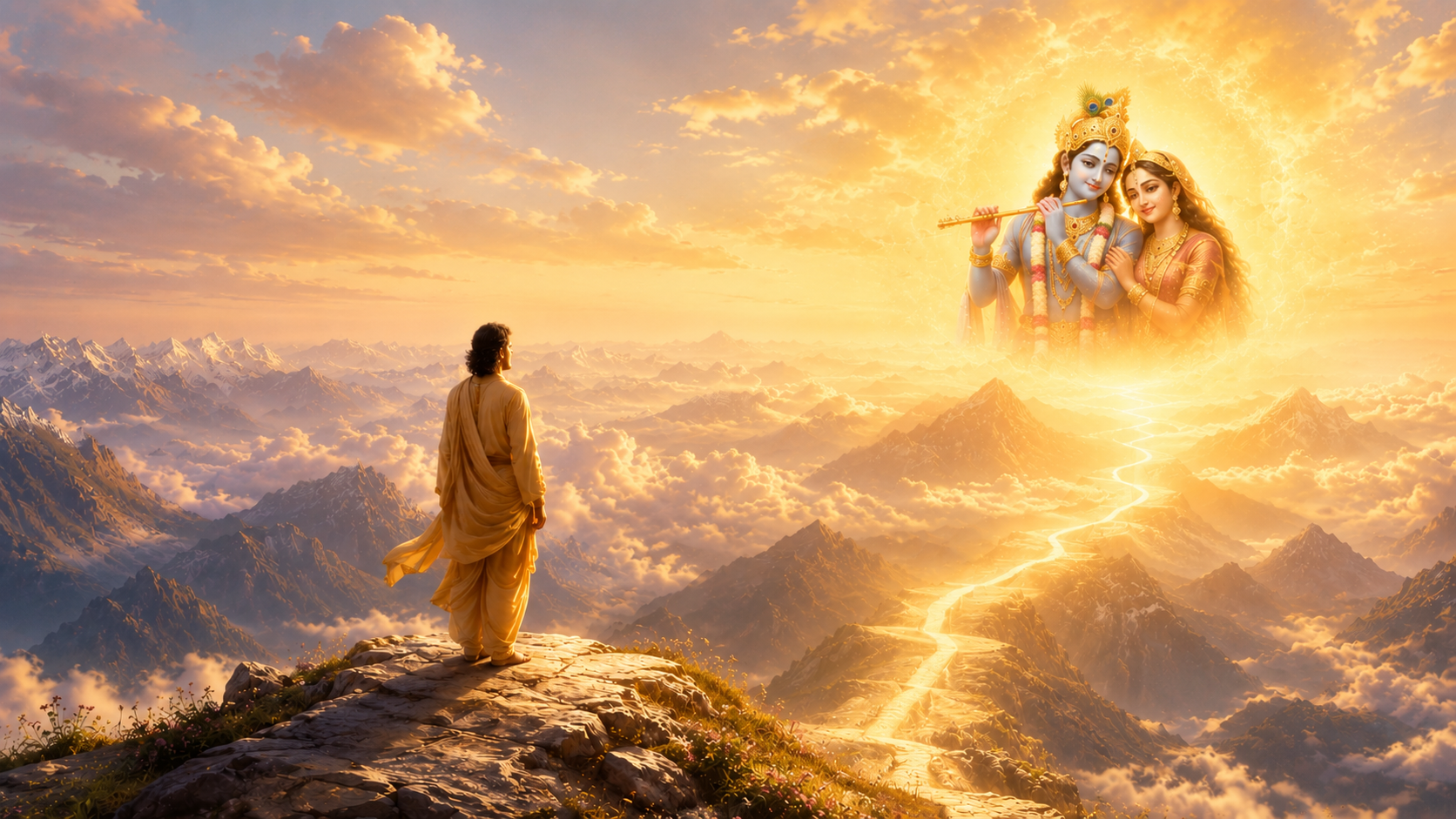
📍 Where You Are in the Inquiry
In the previous hub, we explored the nature of spiritual knowledge and followed the progressive journey from intellectual understanding to direct realization. The scriptures distinguish between ordinary learning, realization of the self, realization of Brahm, and the mature state known as Gyan Yog. We also saw that genuine knowledge removes ignorance, deepens detachment, and transforms the seeker's vision of reality.
Yet an important question remains.
If Brahm gyan — the highest spiritual knowledge — has already been attained, why do the scriptures repeatedly describe great Brahm-gyanis immersed in loving devotion (bhakti) to God? Why do the Upanishads, Bhagavad Gita, Bhagavatam, and the lives of the great Acharyas continue to emphasize Bhakti even after describing the highest states of realization?
Many seekers assume that knowledge and devotion represent different or even opposing paths. Others wonder whether devotion belongs only to beginners, while knowledge alone represents the ultimate goal. The history of Vedanta itself appears to deepen this confusion, as the great Acharyas are often presented as teaching incompatible philosophies.
This inquiry examines these questions by turning to the scriptures, the lives of the great saints, and Shri Maharaj Ji's explanations. Rather than relying upon popular assumptions or sectarian interpretations, we will investigate whether the highest spiritual state is merging into God—or in ever-deepening love for Him.
Read in Order
The following articles progressively examine how the scriptures and the lives of the great realized souls reveal the relationship between Gyan and Bhakti.
1. Did the Great Vedic Acharyas Teach Different Philosophies?
Explore whether the apparent differences among the great Vedantic Acharyas reflect genuine contradiction or progressive emphasis within the same spiritual tradition.
Read: Did the Great Vedic Acharyas Teach Different Philosophies?
2. Did Shankaracharya Reject Bhakti?
Examine whether Adi Shankaracharya truly dismissed devotion or whether later interpretations have obscured his complete spiritual teaching.
Read: Did Shankaracharya Reject Bhakti?
3. Do the Vedas Teach That the Soul Is Brahm?
Investigate what the Vedas actually teach about the relationship between the individual soul, Brahm, and the Supreme Lord.
Read: Do the Vedas Teach That the Soul Is Brahm?
4. Why Did Greatest Brahm-Gyanis Become Devotees?
Discover why some realized knowers of Brahm embraced loving devotion to the Personal Form of God.
Read: Why Did Greatest Brahm-Gyanis Become Devotees?
5. Why Did Brahma and Shiv immerse in Divine Love?
Learn why Lord Brahma and Lord Shiv, despite being the foremost authorities on Brahm-gyan, delight in loving devotion to God.
Read: Why Did Brahma and Shiv immerse in Divine Love?
6. Why did Pramahans get absorbed in Krishn bliss?
See why some liberated Paramhansas become absorbed in the limitless bliss of Shri Krishna rather than remaining satisfied with Brahm realization.
Read: Why did Pramahans get absorbed in Krishn bliss?
7. Why Did Shankaracharya Himself Worship Shri Krishna?
Return to the life of Adi Shankaracharya and examine how his own devotional practices illuminate the culmination of his philosophy.
Read: Why Did Shankaracharya Himself Worship Shri Krishna?
Where This Leads
Taken together, these articles reveal that the apparent conflict between knowledge and devotion largely arises from incomplete reading, isolated quotations, and misunderstanding the progressive nature of the scriptures. As the inquiry unfolds, the lives of the great Acharyas, liberated sages, and scriptural authorities consistently point in the same direction. Genuine spiritual knowledge does not diminish devotion; it deepens it.
Rather than presenting Brahm realization and devotion as competing destinations, the scriptures repeatedly show that some of their foremost authorities on Brahm-Gyan embraced loving devotion to God. Having experienced the sweeter Personal Form of the same Brahm they had already realized, they naturally became absorbed in Divine Love.
Thus, the inquiry into the relationship between Gyan and Bhakti reveals that the highest spiritual knowledge culminates in loving devotion to God.
If the culmination of true knowledge is loving devotion, what is the nature of that devotion, and what is the path that ultimately leads to Divine Love?
Continue the Inquiry
⬅️ Previous: Gyan — Understanding Spiritual Knowledge
➡️ Next: Bhakti Yoga — The Path
🔙 Back to: The Siddhānt (Doctrine)