The Soul Is an Eternal Part of God
The soul is eternal, conscious, subtle, and Divine in nature. As an eternal part of God, it can never be fully satisfied by material happiness.
📍 Where You Are in the Inquiry
In the previous article, we examined the identities we ordinarily mistake to be the self.
Through direct experience and logical inquiry, we saw that the self cannot be:
- the body,
- the senses,
- the mind,
- or material matter itself.
This now raises the central question.
If we are not material, then who are we really?
The scriptures now reveal the true identity of the soul.
The Self Is Non-Material
The material body changes constantly.
The senses become active and inactive.
The mind fluctuates continuously.
Yet the conscious experiencer remains present throughout all these changing conditions.
This reveals that the self is fundamentally different from matter.
The self is conscious.
Matter is unconscious.
The self experiences.
Matter is experienced.
Therefore, the true self must be non-material in nature.
The Scriptures Reveal the Nature of the Soul
The Vedas describe the soul as:
चिन्मात्रं श्रीहरेरंशं सूक्ष्ममक्षरमव्ययम्
“The soul is conscious, subtle, eternal, imperishable, and a part of God.”
This same truth is declared in the Bhagavad Gita:
ममैवांशो जीवलोके जीवभूतः सनातनः
“The soul is My eternal fragmental part.”
Thus, according to the scriptures:
- the soul is eternal,
- conscious,
- subtle,
- imperishable,
- and dependent upon God.
The Soul Is an Eternal Part of God
The soul is not independent.
It exists under the shelter of God.
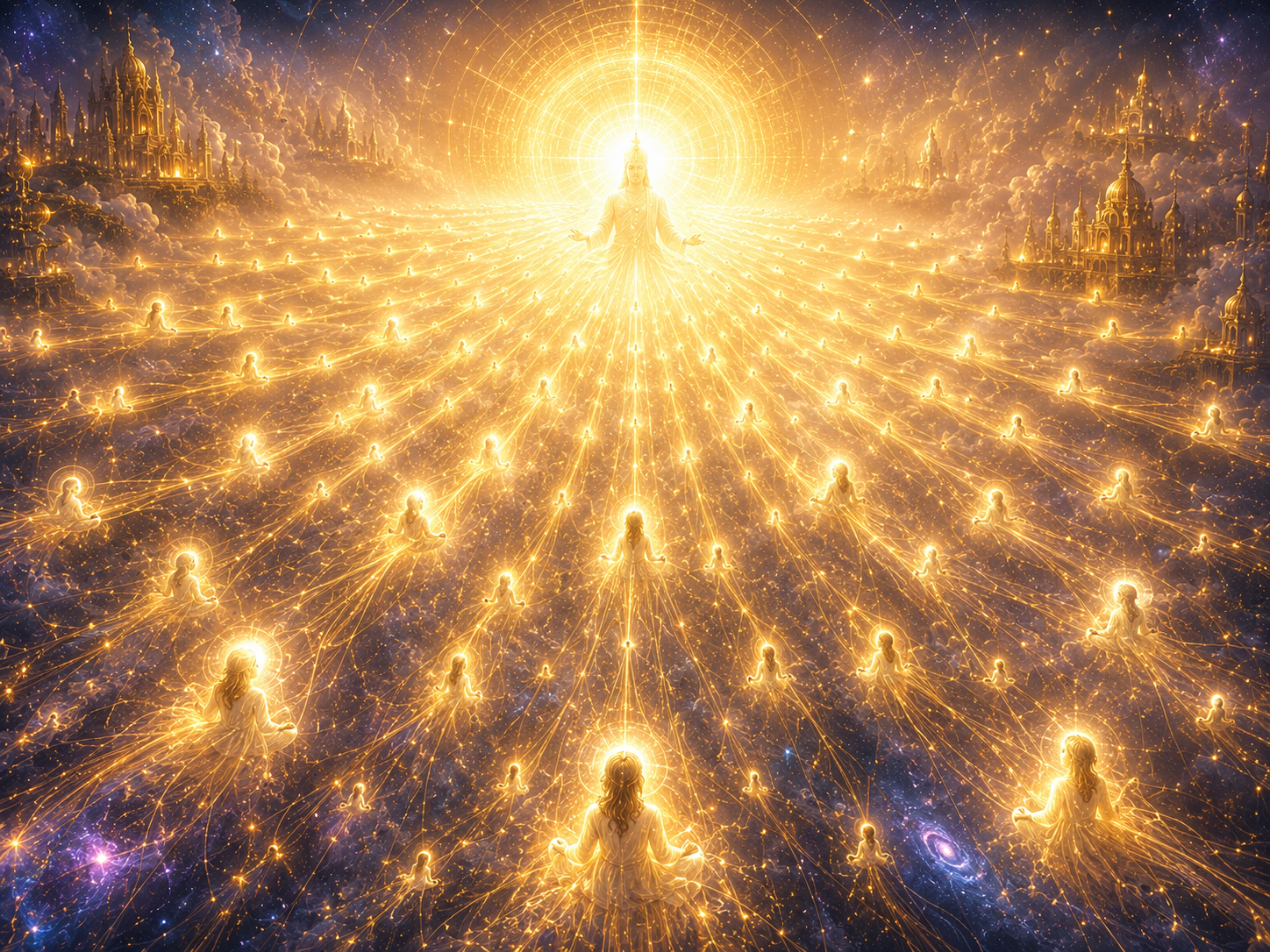
Just as a ray belongs to the sun, the soul eternally belongs to God.
This does not mean that the soul becomes equal to God.
God remains infinite and complete.
The soul remains infinitesimal and dependent.
Yet because the soul originates from God, it possesses a Divine nature distinct from material matter.
This is why the soul can never be fully satisfied through material experience.
Why the Soul Seeks Happiness
Every living being seeks happiness naturally.
This longing does not arise accidentally.
The soul seeks happiness because its true nature is connected to God, who is Sat-Chit-Anand — eternal existence, consciousness, and Bliss.
Thus, the search for happiness is actually the soul’s search for its own Divine fulfillment.
But due to misidentification with the material condition, the mind repeatedly projects happiness onto worldly objects.
Again and again it thinks:
- “This object will satisfy me.”
- “This attainment will fulfill me.”
- “Now I will become complete.”
Yet fulfillment never fully arrives.
Why Material Happiness Cannot Fully Satisfy the Soul
Material objects can temporarily stimulate the mind, but they cannot satisfy the soul completely.
Why?
Because material objects are temporary and mayic, while the soul itself is Divine in nature.
Matter cannot fully satisfy that which is beyond matter.
This is why:
- pleasure fades,
- restlessness returns,
- desires continue,
- and the search never ends.
The soul continues longing because its true fulfillment lies beyond the material world.
Only Divine Bliss Can Fully Satisfy the Soul
As long as the soul searches for fulfillment in temporary material objects, complete satisfaction will remain impossible.
Only Divine Bliss can fully satisfy the Divine soul.
This is why all worldly attainments ultimately remain incomplete.
The soul is not seeking temporary stimulation.
It is seeking eternal Divine fulfillment.
The Inquiry Now Moves Forward
At this point, the nature of the soul has become clearer.
Yet another important question still remains.
If the soul is Divine in nature, then why does the mind remain so deeply attached to the material world?
To understand this, we must now examine the deeper condition of material bondage.
🔍 Go Deeper (Scriptural Foundations)
Continue the Inquiry
(Part 4 of 5 — The Self)
⬅️ Previous: Are We the Body, Mind, or Senses?
➡️ Next: Why the Mind Remains Bound to the World
🔙 Back to Hub: The Soul — The Self