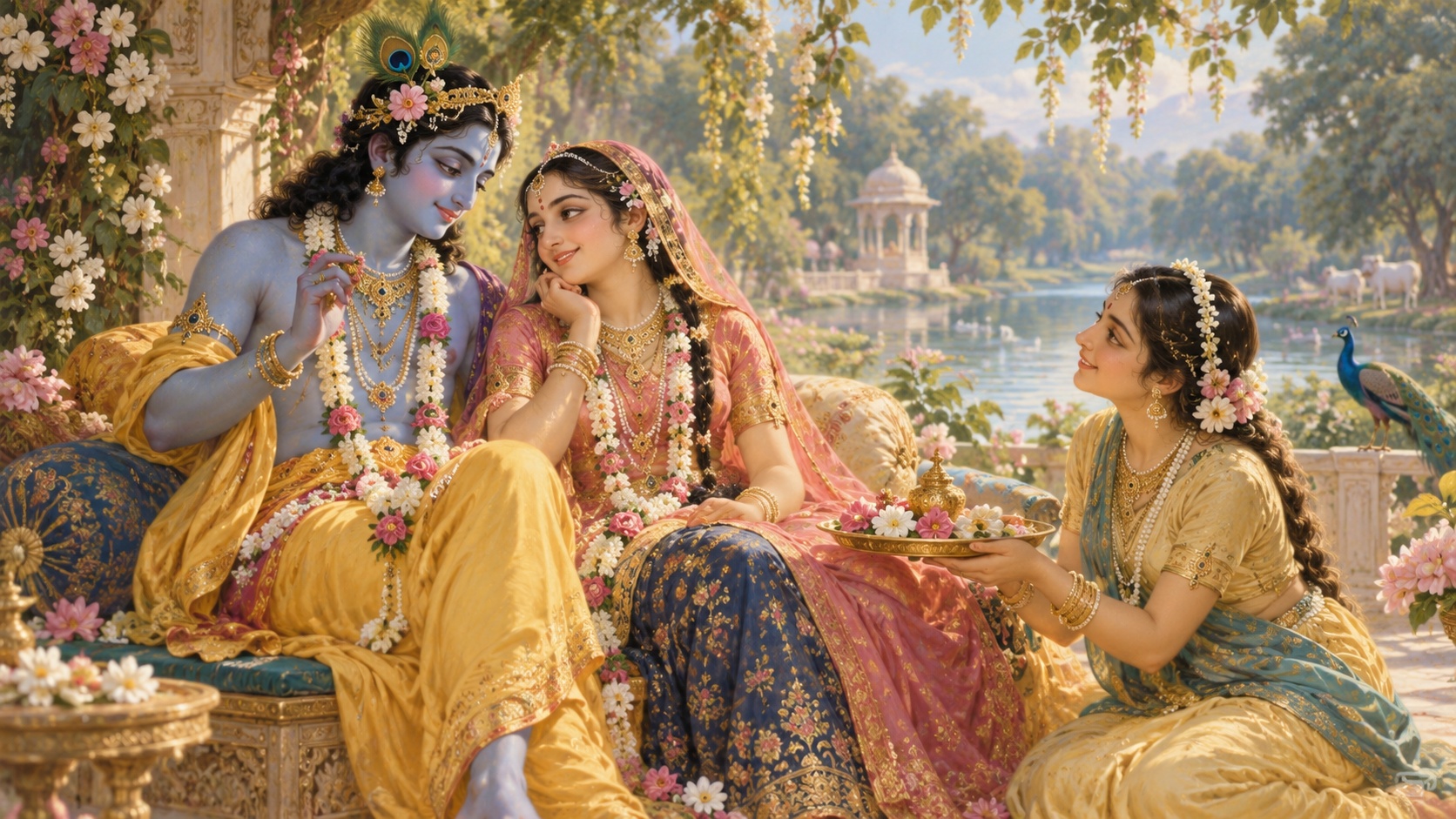
Samartha Rati (समर्था रति)
Samartha Rati is the highest state of Madhurya Bhav, marked by completely selfless love in which the devotee seeks only Shri Radha-Krishna's happiness.

Samartha Rati is the highest state of Madhurya Bhav, marked by completely selfless love in which the devotee seeks only Shri Radha-Krishna's happiness.

Satyakama (सत्यकाम | satyakāma) refers to Desires factualize. The Divine Attribute It means "one whose desires immediately come to fruition." It is one of the eight divine qualities of God described in the Dahara Vidya section of the Chandogya Upanishad. Attainment by the Soul While this power
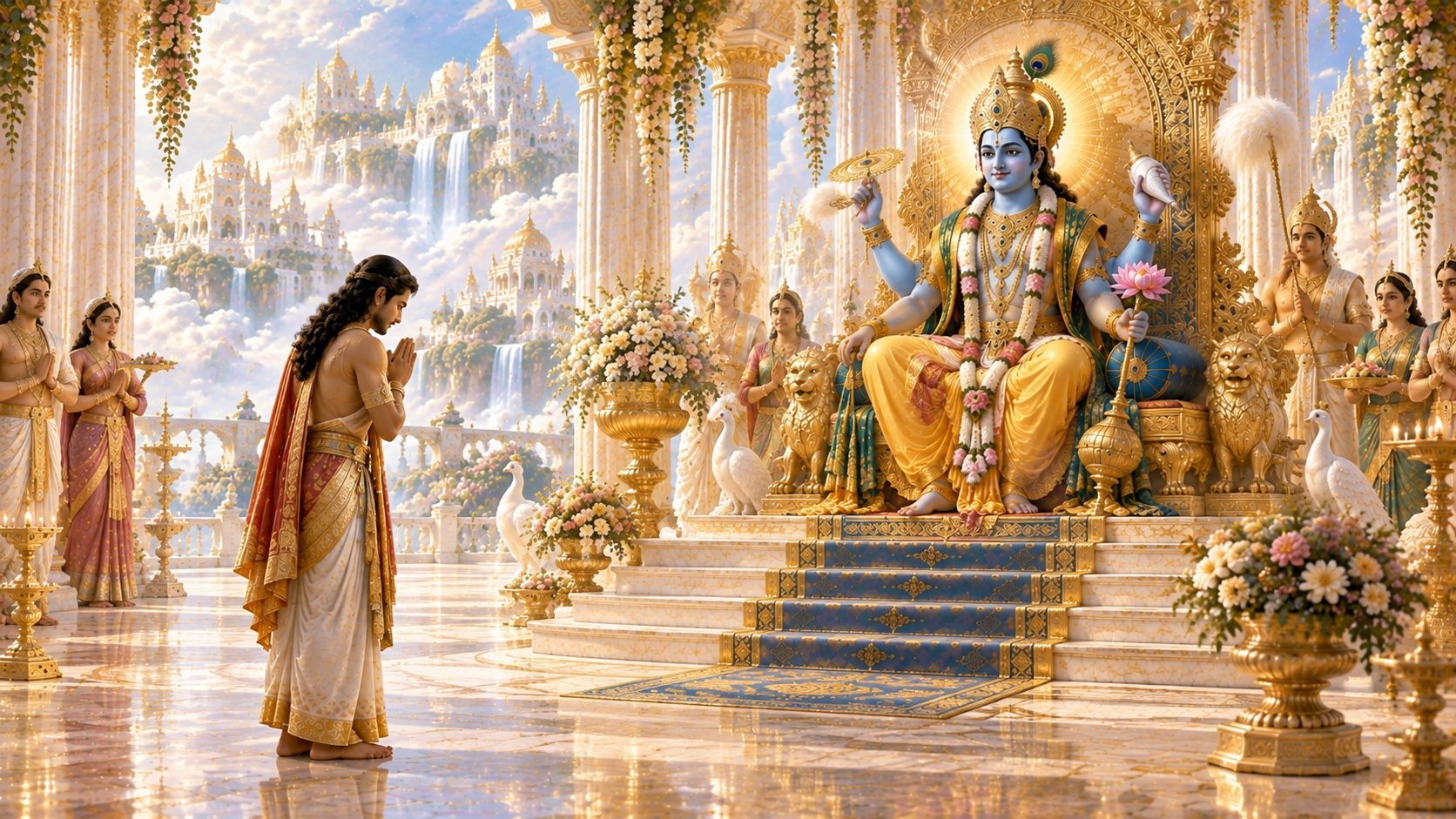
Shant Bhav is the devotional sentiment of loving God as King, with awe, reverence, and respectful distance.

Swansh are the divine expansions of God, identical to Shri Krishna in divinity and governors of Yogmaya Shakti.

Vatsalya Bhav is loving Shri Krishna as one's own child with the tenderness, care, and intimacy of parental love.

Satya Sankalp means "True Resolve." Discover this divine quality where God's will is instantly fulfilled, contrasting human uncertainty with Divine perfection.

Triloka (त्रिलोक | trilōka) refers to the Three Worlds or the collective three classes of material planes. These realms are: * Swarg lok (Celestial Abodes): The heavenly realms. God grants residence here for a limited duration as a reward for strictly adhering to Vedic injunctions. * Mrityu lok (Realm of

Charachar Jagat (चराचर जगत् | carācara jagat) refers to the entire material universe. The term is a compound of Chara (moving/animate) and Achara (non-moving/inanimate). Thus, it signifies the totality of creation, encompassing all living beings and non-living entities existing within the realm of Maya (Samsara). Further

Jad (जड़ | jaṛa) generally signifies "inert," "insentient," or "immobile." The term is used in three primary contexts: * Jad Jiva: Refers to immobile living beings (e.g., plants and trees). Although they possess life, they lack the ability to move voluntarily. * Inert Matter: Refers to

Atmaram means "one who delights in the Atma." Discover how the term refers to delight in the soul or in Shri Krishna, depending on context.

Vittaja Seva (वित्तजा सेवा | vittajā sevā) means serving God and Guru through one's wealth and material resources. Why Is Vittaja Seva Important? Material wealth can be deeply intoxicating. The more wealth a person possesses, the greater the opportunity to increase material comforts, pleasures, possessions, and
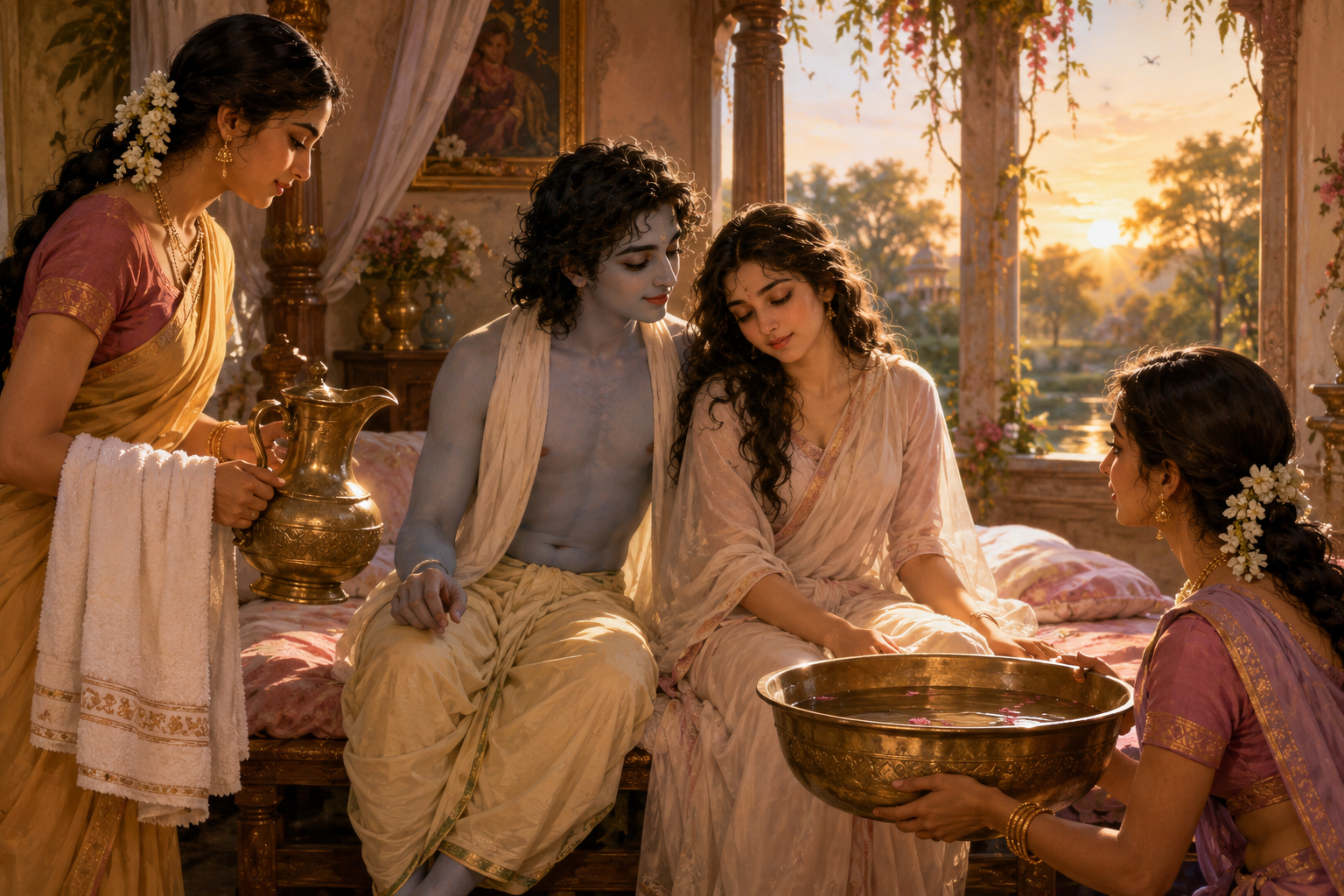
Ashtayami Seva (अष्टयामी सेवा | aṣṭayāmī sevā) refers to the lovingly serving The Divine Couple, Shri Radha Krishna throughout the day. Traditionally, a 24-hour day is divided into eight three-hour periods, called yaam (याम | yāma). Ashtayami Seva literally refers to seva performed across these eight