Dashavatar (दशावतार)
Show the ten principal Avatars as one distinct group collectively known as Dashavatar.
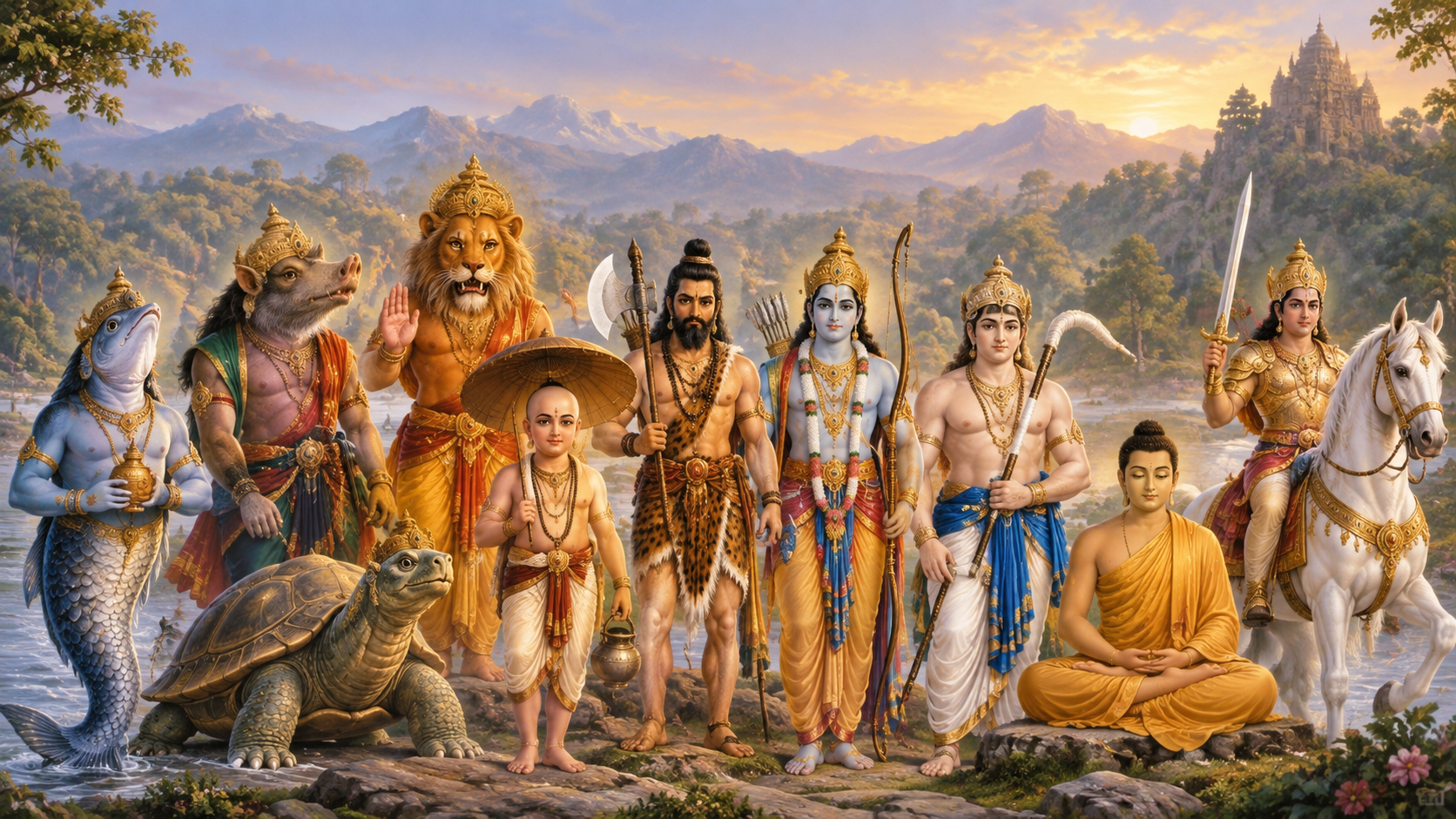
Dashavatar (दशावतार | daśāvatāra) refers collectively to the ten principal Avatars of God in one Chaturyuga.
A Chaturyuga is one complete cycle of the four Yugas—Satya, Treta, Dwapar, and Kali Yuga. Within this cycle, ten descensions of God are identified the principal Avatars. Together, they are called Dashavatar—literally, the ten Avatars.
दस अवतार मुख्य गोविंद राधे । मीन कच्छप वराह नृसिंह बता दे ॥
वामन परशुराम गोविंद राधे । राम बलराम बुद्ध कल्कि बता दे ॥
dasa avatāra mukhya govinda rādhe । mīna kacchapa varāha nṛsiṁha batā de ।
vāmana paraśurāma govinda rādhe । rāma balarāma buddha kalki batā de ।
— 6890–6891
The Ten Principal Avatars
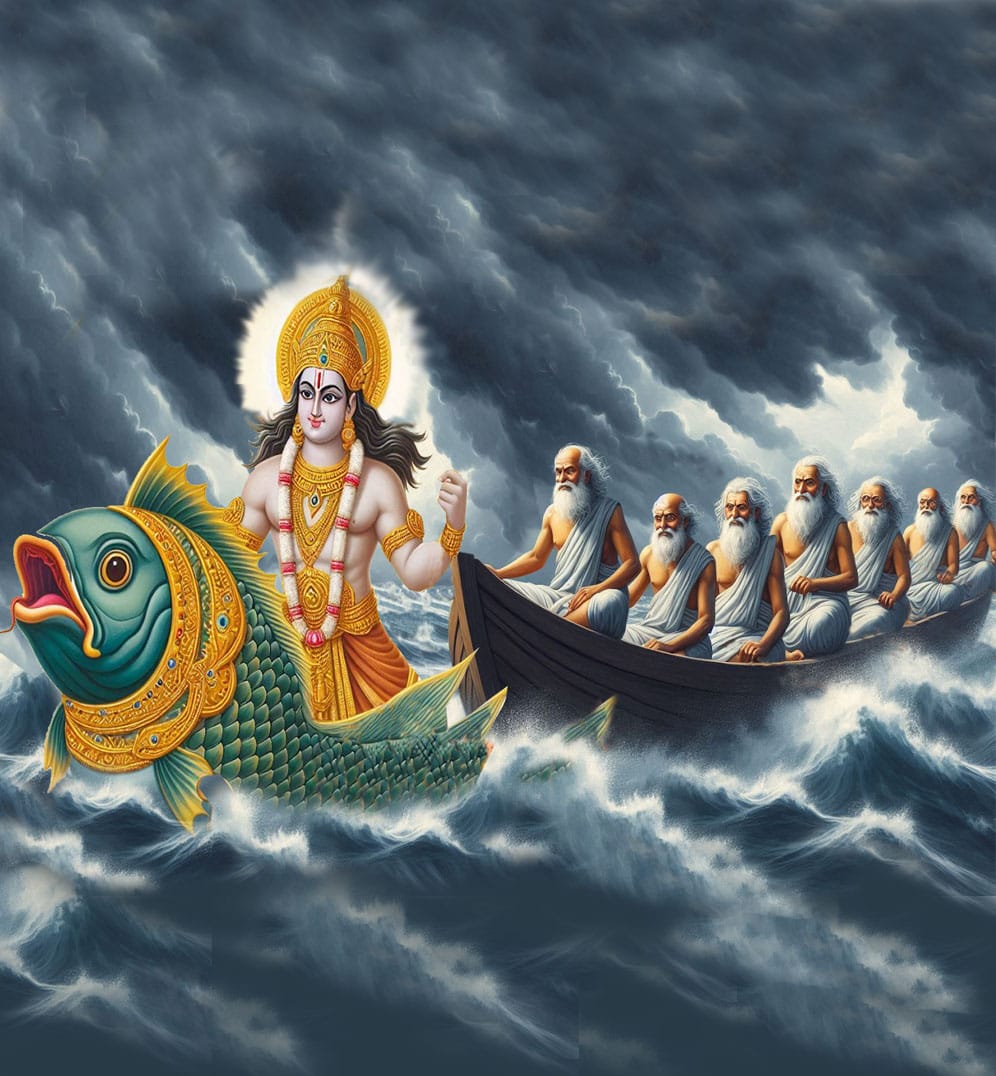
- Matsya — God descended in the form of a Divine fish to save the sages through the dissolution so they could continue into the next Srishti.
- Kurm — God descended in the form of a Divine tortoise and became the support for Mount Sumeru so that Ksheer Sagar could be churned.
- Varah — God descended in the form of a Divine boar to rescue the Earth after Hiranyaksha had taken it into the cosmic waters, and to kill Hiranyaksha.
- Narsingh — God descended in the form of half-man and half-lion to protect His devotee Prahlad and kill Hiranyakashipu.
- Vaman — God descended as a dwarf Brahmin and asked King Bali for three steps of land, ultimately reclaiming the three worlds and restoring them to the Devatas.
- Parashuram — God descended as Parashuram to destroy oppressive Kshatriya rulers who had abused their power.
- Ram — God descended as Shri Ram to destroy Ravan and other demonic forces and establish Dharma.
- Balaram — God descended as Balaram, the elder brother of Shri Krishna.
- Buddha — God descended as Buddha to stop the misuse of Vedic injunctions for animal sacrifice and turn people away from violence.
- Kalki — God will descend as Kalki at the end of Kali Yuga to destroy the prevailing forces of Adharma and re-establish Dharma.
Dashavatar therefore names this particular group of ten principal Avatars. It does not mean that God has only ten Avatars.
Go Deeper
Kaal — Vedic Time
According to our invaluable scriptures, mainly Mahabharata, Manu Smriti and Shrimad Bhagvatam etc. the concept of eternal and cyclical time is a very important aspect of philosophy. Kaal (Devanagari: काल ISO15919: kāla ) has a few meanings in Sanskrit language. For various other meanings please refer to kaal . In this
 JKP Literature
Saptrishi — Seven sages
Seven sages in the Vedic scriptures are collectively referred to as Sapt rishi (Devanagari: सप्तर्षि) ISO15919: saptarṣi ). The Sapta rishi are commended several times in the Vedas and Hindu literature for their tremendous contributions to the world. They are also called manasputtra of the creator Brahma. They possess
 JKP Literature