Does It Matter Which Aspect of God We Worship?
All three aspects lead to the same Supreme God, but their manifested powers and the divine bliss they bestow differ.
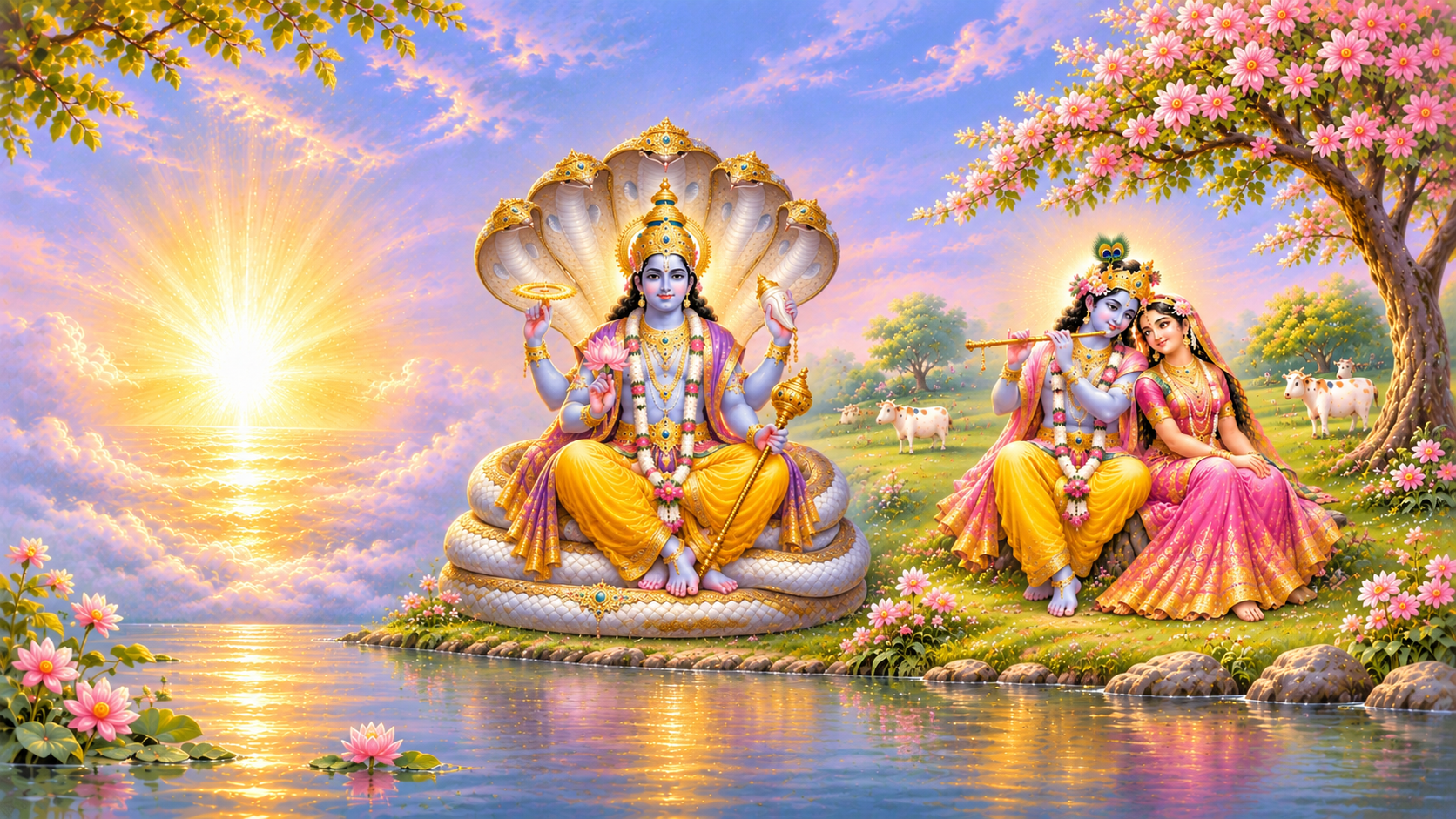
Sage Ved Vyas explains in the Shrimad Bhagawat Mahapuran (1.2.11) that the Supreme God eternally exists in three aspects: Brahm, Paramatma, and Bhagavan.
If all three are the same Supreme God, does it matter which aspect we worship? Will we not attain the same God regardless of the path we follow?
The confusion arises from assuming that because all three aspects are the same Supreme God, they must manifest the same divine powers and bestow the same experience of bliss.
Yes, we will attain the same Supreme God. But the divine bliss we attain will not be the same.
To understand why, we must distinguish between these three aspects, the powers they manifest, and the bliss they bestow.
Do All Three Aspects Lead to the Same God?
Yes.
Brahm, Paramatma, and Bhagavan are not three different Gods. They are three eternal aspects of the same Supreme God, Shri Krishna.
In the Bhagavad Gita (12.2–5), Shri Krishna explains that both those who worship His personal form and those who worship the imperishable, unmanifest aspect ultimately attain Him.
Thus, the Gyani who realizes Brahm, the yogi who realizes Paramatma, and the devotee who realizes Bhagavan have all attained the Supreme God.
None has attained a lesser or different God.
The distinction is not whether one attains God, but which aspect of God one attains and the divine bliss one experiences.
Do All Three Aspects Manifest the Same Divine Powers?
No.
Although all three aspects are the same omnipotent God, the divine powers they manifest are eternally different.
Brahm — The Formless Aspect
Brahm is the divine effulgence emanating from Shri Krishna's body.
He is Alpashakti Brahm, not Nihshakti Brahm. He possesses all divine powers but manifests fewer, without revealing His divine name, form, attributes, pastimes, abode, or associates.
The Gyani realizes Brahm and attains Brahmanand.
Paramatma — The Supremely Majestic Aspect
Paramatma reveals His divine name, form, attributes, and abode. His overwhelming majesty inspires reverence, maintaining a distance between God and devotee.
Bhagavan — The Most Lovable Aspect
Bhagavan reveals His divine name, form, attributes, abode, pastimes, and associates.
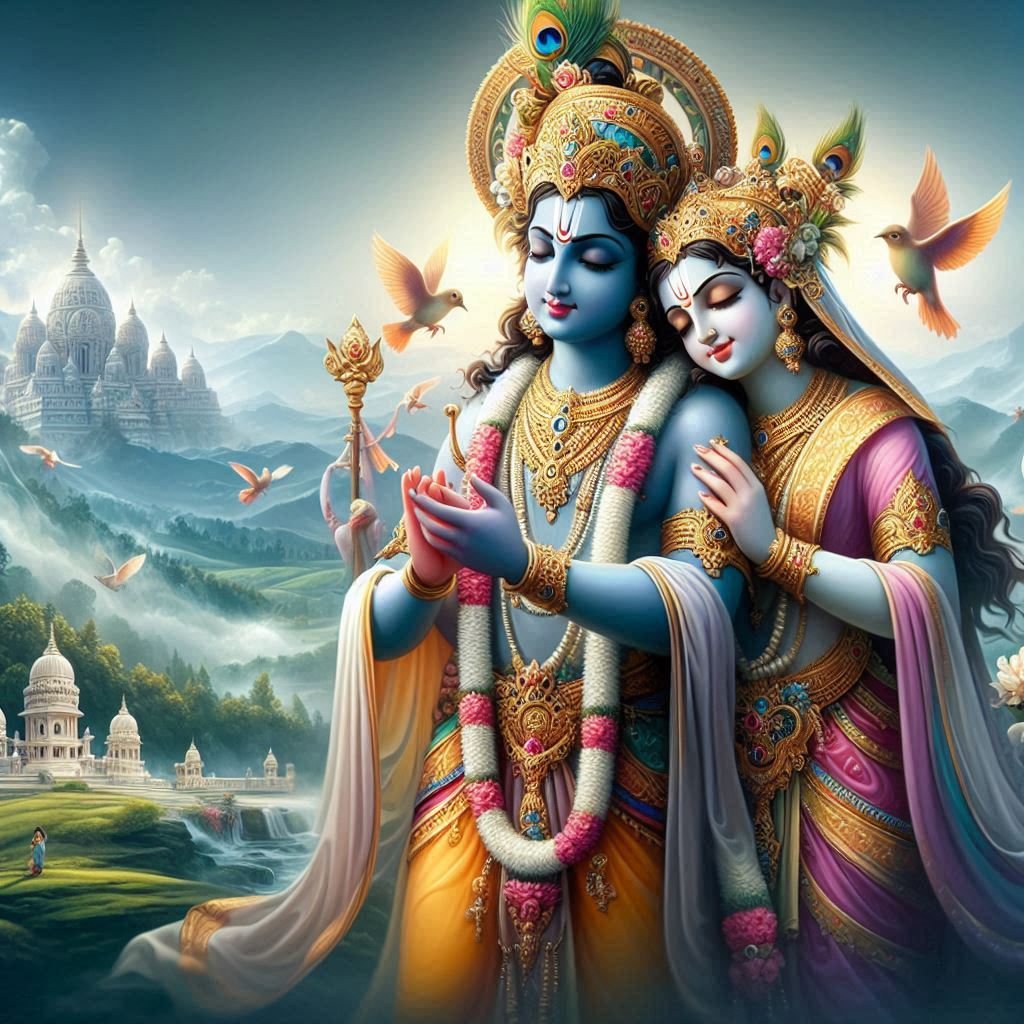
Shri Krishna conceals His overwhelming majesty, allowing devotees to love Him intimately as their friend, child, or beloved, as the inhabitants of Braj did.
He bestows the sweetness of divine love, Premanand.
Do All Three Aspects Bestow the Same Divine Bliss?
No.
Brahmanand is unlimited divine bliss. However, upon attaining Brahm, the Gyani experiences neither pleasure nor pain, because the mind—the instrument through which these are experienced—becomes dormant. Thus, the Gyani is free from all suffering but does not experience the sweetness of Shri Krishna's intimate loving pastimes either.
The devotee of Paramatma experiences divine bliss in the presence of God's overwhelming majesty, while the devotee of Bhagavan experiences the intimate sweetness of divine love according to the relationship established with Him.
For example, a Gyani who attains Brahm does not thereby gain participation in Shri Krishna's Maharas.
God's three aspects are not temporary appearances that become interchangeable upon realization.
They have existed eternally, with their distinct manifestations of divine powers, and will remain so forever.
Therefore, the spiritual goal matters. The aspect of God one ultimately attains determines the nature of the divine bliss one experiences.
Are All Three Paths Equally Easy?
No. The paths differ considerably in difficulty.
Shri Maharaj Ji explains this through the example of crossing the river Ganga.
Gyan Marg — Swimming Across the River
Some people attempt to cross the Ganga by swimming.
They must rely on their own strength to overcome the river's current. The journey is arduous, and the danger of being swept away is considerable.
This is the path of the Gyani.
The qualifications required for Gyan Marg are formidable. Even advanced spiritual aspirants can fall through attachment, as illustrated by the account of Jad Bharat.
Yog Marg — Rowing Across the River
Others cross the Ganga in a boat, but they must row it themselves.
The boat makes the crossing easier than swimming, yet considerable effort is still required.
This is the path of the Yogi.
Bhakti Marg — Entrusting the Boat to Guru and God
Still others sit in a boat and entrust the rowing to Guru and God.
They do not have to struggle against the current or row the boat themselves.
Their responsibility is to remain in the boat and follow the instructions of the one guiding them.
As long as they do not jump into the river, they will reach the other shore.
This is the path of Bhakti.
The devotee relies on the grace and guidance of Guru and God rather than attempting to cross the ocean of Maya through personal strength alone.
Why Do All Three Paths Exist?
Because souls have different spiritual aspirations.
Some seek the formless bliss of Brahm. Others seek the majestic experience of Paramatma. Still others desire the intimate sweetness of divine love bestowed by Bhagavan.
The jeev has the freedom to choose the spiritual goal it wishes to pursue.
However, Shri Maharaj Ji recommends worshipping Bhagavan, for this path is the easiest, and Bhagavan bestows the highest sweetness of divine bliss.
So, Does It Matter Which Aspect We Worship?
Yes. It matters immensely.
Brahm, Paramatma, and Bhagavan are eternally the same Supreme God. Worship of any one of them can lead to God-realization.
But their manifested powers are eternally different, the paths leading to them differ in difficulty, and the divine bliss attained through them differs in sweetness.
Attaining God is one matter. The nature of the divine bliss one attains is another.
For a complete explanation of the three eternal aspects of God, read Aspects of Brahm.
Go Deeper
 JKP Literature
 JKP Literature

 JKP Literature

 JKP Literature