Brahm, Paramatma and Bhagawan: Three Aspects of God
Explore how the Vedas describe the three eternal aspects of the Supreme God and what distinguishes each divine manifestation.
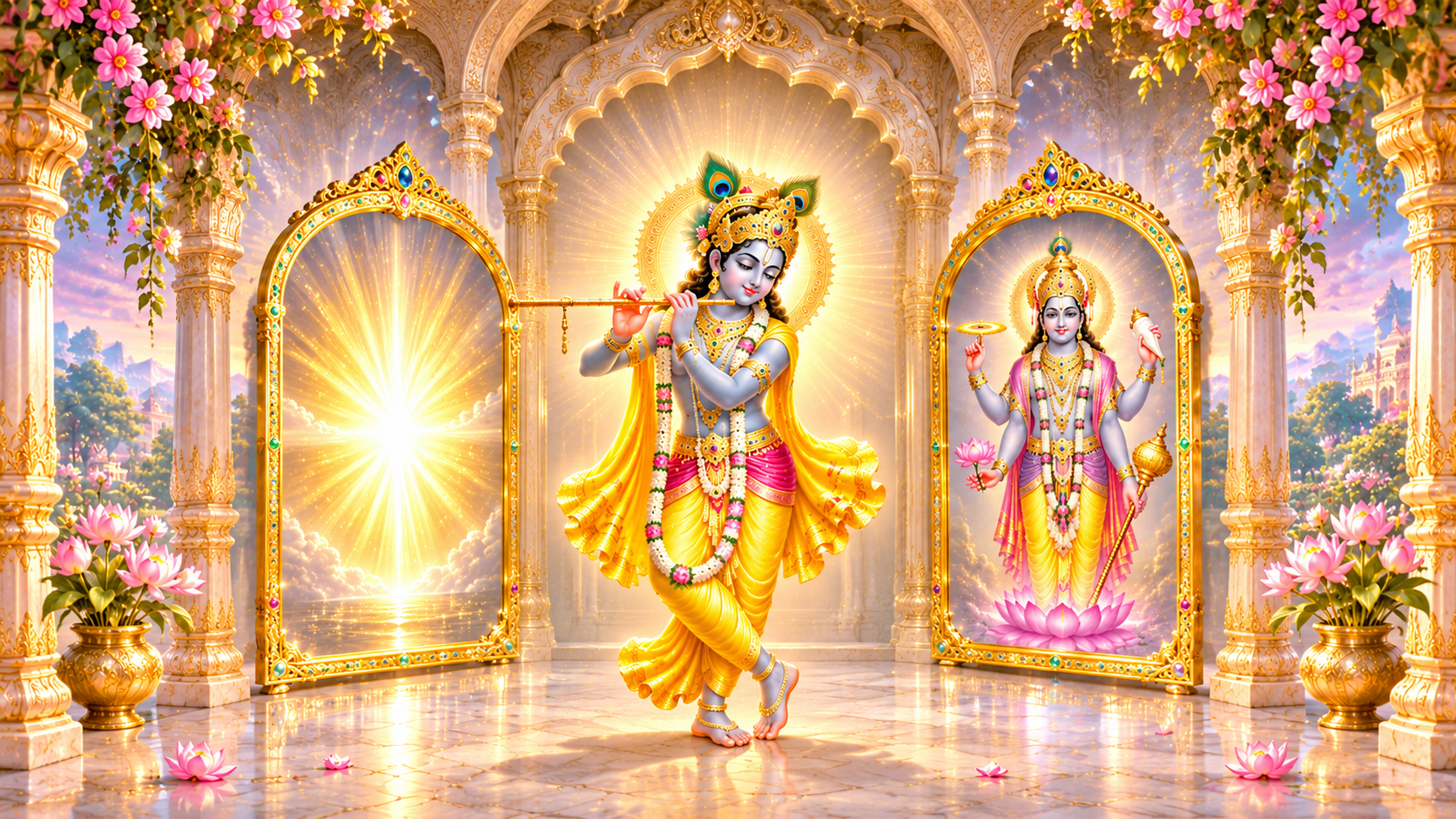
The Vedas are the supreme scriptural authority of Sanatan Vedic dharm, commonly known today as Hinduism. They proclaim Shri Krishna to be the Supreme God.
Sage Ved Vyas explains that the Supreme Lord eternally exists in three aspects: Brahm, Paramatma and Bhagawan.
The Shrimad Bhagavat Mahapuran states:
वदन्ति तत्तत्त्वविदस्तत्त्वं यज्ज्ञानमद्वयम् ।
ब्रह्मेति परमात्मेति भगवानिति शब्द्यते ॥
vadanti tattattvavidastattvaṁ yajjñānamadvayam ı
brahmeti paramātmeti bhagavāniti śabdyate ॥
bhā 1.2.11
"Those who know the one, nondual Supreme Lord describe Him as Brahm, Paramatma, and Bhagawan".
These are not three separate Gods. They are three eternal aspects of the same Supreme God, Shri Krishna.
Brahm — The Formless Aspect
The formless aspect of Shri Krishna is known as Brahm (ब्रह्म | brahma).
Every form of God possesses innumerable Divine powers. However, in the aspect of Brahm, Shri Krishna does not reveal His Divine name, form, pastimes, attributes, abode, or associates.
In this aspect, He reveals His existence as an invisible ocean of unlimited bliss.
The Shrimad Bhagavatam describes this aspect:
रूपं यत् तत् प्राहुरव्यक्तमाद्यं ब्रह्म ज्योतिर्निर्गुणं निर्विकारम् ।
ūpaṁ yat tat prāhur avyaktam ādyaṁ brahma jyotir nirguṇaṁ nirvikāram
— Shrimad Bhagavatam 10.3.24
Vedas describe You as unperceivable through words and the mind.
Those who follow the path of Gyan worship Shri Krishna in this imperceptible, formless aspect.
Paramatma — The Majestic Aspect
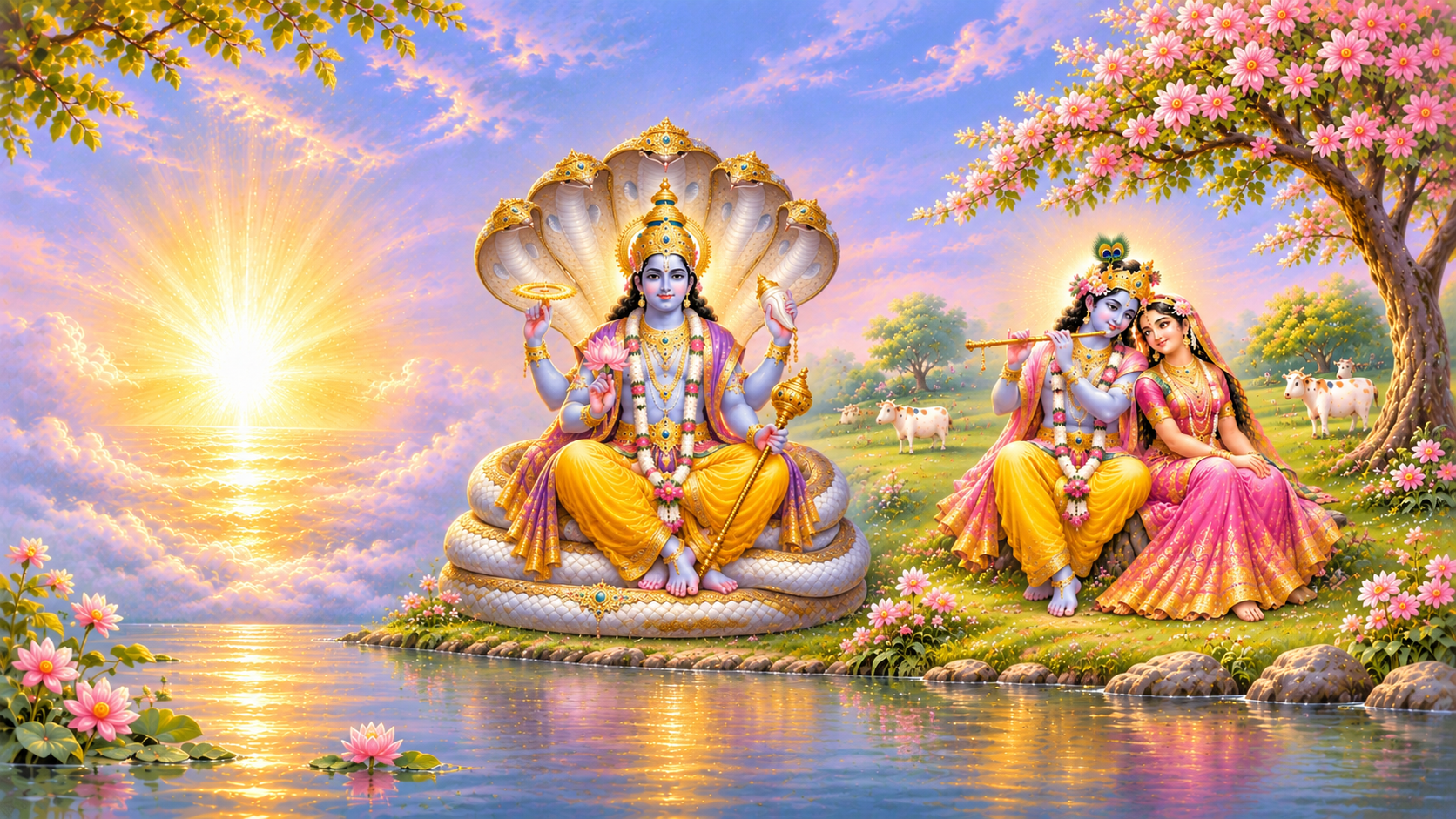
The four-armed form of Shri Krishna known as MahaVishnu is called Paramatma (परमात्मा | paramātmā).
MahaVishnu holds a conch, disc, club, and lotus in His four hands. His eternal Divine abode is Vaikunth Dham.
In this aspect, He reveals His Divine name, form, abode, and attributes. However, He does not reveal His pastimes or associates.
Vaikunth is an abode of unlimited Divine majesty. MahaVishnu's magnificent four-armed form, the extraordinary radiance (तेज) and speed (गति) of His Sudarshan Chakra, and His powerful club constantly remind devotees of His omnipotence.
Those who follow the path of Yoga, as well as devotees who worship Lord Vishnu, attain Vaikunth. There, they receive beautiful Divine forms resembling that of MahaVishnu.
They worship Him, sing His glories, and experience the bliss of His Divine majesty. However, they do not enjoy the intimate closeness with Him that devotees of Bhagawan experience.
Paramatma also resides in the hearts of all living beings. He witnesses their actions and awards the fruits of their karma.
Bhagawan — The Aspect of Divine Love
The third aspect of Shri Krishna is known as Bhagawan (भगवान् | bhagavān).
His Divine abode is Golok.
In this aspect, Shri Krishna conceals His Divine majesty, known as Aishwarya (ऐश्वर्य | aiśvarya), and descends to Earth in a human-like form to distribute Divine love to deserving souls.
Unlike the other two aspects, Bhagawan reveals all six: His Divine name, form, pastimes, attributes, abode, and associates.
He conceals His Godliness and behaves like an ordinary human being. Through His ever-new, playful, and deeply instructive pastimes, He showers His devotees with Divine love.
This is the sweetest aspect of God.
Worshipping Bhagawan is also the easiest way to attain God. Devotees are not overwhelmed by the awareness of His Divine majesty, as they are in the worship of Paramatma.
Furthermore, devotees of Bhagawan do not need to follow the arduous path of Gyan to reach the highest stage of renunciation.
Those who worship this aspect attain Divine bliss and the Divine abodes of Golok or Saket.
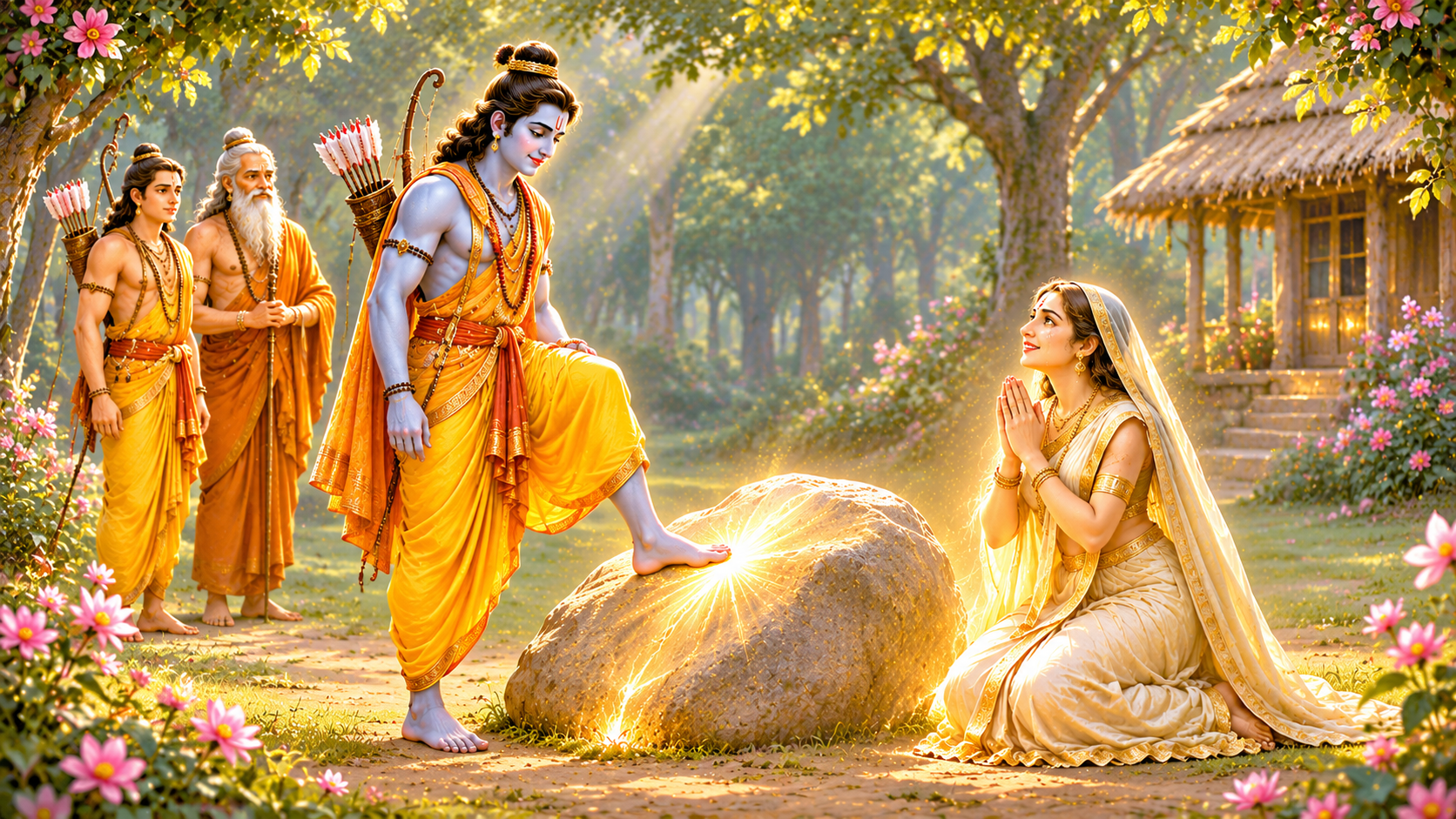
Shri Krishna and Shri Ram are examples of this aspect.
See How gyani and bhakt Forsake the World Differently
If All Three Are the Same God, Are They Really Different?
If Brahm, Paramatma, and Bhagawan are all the same Supreme God, why are their characteristics different?
Consider water, ice, and vapor. All three are forms of the same substance, yet each has different characteristics. Consider:
- A thirsty person wants water. Offering ice cubes may not satisfy their immediate thirst.
- Someone suffering from fever wants water to drink. Offering vapor instead would not satisfy that need.
- Someone feeling unbearably hot might long for ice to cool themselves. Ordinary water may not provide the relief they desire.
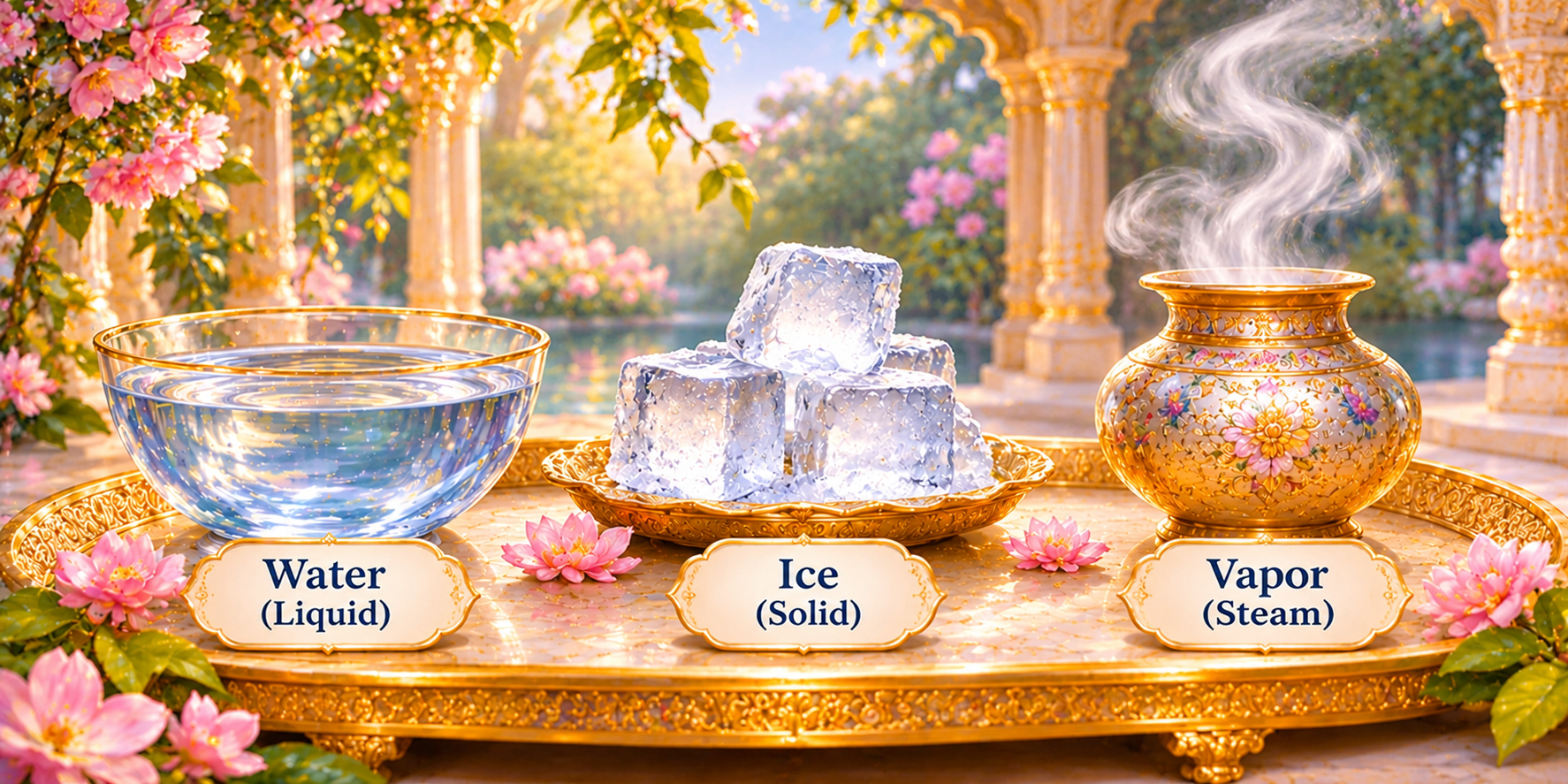
How this connects to the three aspects of God
Brahm, Paramatma, and Bhagawan are the same Supreme God. Yet the Divine bliss experienced by their devotees differs because each aspect reveals different Divine powers.
A devotee seeking the intimate sweetness of Bhagawan would not find that same experience in the majestic worship of Paramatma or the formless realization of Brahm.
The distinction is not in the identity of God, but in the Divine experience available through each aspect.
There is, however, an important difference between this analogy and the Divine reality.
Material water changes from one state to another under different conditions. The three aspects of God do not arise through transformation. All three have existed eternally, and their respective Divine characteristics are also eternal.
Understanding the Difference Through Narad Ji's Arrival
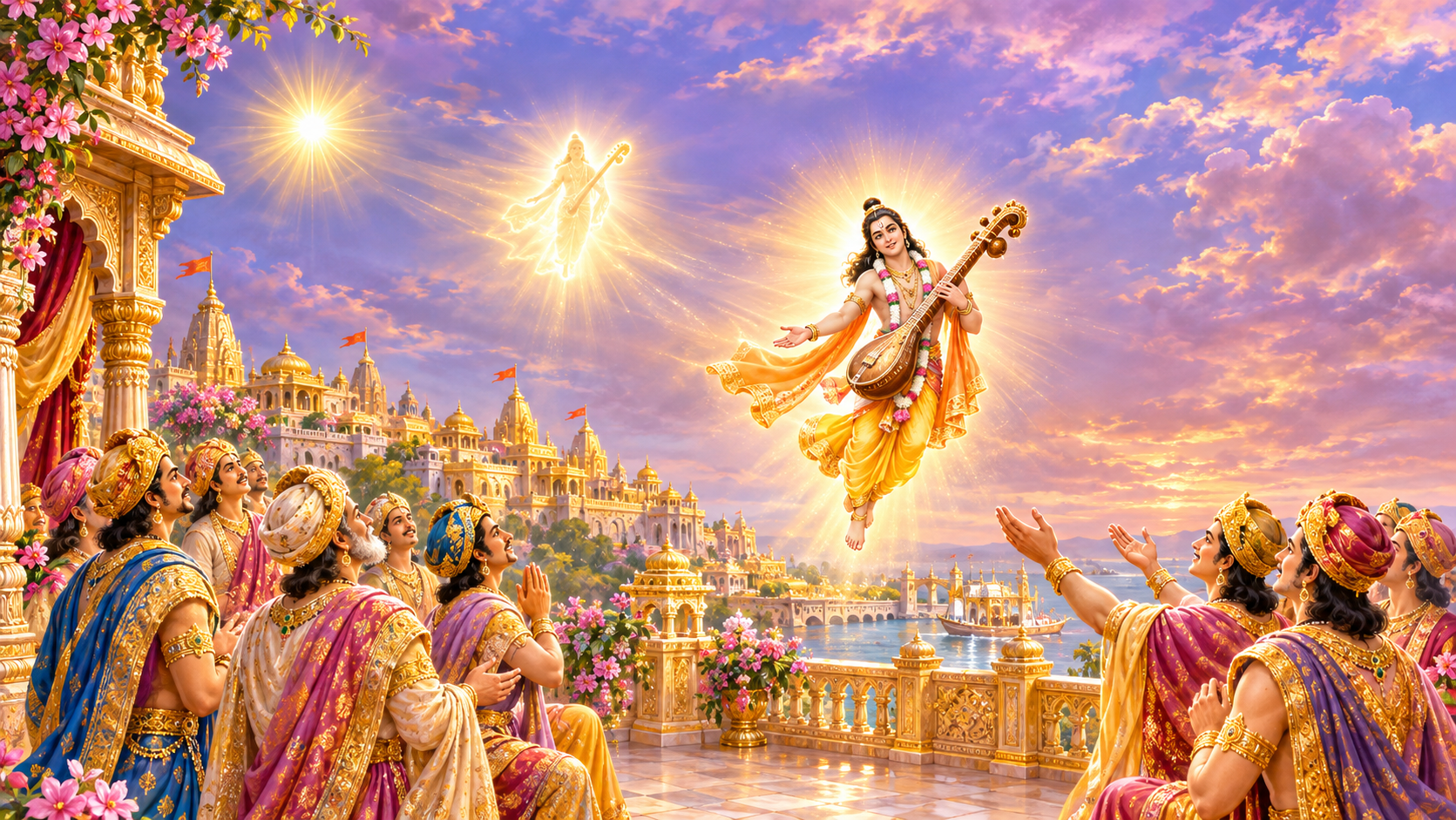
The Sanskrit poet Magha describes an incident in which Narad Ji descended from the sky toward Shri Krishna's palace in Dwarka.
चयस्त्विषामित्यवधारितं पुरा ततः शरीरीति विभाविताकृतिम् ।
विभुर्विभक्तावयवं पुमानिति क्रमादमुं नारद इत्यबोधि सः ॥
cayastviṣāmityavadhāritaṃ purā tataḥ śarīrīti vibhāvitākṛtim ।
vibhurvibhaktāvayavaṃ pumāniti kramād amuṃ nārada ityabodhi saḥ ॥
Śiśupālavadha, 1.3.
At first, the courtiers saw a brilliant light descending from the sky. They were curious about what it might be.
As the light approached, they began to discern a form within it. Realizing that a celestial being was descending, they became eager to see who it was.
Finally, as the figure came closer, they recognized Narad Ji. Their curiosity and anticipation turned into delight, and they warmly welcomed him.
This incident helps illustrate the differences between the three aspects of God.
First: Brahm
Initially, the courtiers perceived only a brilliant light, without recognizing any particular form or identity.
This is comparable to the formless aspect of Brahm.
Gyanis worship this aspect of the Supreme God, in which His name, form, pastimes, attributes, abode, and associates are not revealed.
However, the human mind is accustomed to focusing on a form. Without a visible form upon which to meditate, following the path of Gyan becomes extremely difficult for spiritual aspirants.
निराधार मन चकृत धावे ।
Second: Paramatma
As the light descended further, the courtiers recognized that a celestial being was approaching. Their curiosity gave way to eagerness.
This is comparable to Paramatma, the majestic Divine aspect worshipped by Yogis.
In this aspect, devotees experience God's Divine name, form, attributes, and abode.
Third: Bhagawan
When the courtiers finally recognized Narad Ji, they were delighted by the prospect of his company.
This illustrates the intimate experience of Bhagawan.
When God descends to Earth in a human-like form, He plays, eats, and performs other activities just as human beings do. His Divine majesty remains concealed, allowing devotees to love Him freely, without being overwhelmed by the awareness that He is God.
This was the loving sentiment of the inhabitants of Braj.
The devotees who descended from Golok knew that Shri Krishna was the Supreme God. However, the sweetness of His Madhurya made them forget His Divine majesty, or Aishwarya.
They loved Him wholeheartedly as their friend, child, or beloved, without remembering that He was the almighty Supreme God.
Occasionally, they became aware of His Godliness. At such moments, Shri Krishna, through His Mohini Maya, made them forget His Divine majesty once again.
Thus, their intimate love remained free from the overwhelming awareness of His omnipotence.
Why Does God Manifest in Three Aspects?
Every Jeev has different Sanskars, which give rise to different affinities and preferences.
God is like a Kalp Vriksh, a wish-fulfilling tree that grants what one desires.
Out of His graciousness, He eternally manifests in three aspects to accommodate the different devotional sentiments, or Bhav, of His devotees.
He also reveals the results of worshipping each aspect, allowing every Jeev to choose the form of God they wish to worship.
Thus, the three aspects accommodate different devotional aspirations, while all remain manifestations of the same Supreme God.
Conclusion
There is only one Supreme God: Shri Krishna.
He eternally exists in multiple Divine forms, including Brahm, Paramatma, and Bhagawan.
Devotees who worship any of these aspects can attain God realization. However, the Divine bliss experienced through each aspect differs according to the powers revealed in that form.
Those who seek the easiest path and the sweetest, highest form of Divine bliss worship Bhagawan.
Therefore, a spiritual aspirant should understand the characteristics of these Divine aspects and choose the form of God that corresponds to their devotional sentiment.
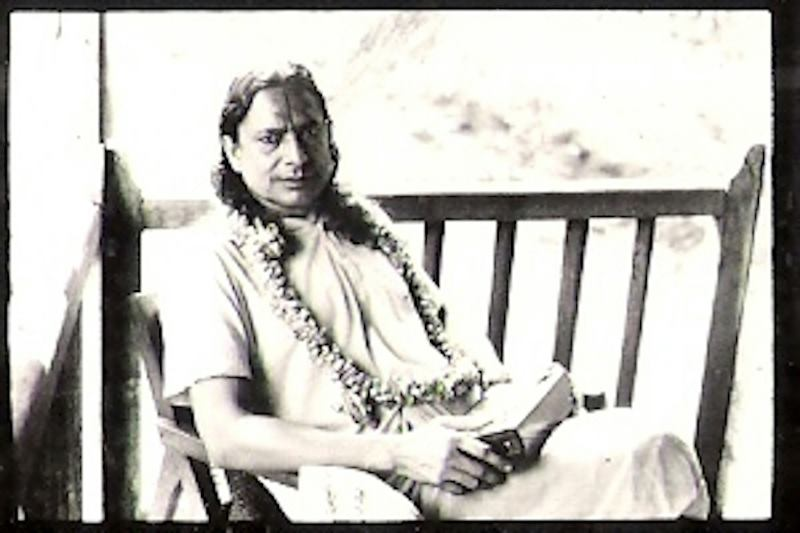
Jagadguruttam Shri Kripalu Ji Maharaj summarizes this teaching in Bhakti Shatak, verse 21:
तीन रूप श्री कृष्ण को, वेदव्यास बताय ।
ब्रह्म और परमात्मा, अरु भगवान कहाय ॥
According to Ved Vyas, Shri Krishna eternally exists in three aspects: Brahm, Paramatma, and Bhagawan.