How Can God Be Both Formless and Have a Personal Form?
How can God be formless yet possess a personal form—and how could such a form remain omnipresent?
📍 Where You Are in the Inquiry
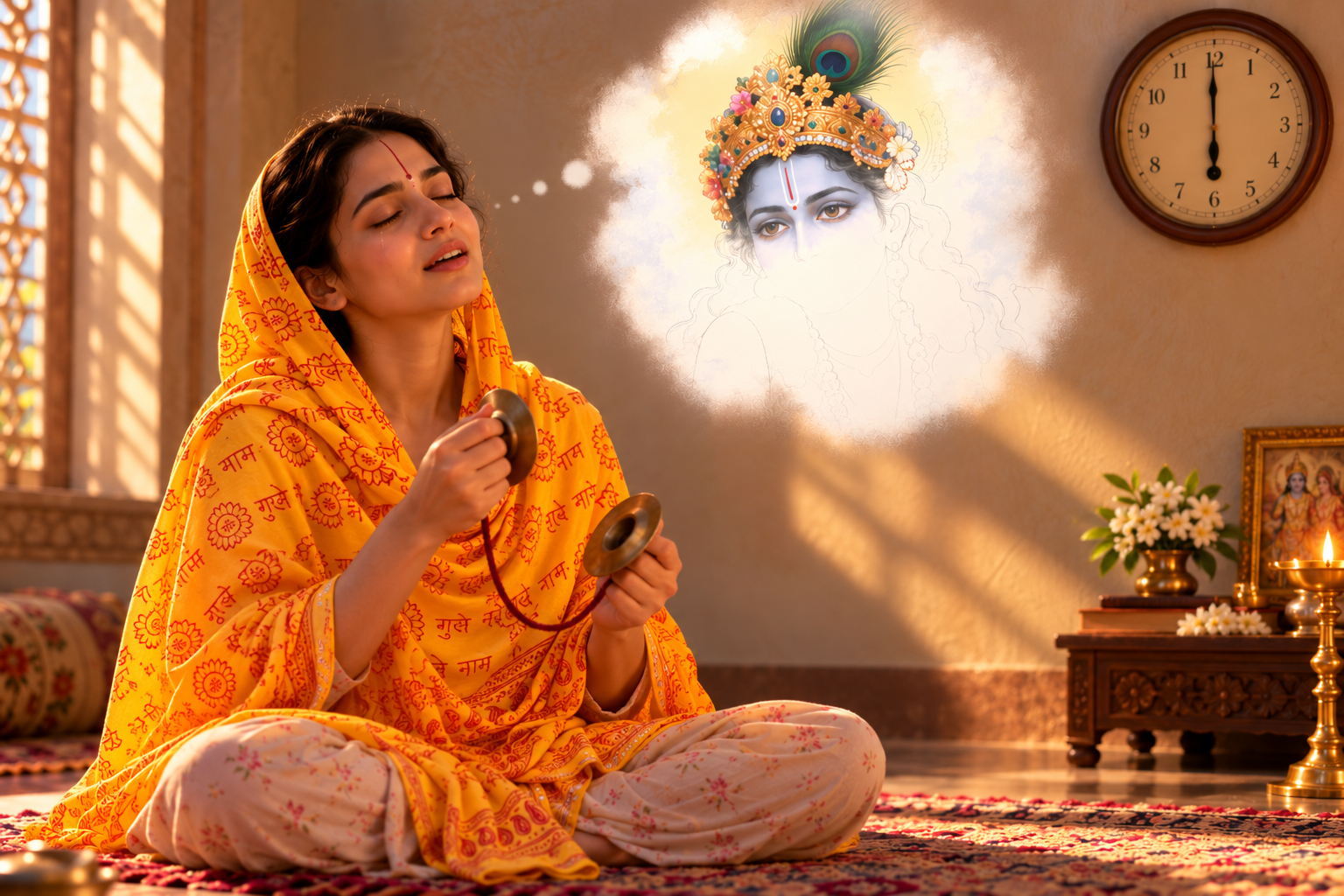
Bhakti entails loving remembrance of God. The preceding inquiry established why the mind must remain absorbed in God rather than merely performing external devotional actions.
But this raises a more fundamental question about the God whom the devotee remembers: Does God have a personal form at all?
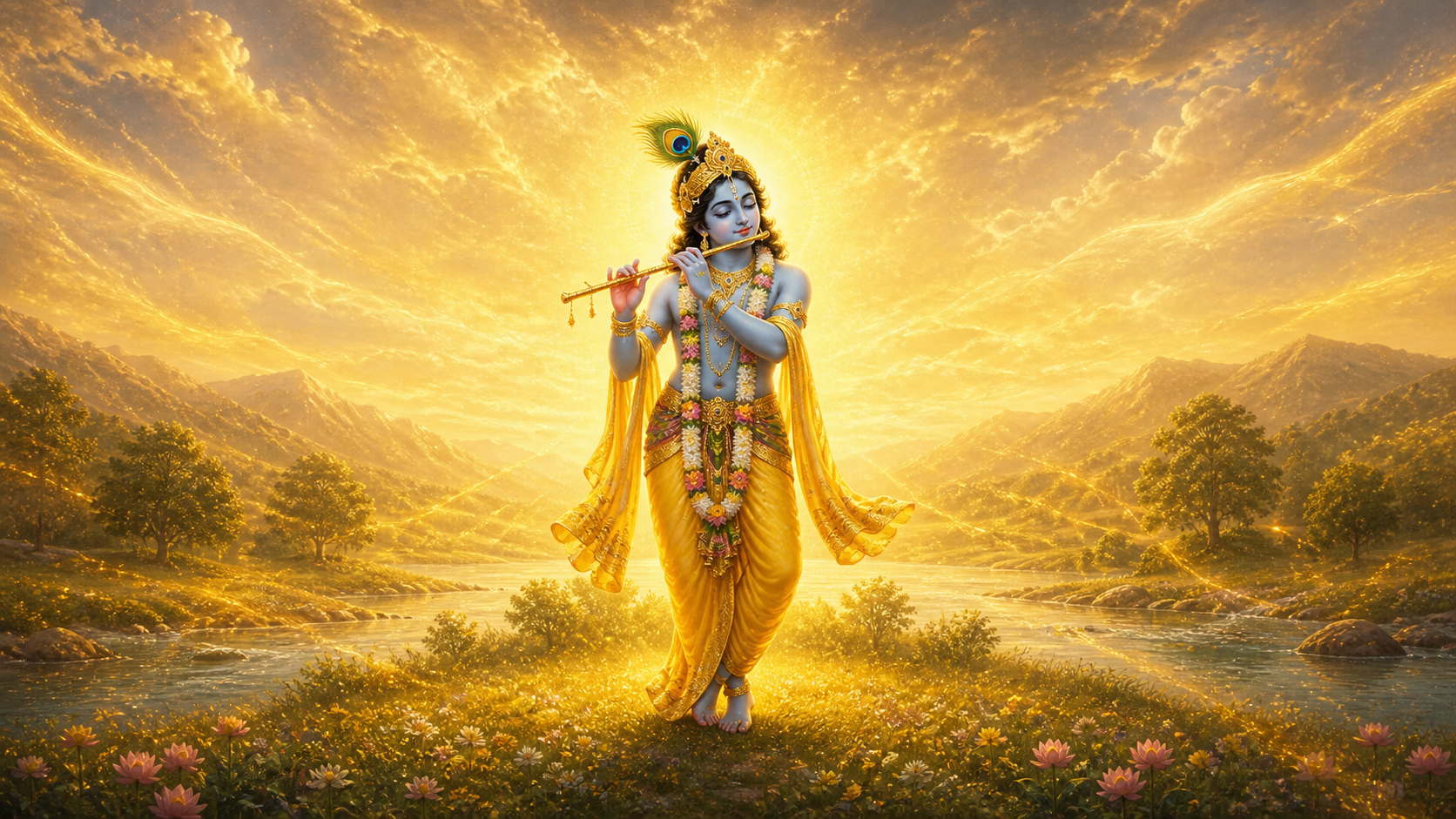
Some question how there can be a Divine descension if God is Nirakar (निराकार | nirākāra)—an impersonal Divine existence without personal form. And if God does possess a personal form, another difficulty immediately follows: how can He still remain omnipresent throughout the universe?
The Vedas resolve this apparent contradiction by revealing that both are simultaneously true.
God Has Both an Impersonal and a Personal Form
A simple experiential analogy can help us see why this initially appears contradictory. Water can exist as liquid water or as vapor, but in ordinary material experience, we understand one state to change into another. When water becomes vapor, we do not expect that same water to remain simultaneously present in its previous state. We may unconsciously apply the same material logic to God: if Brahm is Nirakar, how can He simultaneously possess a Sakar Divine personal form?
But the Vedas describe seemingly opposite qualities of God:
अपाणिपादो जवनो ग्रहीता
apāṇipādo javano grahītā
“God does not have a personal form, yet He also has a personal form.”
This is not a choice between two competing descriptions of God. Rather, the material assumption that makes the two appear mutually exclusive must itself be examined. Does a limitation observed in material transformations necessarily apply to the omnipotent God?
The Vedas further state:
दे वाव ब्रह्मणो रूपे मूर्तं चैवामूर्तं च ।
de vāva brahmaṇo rūpe mūrtaṁ caivāmūrtaṁ ca
“God has two forms: one is an abstract, impersonal Divine existence and the other is His Divine personal form.”
Thus Brahm has both an impersonal aspect, Nirakar, and a Divine personal form, Sakar (साकार | sākāra).
Yet accepting a personal form seems to create another problem. If God has a form, how can He permeate the universe? And if that form exists everywhere, why don't we see Him?
A Formless Soul Also Possesses a Body
To resolve this difficulty, the Vedas draws attention to something closer to our own experience: the soul itself is formless.
बालाग्रशतभागस्य शतधा कल्पितस्य च ।
भागो जीवः स विज्ञेयः स चानन्त्याय कल्पते ॥
bālāgraśatabhāgasya śatadhā kalpitasya ca
bhāgo jīvaḥ sa vijñeyaḥ sa cānantyāya kalpate
(Shvetashropanishad 5/9)
The scriptures also describe the soul as subtle and without material sense organs:
निर्गुणं श्रोत्ररहितं सूक्ष्ममव्ययम् ।
nirguṇaṁ śrotrarahitaṁ sūkṣmam avyayam
Yet this formless soul possesses a physical body.
In the same way, the fact that Brahm is Nirakar does not prevent Him from possessing a body. The crucial distinction lies in the nature of the two bodies.
The soul is under the bondage of Maya (माया | māyā). Consequently, it receives a material body according to the actions of its previous lives.
God is not under Maya. Through His power of Yogmaya (योगमाया | yogamāyā), He possesses an eternal Divine body.
The comparison therefore does not make God's body equivalent to ours. It establishes that being formless does not, by itself, rule out possessing a body.
Why Can't We See God's Divine Form?
The objection then changes.
If God really possesses a personal form and is omnipresent, shouldn't we be able to see Him?
Shri Maharaj Ji explains that this expectation overlooks the difference between Divine reality and material perception.
God's body is Divine. Our eyes are material.
A Divine body cannot be perceived by material eyes. Our inability to see God's personal form therefore does not establish His absence.
When a soul becomes qualified through selfless Bhakti (भक्ति | bhakti), God bestows His Grace and grants Divine vision. With that Divine vision, the soul sees God's Divine personal form everywhere—omnipresent throughout the world.
The experience of countless Saints bears witness to this reality.
Where This Inquiry Leads
God's impersonal and personal aspects are not mutually exclusive alternatives. The Vedas establish both: Brahm is Nirakar, and Brahm also possesses a Sakar Divine personal form.
Nor does God's personal form limit His omnipresence. The apparent contradiction arises when a Divine body is assumed to operate like a material body. The soul's own condition already demonstrates that formless existence and possession of a body are not inherently incompatible; the decisive difference is that the soul's body is material, whereas God's eternal body is Divine.
But another question now arises.
Even if Nirakar Brahm can possess an eternal Divine personal form, how can the formless actually take form? Are we simply asserting that God can do so because He is God, or can this apparent contradiction itself be understood?
Go Deeper
- God's Contradictory Qualities
- Aspects of Brahm
- If God Is Everywhere, Why Can't I See Him?
- Pratyaksh Praman — Perceptual Evidence
- Brahm — The Supreme God
- Sat-Chit-Anand
Continue the Inquiry
(Part 1 of 4 — Impersonal and Personal Aspects of Brahm — The Clarity)
We have established that God's impersonal existence and His Divine personal form are simultaneously true, and that His Divine form does not compromise His omnipresence. The next question goes directly to the apparent impossibility itself: How can Nirakar God take form?
- ⬅️ Previous: Why Is Loving Remembrance of God Essential?
- ➡️ Next: Can Nirakar God Really Take Form?
- 🔙 Back to Hub: Impersonal and Personal Aspects of Brahm — The Clarity