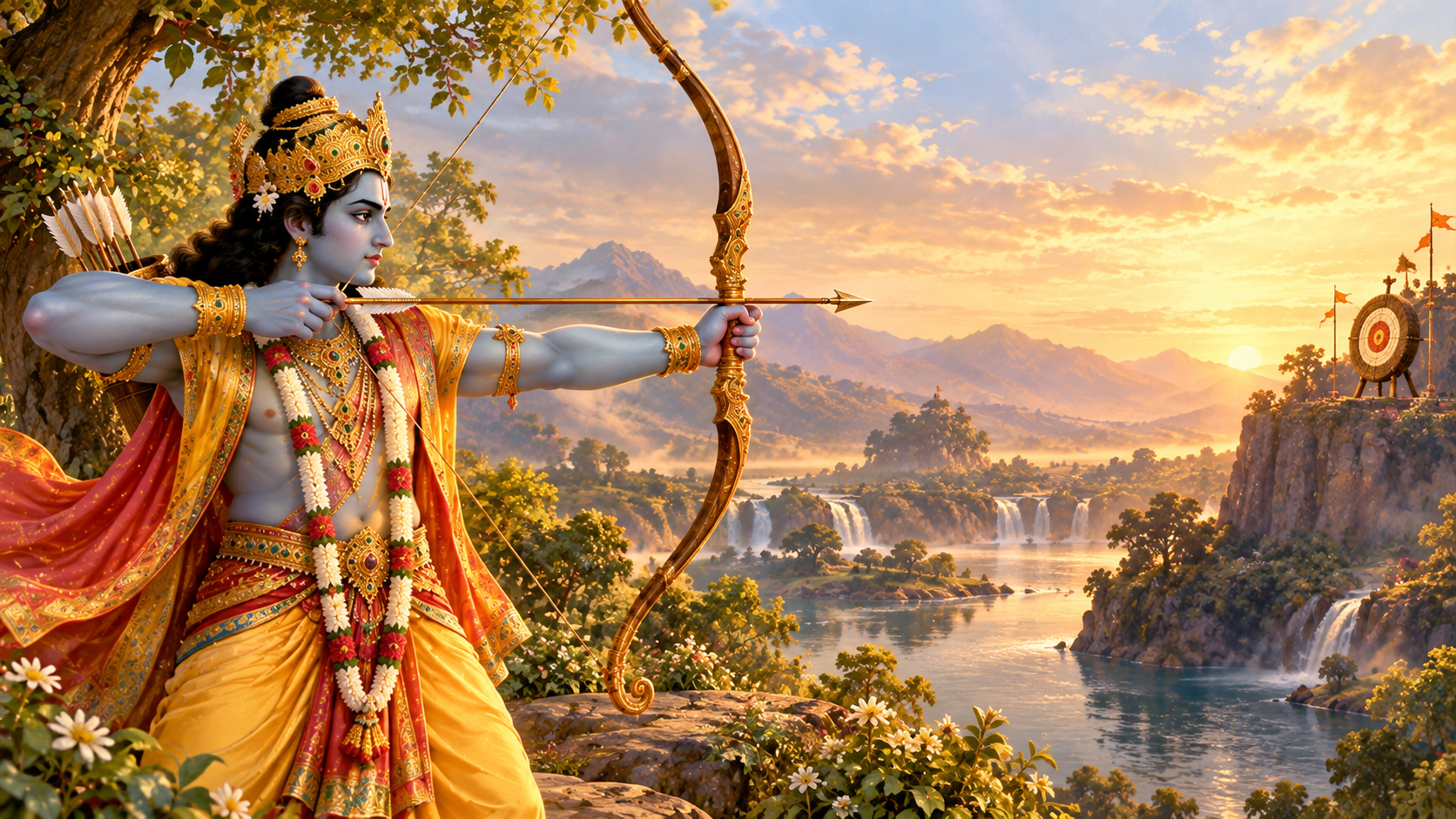
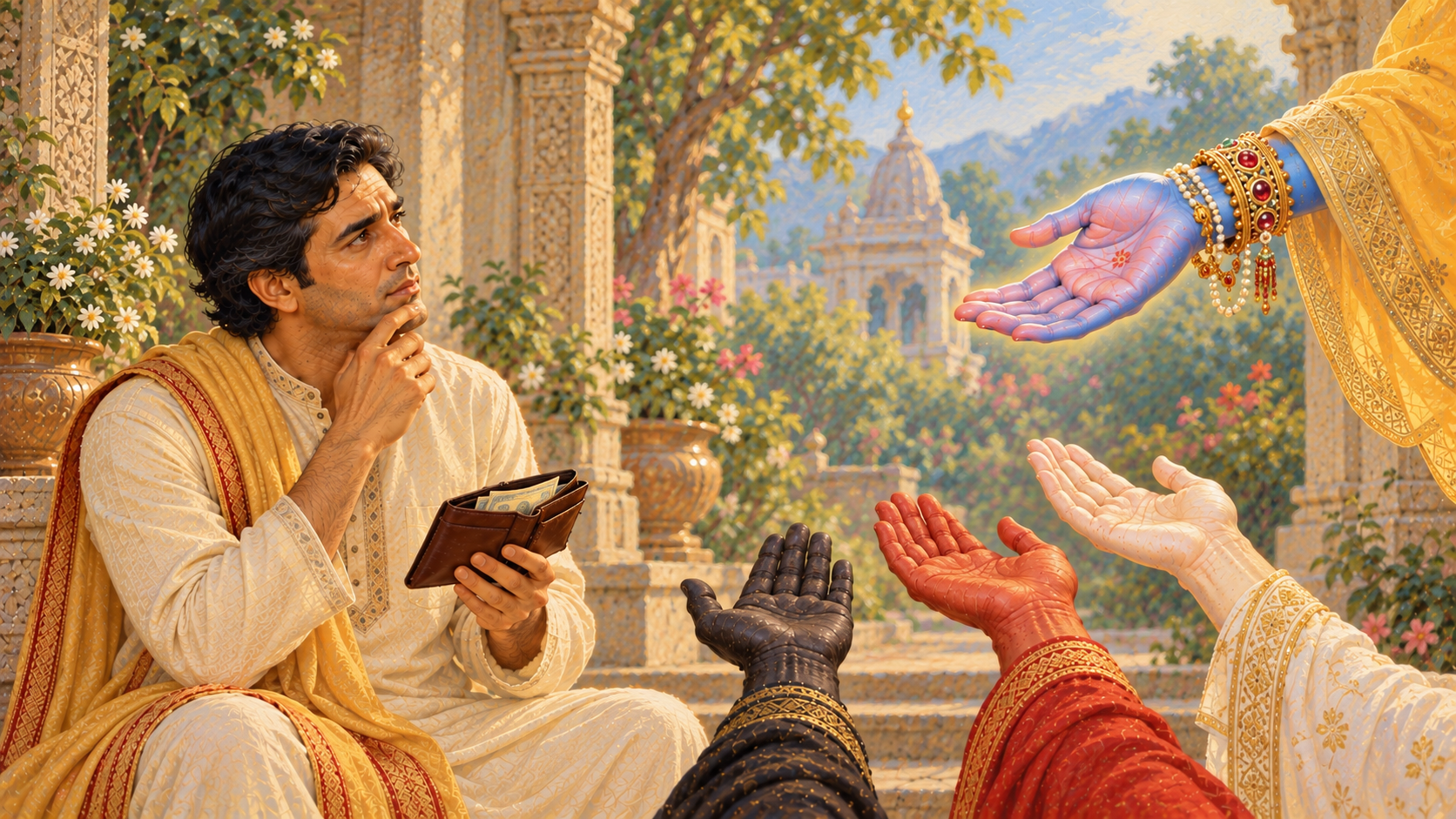
Can Nirakar God really take form?
If Nirakar God has no form, how can He manifest personally without His formless, omnipresent existence disappearing?

📍 Where You Are in the Inquiry
The previous article established that the Vedas describe Brahm as both Nirakar and Sakar: God has an impersonal Divine existence and also an eternal Divine personal form. It also established that His Divine form does not prevent Him from remaining omnipresent.
But the central difficulty has not disappeared. How can the formless God actually take form?
The objection assumes that something without form cannot possibly possess or assume form. Shri Maharaj Ji addresses that assumption first through God's unlimited power and then by examining whether the assumption even holds within the material world.
Could the Creator of the Universe Not Take a Form?
God gives form to uncountable subtle elements and creates the entire universe. Shri Maharaj Ji therefore turns the objection around: Could God, Who by merely smiling gives form to uncountable subtle elements and creates the entire universe, not take a form Himself?
God is all-capable and all-powerful. His powers are unlimited, inconceivable, and Divine.
If God can bring the universe into existence, taking a personal form cannot be regarded as something beyond His capability.
But the reasoning does not stop simply at God's omnipotence. Even within the material world, the assumption that the formless cannot give rise to form does not hold.
Even Formless Elements Give Rise to Form
The Vedas describe the progression of creation:
तस्माद्वा एतस्मादात्मन आकाशः संभूतः । आकाशाद्वायुः । वायोरग्निः ।अग्नेरापः ।अद्भ्यः पृथिवी ।
पृथिव्या ओषधयः । ओषधीभ्योऽन्नम्। अन्नात्। पुरुषः । स वा एष पुरुषोऽन्नरसमयः ॥
तैत्तिरीयोपनिषद्
tasmād vā etasmād ātmana ākāśaḥ sambhūtaḥ । ākāśād vāyuḥ....
“From God, space was created. From space, air was created. From air, fire was created. From fire, water was created. From water, earth was created. From earth, vegetation was created, and from vegetation, grain was created.”
The sequence proceeds:
God → space → air → fire → water → earth → vegetation → grain
Space is originally without form and attributes. Yet through this progression arises earth, which possesses form and qualities that can be felt and perceived.
Thus, even within material creation, that which lacks perceptible form can give rise to something possessing form.
If this occurs within the material world, Shri Maharaj Ji challenges the reasoning that the all-capable, all-powerful God could somehow be incapable of possessing a personal form.
Yet another objection remains.
Perhaps God can take a form—but if He does, what happens to His formless, omnipresent existence?
Does Taking Form Mean the Formless God Must Disappear?
Our ordinary experience can make this seem unavoidable.
When a cloud releases its rainwater, the cloud eventually ceases to exist. And when a cloud forms from vapor, we no longer see the vapor existing in its former state.
From such material transformations, one might reason similarly about God:
If omnipresent, formless God takes a personal form, perhaps His formless existence must cease. Or perhaps by becoming personally manifest, He can no longer remain all-pervasive.
Shri Maharaj Ji rejects this fear because it imposes the limitations of material causes upon God.
Material Causes Cannot Define God's Capabilities
God possesses uncountable and unlimited power. He is all-capable and the Cause of all causes.
Material causes, by contrast, are limited.
If material causes possessed powers enabling them to do anything and everything, they would no longer be material causes.
Therefore, the behavior of vapor, clouds, rainwater, or other material transformations cannot establish what the all-powerful and all-capable God is capable of doing.
The mistake is not merely in reaching the wrong conclusion. It is in using material reasoning as the measure of Divine capability.
God's manifestation in a personal form therefore does not require His omnipresent, formless aspect to cease.
Where This Inquiry Leads
Nirakar God can possess a personal form because the limitation being imposed upon Him does not exist.
Even within material creation, the Vedas describe a progression in which that which is without perceptible form gives rise to that which possesses form. More fundamentally, God is not a material cause governed by the limitations observed in material transformations. His powers are unlimited, inconceivable, and Divine.
Therefore, God's personal manifestation does not mean that His formless, all-pervasive existence disappears.
But this answer raises a sharper question about the meaning of God's unlimited power.
If God is all-powerful and all-capable, does that mean absolutely anything whatsoever is possible—even something contrary to God's own nature?
Go Deeper
Continue the Inquiry
(Part 2 of 4 — Impersonal and Personal Aspects of Brahm — The Clarity)
The limitation of material causes cannot be imposed upon God. But saying that God is all-powerful immediately raises another question: Does Divine omnipotence mean God can do absolutely anything, including what would contradict His own nature?
- ⬅️ Previous: How Can God Be Both Formless and Have a Personal Form?
- ➡️ Next: Does “All-Powerful” Mean Logically Anything Whatsoever? /doctrine/nirakar-sakar-brahm/a/does-all-powerful-mean-logically-anything-whatsoever/
🔙 Back to Hub: Impersonal and Personal Aspects of Brahm — The Clarity