Why Does Hinduism Suppress Women? (Myth vs. Reality)
Does Hinduism suppress women? Jagadguru Shri Kripalu Ji Maharaj explains why being born a woman is a spiritual blessing and how Vedic Dharma elevates women.
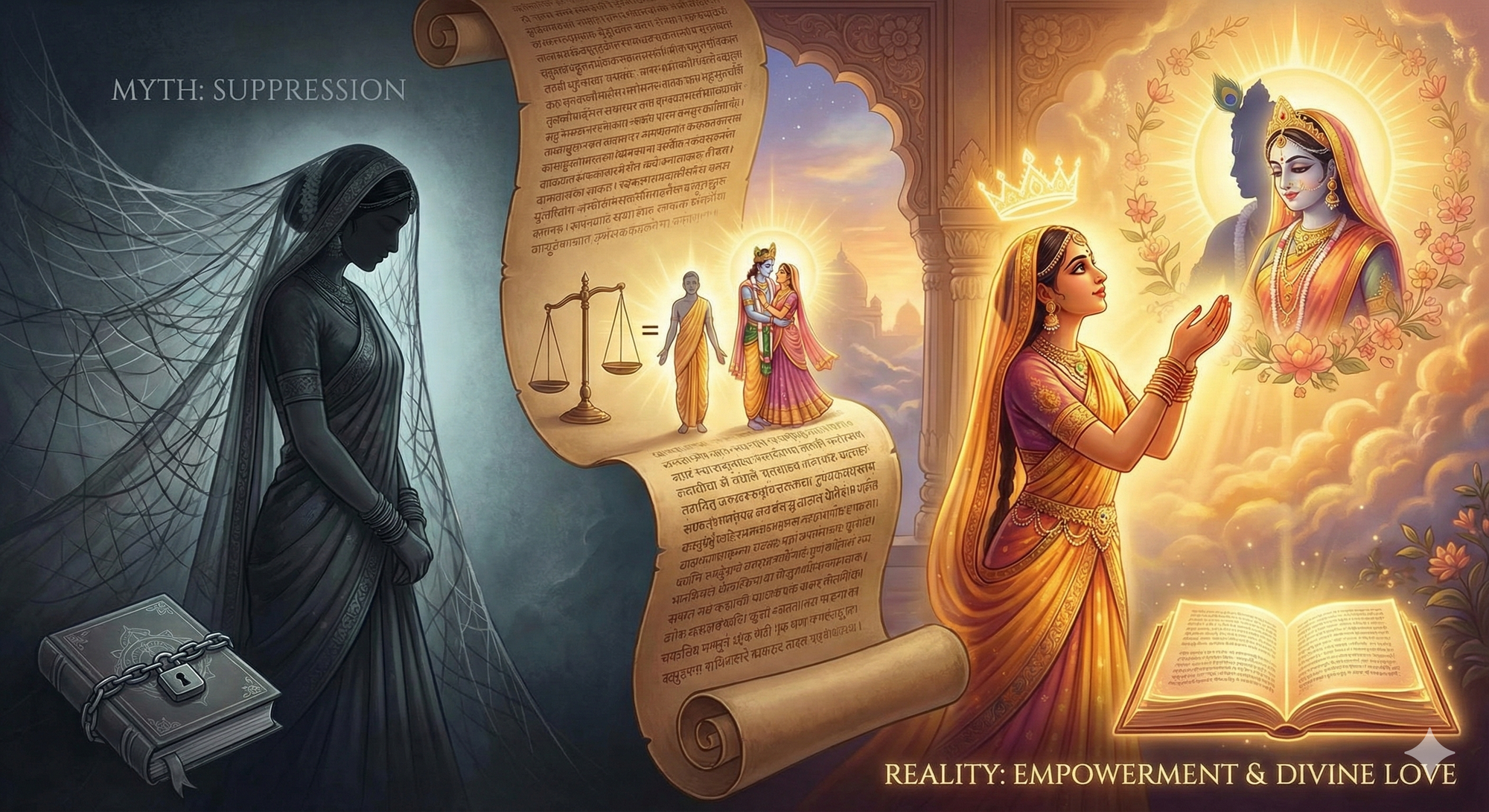
One of the most common criticisms labeled against Hinduism is that it is patriarchal and treats women as second-class citizens. However, if we look at the original scriptures and the philosophy of Sanatan Dharma (Hinduism), we find the opposite truth.
Jagadguru Shri Kripalu Ji Maharaj explains that the status of women in the Vedic tradition is not just equal to men, but often superior. He compares the Vedic perspective with other religious texts to highlight this distinction.
The Story of Creation: Bone vs. Divine Resolve
In the Bible, the story of creation suggests a hierarchy. The scriptures state that God created the man (Adam) first. However, when it came to creating a woman, God did not simply command it; He took a part of the man's body.
"So the Lord God caused a deep sleep to fall upon the man, and he slept; then he took one of his ribs and closed up its place with flesh. And the rib that the Lord God had taken from the man he made into a woman and brought her to the man." — Genesis 2:21-22
Maharaj Ji invites us to think about this logically: If the Almighty could create the sun, stars, and the entire universe just by His divine will, why did He need a physical bone to create a woman? This narrative implies that woman is a byproduct of man, created from him and subordinate to him.
In contrast, the Hindu Vedas describe the creation of Manu (the first man) and Shatarupa (the first woman) differently. The Supreme Lord, through His divine Sankalpa (resolve). From the right side appeared the man, and from the left side appeared the woman. Both were created simultaneously, from the same source, and by the same method. There is no question of one being superior or inferior; they are both a direct manifestation from the Divine Lord.
Shrimad Bhagavatam (3.12.52–54) describes Manu and Shatarupa emerging from Brahma's body. However, Brahma is not an independent creator. Shri Krishna is the ultimate cause of creation, and Brahma performs his assigned role through the power bestowed by the Lord.
Indeed, Brahma himself prays to the Lord that, while carrying out creation, he should not develop the pride of being its independent creator (Bhagavatam 2.9.29–30).
Thus, although Manu and Shatarupa emerge through Brahma, the power behind their creation belongs to the Supreme Lord.
Marriage Vows: "Obey" vs. "Empress"
This difference in status is also reflected in traditional marriage vows. In traditional Christian theology, the wife is often instructed to be submissive.
"Wives, submit yourselves unto your own husbands, as unto the Lord. For the husband is the head of the wife..." — Ephesians 5:22-23
Based on this, traditional vows historically required the woman to promise to "love, cherish, and obey" her husband.
In a Vedic marriage, the perspective is radically different. The groom welcomes the bride into his home not as a servant, but as a Samragyi (साम्राज्ञी, sāmrājñī)—an Empress. He promises to treat her with the dignity of a queen who reigns over the household. The husband pledges his devotion, acknowledging her elevated status in his life.
The Balanced Role of a Wife
The Shrimad Bhagavatam describes the ideal devotion of a wife (pativrata dharma) as a path to spiritual elevation, promising her residence in the celestial abodes (Svarga). She is encouraged to remain faithful in thought and deeds regardless of her husband's physical or financial status.
However, this loyalty is not blind servitude. The same scripture provides a crucial counter-balance: a wife is permitted to abandon her husband if he is spiritually degraded (pataki) or sinful. This proves that her dharma is rooted in spirituality, not merely in serving a man.
Women Placed on An Equal or Higher Pedestal
Beyond the social rules of Varnashrama Dharma (social duties), the spiritual reality of Hinduism places the women on an equal or higher pedestal.
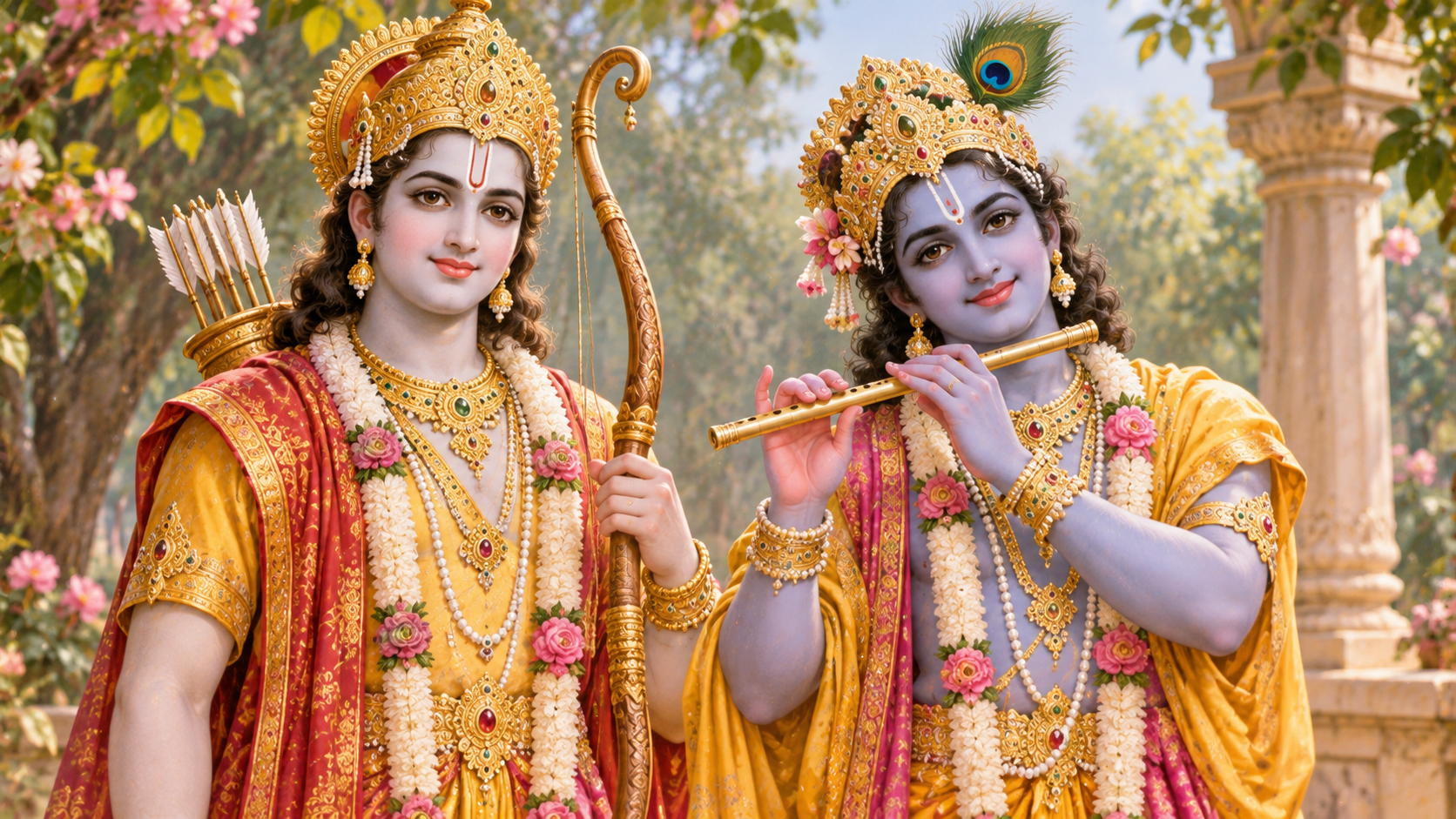
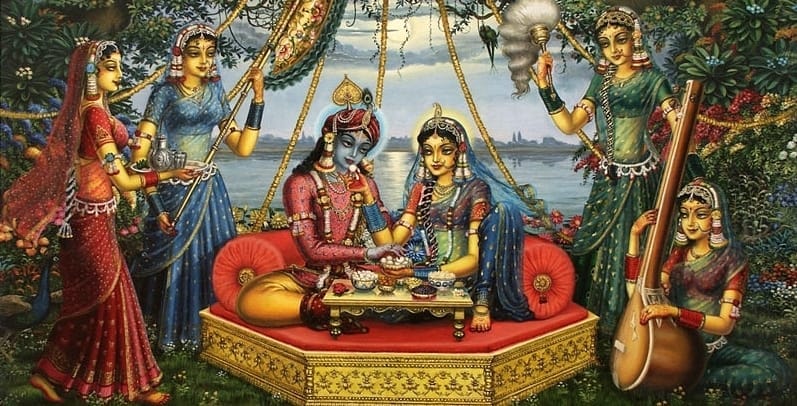
The Supreme Lord is eternally present as both Radha and Krishna. Though they are one and the same, the dynamic of their love is unique: Shri Krishna, the Lord of the Universe, worships Shri Radha. He is the energetic (Shaktiman), but She is the Energy (Shakti) that empowers Him.
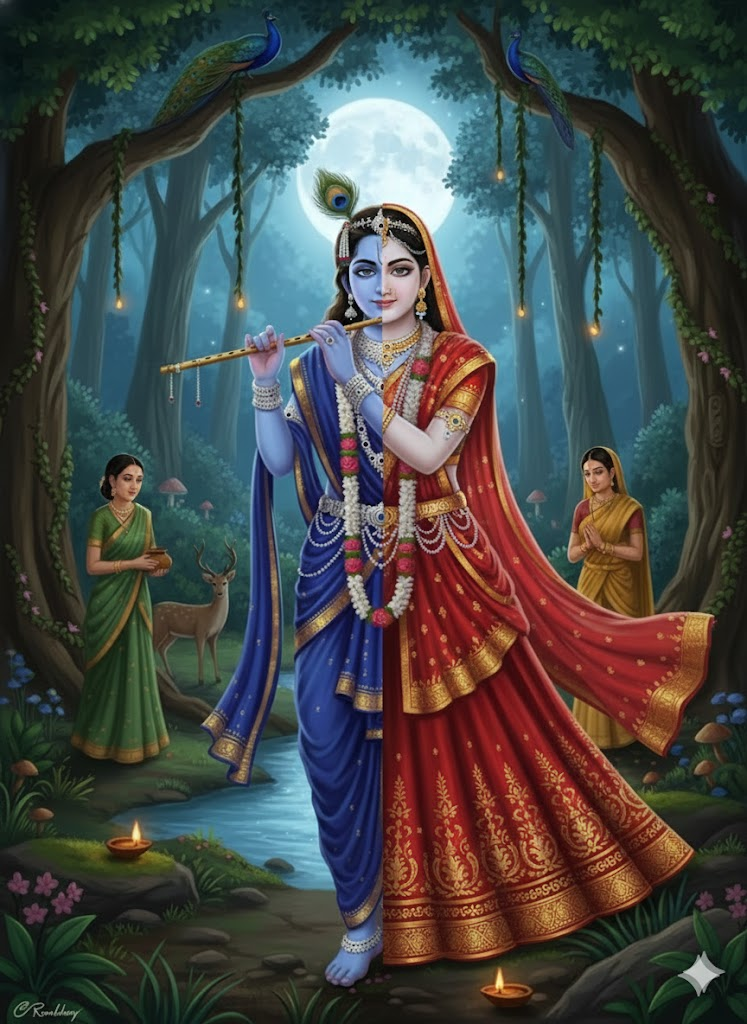
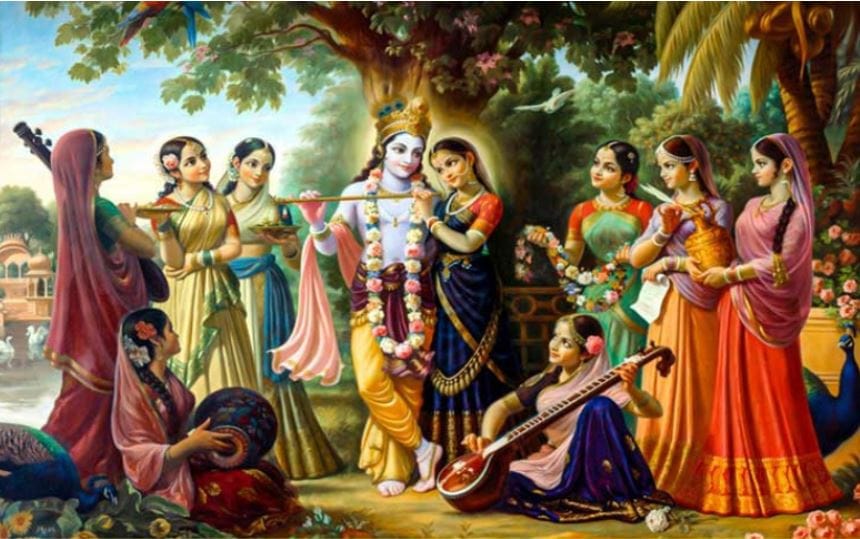
This supremacy extends to Their devotees. The most intimate and elevated devotees in existence are the Ashta Maha Sakhis (The Eight Grand Friends of Radha), such as Lalita and Vishakha. Their status is so high that the governors of the brahmand (universe), Lord Brahma and Lord Shankar, bow down to the dust of their feet.
Superlative State of Prem is Found Only in Women
Because we mistakenly identify ourselves with our material bodies, a woman may find it easier to imagine herself in the female form of a Gopi during Roopdhyan. It is easier for women to naturally accept Shri Radha as their Swamini (Her Ladyship) and Shri Krishna as their Divine Beloved. So, women have a natural advantage in cultivating Prem (divine love).
A man may initially find this more difficult because he is accustomed to identifying with a male body. This is only a practical difference in visualization. The soul itself is neither male nor female, and both are equally eligible to practise Madhurya Bhava.
Those who follow in the footsteps of these Ashta Maha Sakhis and love Shri Radha Krishna with utterly selfless madhurya bhava (divine sweet love) attain the highest status among all perfected devotees.
In fact, the Puranas describe that Lord Brahma, the Creator, performed severe penance for thousands of years. His goal was not to become one of these Gopis—he knew he did not have the capacity for that high status. He simply prayed to obtain a speck of the dust from their feet. Despite his power and penance, He could not attain their foot dust. Such is the elevated status of these women.
Conclusion
While social customs may have fluctuated over centuries, the core philosophy of Sanatan Dharma is clear. Whether in the story of creation, the vows of marriage, or the highest echelons of divine worship, the woman is never seen as a subordinate. Shri Radha is Shri Krishna and they are the epitome of divinity. Amongst the sadhan siddha devotees, women with selfless madhurya bhava hold the supreme seat.
Thus, according to the core tenets of Sanatan Dharma, being born a woman is a blessing, not a curse.
Quick Review: Myth vs. Reality
- Creation Story: While other texts imply woman is a "byproduct" (created from a rib), the Vedas state man and woman were created simultaneously as equal halves from the Divine Lord.
- Marriage Status: Traditional Vedic vows do not ask a woman to "obey." Instead, the groom welcomes her as a Samragyi (Empress) who reigns over his home.
- Rights of a Wife: A wife's loyalty is not blind slavery; scriptures permit her to abandon a husband who is sinful or spiritually degraded.
- Theological Supremacy: In the highest realm of divinity, the Feminine aspect (Shri Radha) is worshipped by the Masculine aspect (Shri Krishna).
- Spiritual Advantage: Being born a woman is considered a blessing, as the female form has a natural aptitude for Madhurya Bhava (the highest state of divine love), a status even Lord Brahma could not attain.
Further Reading and References:
 JKP Literature
 JKP Literature
- Reference:
- Creation of Men and Women - Jagadguru Kripalu Ji Maharaj
- Exclusive Content (Paid)