Manu (मनु)
Manu is the progenitor of humankind. Fourteen Manus govern successive Manvantars during one day of creator Brahma.
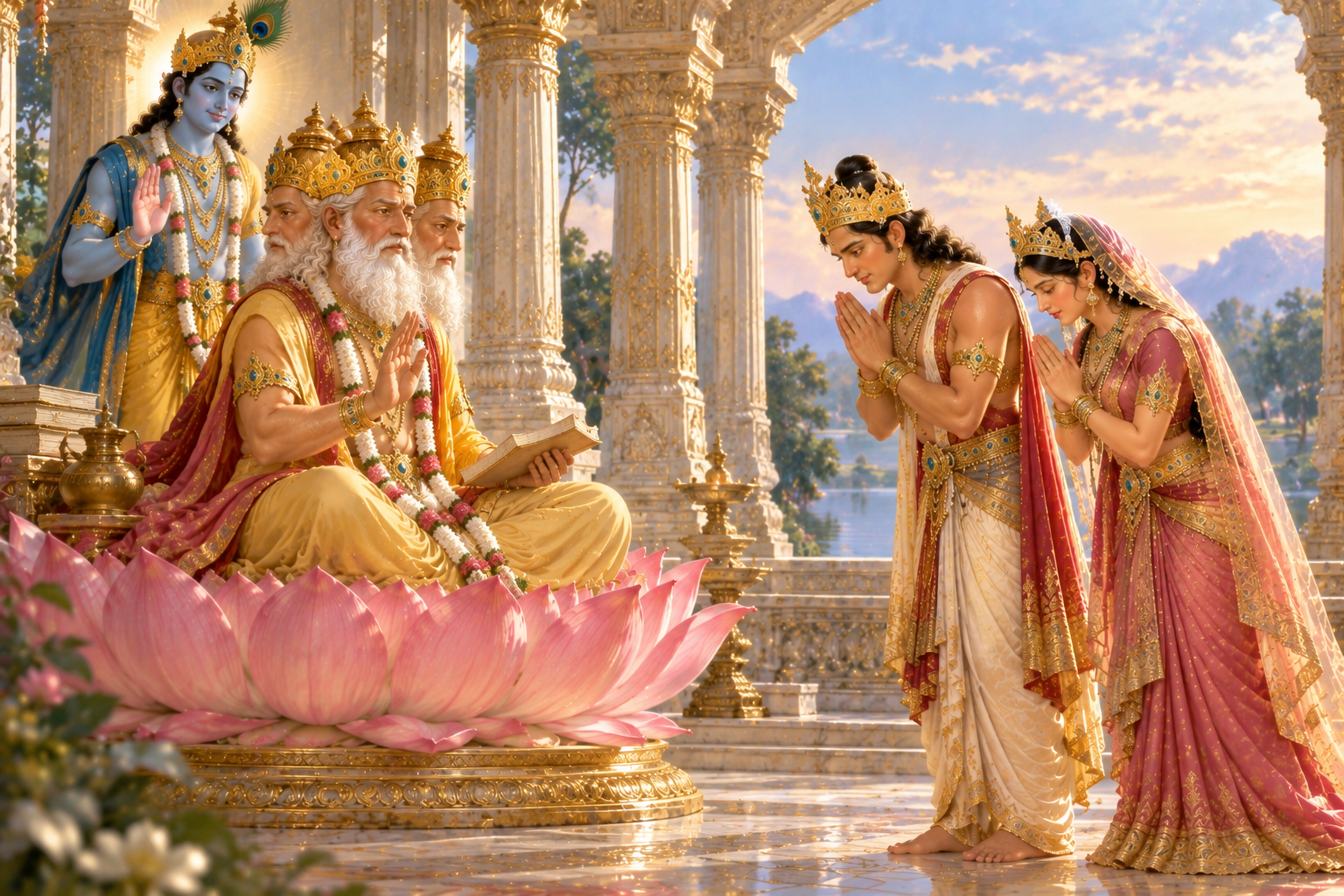
Manu (मनु | manu) is the progenitor of humankind.
When it is time for human beings to be introduced into Srishti, God, by His will, creates Manu and his wife. Human beings descend from Manu and are therefore called Manushya (मनुष्य | manuṣya).
The first Manu of the present Kalp was Svayambhuva Manu (स्वायम्भुव मनु | Svāyambhuva Manu). His wife was Shatarupa (शतरूपा | Śatarūpā).
Their sons were Priyavrata and Uttanapada, and their daughters were Akuti, Devahuti, and Prasuti. The Shrimad Bhagavatam identifies Svayambhuva Manu and Shatarupa as the parents from whom this human lineage developed.
The Fourteen Manus
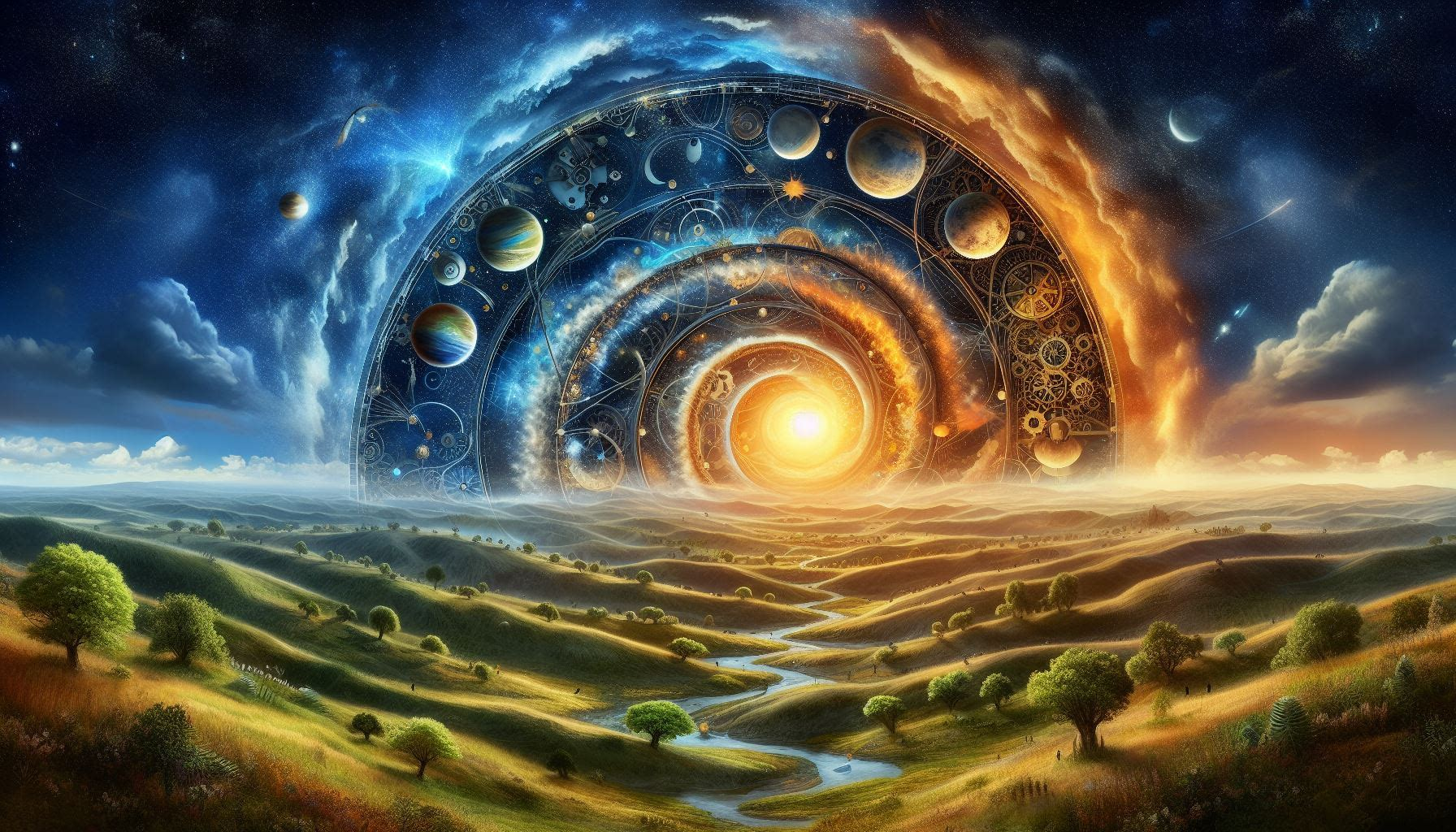
Manu is not the name of only one individual. During one Kalp, or one day of creator Brahma, fourteen Manus successively preside over fourteen periods called Manvantars (मन्वन्तर | manvantara).
Each Manvantar lasts for 71 Chatur Yugs. The fourteen Manus are:
- Svayambhuva Manu (स्वायम्भुव मनु | Svāyambhuva Manu)
- Svarochisha Manu (स्वारोचिष मनु | Svārociṣa Manu)
- Uttama Manu (उत्तम मनु | Uttama Manu)
- Tamasa Manu (तामस मनु | Tāmasa Manu)
- Raivata Manu (रैवत मनु | Raivata Manu)
- Chakshusha Manu (चाक्षुष मनु | Cākṣuṣa Manu)
- Vaivaswat Manu (वैवस्वत मनु | Vaivasvata Manu)
- Savarni Manu (सावर्णि मनु | Sāvarṇi Manu)
- Daksha-Savarni Manu (दक्ष-सावर्णि मनु | Dakṣa-sāvarṇi Manu)
- Brahma-Savarni Manu (ब्रह्म-सावर्णि मनु | Brahma-sāvarṇi Manu)
- Dharma-Savarni Manu (धर्म-सावर्णि मनु | Dharma-sāvarṇi Manu)
- Rudra-Savarni Manu (रुद्र-सावर्णि मनु | Rudra-sāvarṇi Manu)
- Deva-Savarni Manu (देव-सावर्णि मनु | Deva-sāvarṇi Manu)
- Indra-Savarni Manu (इन्द्र-सावर्णि मनु | Indra-sāvarṇi Manu)
We are presently in the period of the seventh Manu, Vaivaswat Manu. The present period is therefore called the Vaivaswat Manvantar. The larger Vedic time structure in which these fourteen Manvantars occur is explained in Kaal — Vedic Time.
Go Deeper
 JKP Literature
 JKP Literature