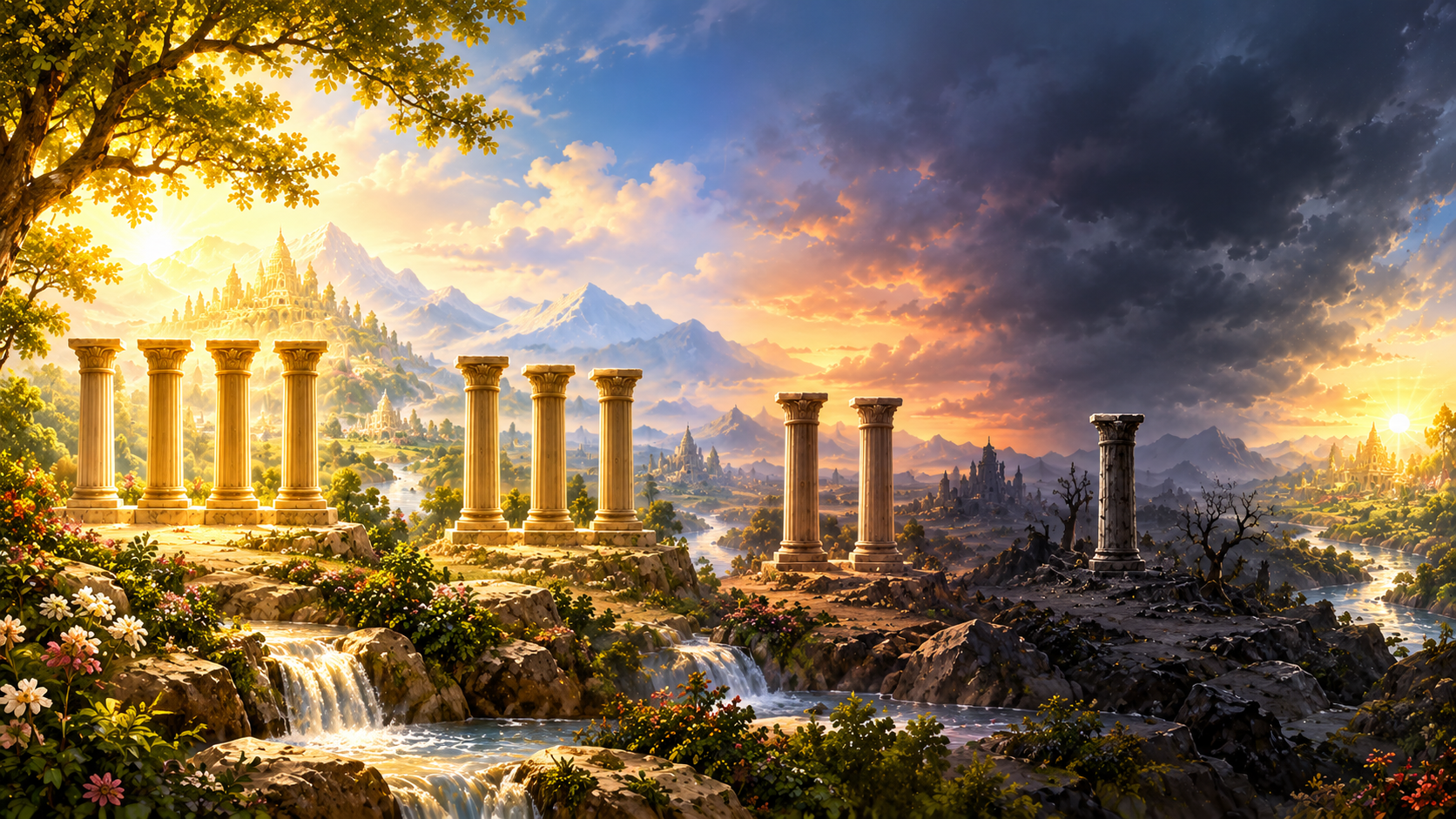
Chatur yug (चतुर्युग)
A Chatur Yug is one complete cycle of Sat, Treta, Dvapar, and Kali Yug, after which the four-age sequence begins again.

A Chatur Yug is one complete cycle of Sat, Treta, Dvapar, and Kali Yug, after which the four-age sequence begins again.
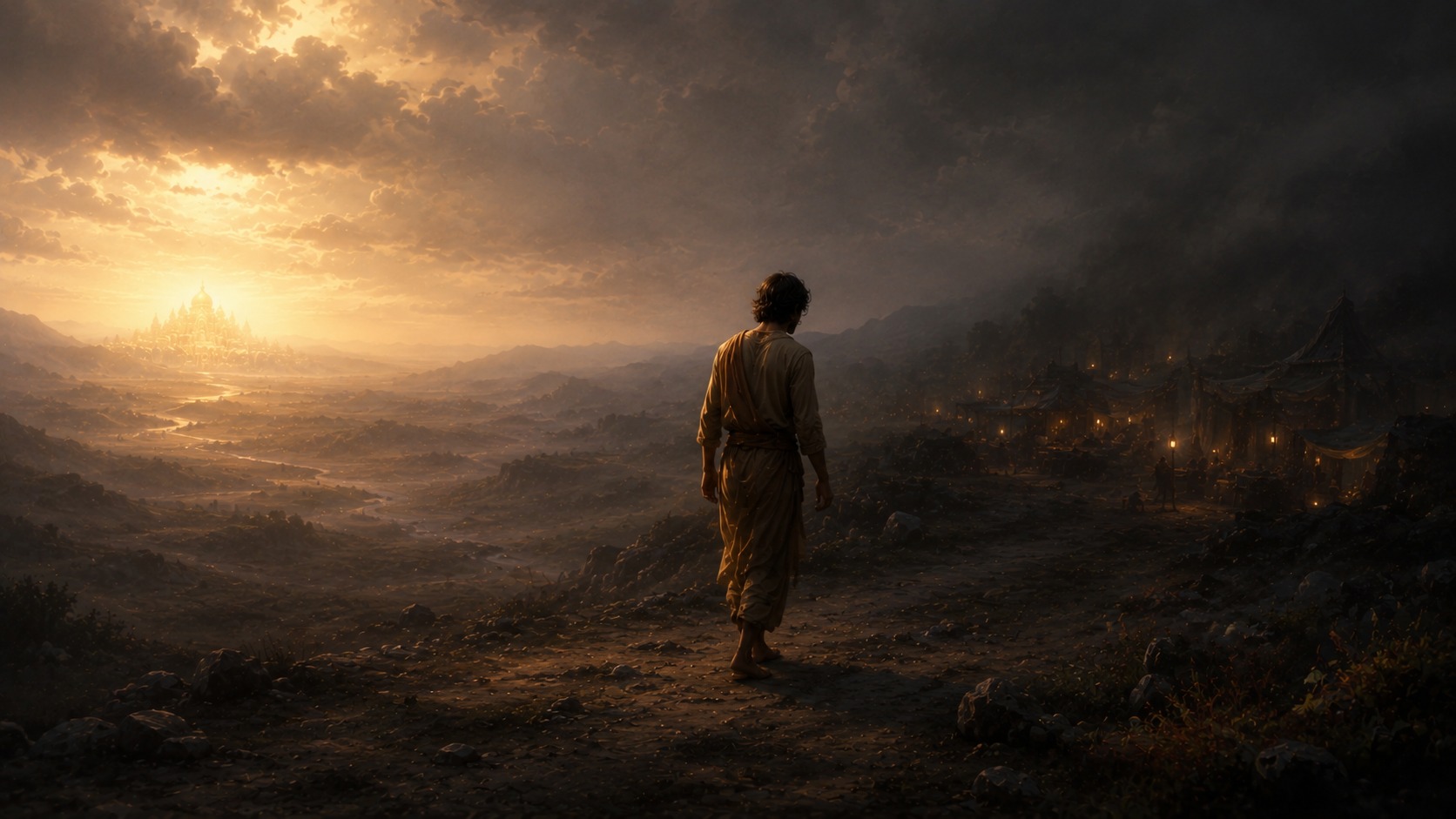
Vikarm refers to actions contrary to scriptural guidance that increase suffering, bondage, and distance from spiritual progress.
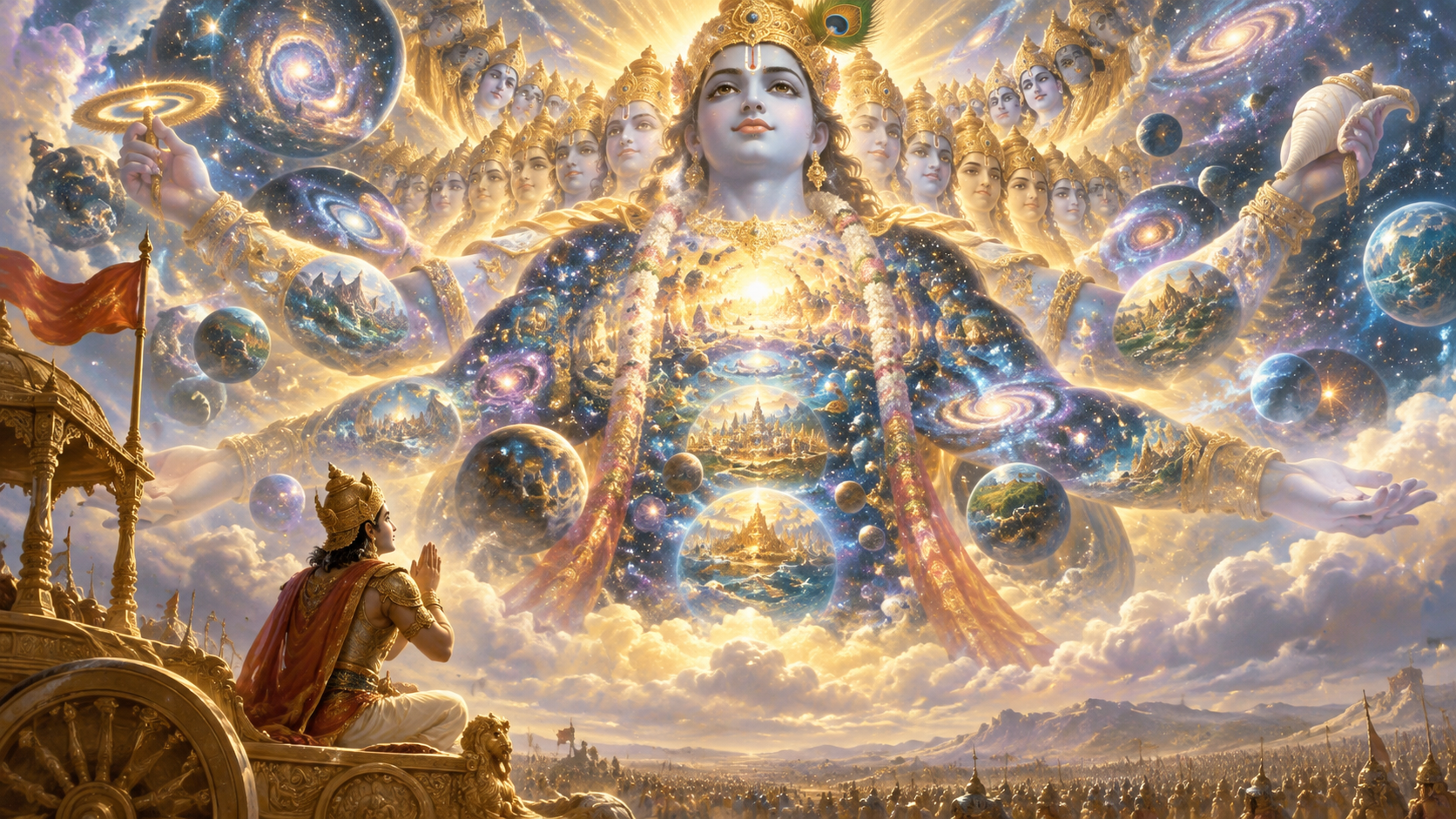
Virat Roop is God's awe-inspiring universal form, revealing the overwhelming majesty and grandeur of Shri Krishna.
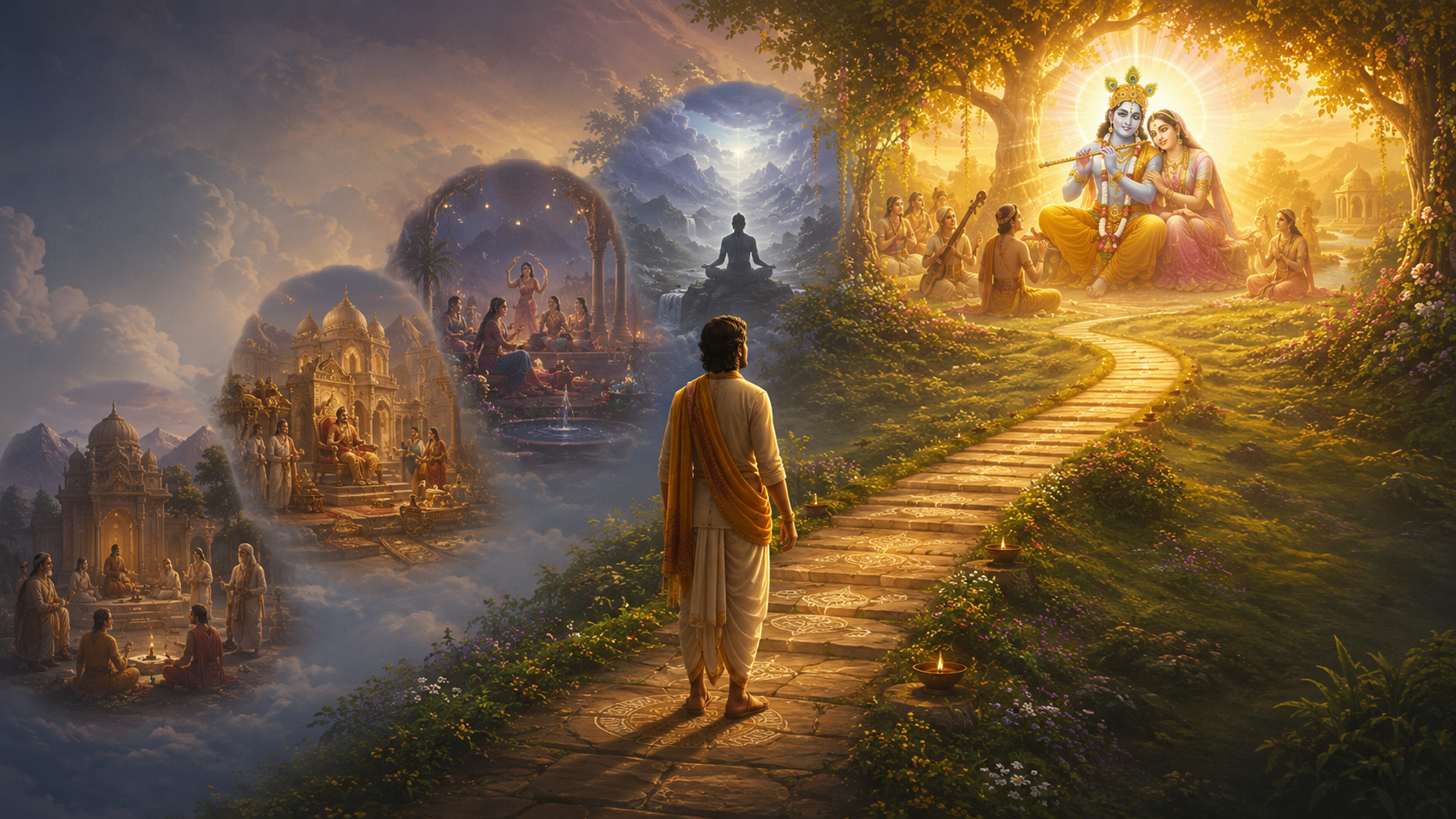
Pancham Purushartha is the fifth and highest goal of life taught in the Vedic tradition—the attainment of Divine Love and the full realization of the soul's eternal relationship with Shri Krishna.

Akash (आकाश | ākāśa) is commonly understood as sky or space, but in Vedic terminology it carries deeper meanings depending on context. At the material level, Ākāśa is one of the panch mahabhoot (five gross elements). It represents space—the subtlest of the material elements—and is the first gross

Jagat (जगत् | jagat) is the infinitely large material creation. The literal meaning of the word is the one that continuously is slipping downward. The material world continuously keeps slipping downwards. When it reaches the bottom then God puts it back up on the top. This is the home of all

Anshavatara (अंशावतार | aṁśāvatāra ) means avatar of God where only a few powers are revealed. God is perfect and unchanging. All of His avatars are also God and have all of His powers. Yet, the need of the hour determines how many powers are exhibited by the avatar.
Ahankar means ego or “I-ness.” It also refers to a subtle material element that arises from Mahat-tattva during the process of creation.

Akarm means action performed without egoistic attachment to doership or desire for personal reward. Such action does not bind the soul in karmic reaction.

Brahmand (ब्रह्माण्ड | brahmāṇḍa) means cosmic egg—an egg-shaped cosmic realm consisting of fourteen major lokas (worlds or planes of existence), many of which support life. The material world, called sansar, contains countless brahmands. Each brahmand has three governing deities, collectively known as the Tridev: * Brahma,

Asampragyat Samadhi (असंप्रज्ञात समाधि | asaṁprajñāta samādhi ) is a state of God-realization of the yogis . The impressions from past lives called sanskars along with the seeds of sanskars burn eternally and they become free from Maya . Those who pursue the jnanayog do so with the
Karm Sannyas is the path of bhakti of God after renouncing Varnashram duties, while remaining free from karmic bondage.