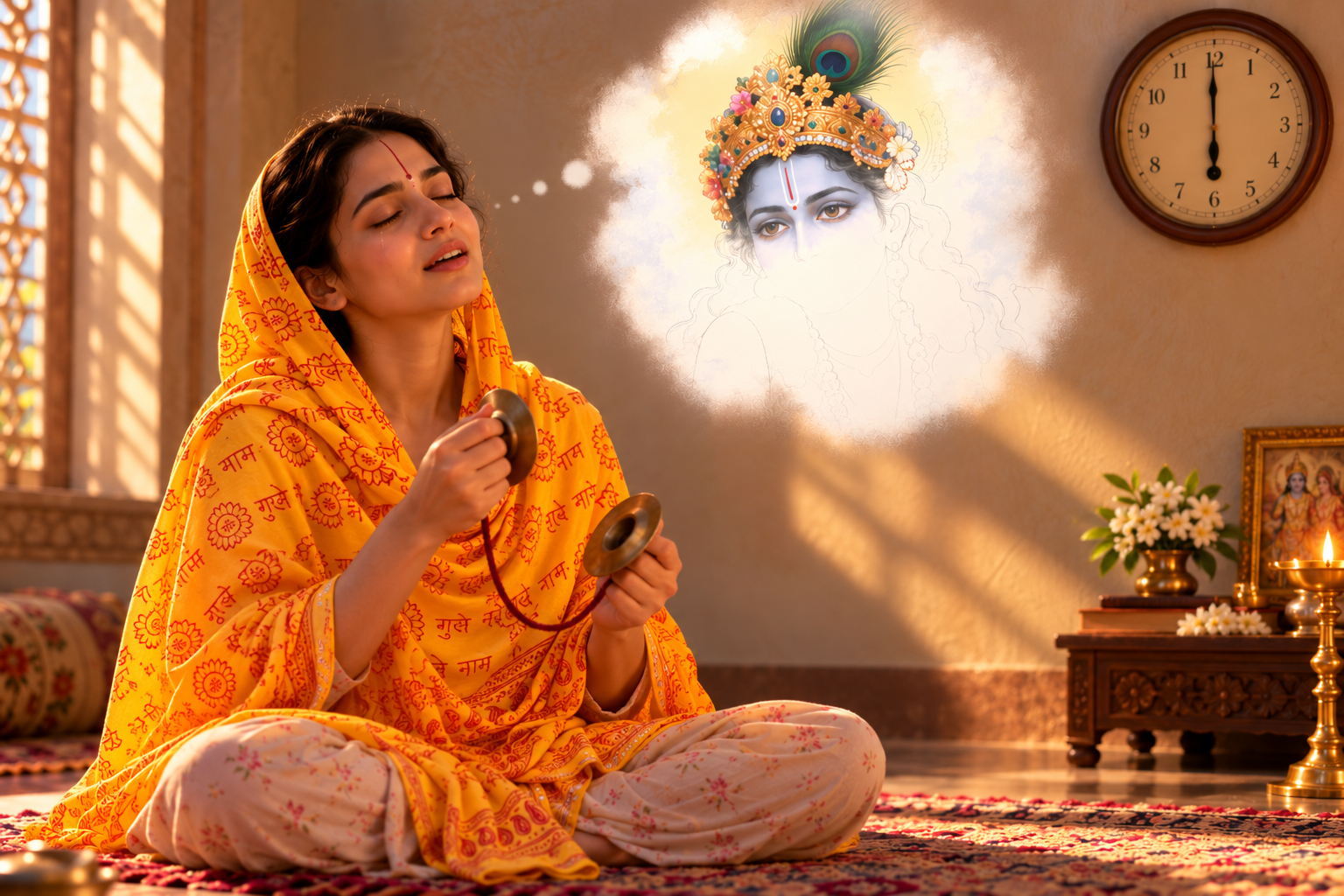
What Does True Surrender Actually Mean?
What does surrender really mean? Learn why surrender is necessary before Divine Grace descends and how true dependence upon God transforms spiritual life.
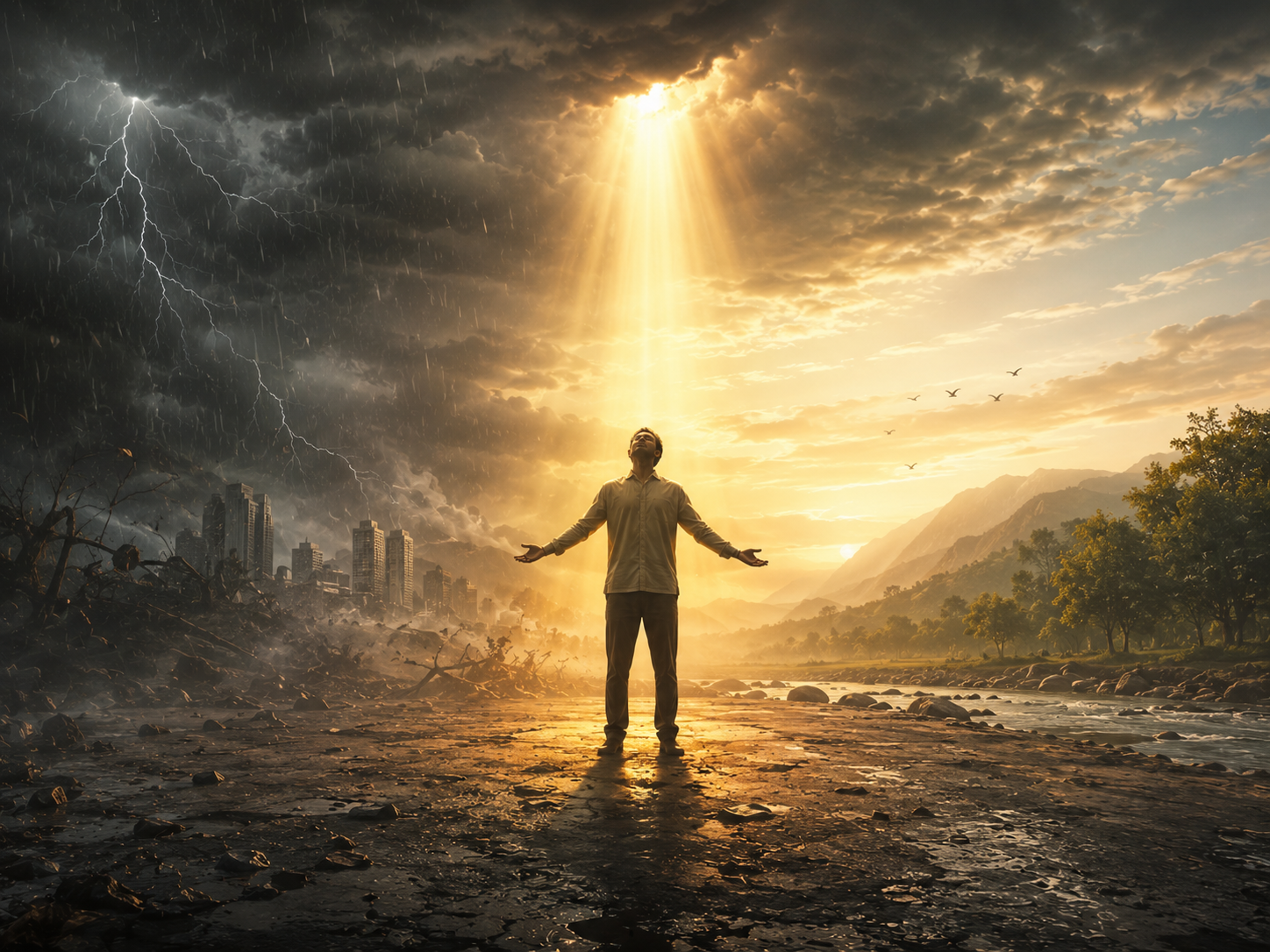
📍 Where You Are in the Inquiry
We have seen that God cannot be attained by effort alone.
The soul has wandered through countless lifetimes under the bondage of Māyā, karma, attachment, and ignorance.
Divine Grace alone can liberate the soul.
But another question now arises:
If Divine Grace is necessary, then how does the soul receive it?
The scriptures repeatedly give the same answer:
Through surrender.
But what does surrender actually mean?
Is it weakness?
Is it abandoning all action?
Is it external renunciation?
Or is it something far deeper?
Surrender Is the Condition for Divine Grace
The Vedas declare:
“यो ब्रह्माणं विदधाति पूर्वं यो वै वेदांश्च प्रहिणोति तस्मै।
तं ह देवमात्मबुद्धिप्रकाशं मुमुक्षुर्वै शरणमहं प्रपद्ये॥”
“We surrender to that Supreme God by Whose Grace the soul and intellect are illuminated.”
The Bhagavad Gītā says:
“तमेव शरणं गच्छ सर्वभावेन भारत।
तत्प्रसादात् परां शान्तिं स्थानं प्राप्स्यसि शाश्वतम्॥”
“O Arjun! Surrender completely unto Him. By His Grace you shall attain supreme peace and the eternal Divine abode.”
The scriptures do not merely praise surrender.
They declare it to be the doorway to Divine Grace.
Without surrender, the soul remains dependent upon its own limited strength.
Through surrender, the soul comes under Divine protection.
Only Those Who Surrender Can Cross Māyā
Bhagavān Shri Krishna says:
“दैवी ह्येषा गुणमयी मम माया दुरत्यया।
मामेव ये प्रपद्यन्ते मायामेतां तरन्ति ते॥”
“This Divine Māyā of Mine cannot be crossed by self-effort alone. Only those who surrender unto Me transcend it through My Grace.”
Māyā is not an ordinary obstacle.
It is the Divine material power of God Himself.
The soul has struggled against it for endless lifetimes, yet remains bound by:
- attachment,
- ego,
- desires,
- karma,
- birth,
- and death.
Why?
Because finite power cannot independently overcome the infinite power of Māyā.
Thus, surrender is not merely a spiritual option.
It becomes necessary for liberation itself.
Surrender Must Be Wholehearted
The Gītā does not say:
“Partially surrender.”
Nor:
“Surrender intellectually while remaining inwardly attached elsewhere.”
It says:
“तमेव शरणं गच्छ सर्वभावेन भारत।”
“Surrender with your entire being.”
As long as the soul continues depending primarily upon:
- worldly supports,
- ego,
- self-power,
- or material attachment,
complete surrender has not yet occurred.
True surrender is wholehearted dependence upon God.
Those Who Surrender Attain Divine Bliss
Throughout history, those souls who surrendered to God attained:
- Divine Grace,
- Divine peace,
- liberation from Māyā,
- and supreme Divine Bliss.
They attained the very goal for which the soul has been searching through countless lifetimes.
The scriptures repeatedly glorify such surrendered souls because they no longer remain under the control of material bondage.
Instead, they come under the shelter of God's Divine Grace.
Those Who Do Not Surrender Remain Bound
Those who do not surrender continue wandering endlessly through material existence.
The Ramayan says:
“फिरत सदा माया कर प्रेरा।
काल कर्म स्वभाव गुण घेरा॥”
“The soul continues wandering under the influence of Māyā, bound by the constraints of time, karma, nature, and the modes of material existence.”
Without surrender:
- Māyā remains unconquered,
- attachment remains unbroken,
- and the cycle of birth and death continues.
Thus, surrender is not merely devotional poetry.
It is the dividing line between bondage and liberation.
Surrender Does Not Mean Abandoning Action
Many misunderstand surrender.
Some imagine that surrender means:
- becoming inactive,
- abandoning responsibilities,
- or withdrawing externally from the world.
But true surrender is not fundamentally external.
A person may continue performing actions outwardly while remaining inwardly dependent upon God.
And another may externally renounce everything while inward dependence upon self-effort, worldly supports, devi-devatās, and material attachment still remains.
Thus, surrender is not primarily about what the body is doing.
It is about what the soul is relying upon.
The Child and the Mother
Jagadguruttam Swami Shri Kripalu Ji Maharaj explains surrender through a simple example.
As long as a newborn child does nothing for itself, the mother does everything for the child.
But as the child gradually becomes self-dependent, the mother reduces what she does.
Similarly, as long as the soul insists upon relying solely upon its own power, it continues struggling under material bondage.
But when the soul truly turns toward God in dependence, Divine Grace begins to descend.
Thus, surrender is not weakness.
It is dependence upon the Infinite instead of dependence upon the limited self.
Draupadī and Complete Surrender
A famous example of surrender appears in the Mahābhārat.
When Draupadī was being humiliated in the royal assembly, she first depended upon:
- her husbands,
- the elders,
- and her own efforts.
But when every support failed and she finally surrendered completely to Shri Krishna, Divine Grace descended instantly.
Krishna protected her honor.
This episode illustrates an important spiritual truth:
As long as the soul continues relying primarily upon worldly support or egoic self-effort, complete surrender has not yet occurred.
True surrender begins where self-dependence ends.
The Beginning of Divine Shelter
The soul has spent countless lifetimes trying to attain fulfillment independently.
Surrender is the moment the soul stops relying solely upon itself and comes under Divine shelter.
It is not defeat.
It is the beginning of Divine protection, Divine Grace, and true spiritual freedom.
🔍 Go Deeper (Scriptural Foundations)
- Destiny vs. Deeds: Who Really Runs the Show?
- Who Really Shapes My Fate?
- Is Karma Pointless If Destiny Is Fixed?
Continue the Inquiry
(Part 1 of 5 — Surrender)
⬅️ Previous: The Condition for Grace
➡️Next: Is Surrender a Transaction With God?
🔙 Back to Hub Surrender Hub