Ansh (अंश)
Ansh means a part. The Jeev is God's eternal Ansh, belonging to His Jeev Shakti, not a physically separated fragment.

Ansh (अंश | aṃśa) means a part of a whole.
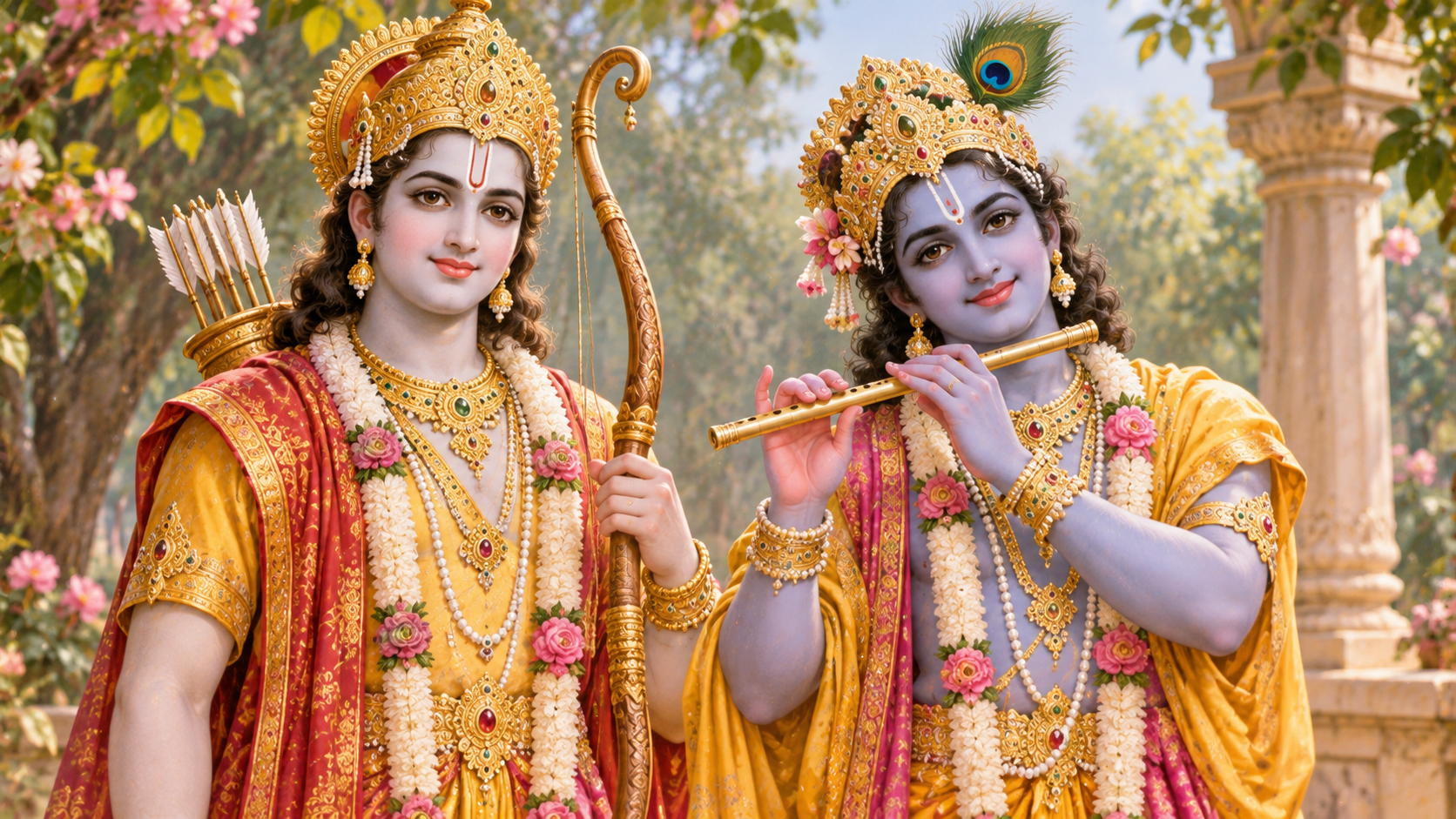
In Vedas, both the Jeev (soul) and the Swansh (Avatars) of Shri Krishna are called His Ansh. However, their natures are fundamentally different.
The Jeev is an eternal Ansh of God, belonging to His Jeev Shakti. It is conscious and eternal but does not possess God's unlimited divine powers.
Swansh Avatars are direct divine manifestations of Shri Krishna. Each is intrinsically complete and possesses the same divine power, although different Avatars manifest different degrees of that power.
Calling either an Ansh does not mean Shri Krishna is divided into pieces. He remains Akhand (अखंड | akhaṇḍa)—indivisible, infinite, and complete.
Thus, Ansh describes the relationship with the Anshi, but does not mean that every Ansh has the same nature or powers.
Go Deeper
 JKP Literature

Understand why the soul's eternal relationship with God determines its true nature and its search for happiness.
 JKP Literature
Explore the nature of the Jeev, its place within God's Jeev Shakti, and its relationship with Maya.
REFERENCE