What Bhakti Does Behind the Scenes?

To walk the path of Bhakti and make steady spiritual progress, it is essential to develop firm tattva gyan—a clear understanding of the spiritual principles governing Bhakti.
This understanding must become so deeply ingrained that it guides our choices and prevents us from taking actions that hinder our spiritual progress. As tattva gyan becomes firm, God naturally becomes our first priority, while we continue to fulfill our worldly responsibilities.
Every action of a jeev bound by Maya is motivated by some goal. What, then, should be the goal of practicing Bhakti?
The Primary Fruit of Bhakti: Loving Service to Shri Krishna
As explained earlier, when God reveals His divine form, He asks the devotee to seek a boon.
This is the ultimate test of the devotee's selflessness.
Only those who have practiced selfless devotion under the guidance of a Rasik Saint of the highest caliber ask for divine love or pure Bhakti.
Why?
Because divine love is the power that brings even the Supreme Lord, Shri Krishna, under the loving control of His devotee. Through that love, the bhakt performs seva solely to please Him.
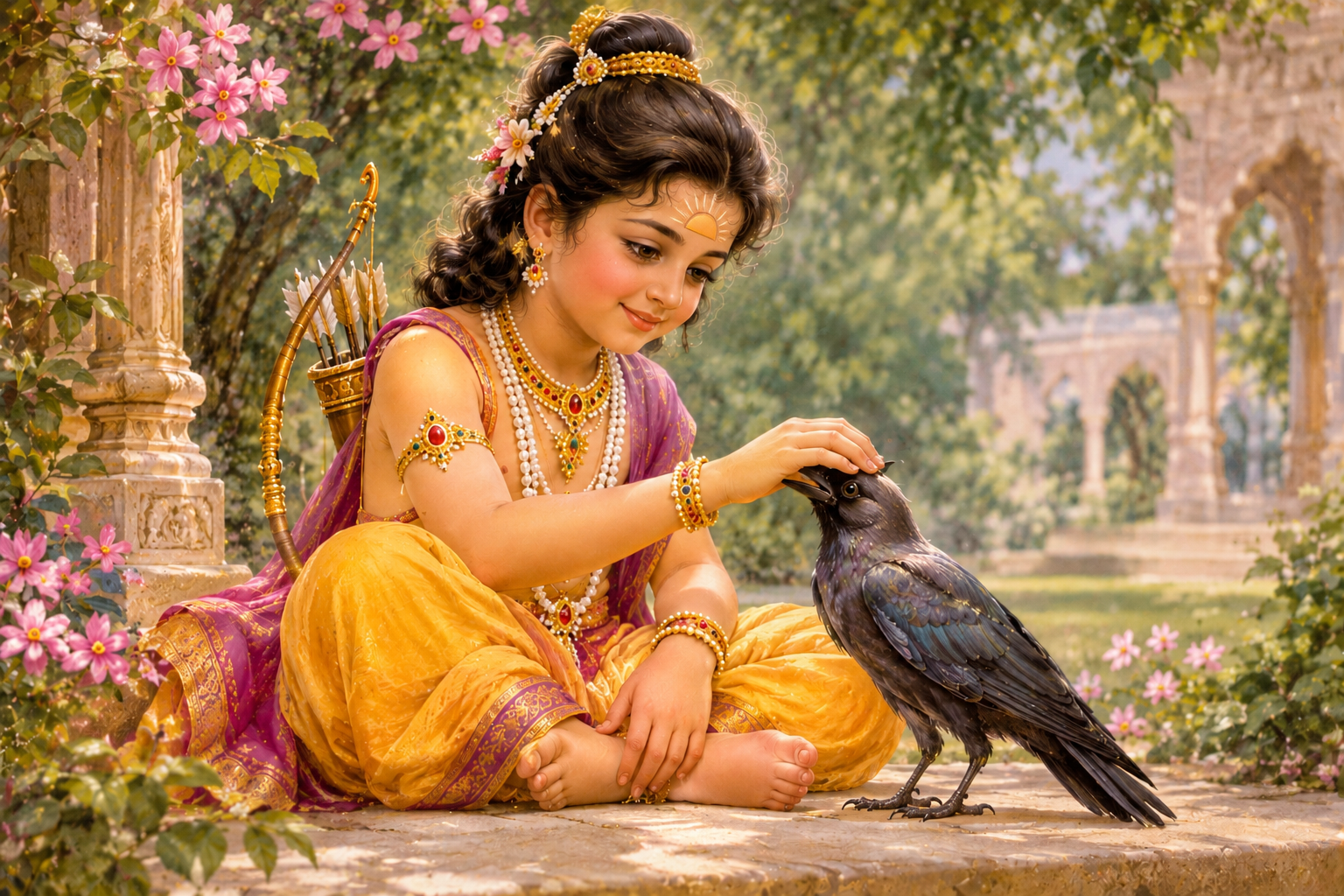
Consider the story of Kagbhushundi.
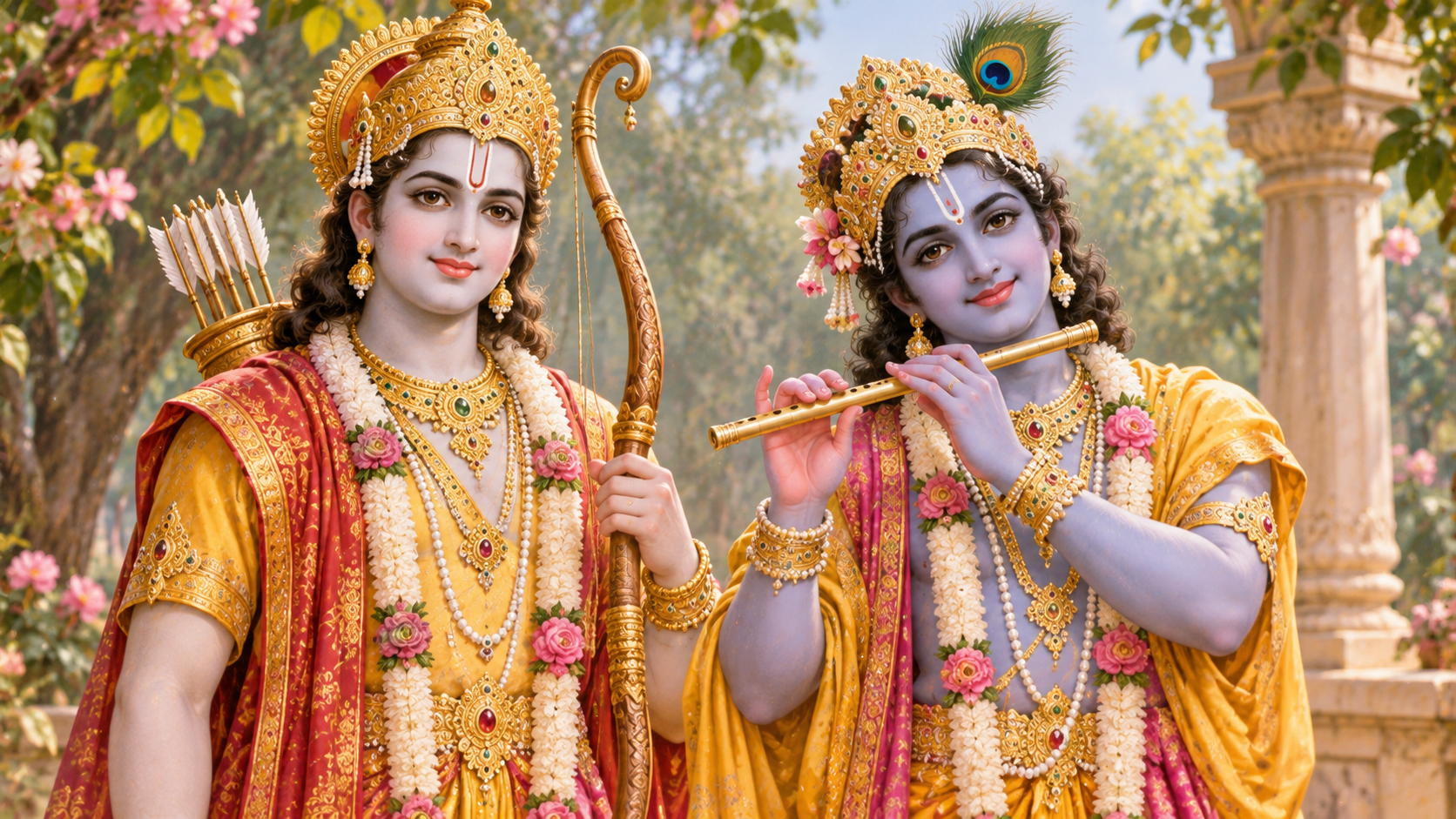
Lord Ram offered him riddhi, siddhi, and mukti—extraordinary powers and liberation itself. Yet Kagbhushundi refused them all. He wanted only Bhakti, the power that binds the devotee to Bhagavan through love.
Bhakti keeps the devotee eternally connected to God. And God accepts service offered with love. This is His eternal, unchanging divine law.
Radha Govind Geet 3974
भक्ति का मुख्य फल गोविंद राधे। दिव्य प्रेम युक्त कृष्ण सेवा बता दे ॥
bhakti kā mukhya phala goviṁda rādhe। divya prema yukta kr̥ṣṇa sevā batā de॥
Meaning: The primary fruit of Bhakti is loving service to Shri Krishna, endowed with divine love and performed solely for His pleasure.
This is the true fruit of Bhakti.
Yet Bhakti grants many other benefits as well. The devotee does not seek them, but they arise naturally through Bhakti.
Shri Maharaj Ji describes these additional fruits in the following verses of Radha Govind Geet.
1. Bhakti Bestows Liberation from Maya
Radha Govind Geet 3975
आनुषंगिक फल गोविंद राधे। माया निवृत्ति अपवर्ग बता दे ॥
ānuṣaṅgika phala goviṁda rādhe। māyā nivr̥tti apavarga batā de॥
Meaning: An additional fruit of Bhakti is liberation from Maya.
A true devotee considers liberation an insignificant goal compared with loving service to Shri Krishna. The devotee does not seek even the five forms of mukti.
Yet Bhakti grants liberation automatically.
Why?
Because nothing material can enter the divine realm.
The sun, moon, stars, earth, and everything else we perceive belong to the material world. None can enter Shri Krishna's divine abode.
In the divine realm, Shri Krishna Himself becomes sun, moon, stars and earth through His divine powers.
Therefore, before a bhakt can enter Golok and serve Shri Krishna, the devotee must first become free from Maya.
That freedom is mukti.
Thus, although the devotee does not seek liberation, Bhakti necessarily grants it. Liberation is not the destination; it is a prerequisite for attaining the devotee's true goal.
Read more: Bhakti Trivializes Liberation
2. Bhakti Grants Complete Control over the Mind
Restlessness is a characteristic of the material mind. It cannot remain inactive even for a moment.
Radha Govind Geet 3976
आनुषंगिक फल गोविंद राधे। चित का निरोध स्वयमेव करा दे ॥
ānuṣaṅgika phala goviṁda rādhe। cita kā nirodha svayameva karā de॥
Meaning: Another fruit of Bhakti is that the mind becomes completely controlled, automatically.
When the mind becomes wholly attached to God, it can no longer wander toward worldly objects. It remains absorbed in Him.
The Gopi Who Was Trying to Forget Shri Krishna
Once, Sage Narad Ji visited Braj and saw a Gopi sitting in deep meditation.
He waited patiently.
When she opened her eyes, Narad Ji bowed respectfully and asked, “O Mother! Were you meditating on Shri Krishna?”
The Gopi immediately scolded him.
“Don't you dare utter His name before me!
“I am trying to drive Him out of my heart. He has completely disrupted my life.
“When I cook, tears keep flowing from my eyes and extinguish the fire. When I put a roti on the fire, I forget all about it because my mind goes to Him, and the roti burns.
“I am thoroughly fed up with Him! That is why I am meditating—to get Him out of my mind.”
What an extraordinary state of love!
Even when she tries to forget Shri Krishna, she cannot stop thinking about Him.
But was the Gopi truly resentful?
Not at all.
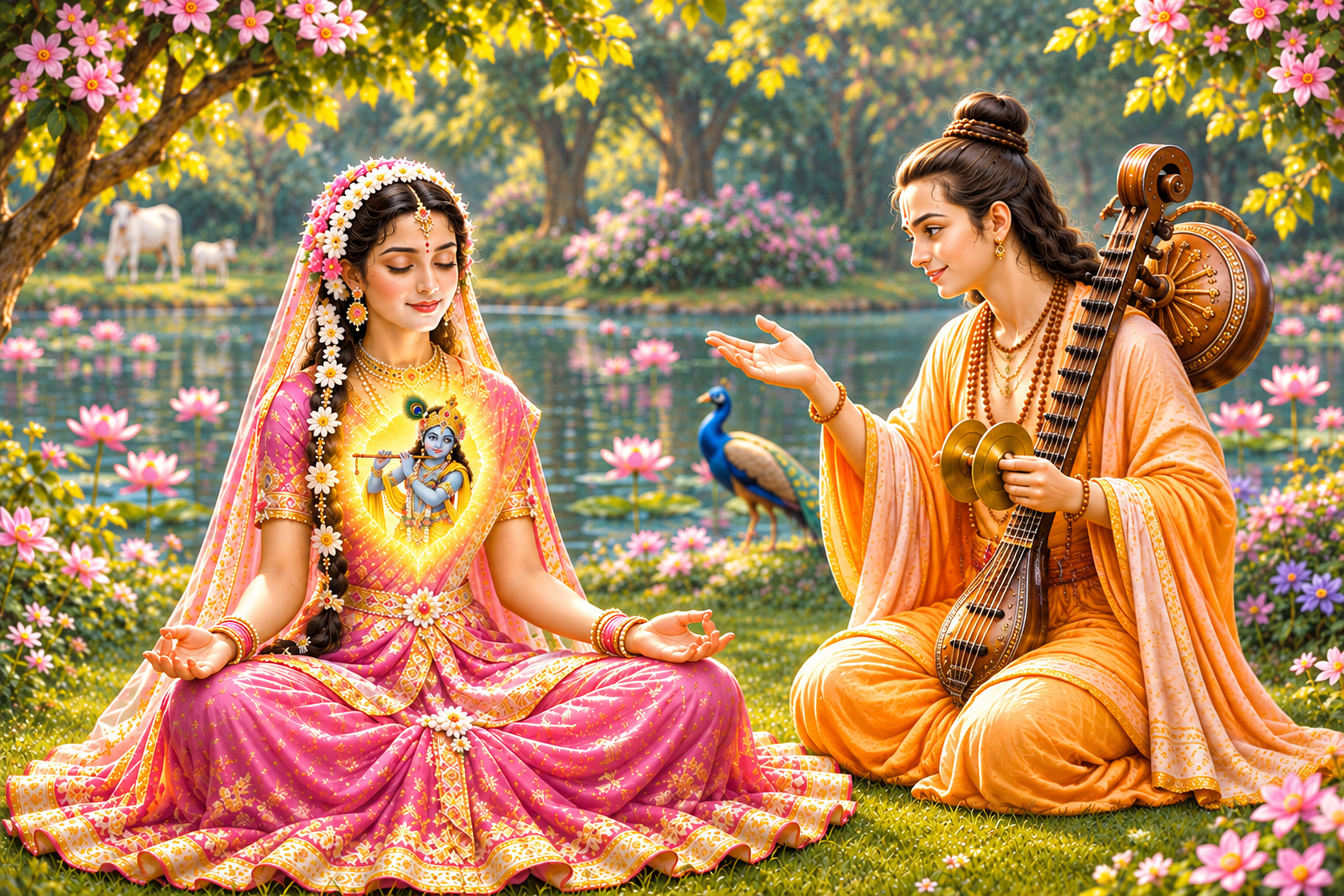
This is the beautiful, inverted language of divine love, in which the words appear to express displeasure while the heart is overflowing with affection.
She does not really want to forget Him. She cannot bear to be separated from Him.
Shri Maharaj Ji reveals a similar sentiment in Prem Ras Madira:
बसे रे मेरे, नैनन पिय! तेरे नैन ।
नैनन को नहिं डर पिय! उतनो, डर उन नैन सैन ।
पुनि सैननहूँ डर नहीं उतनो, डर उन सैनन पैन ।
जब चह सैन निकारन दृग कह, पैन किंतु सुख-दैन ।
अब नैन करकत तिन छिन छिन, चैन न मोहिं दिन-रैन ।
कह ‘कृपालु’ यह रोग लाग जेही, कैसेहूँ कबहूँ छूटै न ॥
base re mere, nainana piya! tere naina।
nainana ko nahiṁ ḍara piya! utano, ḍara una naina saina।
puni sainanahūm̐ ḍara nahīṁ utano, ḍara una sainana paina।
jaba caha saina nikārana dr̥ga kaha, paina kiṁtu sukha-daina।
aba naina karakata tina china china, caina na mohiṁ dina-raina।
kaha ‘kr̥pālu’ yaha roga lāga jehī, kaisehūm̐ kabahūm̐ chūṭai na॥
Prem Ras Madira
Meaning:
“O Beloved! Your eyes have made my eyes their dwelling place.
“I do not fear Your eyes as much as I fear their loving glances. And I do not fear those glances as much as their piercing arrows.
“When I try to remove those arrows from my eyes, my eyes protest, for those arrows give them such pleasure!
“Now those glances wound me constantly. I find no peace, day or night.”
Shri Maharaj Ji concludes that once this ailment of divine love takes hold, there is no way to be cured of it.
And who would wish to be cured?
This is how completely the Gopi's mind is absorbed in Shri Krishna. Even when she tries to forget Him, she cannot. Why?
The jeev is the master of the mind, and the mind is its faithful servant. Its job is to seek happiness for its master.
The jeev is an infinitesimally small part of God. It naturally longs for everlasting happiness, which only God can provide.
The Gopi's mind is completely absorbed in Shri Krishna, the source of her everlasting happiness. Why would her mind turn away from Him and deprive its master of that bliss?
A divine mind cannot pull itself away from Shri Krishna. It is impossible! The mind is simply doing its job. It has found what its master has been searching for.
For a seeker whose mind still wanders, Shri Maharaj Ji also explains what to do when the mind wanders during Roopdhyan.
3. Bhakti Eradicates All Material Vices
As long as the mind remains under Maya, it is susceptible to lust, anger, greed, attachment, and other material vices.
Radha Govind Geet 3977
आनुषंगिक फल गोविंद राधे। काम क्रोध आदि को सदा को नसा दे॥
ānuṣaṅgika phala goviṁda rādhe। kāma krodha ādi ko sadā ko nasā de॥
Meaning: Bhakti permanently eradicates lust, anger, and all other material vices.
Maya is the root cause of these vices. Once Bhakti frees the jeev from Maya, the cause of those vices disappears, and they can no longer bind the jeev.
But what about the anger displayed by Lord Shiv or Saint Durvasa?
Does that mean they are subject to material vices?
No.
The actions of God and God-realized Saints are fundamentally different from those of jeevs bound by Maya.
A Maya-bound jeev may act under the influence of anger, greed, or attachment. God and God-realized Saints are not controlled by these vices.
Their apparently angry or stern actions are divine leelas, performed to impart teachings or bestow bliss.
Just as an actor may portray anger without actually being consumed by it, divine personalities may display anger without being subject to the material vice of anger.
The distinction is not merely how the action appears externally, but what motivates it.
Read more: Bhakt Vatsal Shri Krishna
4. Bhakti Bestows Divine Virtues
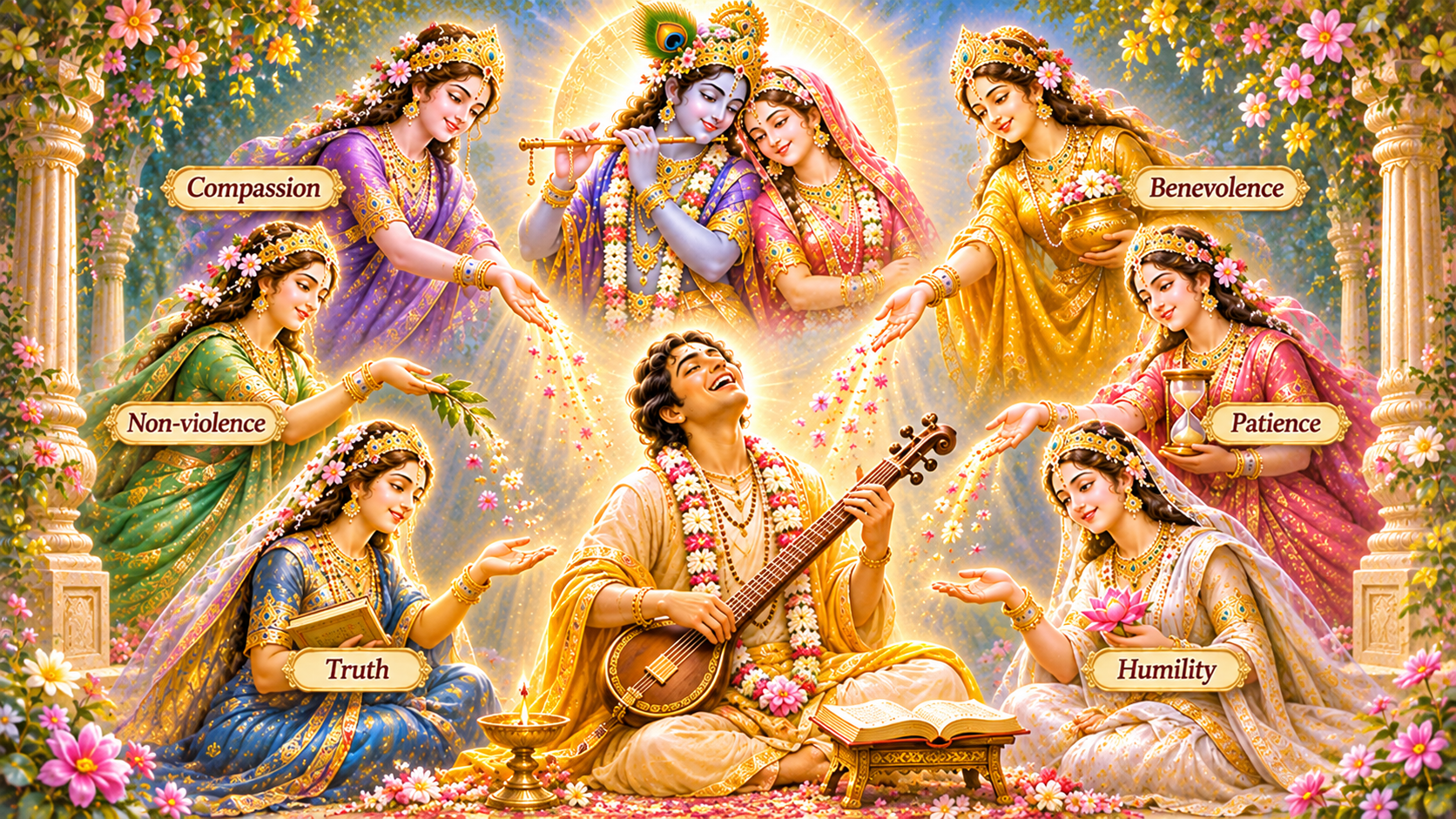
There is a familiar saying: a person is known by the company they keep.
During Sadhana Bhakti, the seeker repeatedly directs the mind toward God. As attachment to God deepens, His divine qualities begin to influence the seeker's conduct.
Thus, Bhakti begins cultivating virtues from the very start of spiritual practice. At God-realization, these divine virtues become complete.
Read more: Bhakti brings auspiciousness
At God-realization, these divine virtues become complete.
Radha Govind Geet 3978
आनुषंगिक फल गोविंद राधे । सत्य अहिंसा आदि दिलवा दे॥
ānuṣaṅgika phala goviṁda rādhe। satya ahiṁsā ādi dilavā de॥
Meaning: Bhakti bestows divine virtues such as truthfulness and nonviolence.
A God-realized bhakt possesses divine virtues in their fullness.
The seeker does not need to pursue each virtue as a separate ultimate goal. By sincerely practicing Bhakti and purifying the mind, the seeker progresses toward the source of all divine virtues.
Read more: The Sole Key to Cultivating Divine Virtues
5. Bhakti Frees the Jeev from Trigun, Trikarma, and Tritaap
Radha Govind Geet 3979
आनुषंगिक फल गोविंद राधे। त्रिगुण त्रिकर्म त्रिताप नसा दे॥
ānuṣaṅgika phala goviṁda rādhe। triguṇa trikarma tritāpa nasā de॥
Meaning: Bhakti frees the jeev from the three gunas, the bondage of the three kinds of karma, and the three forms of suffering.
Freedom from Trigun
The three gunas—Sattva, Rajas, and Tamas—belong to Maya.
As long as the jeev is bound by Maya, these gunas influence the mind and its activities.
When the jeev becomes God-realized, Maya no longer has any hold over the jeev. Consequently, the three gunas also lose their influence.
Freedom from Trikarma
The three kinds of karma are Sanchit, Kriyamana, and Prarabdha.
At God-realization, Sanchit karma is destroyed, Kriyamana karma no longer creates bondage, and the bhakt is no longer bound to undergo Prarabdha karma.
Thus, the God-realized bhakt is completely free from karmic bondage.
Freedom from Tritaap
Tritaap refers to the three kinds of suffering experienced by jeevs under Maya.
As the seeker progresses in Bhakti, attachment to the body and worldly circumstances begins to diminish. Consequently, the distress caused by unfavorable circumstances also becomes less overwhelming.
At God-realization, suffering ends completely.
Consider the story of Vasudeva, the leper, during the time of Chaitanya Mahaprabhu.
His body was so severely afflicted that worms lived in his wounds. If a worm fell from his body, he would gently pick it up and return it.
“Why should you be deprived of your food?” he would say.
What an extraordinary state of mind!
Ordinarily, such a bodily condition would be unbearable. Vasudeva's extraordinary concern for other living beings, even amid severe bodily affliction, illustrates how profoundly attachment to the body can be overcome.
At God-realization, the jeev is completely free from the suffering associated with Tritaap.
The distinction between Daihik Taap and Bhautik Taap, along with the third form of suffering, is explained in the Tritaap article.
Read more: Bhakti Burns Misery
6. Bhakti Incinerates the Five Sheaths
Radha Govind Geet 3980
आनुषंगिक फल गोविंद राधे । पंचकोश को भस्म करा दे ॥
ānuṣaṅgika phala goviṁda rādhe। pañcakośa ko bhasma karā de॥
Meaning: Bhakti burns away the five sheaths that conceal the true nature of the jeev.
The five sheaths, or Panchkosh, are associated with the jeev's material existence.
As long as the jeev remains under Maya, these coverings obscure its true spiritual nature.
At God-realization, Bhakti removes these coverings completely.
The devotee does not need to undertake a separate practice to destroy each sheath. Their removal is another automatic fruit of Bhakti.
7. Bhakti Eradicates the Five Afflictions
Maya subjects the jeev to five afflictions, known as Panchklesh.
Radha Govind Geet 3981
आनुषंगिक फल गोविंद राधे । पंचक्लेश अत्यंताभाव करा दे॥
ānuṣaṅgika phala goviṁda rādhe। pañcakleśa atyantābhāva karā de॥
Meaning: Bhakti brings about the complete and permanent absence of the five afflictions.
These afflictions trouble the jeev as long as it remains under Maya and identifies with the material body and its relationships.
Consider Abhinivesh—the fear of death.
People are frightened of losing their bodies because they identify themselves with those bodies.
But the jeev is not the body. It is the eternal servant of God.
As this understanding becomes firm through Sadhana Bhakti, fear and attachment begin to diminish.
Recall the episode of King Ambarish, who willingly accepted being put to death to appease Saint Durvasa's anger.
Now consider Prahlad and his son Virochan.
When Prahlad was called upon to judge between Virochan and his Guru's son, he did not favor his own son merely because of their relationship.
He judged his Guru's son to be superior and pronounced a death sentence upon Virochan.
Yet Prahlad was not overcome by grief or attachment.
When the Guru's son subsequently ordered Virochan's release, Prahlad was equally undisturbed.
He remained equipoised in both circumstances.
Why?
Because he was free from Raag—material attachment—and Dwesh—aversion or ill will.
His judgment was not governed by affection for his son or hostility toward anyone else.
This is the freedom that Bhakti grants.
During Sadhana Bhakti, these afflictions begin to weaken. At God-realization, all five are completely eradicated.
Read more: Panchklesh — The Five Afflictions
8. Bhakti Makes the Body Divine
A jeev bound by Maya possesses three material bodies: Sthool Sharir, the gross body; Sookshma Sharir, the subtle body; and Karan Sharir, the causal body.
At God-realization, the jeev is freed from these material coverings.
Radha Govind Geet 3982
आनुषंगिक फल गोविंद राधे । मायिक तनु भी दिव्य करा दे॥
ānuṣaṅgika phala goviṁda rādhe। māyika tanu bhī divya karā de॥
Meaning: Bhakti transforms even the material body into a divine body.
The body no longer consists of the five gross material elements. It becomes divine.
Although its outward appearance may resemble the earlier body, its nature is entirely different.
The Divine Fragrance of Putana's Body
You may have heard the story of Putana, who approached the six-day-old Shri Krishna intending to kill Him.
She smeared her breasts with deadly poison and offered to nurse Him.
But Shri Krishna accepted her as His mother because she had offered Him her milk. He bestowed Golok upon her.
When Putana's body was cremated, something extraordinary happened.
Ordinarily, burning human flesh produces a foul smell. Yet Putana's burning body emitted a wonderful divine fragrance that spread throughout Braj.
Even Nand Baba, returning from Mathura after paying taxes to Kansa, could smell the fragrance from far away.
Why did her body emit a divine fragrance instead of the foul smell of burning flesh?
Because Shri Krishna had accepted her as His mother and bestowed Golok upon her. Her body had become divine.
Read more: Why Is Shri Krishna Called Akaran Karun?
9. Bhakti Makes the Senses, Mind, and Intellect Divine
The material body comes equipped with material senses, mind, and intellect.
God has given the jeev these instruments so that it may attain Him.
The Guru imparts spiritual knowledge to the ignorant jeev. Through the Guru's grace, the intellect comes to understand its own limitations and learns to follow divine guidance.
At God-realization, another extraordinary transformation takes place.
Radha Govind Geet 3983
आनुषंगिक फल गोविंद राधे । इंद्रिय मन बुधि दिव्य करा दे॥
ānuṣaṅgika phala goviṁda rādhe। iṁdriya mana budhi divya karā de॥
Meaning: Bhakti transforms the material senses, mind, and intellect into divine senses, mind, and intellect.
Why is this necessary?
Because Shri Krishna's divine form, qualities, and pastimes cannot be perceived through material senses.
The material mind and senses have limited capacities. They cannot withstand or relish unlimited divine bliss.
Therefore, the Guru first makes the devotee's senses, mind, and intellect divine, and then bestows divine love.
Only then can the devotee fully perceive and relish Shri Krishna's divine sweetness.
The more the devotee relishes Shri Krishna, the more divine love increases. As that love increases, the longing to relish His sweetness grows still further.
Neither divine love nor the longing to relish Shri Krishna ever reaches an end.
Shri Maharaj Ji describes this state of a Gopi:
नख शिख लखि सखिअखियनहूँ ते, पल पल तलफती देखन को री।
nakha śikha lakhi sakhiakhiyanahūm̐ te, pala pala talaphatī dekhana ko rī।
Prem Ras Madira — Shri Krishna Madhuri
Meaning: “O Sakhi! Even after beholding Him from head to toe with my own eyes, my longing to see Him increases with every passing moment.”
She is seeing Shri Krishna, yet her longing to see Him continues to intensify.
Such is the nature of divine love.
Only divine senses, mind, and intellect can perceive and relish Shri Krishna's divine form.
10. Bhakti Grants the Divine Abode Without Asking
Shri Krishna's divine abode is Golok.
To serve Him there, the devotee must attain His divine realm.
Radha Govind Geet 3984
आनुषंगिक फल गोविंद राधे । दिव्य हरीधाम बिन मांगे दिला दे॥
ānuṣaṅgika phala goviṁda rādhe। divya harīdhāma bina māṁge dilā de॥
Meaning: Bhakti grants the divine abode of Shri Krishna without the devotee even asking for it.
Some devotees of Paramatma seek Salokya Mukti—the liberation through which they attain residence in God's realm.
But a selfless devotee of Shri Krishna does not ask for residence in Golok.
The devotee asks only for the opportunity to serve Him lovingly.
Yet Bhakti grants Golok automatically.
And this divine attainment is not restricted to the period after physical death.
Once the bhakt has attained God-realization and received a divine body, the devotee can reside in Golok even while appearing to live on earth.
This may seem impossible to comprehend through the material intellect. But divine realization is a matter of experience, not merely intellectual understanding.
There is no need to speculate about an experience we have not yet attained.
For now, our responsibility is to understand tattva gyan and put it into practice.
What Should We Seek from Bhakti?
We often hear that Bhakti is the best way to attain God.
But Shri Maharaj Ji teaches something more precise:
Bhakti is not merely the best way to attain God. It is the only way.
Bhakti grants the highest fruit of all—divine love and eternal, loving service to Shri Krishna.
And along with that primary fruit, Bhakti automatically grants liberation, mastery over the mind, freedom from material vices, divine virtues, freedom from karmic bondage and suffering, removal of material coverings and afflictions, a divine body, divine senses, and the divine abode.
Yet the devotee should not practice Bhakti to obtain these benefits.
The goal remains the same: to please Shri Krishna through selfless loving service.
The first step is to practice Sadhana Bhakti regularly and sincerely under the guidance of a genuine God-realized Saint.
And having begun, we must guard our devotion carefully. The influences of kusang can weaken or destroy the spiritual progress we have made.
Shri Maharaj Ji expresses the devotee's prayer beautifully:
नित सेवा माँगूँ श्यामा श्याम तेरी ।
न भुक्ति न ही मुक्ति मागूँ मैं ।
बाढ़े भक्ति निष्काम नित मेरी ।
न भुक्ति न ही मुक्ति मागूँ मैं ।
nita sevā māṅgūṁ śyāmā śyāma terī।
na bhukti na hī mukti māgūṁ maiṁ।
bāṛhe bhakti niṣkāma nita merī।
na bhukti na hī mukti māgūṁ maiṁ।
Meaning:
“O Shyama Shyam! I ask only for the opportunity to serve You.
“May my selfless devotion to You continue to increase.
“I seek neither worldly enjoyment nor liberation from Maya.”
— Jagadguruttam Shri Kripalu Ji Maharaj
That is the aspiration of a true devotee: not to seek what Bhakti can give, but to seek only the happiness of the Beloved.