Āsakti (आसक्ति | āsakti)
Āsakti refers to worldly attachment through which the jīva becomes emotionally bound to temporary objects, relationships, desires, and experiences, strengthening bondage under Māyā.
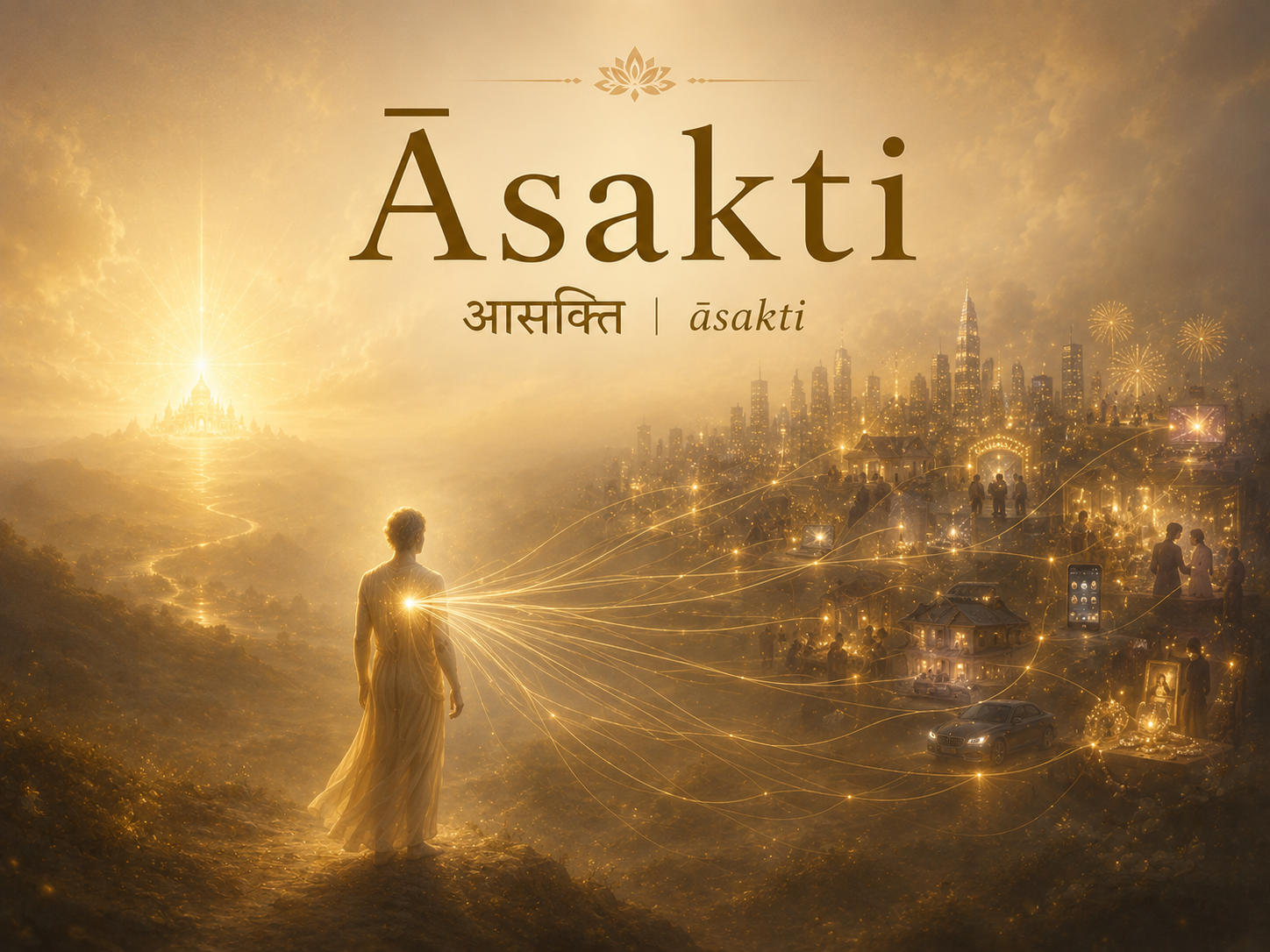
Attachment or deep emotional absorption toward worldly objects, relationships, experiences, or desires.
Doctrinal Understanding
Āsakti refers to the attachment through which the jīva becomes emotionally bound to the material world.
When the mind repeatedly contemplates worldly pleasures, possessions, relationships, status, or bodily identity, attachment gradually develops. This attachment strengthens desires, expectations, fears, and dependence upon temporary worldly conditions.
PRS philosophy explains that attachment is one of the primary causes of bondage under Māyā. Because of āsakti, the jīva repeatedly experiences:
- attraction and aversion,
- pleasure and sorrow,
- anxiety and fear,
- hope and disappointment,
- repeated worldly entanglement.
Worldly attachment binds the mind outward toward temporary objects, while bhakti redirects attachment toward God.
True spiritual progress does not arise merely from externally abandoning the world, but from transforming the direction of attachment itself.
As long as worldly āsakti remains strong, the mind cannot become steadily absorbed in Divine remembrance.
Poetic Usage
Jagadguruttam Swami Shri Kripalu Ji Maharaj frequently describes worldly attachment as the force that repeatedly drags the jīva toward temporary pleasures despite repeated suffering.
In devotional poetry, āsakti is often contrasted with:
- Divine attachment,
- surrender,
- longing for God,
- detachment from worldly pleasures,
- exclusive love for Shri Krishna.
Related Concepts
Appears In
- devotional pads
- philosophical prose works
- lecture explanations
- study companions