Archival Record: Foundational Questions — Chitrakoot Convention (1955)
Documented foundational questions discussed during the Chitrakoot 1955 scholarly assembly.
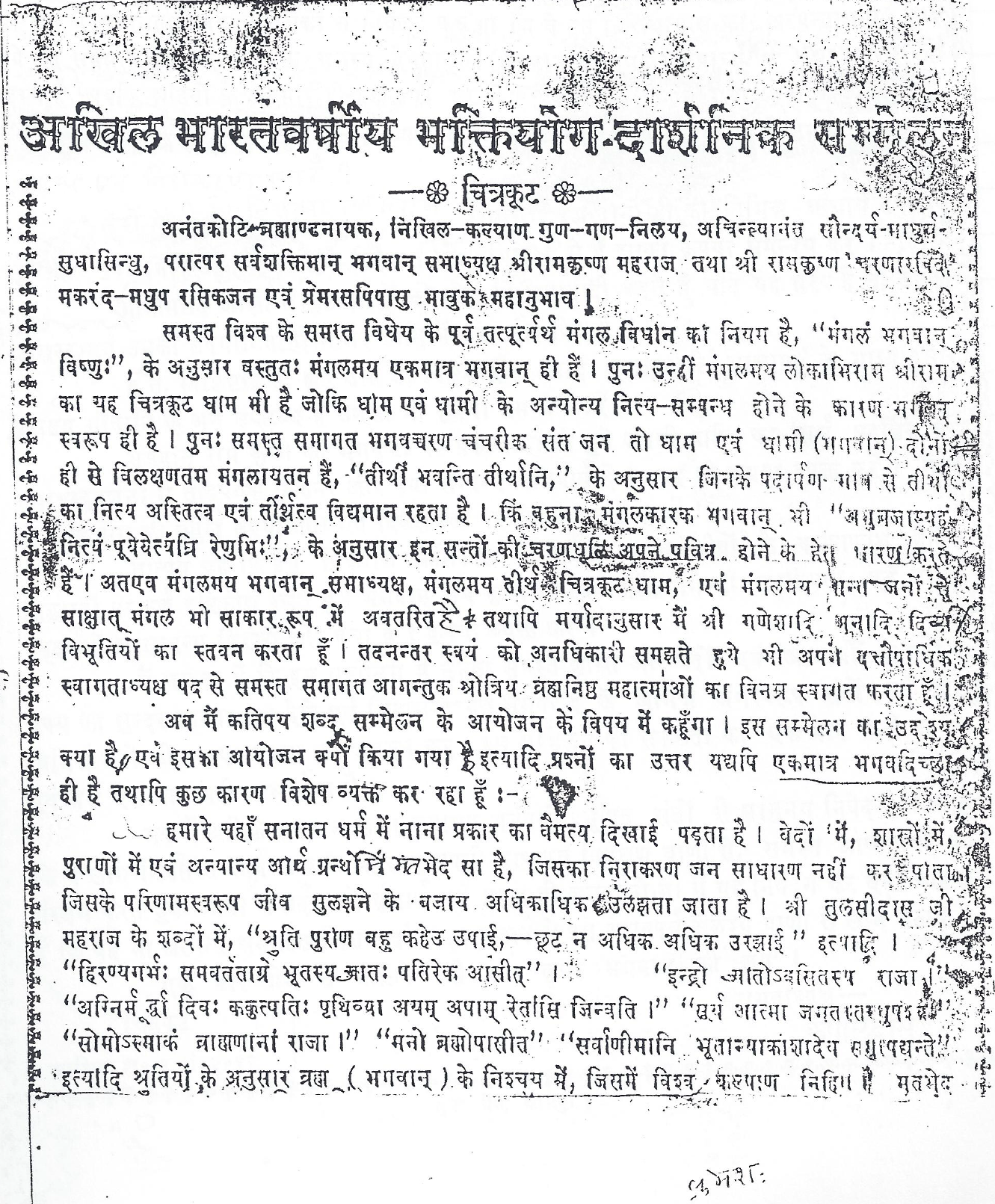
Archival Record
At the 1955 Chitrakoot Convention, the stated objective was not devotional celebration, but philosophical reconciliation.
The following foundational questions were presented before the assembled saints and scholars for resolution and clarification.
They represent long-standing points of apparent contradiction within Vedic literature and traditional commentaries.
1. On the Identity of the Supreme
The Vedas describe various entities such as Hiranyagarbha, Indra, Surya, Chandra and others.
Are these to be understood as the Supreme God?
Or is there a deeper theological structure to be understood within these references?
2. On the Prescribed Paths to God
The Vedas and Shastras prescribe multiple approaches for attaining the Supreme:
- Karma (action)
- Jñāna (knowledge)
- Upāsanā / Bhakti (devotion)
What is the interrelationship among these paths?
Are they sequential?
Are they complementary?
Or is one ultimate?
Which path is to be followed for final realization?
3. On the Nature of God — Form and Formlessness
The Vedas describe God as:
- Nirguṇa (without attributes)
- Nirākār (without form)
Yet they also describe Him as:
- Saguṇa (with attributes)
- Sākār (with form)
Additionally, various Acharyas present differing interpretations.
How are these seemingly opposing descriptions to be reconciled?
4. On the Status of Mimāṁsā
Certain schools, particularly within Mimāṁsā philosophy, are described by some as atheistic.
If so:
What is their legitimate position within Vedic tradition?
To what extent are they useful or limited in the pursuit of Supreme Bliss?
5. On Divergent Interpretations of Core Scriptures
Multiple interpretations exist for foundational texts such as:
- Brahma Sutra
- Bhagavad Gita
- Upanishads
These interpretations include:
- Vishishtadvaita
- Dvaitadvaita
- Vishuddhadvaita
- Advaita
- and others
Are these mutually contradictory systems?
Or can they be reconciled within a unified framework?
6. On Lord Rama and Lord Krishna
Are Lord Rama and Lord Krishna to be understood as:
- Historical personalities?
- Incarnations?
- The Supreme God?
How does one attain Them according to Vedic philosophy?
What is the relationship between devotion (Bhakti Yoga) and the Shat Darshanas (the six classical schools of philosophy) in this context?
7. On Bhakti in the Age of Kali
In the present age of confusion and decline (Kali Yuga):
What is the precise role of Bhakti Yoga?
How does it relate to the Vedic principles and philosophical systems?
Is it independent of them?
Or their culmination?
Historical Note
These questions were publicly placed before the distinguished assembly with the stated intention of reconciling scriptural diversity into a coherent philosophical unity.
The purpose of preserving this record is historical continuity.
No interpretive commentary is added here.