The Sin Scale: From Minor to Unforgivable
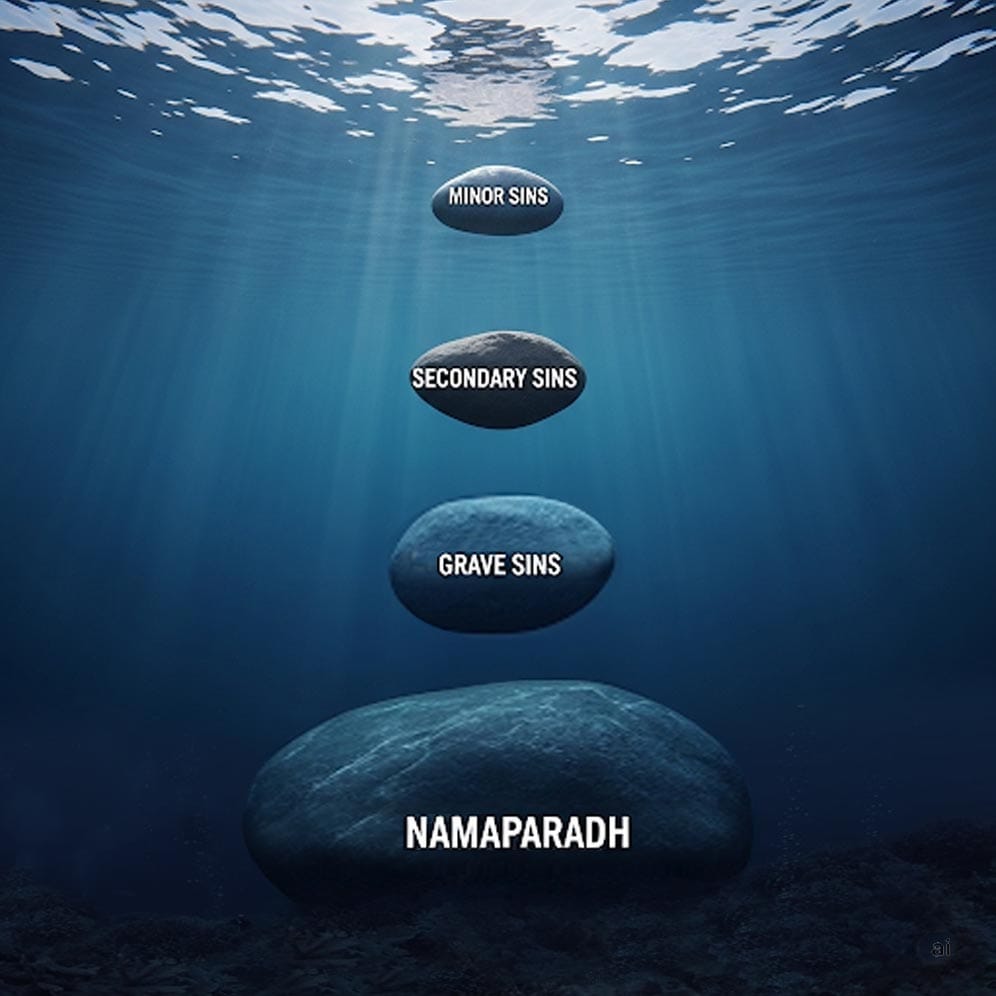
In Sanatan Dharma (सनातन धर्म | Sanātana Dharma), commonly known as Hinduism, actions that conform to Dharma are considered virtuous, while actions that violate Dharma are sinful.
Dharma establishes standards of conduct and prescribes consequences for their violation. These principles and consequences serve to maintain peace and harmony in society. However, the purpose of Dharma extends beyond maintaining social order. However, maintaining social order is not the ultimate goal of human life. That goal is the attainment of unlimited divine bliss.
Following Dharma earns Punya (पुण्य | Puṇya), or virtue, while violating it constitutes Adharma (अधर्म | Adharma) and results in Paap (पाप | Pāpa), or sin.
Paap and Punya are the two kinds of consequences arising from Karma (कर्म | Karma), or actions. They influence the destiny of every living being.
The Dharmashastras also use the word Patak (पातक | Pātaka) for sin. Derived from the Sanskrit root pat, meaning “to fall,” it refers to actions that lead to one's downfall.
Scriptures classify sins according to their severity and consequences.
1. Mahapatak — The Gravest Sins
Mahapatak (महापातक | Mahāpātaka) refers to the most serious sins, which lead to suffering in the darkest regions of Narak (नरक | Naraka).
One description portrays a vast vessel filled with worms into which the offending soul, in its subtle body, is thrown. The worms continuously bite the soul, which suffers terribly without dying.
These punishments are not arbitrary. Just as a loving mother disciplines her children for their welfare, the all-merciful God uses suffering to correct the Jeev and guide it away from wrongdoing.
Such grave sins cannot be erased through ordinary penance. Their consequences must be endured. Some Puranas, however, describe how devotion and God's grace can overcome even these sins.
The Chandogya Upanishad (5.10.9) identifies five grave transgressions, traditionally called the Pancha Mahapatakas.
स्तेनो हिरण्यस्य सुरां पिबंश्च गुरोस्तल्पमावसन्ब्रह्महा चैते पतन्ति चत्वारः पञ्चमश्चाचरंस्तैः ॥ ५.१०.९ ॥
stēnō hiraṇyasya surāṃ pibaṃśca gurōstalpamāvasanbrahmahā caitē patanti catvāraḥ pañcamaścācaraṃstaiḥ ॥ 5.10.9 ॥
“One who steals gold, drinks intoxicating liquor, violates the Guru's bed, or kills a Brahmin—these four fall, as does a fifth who associates with them.”
The five offenses are explained below.
A. Killing a Brahmin — Brahmahatya
Brahmahatya (ब्रह्महत्या | Brahmahatyā) refers to killing a Brahmin.
A Brahmin is described through the following expression:
ब्रह्मं एति इति ब्राह्मणाः ।
A Brahmin is one who knows God.
Such people is qualified to study and teach the Vedas. Killing such a person is especially grave because it destroys an important source of spiritual knowledge and deprives many seekers of the opportunity to receive that knowledge.
B. Stealing Precious Savings — Suvarna Steya
Suvarna Steya (स्वर्णस्तेय | Suvarṇa Steya) refers to stealing gold or other precious possessions.
This includes wealth accumulated through years of effort, such as the lifelong savings of a retired person.
Such theft can cause immense suffering to the victim. The deliberate deprivation of another person's hard-earned security makes it a grave sin.
C. Consuming Intoxicants — Surapaan
Surapan (सुरापान | Surāpāna) refers to consuming alcohol or other intoxicating substances.
The teaching identifies intoxication as especially dangerous because it immediately disturbs the mind and judgment. It can also damage physical health, including vital organs such as the heart and liver.
Habitual intoxication can degrade a person's mental disposition, disrupt family life, and lead to violence or other serious wrongdoing. Under its influence, a person may commit acts that bring lifelong regret.
Other grave sins may produce consequences primarily in the afterlife. A murderer or thief who escapes worldly punishment may appear to prosper temporarily, yet still face the consequences of those actions later.
Habitual intoxication, however, produces suffering in this very life. It can destroy health, wealth, family harmony, and spiritual progress.
For these reasons, the teaching describes habitual intoxication as particularly destructive among the Mahapatakas.
D. Violating the Guru's Marriage — Guru Talp Gaman
Guru Talp Gaman (गुरुतल्पगमन | Guru-talpa-gamana) refers to seducing or engaging in an illicit relationship with the spouse of one's Guru.
Here, Guru refers to a spiritual master, teacher, mentor, priest, or other respected elder, including those known as Gurujan.
Violating this relationship is considered a grave moral transgression.
E. Assisting in Grave Sins — Paap Sahayakatva
Paap Sahayakatva (पापसहायकत्व | Pāpa-sahāyakatva) refers to helping someone commit a grave sin.
Assisting another person in wrongdoing makes the helper responsible for participating in that sin.
Under divine law, the helper undergoes the same type of punishment as the person who committed the offense. However, the duration of punishment depends on the extent of assistance rendered.
For example, if the offender is punished by being immersed in boiling oil for a thousand years, someone who provided only minimal assistance might undergo the same punishment for a much shorter period, such as one year.
Thus, responsibility for a sinful act is not necessarily limited to the person who performs it directly.
2. Upapatak — Secondary Sins
Upapatak (उपपातक | Upapātaka) refers to sins that are less severe than Mahapatakas but nevertheless carry consequences.
The teaching identifies five kinds of secondary offenses:
- Failing to perform prescribed daily Vedic rituals.
- Incurring the displeasure of one's preceptor.
- Selling intoxicating drinks.
- Giving false testimony or making false claims.
- Performing a sacrifice for an unworthy person or an unworthy cause.
Although these offenses are classified as secondary, they remain violations of Dharma.
3. Prakirn Patak — Minor Sins
Prakirn Patak (प्रकीर्ण पातक | Prakīrṇa Pātaka) refers to lesser offenses committed intentionally or unintentionally through ignorance or carelessness.
Scriptures describe more than fifty such offenses. Examples include deceit, killing a woman, studying scriptures forbidden by one's spiritual master, killing insects or other creatures, adultery, cruelty, disobedience toward parents, and accepting alms without performing the prescribed austerities or sacrifices.
These sins can be addressed through prescribed Vedic rituals, sincere repentance, and seeking forgiveness.
God is merciful and forgiving. The Vedas describe numerous forms of worship, fire sacrifices, and atonement intended to counteract the consequences of sinful actions.
However, there is a fundamental difficulty.
Every Jeev has performed countless actions over innumerable past lives. Each action produces consequences. A sin may be committed in a moment, while its atonement may require considerable time and effort.
How, then, could anyone possibly atone for every sin accumulated over countless lifetimes?
The process would take an unimaginably long time. Moreover, while attempting to atone for past sins, a person may continue committing new ones.
It is therefore impossible to eliminate the entire burden of accumulated sins through individual acts of atonement.
Yet there is a way.
The all-gracious God forgives all our sins when we completely surrender ourselves at His lotus feet.
4. Namaparadh — The Gravest Spiritual Offenses
Beyond these categories of sin are spiritual transgressions known as Namaparadh (नामापराध | Nāmāparādha).
These offenses are especially grave because they directly obstruct one's spiritual progress and devotion to God.
While ordinary sins can be forgiven through complete surrender to Shri Krishna, Namaparadh cannot be removed through Vedic rituals or ordinary acts of penance. The teaching warns that even God does not pardon these offenses in the ordinary manner.
Scriptures of Bhakti, including Ujjvala Nilamani, Bhakti Rasamrita Sindhu, and Prem Ras Siddhant, describe ten forms of Namaparadh.
They include offenses against God-realized Saints and one's Guru, disrespect toward authentic scriptures, discrimination between divine names, misinterpretation or misuse of those names, and other transgressions involving the practice of devotion.
The consequences are severe. Such offenses can destroy one's love for God, obstruct spiritual progress, and lead to prolonged suffering and continued bondage in the cycle of birth and death.
Unlike ordinary sins, Namaparadh cannot be neutralized by performing prescribed rituals.
The remedy is sincere repentance, seeking forgiveness, remembering God, and obtaining the grace of a God-realized Saint. Where an offense has been committed against a Saint, forgiveness must be sought from the offended Saint.
Conclusion — The Path Beyond Sin
The consequences of sinful actions cannot be dismissed merely because their effects are not immediately visible.
Some actions bring suffering in this life, while others bear fruit later. Even seemingly lesser offenses contribute to the accumulated burden of Karma.
Vedic rituals and repentance can address certain sins, but no one can individually atone for the countless actions performed over innumerable lifetimes.
God's grace offers a way beyond this burden.
Surrender yourself at the lotus feet of an authentic Rasik Saint, resolve to follow the Saint's instructions, and practice devotion under that guidance.
Above all, remain vigilant against spiritual transgressions, particularly offenses toward Saints, divine names, and scriptures.
Through sincere surrender, devotion, and the grace of a God-realized Saint, the Jeev can attain the ultimate goal of divine love and bliss.
Go Deeper
 JKP Literature

Why do the consequences of our actions follow us across lifetimes?
 JKP Literature

If countless sins cannot be individually atoned for, how can the soul become free of them?
 JKP Literature

Which offenses can obstruct even the practice of devotion?