Difference between Brahm and Jeev?
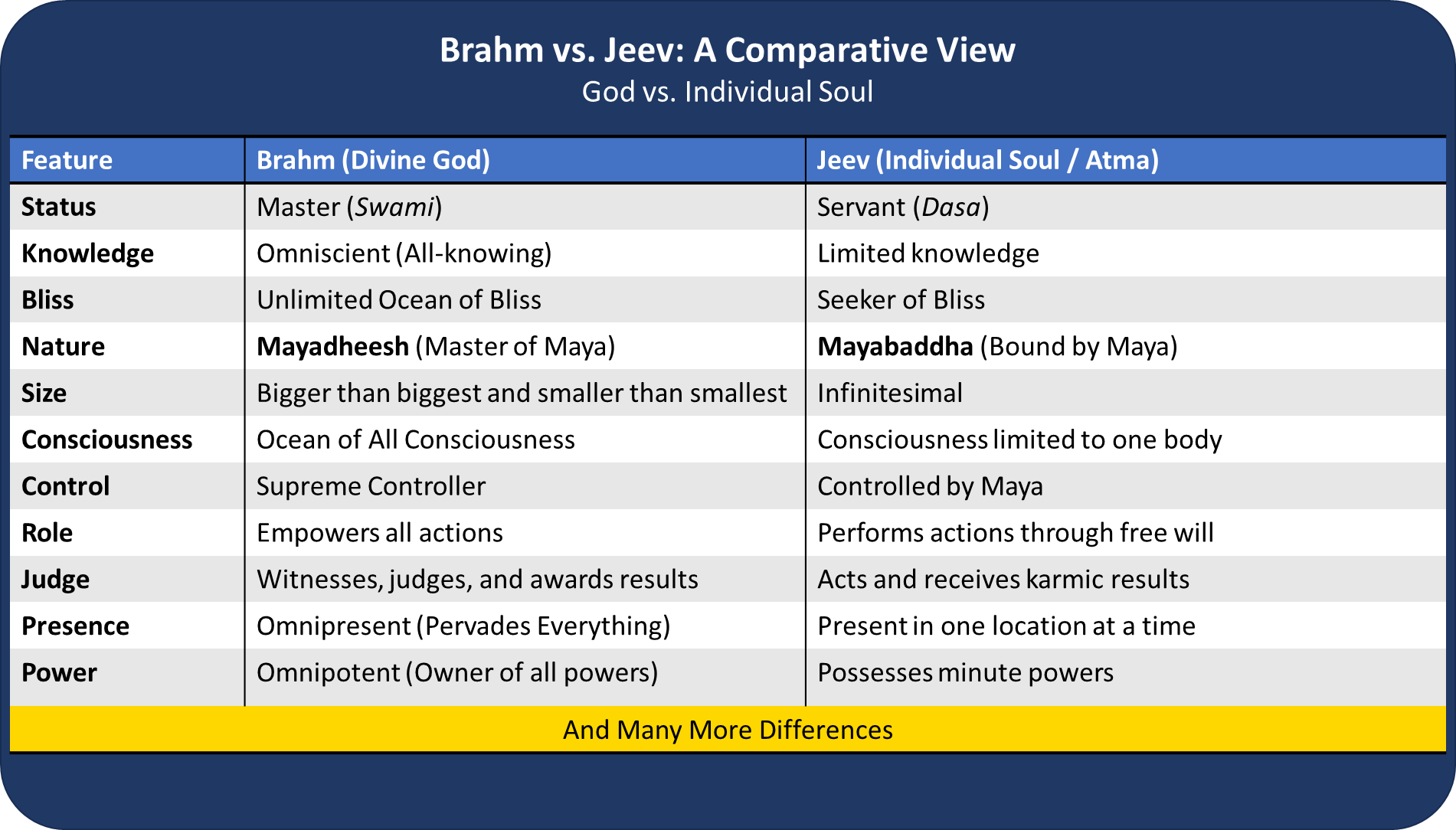
Both Brahm and Jeev are spiritual in nature, yet they are not identical. God is infinite, omniscient, and the master of Maya, while the individual soul is infinitesimal, limited, and dependent upon Him.
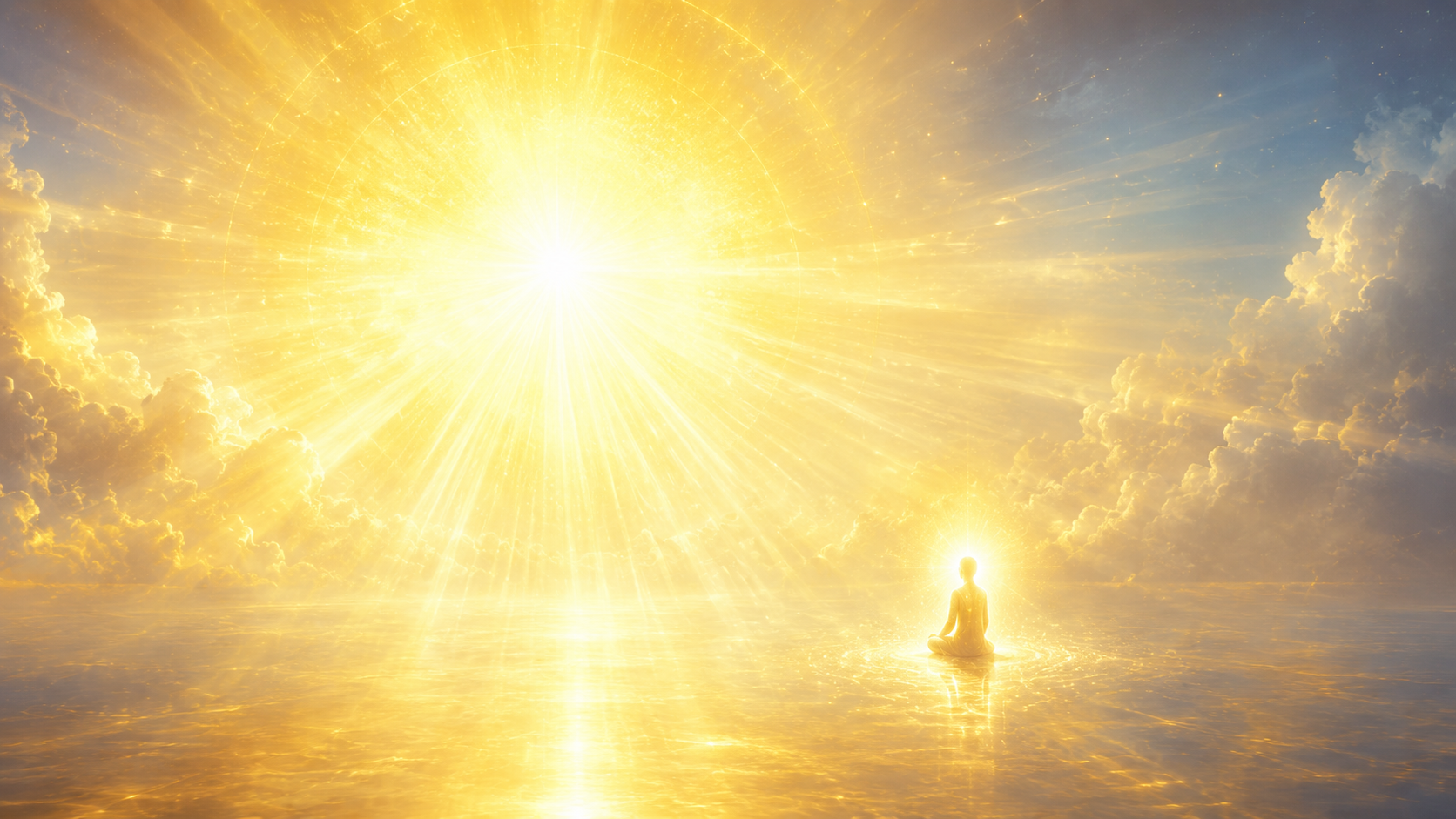
Many spiritual discussions use the words God, soul, self, consciousness, Brahm, and Atma. As a result, seekers often become confused about the relationship between Brahm and Jeev.
The scriptures teach that both are divine and eternal, yet they are not identical.
Understanding this distinction is essential for understanding Atma-Gyan, Brahm-Gyan, Bhakti, Grace, and liberation.
What Is Brahm?
Brahm is God.
The scriptures describe Brahm as conscious, eternal, all-knowing, all-powerful, all-pervading, and infinitely blissful.
Brahm is the source of all existence (living and non-living) and the master of Maya and also Jeev.
What Is Jeev?
Jeev is the individual soul. Like you and I, all living beings are the life force.
Like Brahm, the soul is eternal, conscious, and divine personality. These are the similarties between the two.
However, the soul is infinitesimal and possesses only a minute fraction of the qualities that exist infinitely in God.
The soul is not the creator, controller, or sustainer of the universe.
Key Differences at a Glance
Why This Distinction Matters
Many spiritual errors arise when the soul and God are treated as identical.
The scriptures teach that the soul is spiritual, but it is not God.
The soul is conscious, but not all-conscious.
The soul seeks bliss, while God is the infinite source of bliss.
The soul may become liberated, but God is eternally beyond Maya.
For this reason, realization of the soul and realization of God are not the same attainment.
The Essential Conclusion
The soul and God share a spiritual nature, but they are not equal.
Brahm is the infinite Supreme Reality.
Jeev is the infinitesimal individual soul.
Understanding this distinction prepares the seeker to understand the difference between Atma-Gyan and Brahm-Gyan.