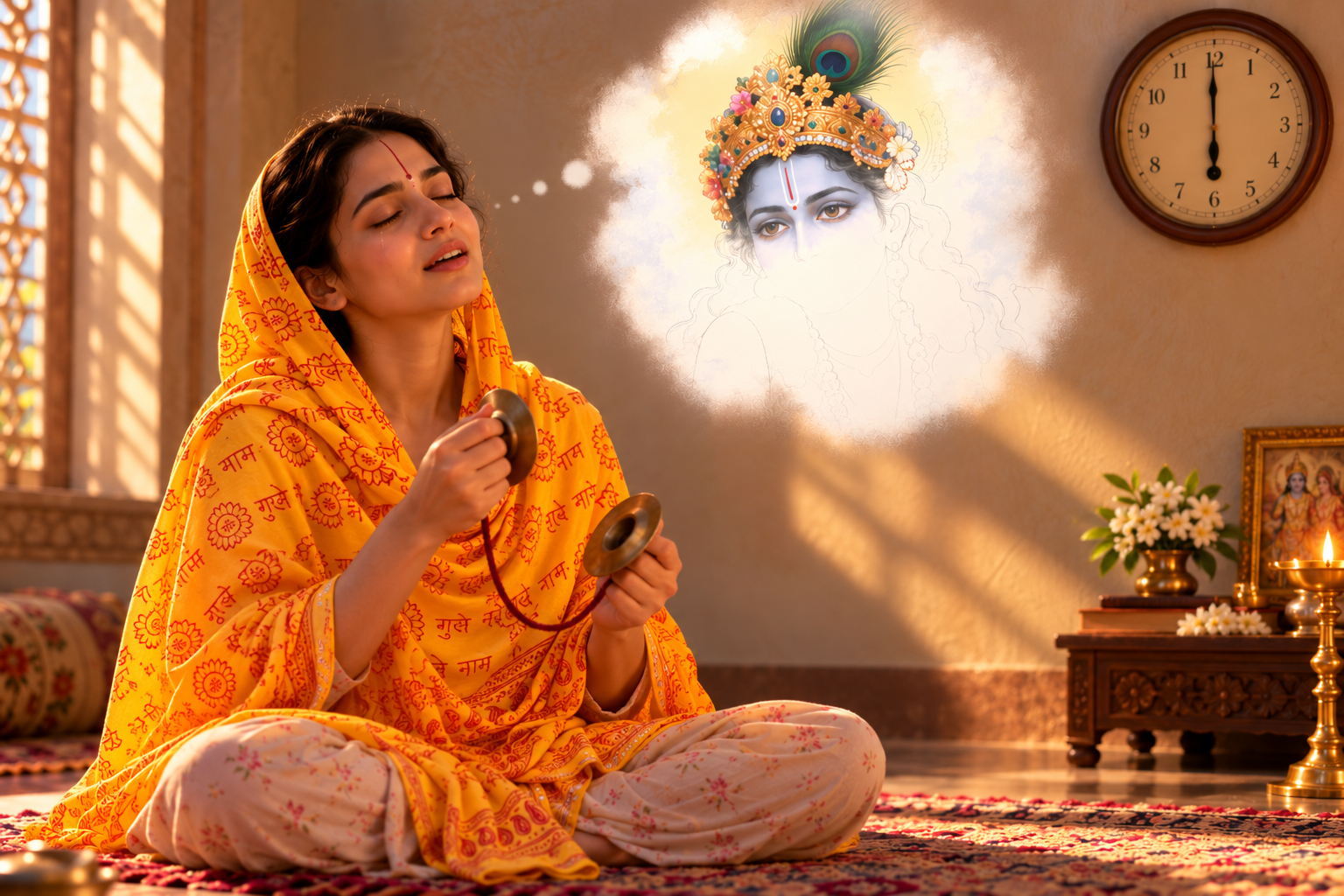
The Eternal Relationships Between Brahm and Jeev
The Vedic scriptures describe Brahm and Jeev as eternally related. These relationships reveal both the soul's complete dependence upon God and its intimate connection with Him, providing the foundation for Bhakti, Grace, surrender, and Divine Love.
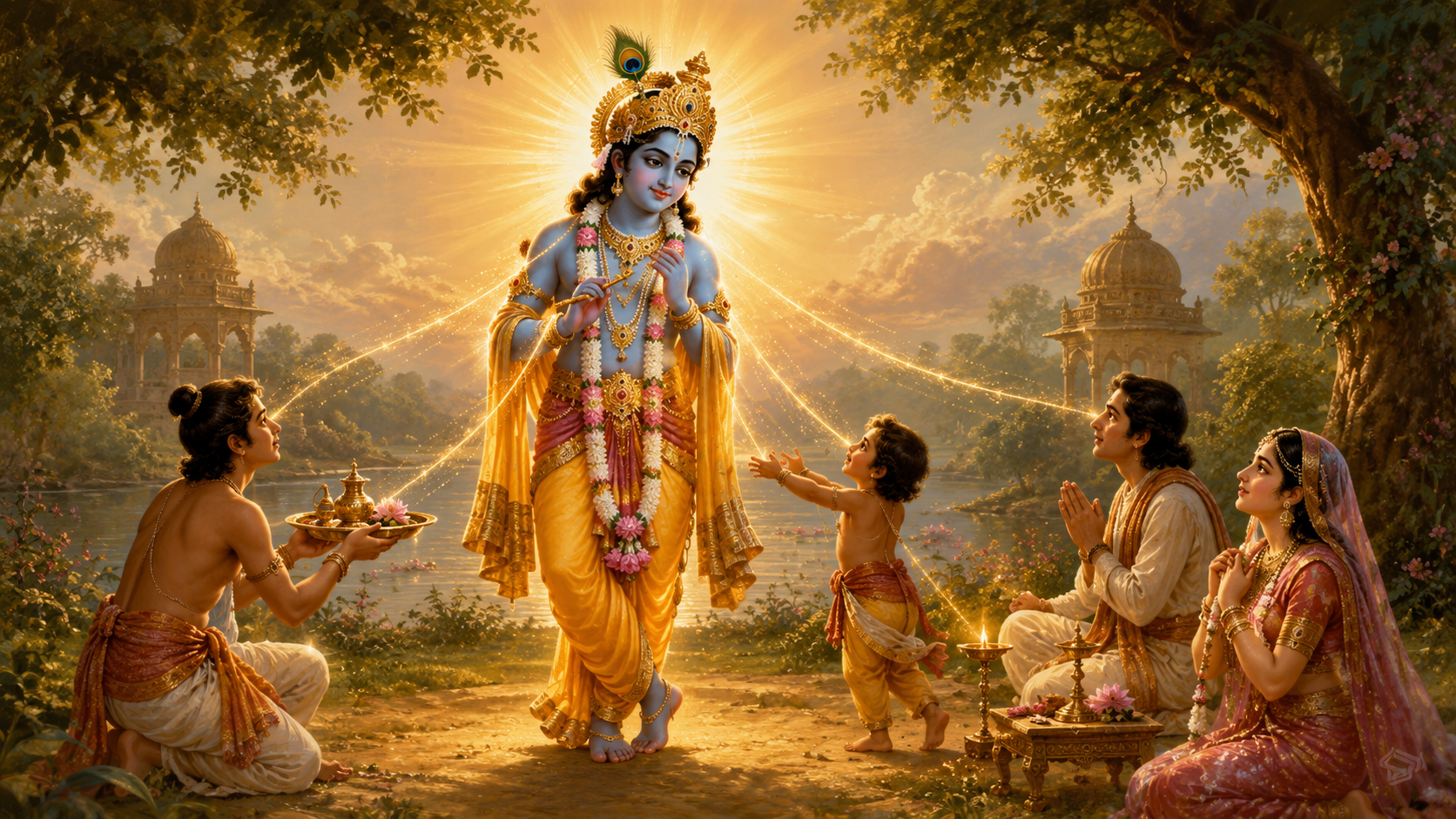
The Vedic scriptures describe both Brahm (God) and Jeev (the individual soul) as eternal, conscious, and divine.
Because of these similarities, many seekers conclude that the soul and God must be identical.
The scriptures reject this conclusion.
One of the strongest scriptural proofs that Brahm and Jeev are distinct entities is the existence of eternal relationships between them.
Relationship itself requires distinction.
If two entities were absolutely identical in every respect, no relationship between them could exist.
Understanding these relationships is essential for understanding Bhakti, Grace, surrender, and God-realization.
The Soul Is an Eternal Part of God
The Bhagavad Gita declares:
ममैवांशो जीवलोके जीवभूतः सनातनः ।
mamaivāṁśo jīvaloke jīvabhūtaḥ sanātanaḥ
"The eternal soul in this world is My eternal fragmental part." (Bhagavad Gita 15.7)
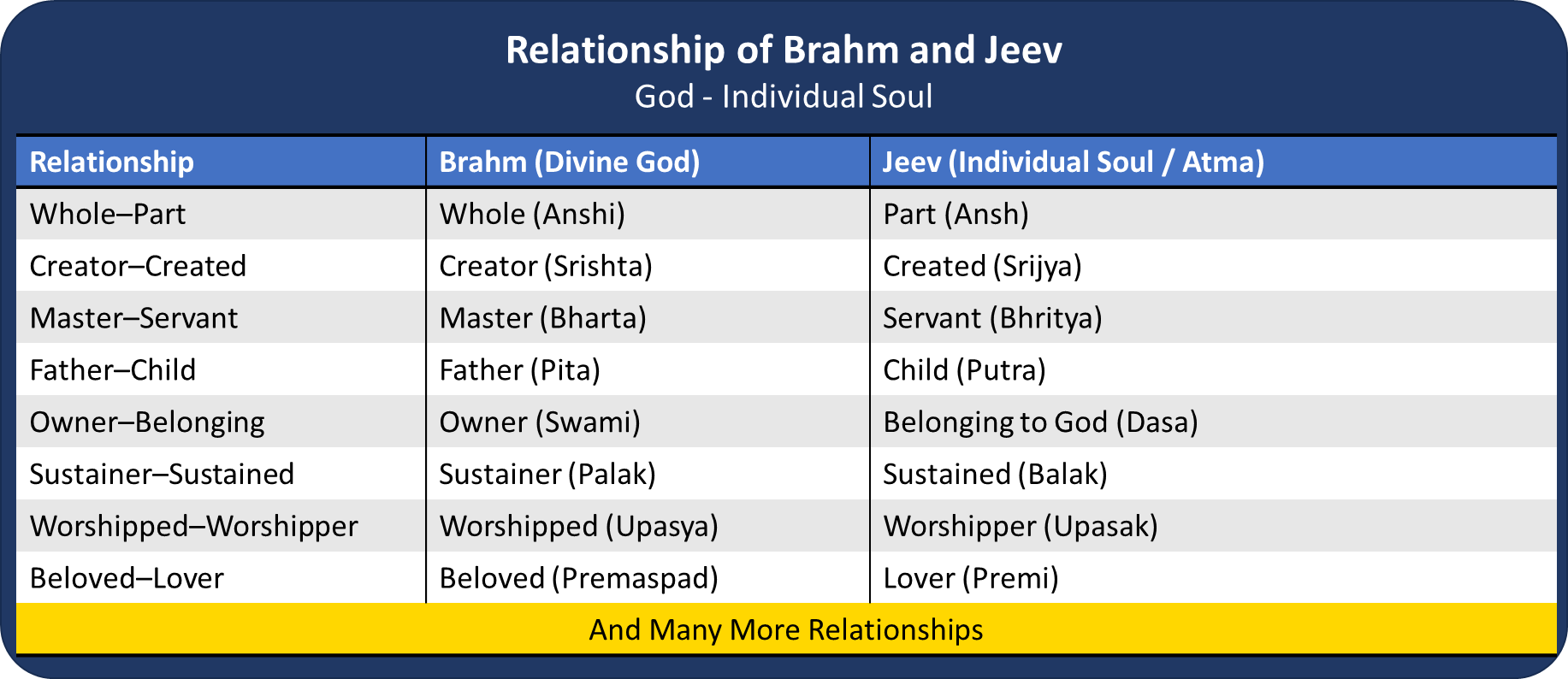
Thus, the soul (Jeev) is an eternal part (ansh) of God (Brahm), who is the Supreme Whole (Anshi).
Because the soul and God are distinct entities, numerous eternal relationships exist between them.
The Soul Is Eternally Related to God
The soul is not an isolated spiritual entity existing independently of God.
The soul exists eternally in relationship with God.
Just as a ray cannot exist independently of the sun, the soul cannot exist independently of God.
These relationships do not arise after liberation.
Nor are they temporary conditions created by Maya.
They are eternal realities.
Liberation does not create these relationships.
It perfects them.
God Is the Whole; the Soul Is the Part
God is Anshi (अंशी | aṃśī)—the Supreme Whole.
The soul is Ansh (अंश | aṃśa)—His infinitesimal part.
Because the soul is an infinitesimal part of God, it shares certain divine qualities with Him.
However, the part never becomes equal to the Whole.
This relationship explains both the similarity and the difference between Brahm and Jeev.
God Is the Master; the Soul Is the Servant
God is Swami (स्वामी | svāmī)—the eternal Master.
The soul is Dasa (दास | dāsa)—the eternal servant.
The soul's perfection lies not in becoming God, but in lovingly serving Him.
Bhakti is therefore not an artificial practice imposed upon the soul.
It is the natural expression of the soul's eternal relationship with God.
God Is the Lord; the Soul Is His Servant
God is Bharta (भर्ता | bhartā)—the Lord and sustainer.
The soul is Bhritya (भृत्य | bhṛtya)—one who serves and depends upon Him.
This relationship emphasizes the soul's complete dependence upon God for its existence, sustenance, and ultimate welfare.
God Is the Father; the Soul Is His Child
God is Pita (पिता | pitā)—the eternal Father of all souls.
The soul is Putra (पुत्र | putra)—His child.
Just as a loving father desires the welfare of his child, God continuously seeks the spiritual upliftment of all souls.
Even when the soul forgets God, God never forgets the soul.
God Sustains; the Soul Is Sustained
God is Palak (पालक | pālaka)—the protector and sustainer of all beings.
The soul is Balak (बालक | bālaka)—eternally sustained by God.
Every breath, every thought, and every moment of existence depends upon God's sustaining power.
The soul can never exist independently of Him.
God Creates; the Soul Is Created
God is Srishta (सृष्टा | sṛṣṭā)—the creator.
The soul is Srijya (सृज्य | sṛjya)—that which has been created.
Although the soul is eternal, it does not possess the power to create itself.
Its existence eternally depends upon God.
God Is Worshipped; the Soul Worships
God is Upasya (उपास्य | upāsya)—the object of worship.
The soul is Upasak (उपासक | upāsaka)—the worshipper.
The scriptures therefore prescribe devotion, remembrance, worship, and surrender to God.
Bhakti is not merely a spiritual technique.
It is the natural function of the soul.
God Is the Beloved; the Soul Loves
God is Premaspad (प्रेमास्पद | premāspada)—the eternal object of Divine Love.
The soul is Premi (प्रेमी | premī)—the lover.
The ultimate goal of the soul is not merely liberation from suffering.
It is the attainment of pure Divine Love for God.
This relationship reaches its fullest expression in Bhakti.
Why These Relationships Matter
The existence of these eternal relationships demonstrates that Brahm and Jeev cannot be absolutely identical.
God is the creator.
The soul is created.
God is worshipped.
The soul worships.
God grants the fruits of actions.
The soul performs actions.
God is independent.
The soul is dependent.
Such relationships would be impossible if God and the soul were one and the same in every respect.
At the same time, these relationships reveal the soul's eternal connection with God.
The soul does not exist independently of God.
It eternally belongs to Him and finds its fulfillment only in relationship with Him.
The Foundation of Bhakti
Bhakti becomes possible only because Brahm and Jeev are eternally distinct.
If the soul and God were absolutely identical, there could be no worship, surrender, service, friendship, parental affection, or Divine Love.
The scriptures therefore describe countless devotional relationships between God and the soul, including:
- Dasya (दास्य | dāsya) — servitude
- Sakhya (सख्य | sakhya) — friendship
- Vatsalya (वात्सल्य | vātsalya) — parental affection
- Madhurya (माधुर्य | mādhurya) — Divine Love
These loving relationships constitute the very heart of Bhakti.
Bhakti does not create a relationship between God and the soul.
It awakens and perfects relationships that already exist eternally.
The Essential Conclusion
The soul and God are both eternal, conscious, and divine.
Yet they are not identical.
The soul is the eternal Ansh.
God is the eternal Anshi.
The existence of eternal relationships between Brahm and Jeev demonstrates both their distinction and their intimate connection.
Liberation does not destroy these relationships.
Rather, liberation perfects them.
Understanding these eternal relationships provides the proper foundation for Bhakti, surrender, Grace, and Divine Love.