
Bhog Yoni (भोग योनि)
Bhog Yoni refers to life forms in which the Jeev primarily experiences the results of actions performed in previous human lives.

Bhog Yoni refers to life forms in which the Jeev primarily experiences the results of actions performed in previous human lives.
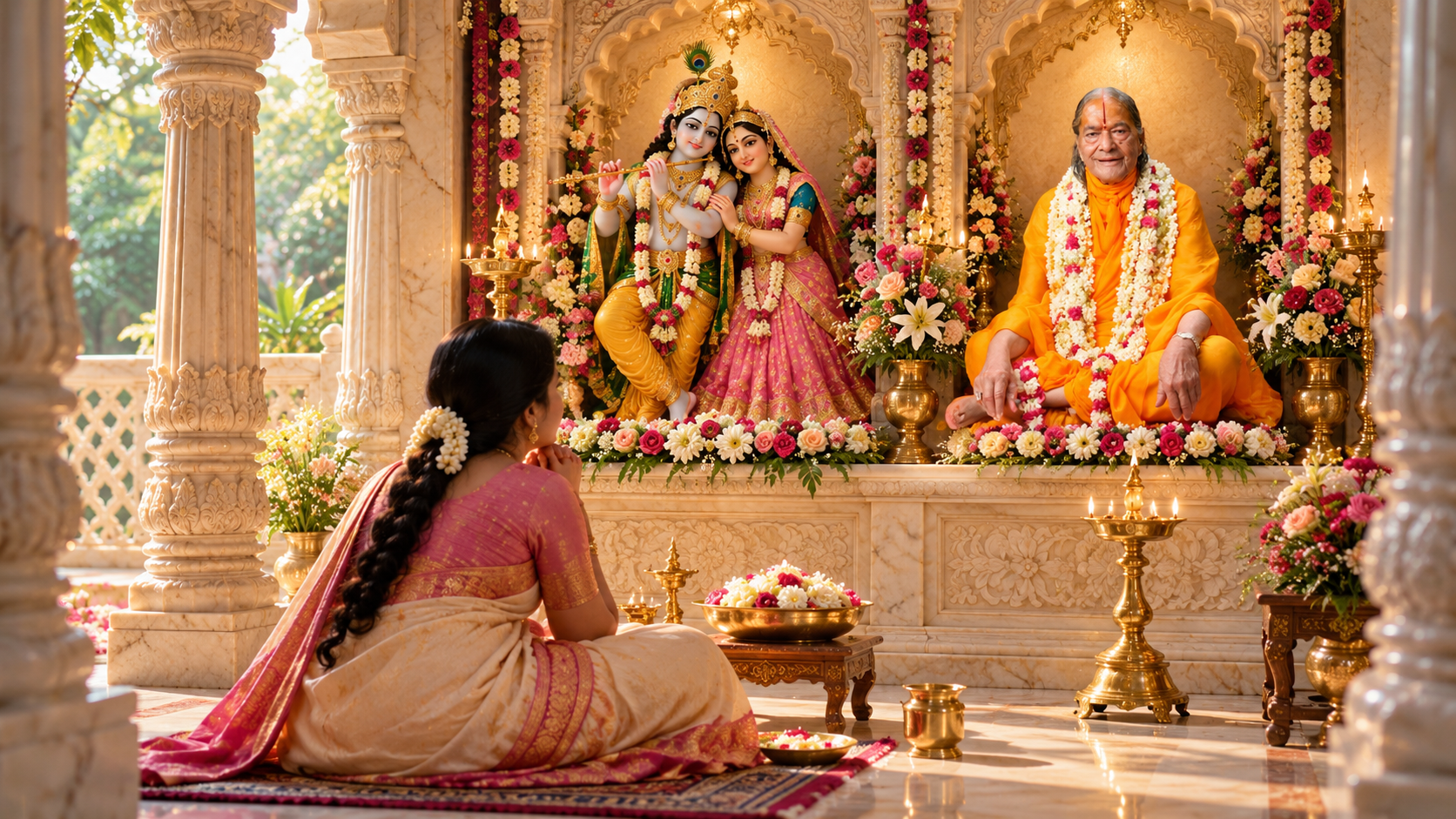
Ananyata means exclusiveness in devotion—being exclusive to one's chosen form of God and Guru and to the path taught by one's Guru.

Anarth Nivritti refers to the dissipation of unwanted tendencies and impurities that obstruct devotion. * anartha — that which is not meaningful or beneficial for the soul * nivṛtti — removal or cessation It is the stage in Bhakti where inner obstacles begin to weaken and fall away. What It Is Anarth Nivritti is

anumana pramana (Devanagari: अनुमान प्रमाण ISO15919: anumāna pramāṇa ) is inferential evidence based on previous experience. LEARN MORE * pratyaksh pramana * shabda pramana Reference: Jagadguruttam - The Supreme Spiritual Master - A Biography

Bhukti is the desire for material pleasures in this world or celestial worlds and is classified as tamasi, rajasi, or sattvik.

Mahapurush (महापुरुष | mahāpuruṣa) means a God-realized Saint—a soul who has attained Bhagavadprapti and is no longer under the influence of Maya. The word is formed from maha, meaning “great,” and purush, meaning “person.” In this spiritual sense, Mahapurush does not simply mean an important, accomplished,

Manushya means a human being—a descendant of Manu—and the human form uniquely provides the freedom to perform fruit-bearing karma.

Nirvikalpa Samadhi (निर्विकल्प समाधि; nirvikalpa samādhi) refers to the Trance of Non-Duality or Undifferentiated Absorption. The State of Dormancy It is the state where the mind becomes totally inactive and dormant. Attaining Brahmajnana (Knowledge of the Absolute) is the highest achievement possible on the

Paap refers to sinful or prohibited actions that create suffering and karmic bondage, keeping the soul within material existence.
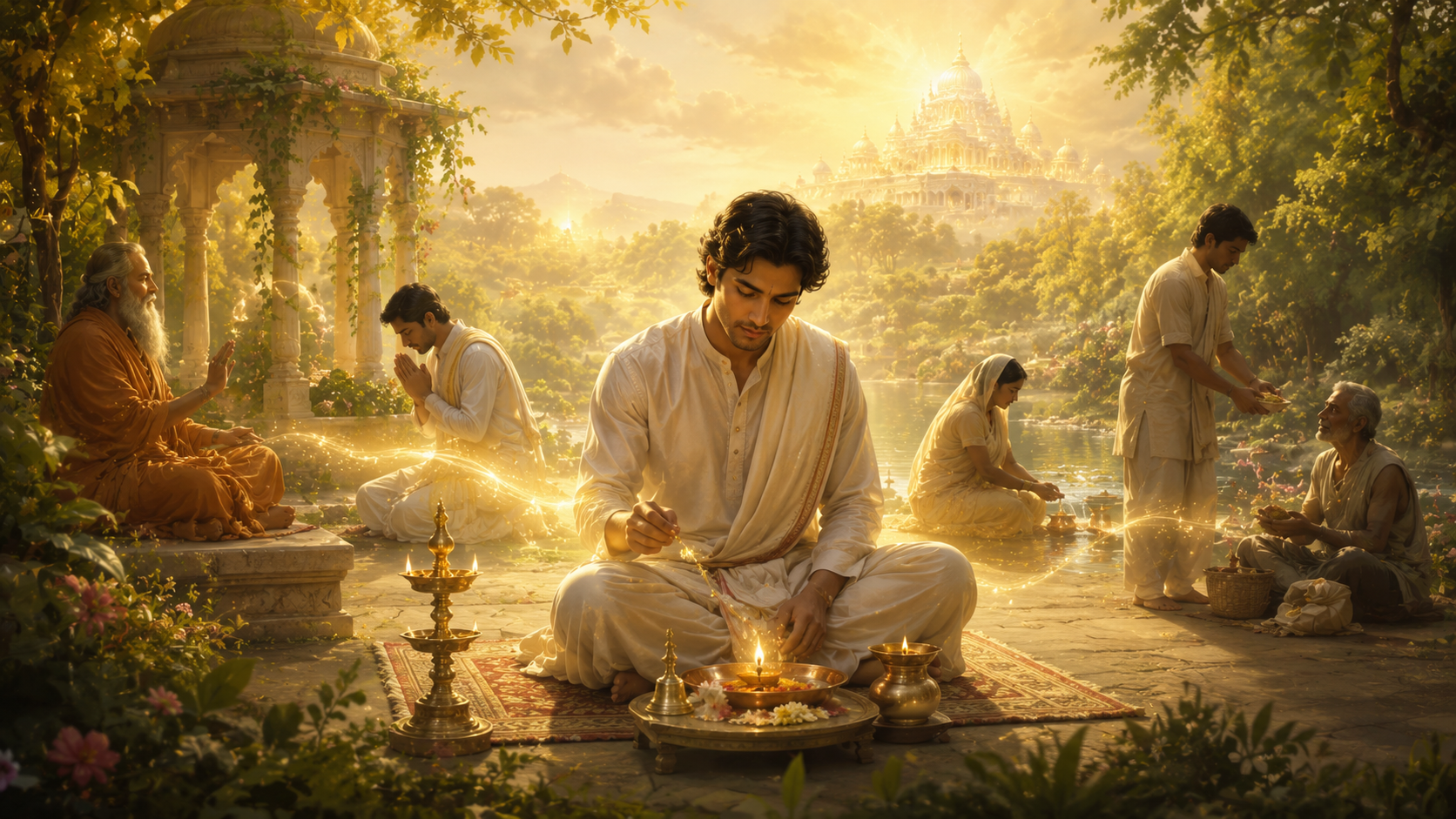
Punya (पुण्य) refers to virtuous actions performed in accordance with Vedic injunctions. When such actions are performed correctly and in full conformity with scriptural principles, they produce favorable karmic results, including temporary residence in heavenly realms.

Rasa (रस | rasa) refers to Divine Bliss, Spiritual Essence, or the nectar-like experience of God. It is not merely an attribute of God, but His very nature. What It Means In Vedic understanding, Shri Krishna is not just the possessor of bliss — He is Rasa itself. Rasa is the

Samanjasa Rati is love for Shri Krishna as the beloved husband, primarily seeking His happiness while retaining some desire for one's own.