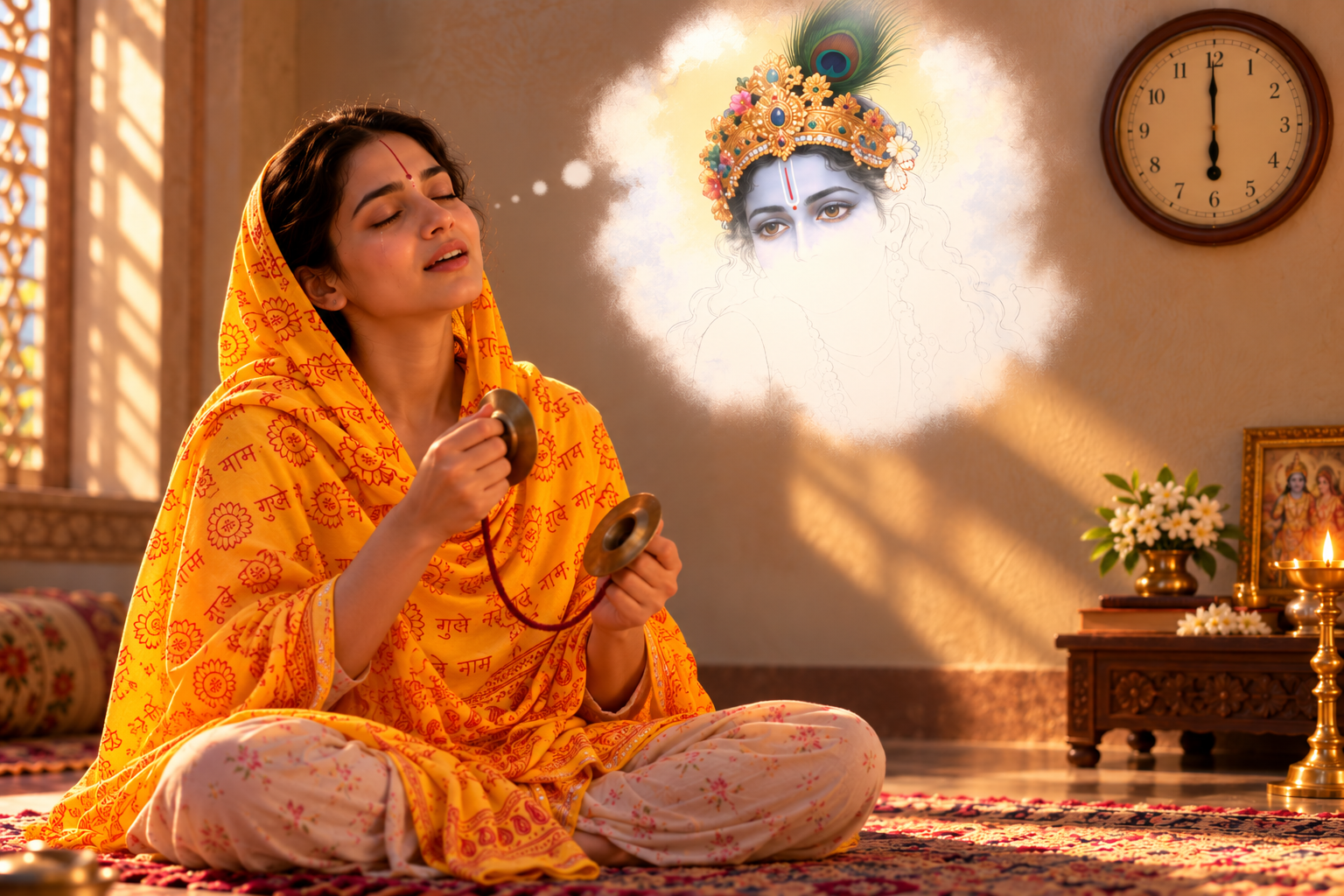
Bhukti (भुक्ति)
Bhukti is the desire for material pleasures in this world or celestial worlds and is classified as tamasi, rajasi, or sattvik.

Bhukti (भुक्ति | bhukti) means the desire to attain material pleasures, whether in this world or in the celestial worlds.
These pleasures extend from those available on Earth to those available in Brahmalok, the abode of creator Brahma. Despite the enormous differences between these pleasures, they all remain within the material realm and under the control of Maya.
Three Grades of Bhukti
Bhukti is of three grades. Although all three are material, each succeeding grade is superior to the previous one.
Tamasi Bhukti (तामसी भुक्ति | tāmasī bhukti) includes desires connected with violence, intoxication, harming others, lying, and other evil activities.
Rajasi Bhukti (राजसी भुक्ति | rājasī bhukti) is centered on me and mine—earning and using what one has for oneself and those one considers one's own.
Sattvik Bhukti (सात्त्विक भुक्ति | sāttvika bhukti) involves attachment of the mind to sattvik people or things.
Although sattvik bhukti is superior to rajasi and tamasi bhukti, all three remain under Maya and therefore must ultimately be abandoned.
Go Deeper
 JKP Literature
 JKP Literature

 JKP Literature