Samanjasa Rati (समंजसा रति)
Samanjasa Rati is love for Shri Krishna as the beloved husband, primarily seeking His happiness while retaining some desire for one's own.
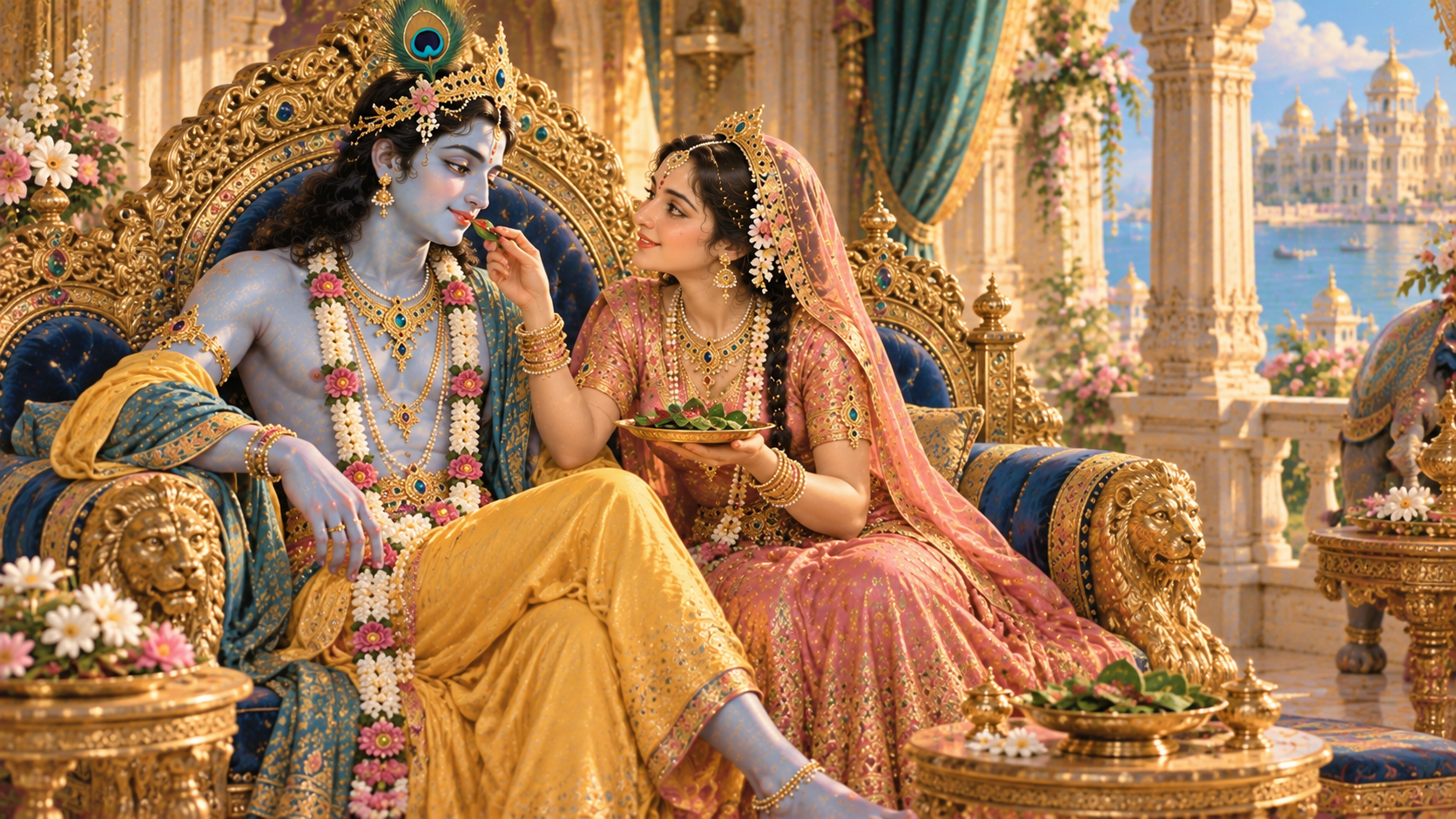
Samanjasa Rati (समञ्जसा रति | samañjasā rati) is the intermediate category of Madhurya Bhav, in which the devotee primarily desires to please Shri Krishna but occasionally also desires her own happiness.
Nature of Samanjasa Rati
In Samanjasa Rati, the devotee regards Shri Krishna as her beloved husband.
As a wife, she lovingly serves her husband, and she also has a sense of right over her relationship with him. Therefore, although her love is predominantly directed toward pleasing Shri Krishna, she may occasionally desire her own happiness.
This distinguishes Samanjasa Rati from Samartha Rati, in which the desire for one's own happiness is completely absent.
Exemplary Personalities
Goddess Mahalakshmi exemplifies Samanjasa Rati as the eternal consort of the Lord in Vaikuntha.
Rukmini, the principal Queen of Dwarika and a descension of Goddess Mahalakshmi, also exemplifies this love for Shri Krishna.
Related Concepts
 JKP Literature
 JKP Literature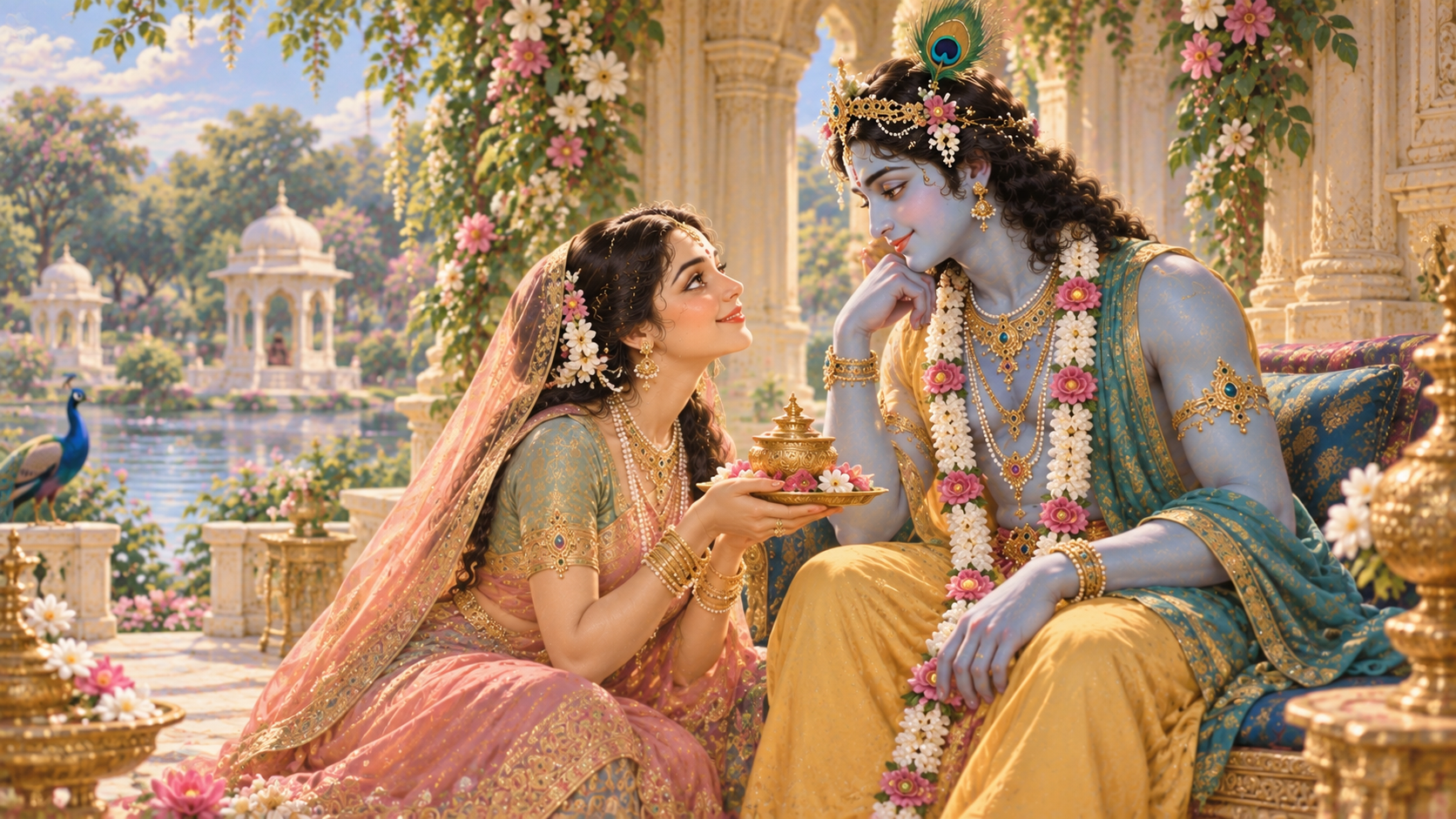
 JKP Literature
Reference
Bhakti Shatak - Hundred Gems of Devotion - an in-depth analysis