Ananyata (अनन्यता)
Ananyata means exclusiveness in devotion—being exclusive to one's chosen form of God and Guru and to the path taught by one's Guru.
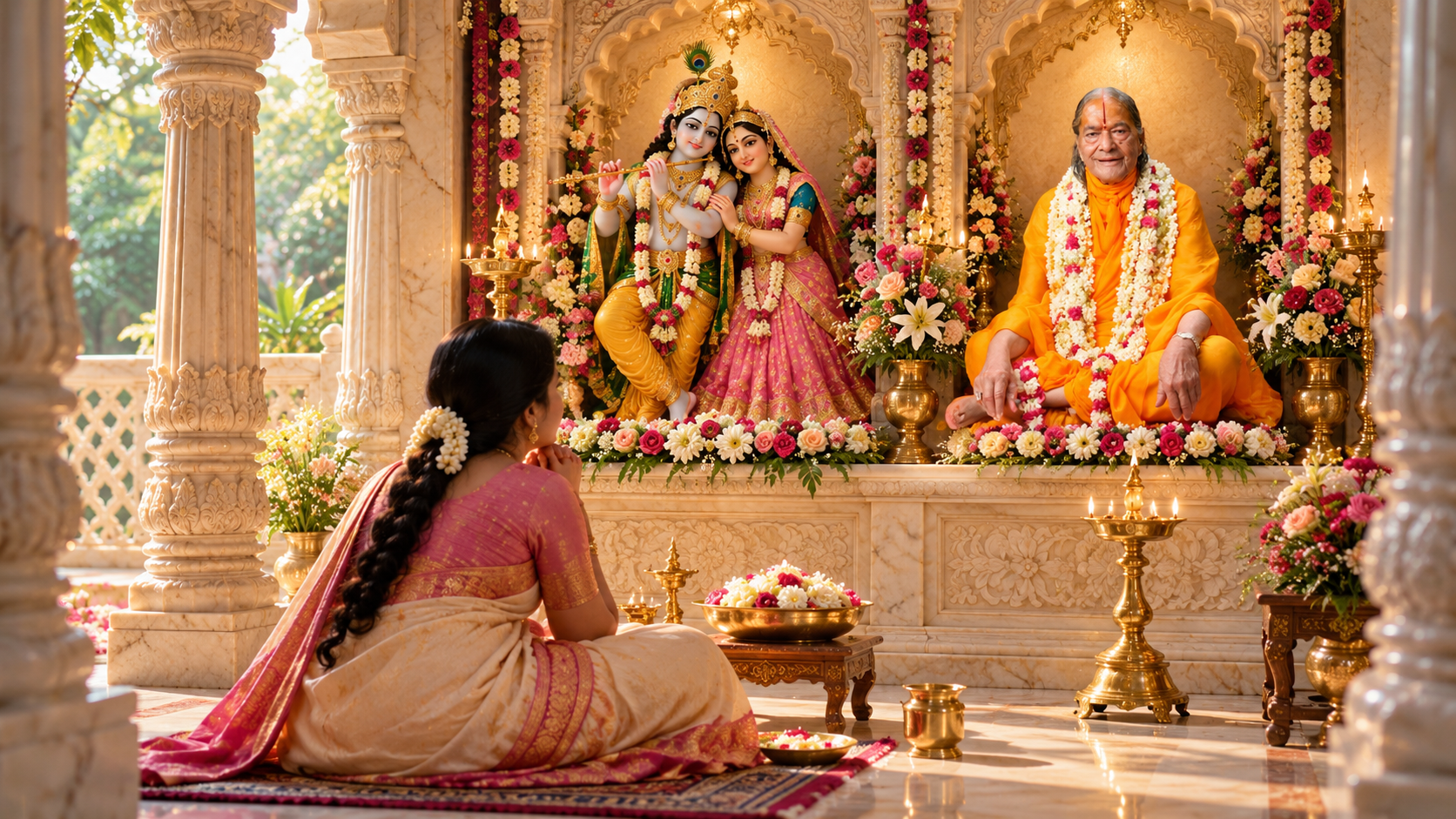
Ananyata (अनन्यता | ananyatā) means exclusiveness—having no other. The word expresses this directly: a means “no” and anya means “other.” In sadhana bhakti, Ananyata means being exclusive to one's chosen form of God and Guru, and exclusively following the path taught by one's Guru.
In sadhana bhakti, this exclusiveness applies both to whom one follows and the path one follows.
A sadhak practices bhakti exclusively toward their chosen form of God and Guru. At the same time, they exclusively follow the spiritual path taught by their Guru rather than mixing different paths or methods.
Ananyata is therefore one of the pillars of sadhana bhakti.
Go Deeper
 JKP Literature
See how Ananyata functions as one of the essential pillars of sadhana bhakti and how exclusiveness supports spiritual practice.
 JKP Literature
 JKP Literature