Akarta (अकर्ता)
Akarta means non-doer. Understand why the jeev, God, and God-realized Saints are each called Akarta in different contexts.
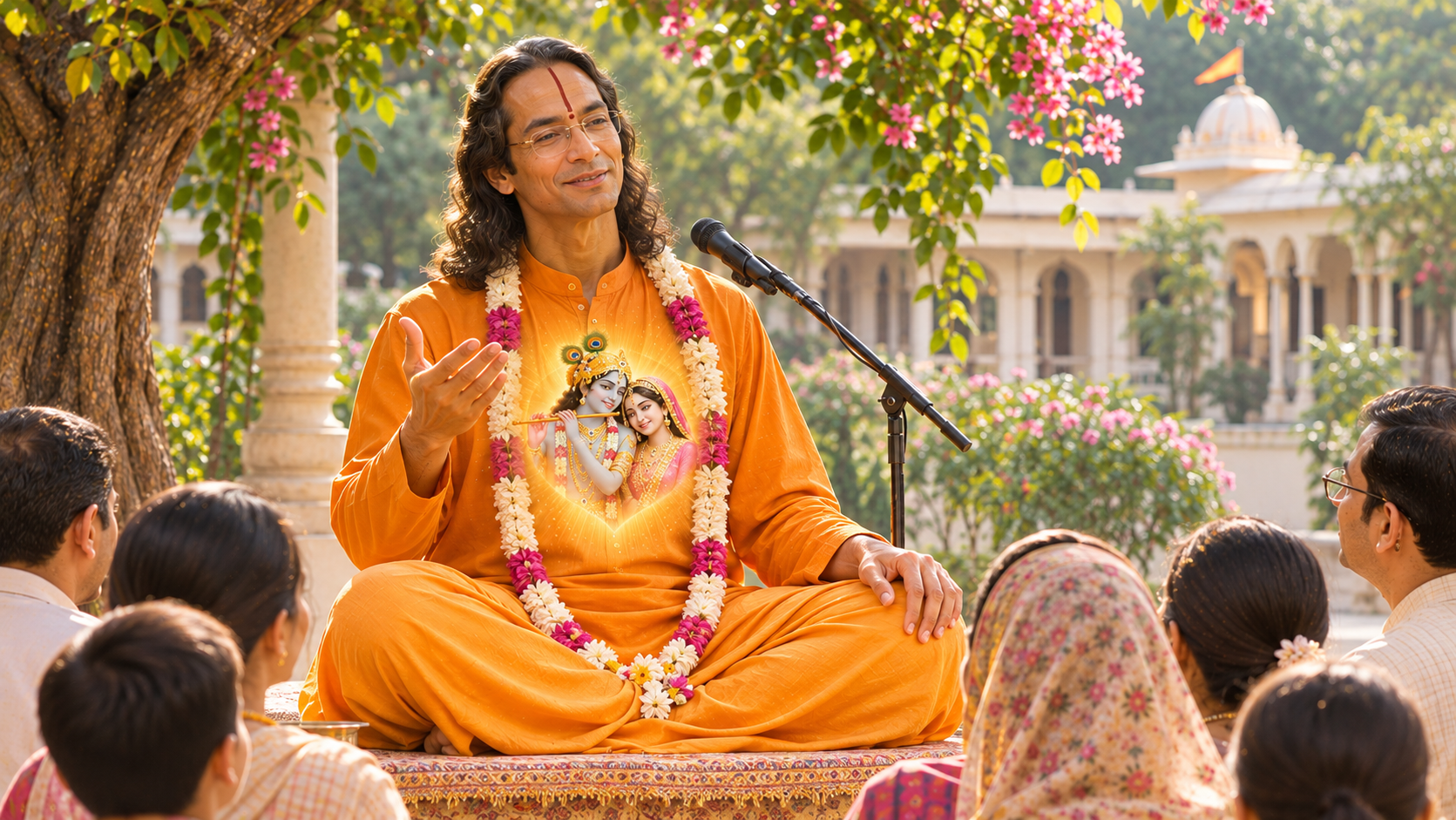
Akarta (अकर्ता | akartā) means the non-doer.
Karma means action. For the Maya-bound jeev, the mind performs actions to fulfill its own desires. God and God-realized Saints, however, have no unfulfilled desires. Although they perform countless actions for the welfare of others, they have nothing to attain for themselves. Therefore, they are called Akarta.
The Jeev as Akarta
The jeev is intrinsically Akarta because it does not perform actions independently. The mind, which is made of Maya and is therefore inert, performs karma using the power received from the jeev.
The jeev is also called Karta, the doer, because of its association with the mind.
During Mahapralay, the great dissolution of creation, the jeev does not have the mind available to perform actions. Consequently, it cannot act.
When creation begins again, God provides the jeev with the mind, and it resumes performing actions through it.
Thus, the jeev is intrinsically Akarta but is called Karta through its association with the mind.
God as Akarta
God is Akarta because He has no unfulfilled desires and therefore has no need to perform actions to attain anything.
Nevertheless, God performs divine actions. He is Nimittopadan Karan, both the instrumental and material cause of creation, and Prayojak Karta, the giver of the power to act.
Thus, calling God Akarta does not mean that He performs no actions.
God-Realized Saints as Akarta
God-realized Saints are Akarta because they have attained their ultimate goal and have no unfulfilled desires.
They are Kritkritya—those who have accomplished what needed to be accomplished.
Although they may continue to perform actions for the welfare of others, they have no personal need to act to attain anything. All their actions are Akarm, since they are forever beyond karmic bondage.
Go Deeper
 JKP Literature


 JKP Literature