shakha
Shakha (शाखा, śākhā) literally means "branch." In the context of Vedic literature, it refers to a specific concept. Further Reading and Reference * Related Concepts: Upanishad * Reference: Who am I? Who is Mine? Vol. 1, Ch. 2
Question Jagadguruttam Shri Kripalu Ji Maharaj often draws a comparison between the nature of God-realized saints and a birch tree. What is the similarity between these two? Answer: The Ramayan says भुर्ज तरु सम संत कृपाला । पर हित सह नित विपति वि
Yajurveda (Devanagari: यजुर्वेद; ISO 15919: yajurveda) is one of the four Vedas. It primarily contains the mantras and detailed instructions required to perform Vedic sacrifices and rituals. Further Reading and Reference * Alternate Spelling: Yajur Veda, Yajurved * Related Concepts: Upanishad * Reference: Who am I? Who is Mine? Vol.
The Murti (मूर्ति) is the divine form for worship. As the true Murti is God's form, the consecrated idol helps the mind achieve God-realization via Rupdhyana.
Akshaypatra (अक्षयपात्र, akṣayapātra) refers to the inexhaustible vessel or divine bowl. The term is derived from Akshaya (un-decaying/inexhaustible) and Patra (vessel). In the Mahabharata, this vessel was gifted by the Sun God (Surya) to the Pandavas during their exile. It provided an unlimited supply of food
Atharvaveda (अथर्ववेद, atharvavēda) is one of the four parts of the Vedas consisting of 50 branches (shakha), comprising verses for averting calamities and bodily afflictions, and for performing religious rites. Further Reading and References * Also written as Atharva Veda, Atharv Ved * Further Reading: rigveda, saamved, yajurveda, When and
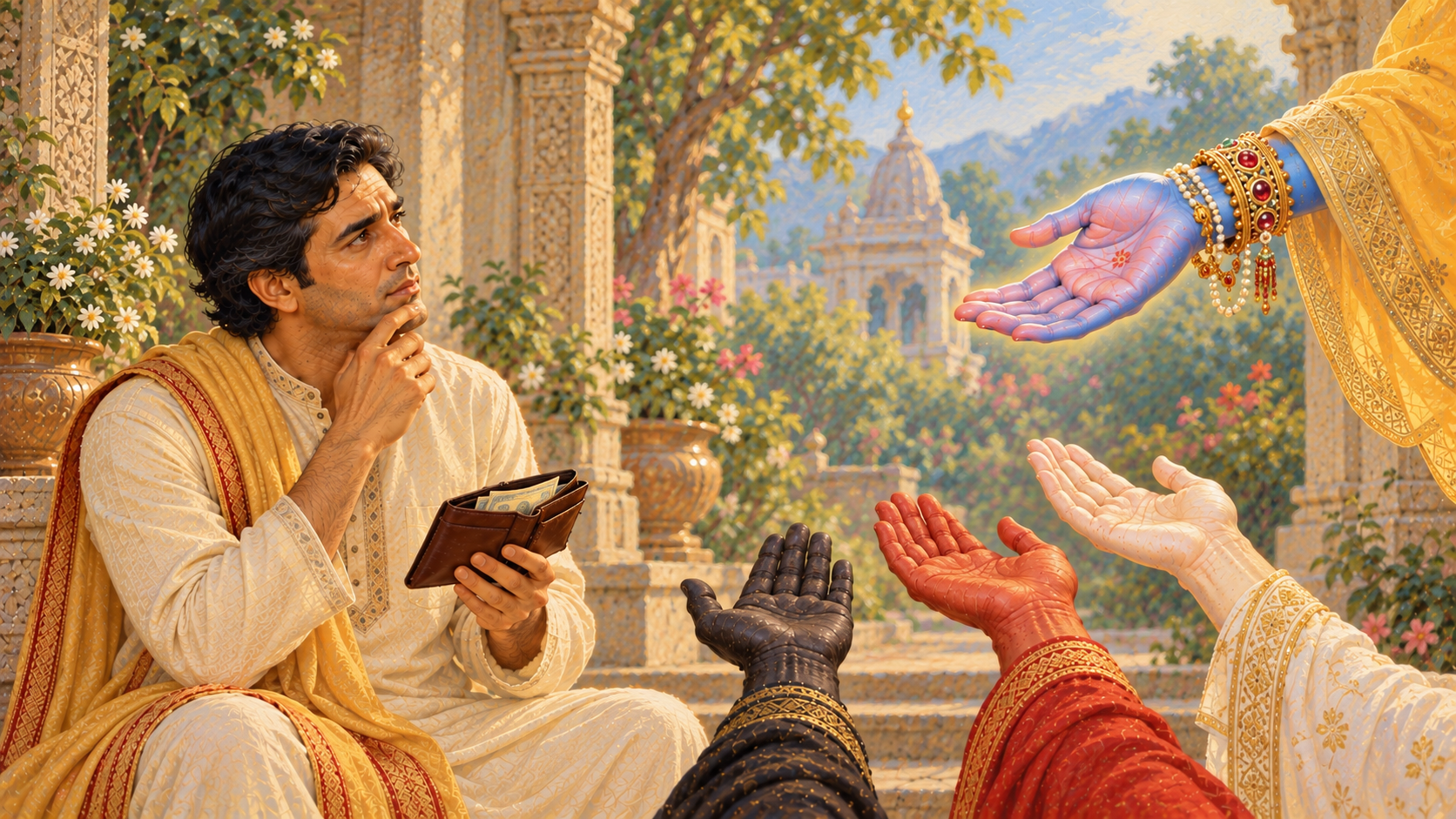
Question When God is causelessly merciful or Akaran Karun why does He bestow His grace only when a devotee fully surrenders himself unto Him? It appears that God’s grace is not unconditional. Answer Surrender means the complete submission of the mind (antahkaran) along with submission of the self [1]
Kamadev (कामदेव, kāmadēva) is a celestial devata residing in Svarga. Among all material beings, he is considered the most handsome. Known as the god of conjugal love, Kamadev wields a bow and arrows—anyone struck by his arrow becomes filled with lust. However, his powers have no effect
The Upanishad (उपनिषद्, upaniṣad) are the philosophical essence of the Vedas. Though the exact counts are highly debated, the numbers presented here are based on the teachings of Jagadguruttam Swami Shri Kripalu Ji Maharaj (Shri Maharaj Ji), who was recognized as an undisputed Vedic scholar by the honorable body
Scholars of Sanatan Dharma used to debate on the shastra (scriptures) to deepen their understanding. This debate is called shastrartha (Devanagari: शास्त्रार्थ ISO15919: śāstrārtha). When done as a competition then the winner is recognized as a having more depth understanding of the scriptures. The one
Rigveda (ऋग्वेद, r̥gveda) is the first of the four Vedas. The original body of Vedic knowledge was divided into four distinct books by Sage Ved Vyas, with the Rigveda serving as the foundational text. Further Reading and Reference * Related Concepts: The Vedas: Sacred Knowledge or Mythical Tales?
Rishi (ऋषि, r̥ṣi) signifies an ascetic, sage, or seer. It specifically describes an individual who has attained mastery over their senses through rigorous spiritual practice. Further Reading and Reference * Related Concepts: Rajrishi, Brahmrishi, pancha jnanandriya * Reference: Prema Rasa Siddhanta - Philosophy of Divine Love