
Karta (कर्ता)
Karta means the doer. Understand why God, the jeev, and the mind are each called Karta in different contexts.

Karta means the doer. Understand why God, the jeev, and the mind are each called Karta in different contexts.

Kamadev (कामदेव, kāmadēva) is a celestial devata residing in Svarga. Among all material beings, he is considered the most handsome. Known as the god of conjugal love, Kamadev wields a bow and arrows—anyone struck by his arrow becomes filled with lust. However, his powers have no effect
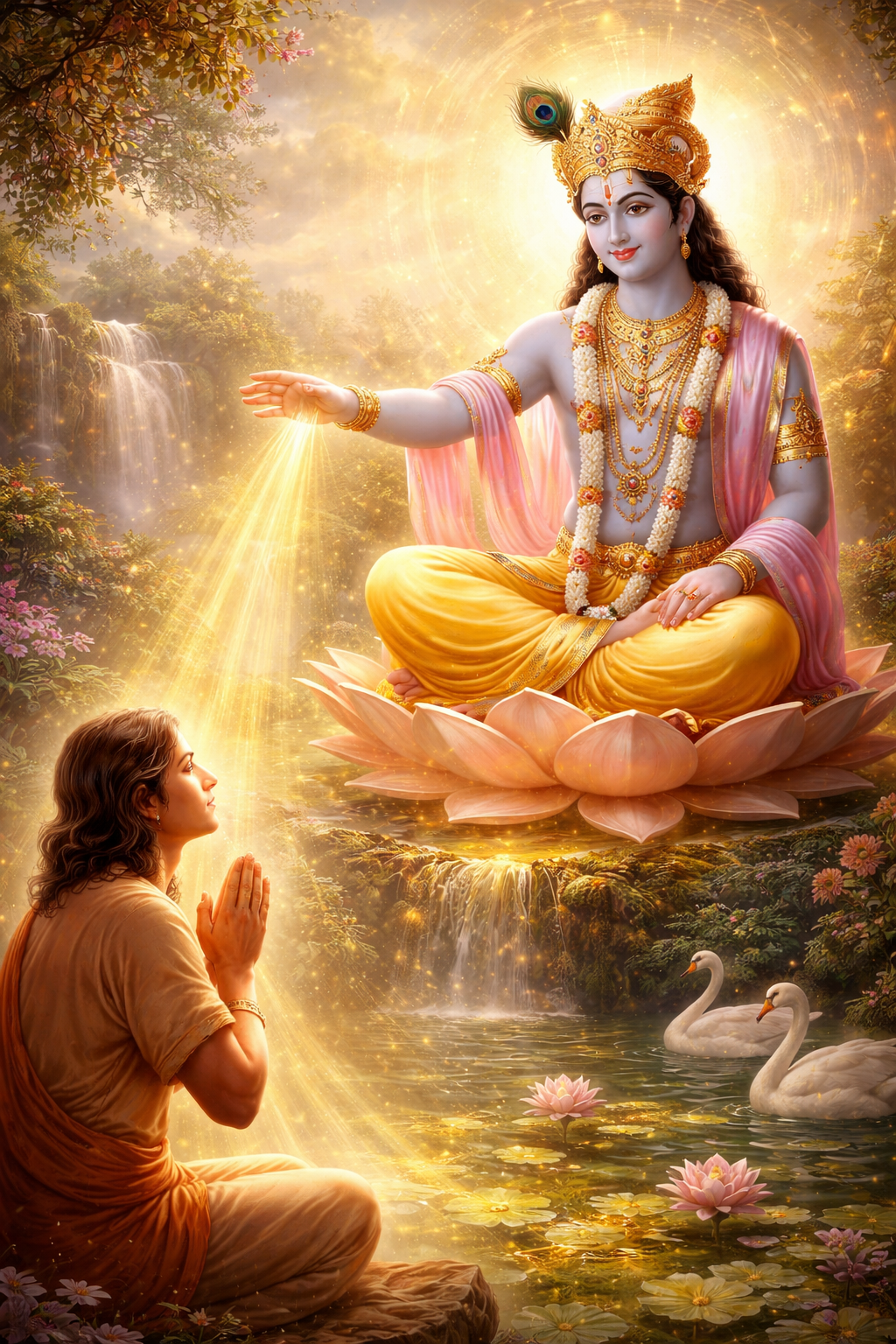
Kripā (कृपा | kr̥pā) means grace. What It Means Kripā is: performing actions exclusively to uplift another, without wanting anything in return True Grace Such grace can be bestowed only by those who: * desire nothing from anyone * possess something that does not diminish by giving Only God and God-
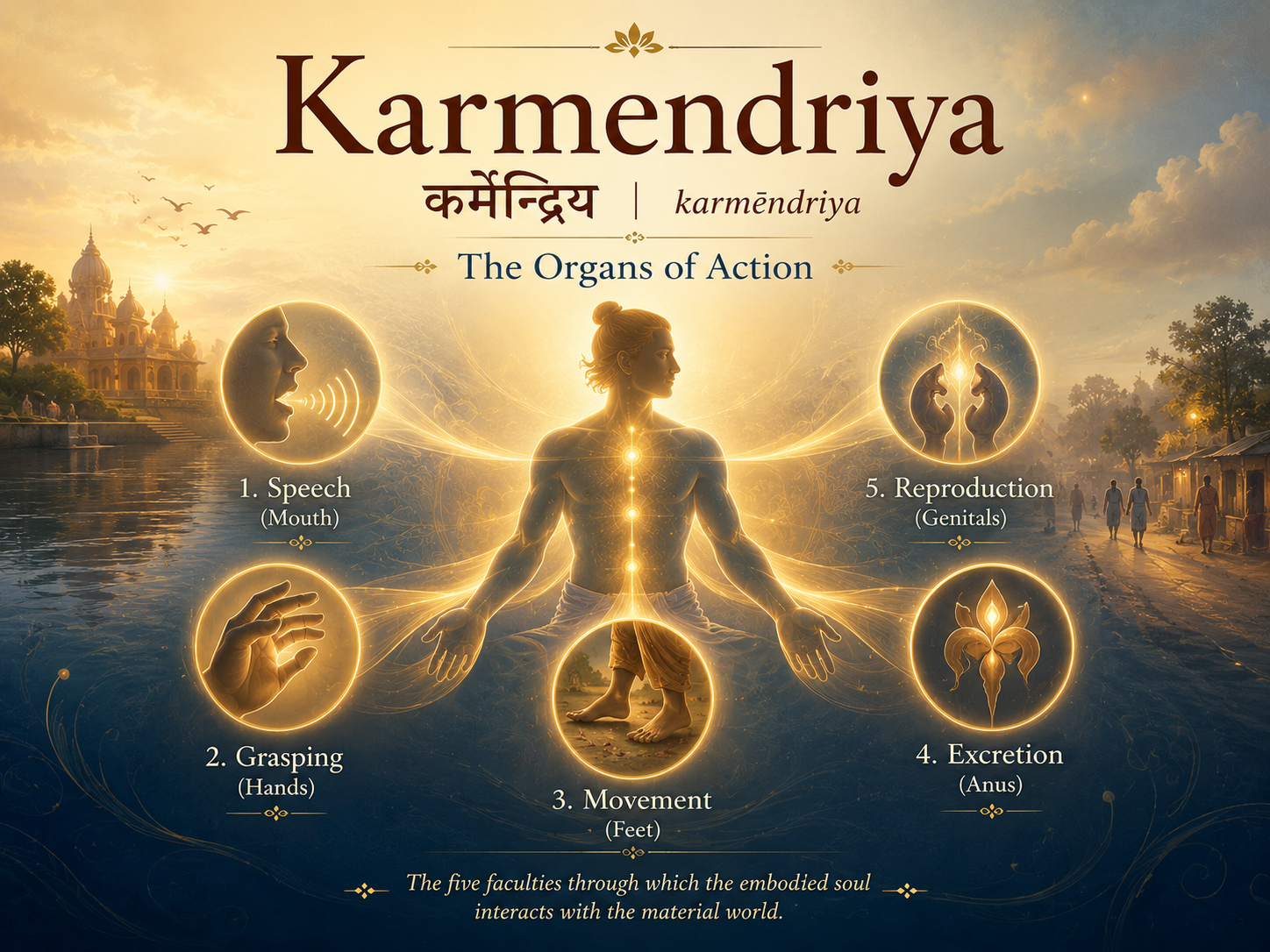
Karmendriya refers to the five organs of action through which the embodied soul interacts with the material world: speech, grasping, movement, excretion, and reproduction.

Karma is used in many ways in the world and scriptures. Learn why its meaning depends on context.

kalaa (Devanagari: कला ISO15919: kalā ) has many meanings. Listing a couple here. * A single phase of the wanning and waxing moon is called kalaa. Total they are sixteen in number. * A talent. Shri Krishna has countless talents. Moreover each of His kalaa is personified. He can reveal them whenever he

Karm Sannyas is the path of bhakti of God after renouncing Varnashram duties, while remaining free from karmic bondage.

Karm Yog means performing duties while keeping the mind attached to God, transforming action into a path of bhakti.

Karm-Bandhan refers to the bondage created by karmic actions and their consequences. Through countless births, the jīva remains entangled in the cycle of action, reaction, and worldly suffering.

Yamdoots are servants of Yamraj who escort certain jeevs after death and carry out punishments in Narak.

The human form is the only karma yoni—a life form in which the Jeev can perform new actions that produce future results.

kritkritya (Devanagari: कृतकृत्य ISO15919: kr̥takr̥tya) is a Sanskrit term that means one who has accomplished their goal. Since every action is motivated by a specific aim, someone who is Kritkritya has no unfulfilled desires. When the cause (the desire) is gone, the effect (the action)