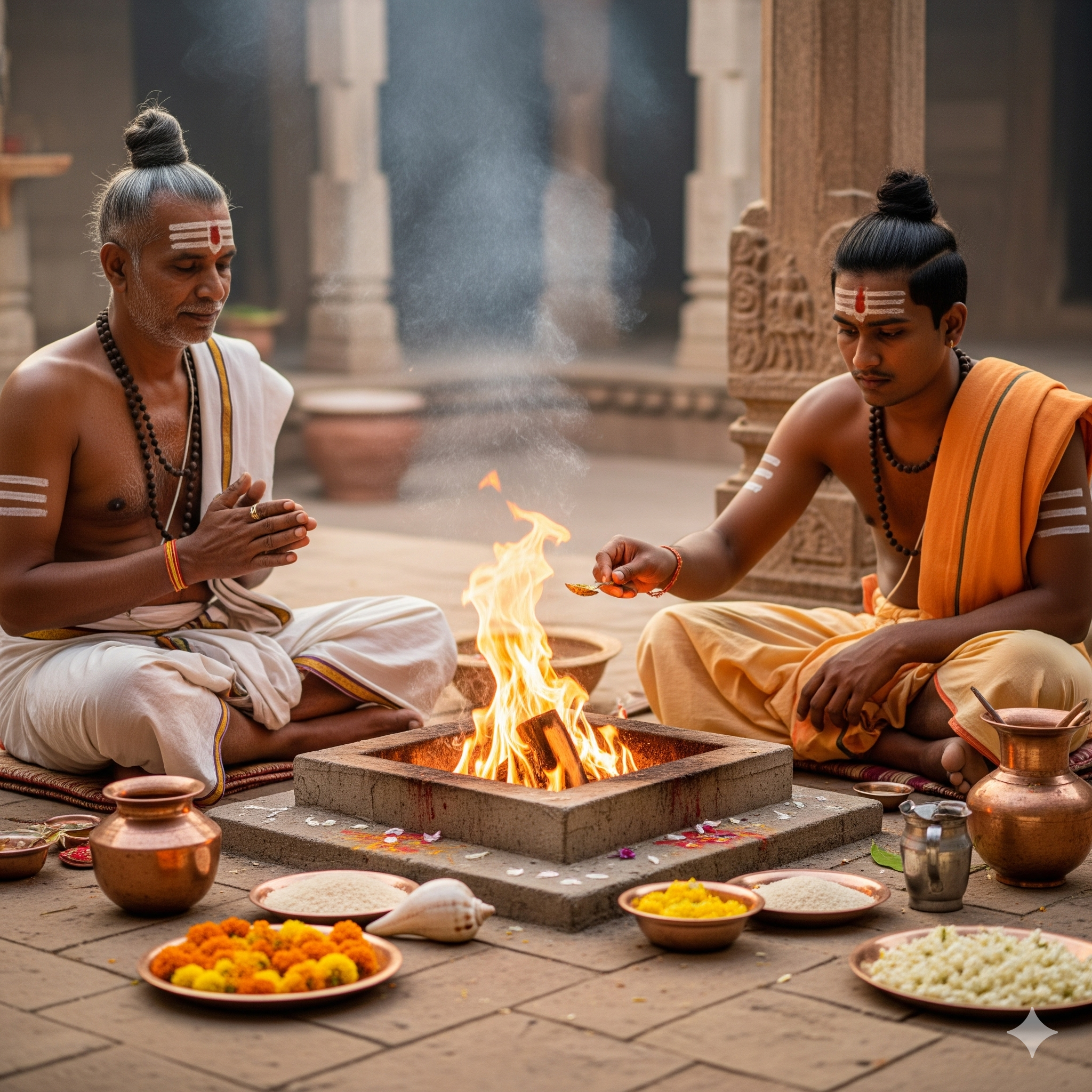
karmakanda | कर्मकान्ड
karmakand (Devanagari: कर्मकान्ड ISO15919: karmakānḍa) is the same as karma dharma.

karmakand (Devanagari: कर्मकान्ड ISO15919: karmakānḍa) is the same as karma dharma.

Kirtan (कीर्तन | kīrtana) refers to the audible chanting or singing of God's names, attributes, and Leelas. Kirtan is not merely an activity of the voice. While singing about God, the devotee also lovingly remembers Him in the mind. Through Roopdhyan, the devotee brings His Divine form

Kamadhenu (Devanagari: कामधेनु; ISO 15919: kāmadhenu) refers to the celestial wish-fulfilling cow. Residing in svarga (Heaven), she is capable of fulfilling any material desire of her owner. Vedas say all the deities (Devi-Devatas) live within her physical form, symbolizing her sacred and all-encompassing nature. Legend

The Four Kumars (Devanagari: कुमार; ISO 15919: kumāra) refer to the four brothers: Sanak, Sanandan, Sanatan, and Sanat. Collectively, they are also known as Sanakadi (Devanagari: सनकादि; ISO 15919: sanakādi), meaning "Sanak and the others." Their Birth They manifested from the mind (Manas) of Creator

Kaal (काल, kāla) carries multiple profound meanings in the Sanskrit language. While commonly used to denote "time", it has multiple specific applications: * The Moment of Death: It refers to the destined end of a lifespan. Life is viewed as a countdown starting from the moment of birth

Kusang is harmful association, including thoughts and influences that turn the mind away from God and weaken devotion.
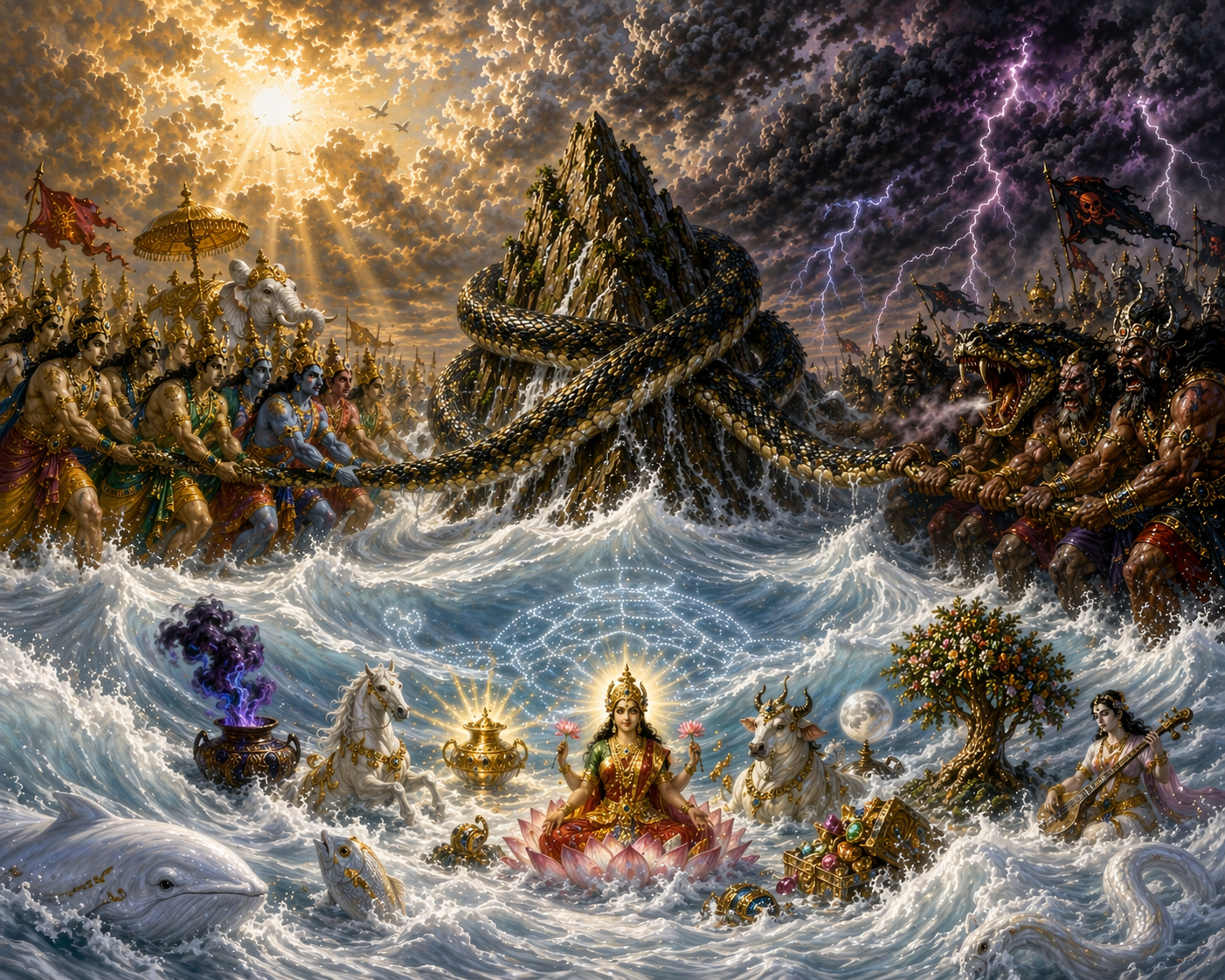
Kshirasagara (क्षीरसागर | kṣīrasāgara) refers to the Ocean of Divine Milk. It is within this cosmic ocean that Lord Vishnu reclines upon Shesha Naga, His thousand-headed divine servant. Devatas and the demons had churned this divine ocean during Samudra Manthan leela. Further Reading and Reference * Reference: Prema
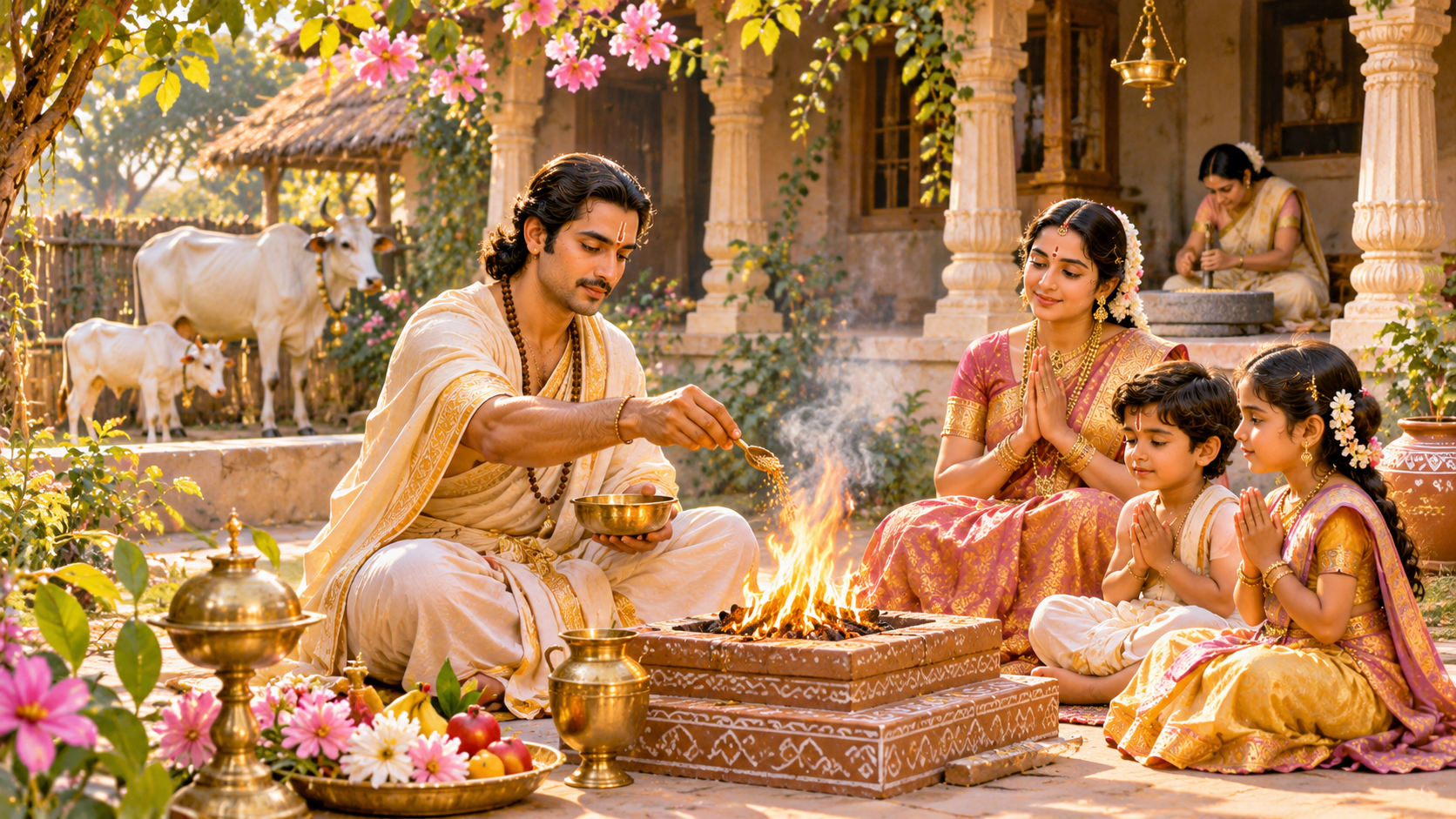
The ritualistic and bodily duties prescribed by the Vedas.
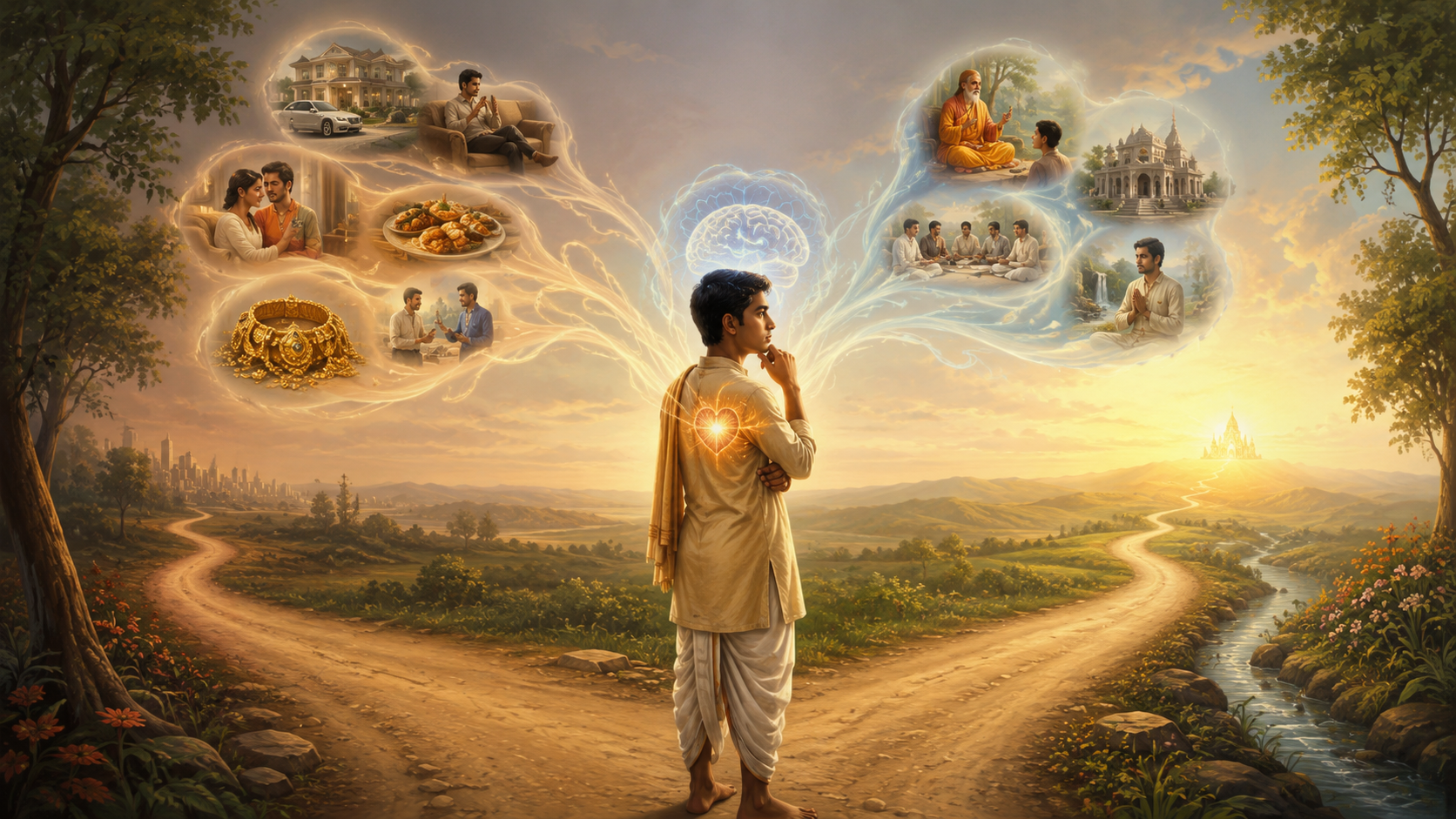
Kriyaman Karm refers to actions presently performed through mind, speech, and body. These actions become the source of future karmic consequences.

Kanishth adhikari (कनिष्ठ अधिकारी | kaniṣṭha adhikārī) is a spiritual aspirant who possesses minimal detachment from worldly things and has little knowledge of the scriptures. Consequently, has weak or unsteady faith in God. While such individuals are eligible to practice bhakti (devotion), the Bhakti Rasamrita Sindhu categorizes

Kaitava (Devanagari: कैतव; ISO 15919: kaitava) signifies deception, cheating, or a "con." According to the Srimad Bhagavatam, this term applies to the four traditional human pursuits (Purusharthas): * Dharma: Prescribed scriptural duties. * Artha: The attainment of wealth. * Kama: The fulfillment of sensual desires. * Moksha: Liberation. These are termed

Same as advaitavada, the belief propagated by Adi Jagadguru Shri Shankaracharya. Further Reading and Reference * Who am I? Who is Mine? Vol. 1, Ch. 5