Paramatma (परमात्मा)
The Supreme Soul is Shri Krishna's majestic form, MahaVishnu, who pervades creation and dwells within living beings.
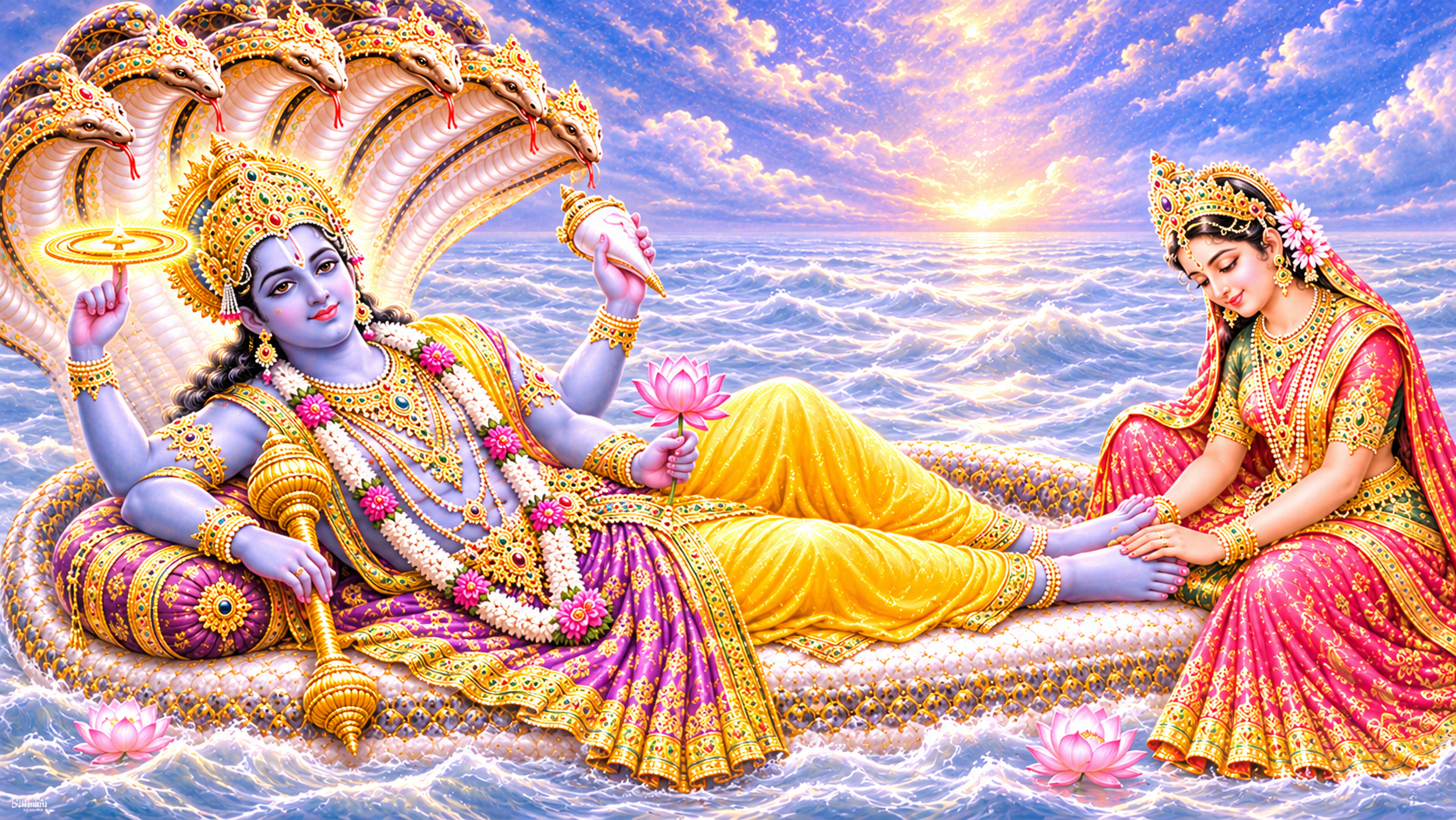
Paramatma (परमात्मा | paramātmā) literally means the Supreme Soul.
Paramatma is an all-majestic Divine form of Shri Krishna, commonly known as MahaVishnu (महाविष्णु | mahāviṣṇu).
The Sakar Form of Paramatma
In His Sakar (personal) form, MahaVishnu possesses:
- Naam (नाम) — Divine name
- Roop (रूप) — Divine form
- Guna (गुण) — Divine qualities
- Dham (धाम) — Divine abode
His eternal abode is Vaikunth (वैकुण्ठ | vaikuṇṭha).
In this aspect, MahaVishnu does not reveal Leela (लीला) (Divine pastimes) or Parikar (परिकर) (Divine associates).
The Nirakar Form of Paramatma
Paramatma also pervades creation in His Nirakar (formless) form.
This all-pervading presence is revealed through three forms of MahaVishnu:
| Scope of Pervasion | Form of MahaVishnu | Meaning |
|---|---|---|
| Samashti Brahmand (समष्टि ब्रह्मांड में व्याप्त) |
Karanarnavashayi MahaVishnu (कार्णार्णवशायी महाविष्णु) |
Pervades all brahmands collectively. |
| Vyashti Brahmand (व्यष्टि ब्रह्मांड में व्याप्त) |
Garbhodashayi MahaVishnu (गर्भोदशायी महाविष्णु) |
Pervades an individual brahmand. |
| Jeevatma (जीवात्मा में व्याप्त) |
Kshirodashayi MahaVishnu (क्षीरोदशायी महाविष्णु) |
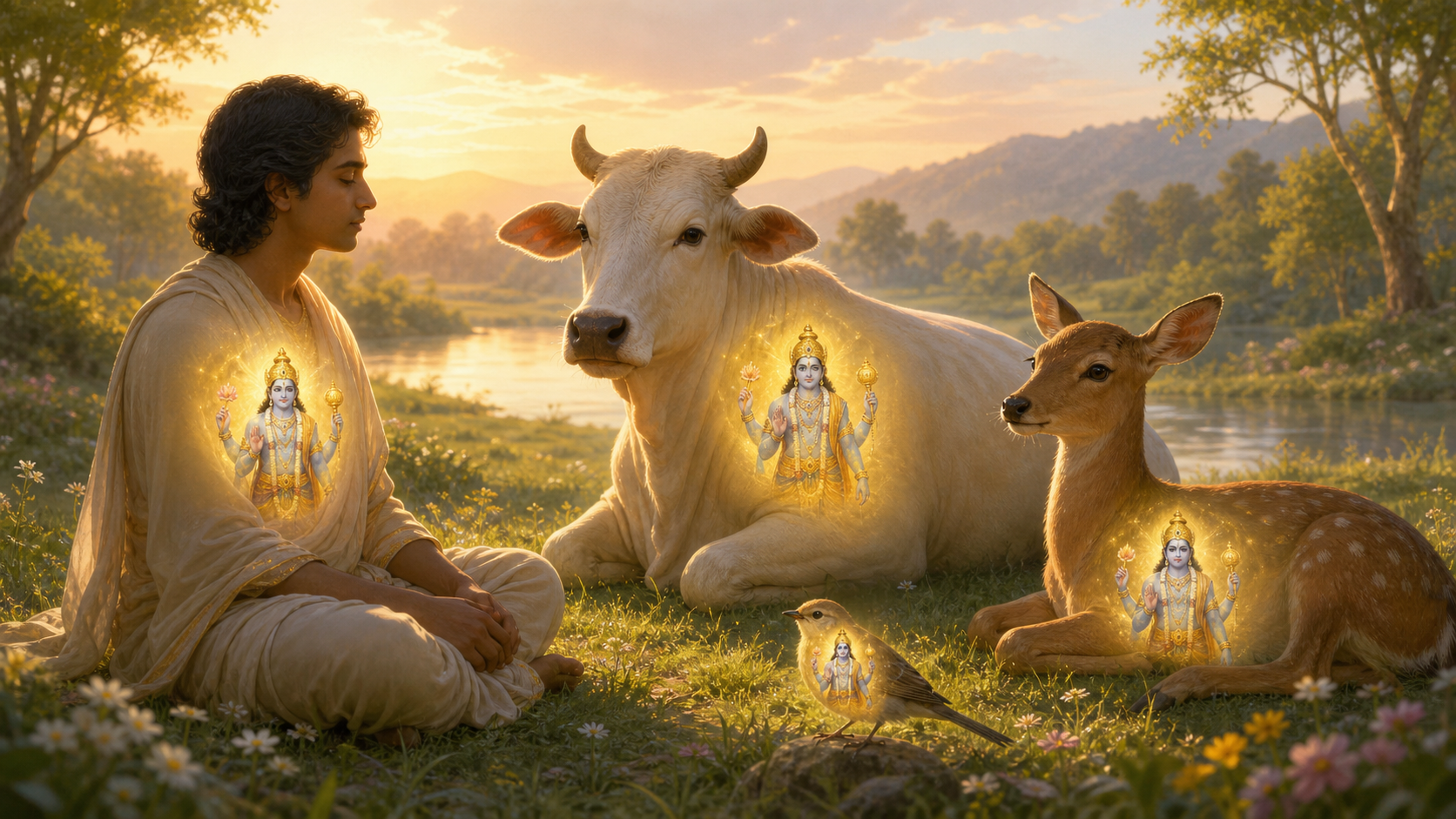
Resides within every Jeevatma, in the hearts of all living beings. |
Kshirodashayi MahaVishnu is the indwelling witness who specifically observes and records the thoughts and actions of human beings.
Paramatma's Nirakar pervasion should not be confused with Nirakar Brahm, the distinct impersonal aspect of the Supreme Lord.
Go Deeper
 JKP Literature

How do Brahm, Paramatma, and Bhagavan differ if all three are aspects of the same Supreme God?
 JKP Literature
If Paramatma possesses a Divine form, how can He simultaneously pervade all creation?
 JKP Literature

Are Shri Krishna and MahaVishnu two different Divine beings, or different forms of the same Supreme God?
Reference
- Divya Swarth - Lecture #2
- Paid Subscription: Divya Swarth (Part 2)