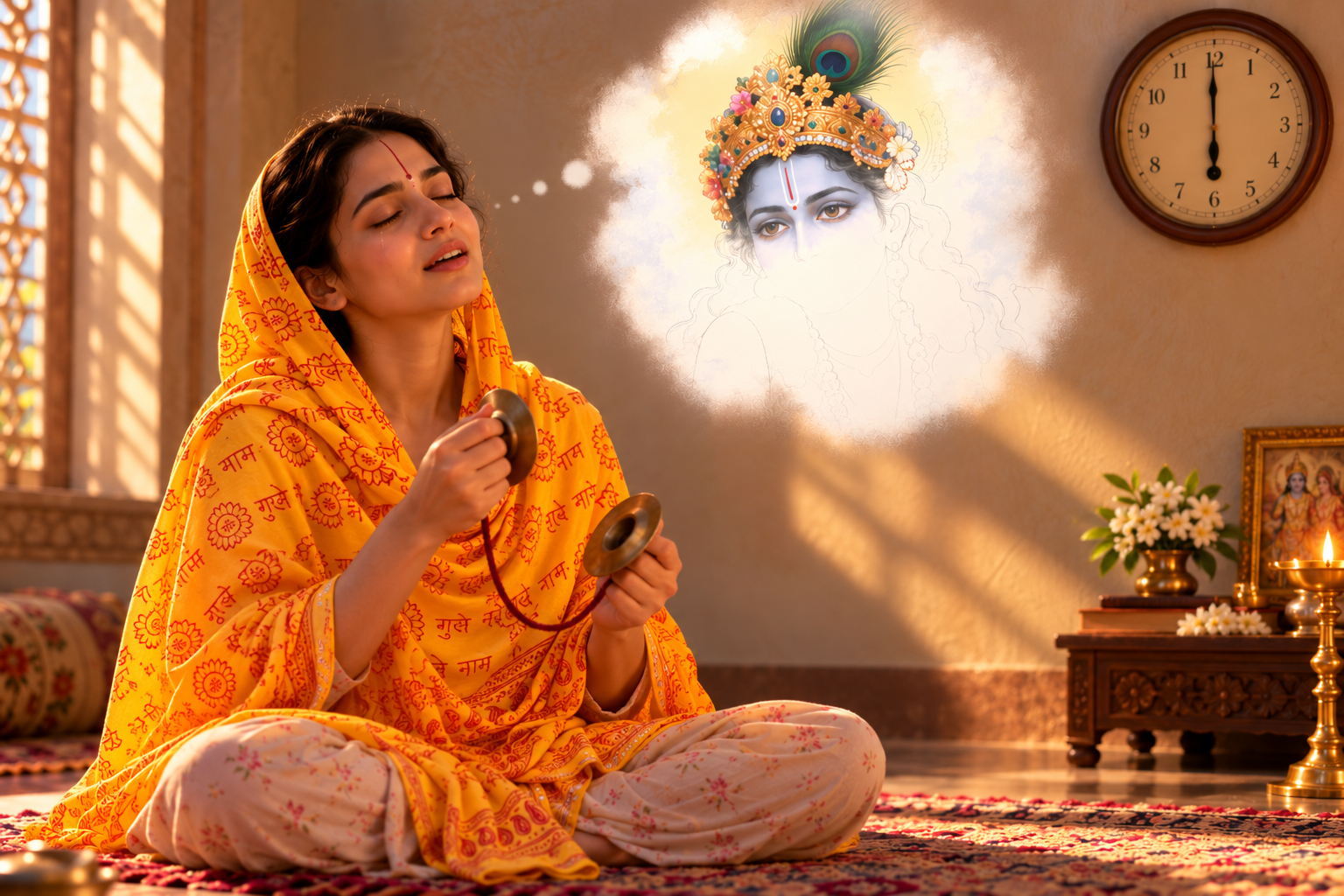
Nishkamata (निष्कामता)

Nishkamata (निष्कामता | niṣkāmatā) means freedom from the desire for one's own happiness.
In Bhakti, nishkamata does not mean having no desires. A devotee may intensely desire to see God, remember Him, serve Him, love Him, and please Him.
What changes is the purpose of those desires.
A selfish desire asks:
What happiness will I receive?
Nishkamata turns the heart toward a different question:
What will give happiness to my Divine Beloved?
Thus, selfless devotion does not require the destruction of loving desire. It requires freedom from seeking one's own happiness through that love.
At its highest, this develops into tatsukha-sukhitvam — finding one's happiness in the happiness of the Beloved.
Nishkamata is one of the fundamental conditions of Sadhana Bhakti (साधना भक्ति | sādhanā bhakti).
Related Concepts
Go Deeper
- What Does Selfless Devotion Really Mean? — Understand why selflessness does not require abandoning Divine desires.
- Lust Is Not Love — Explore tatsukha-sukhitvam and the distinction between seeking one's own happiness and the happiness of the Beloved.