Atmaram (आत्माराम)
Atmaram means "one who delights in the Atma." Discover how the term refers to delight in the soul or in Shri Krishna, depending on context.
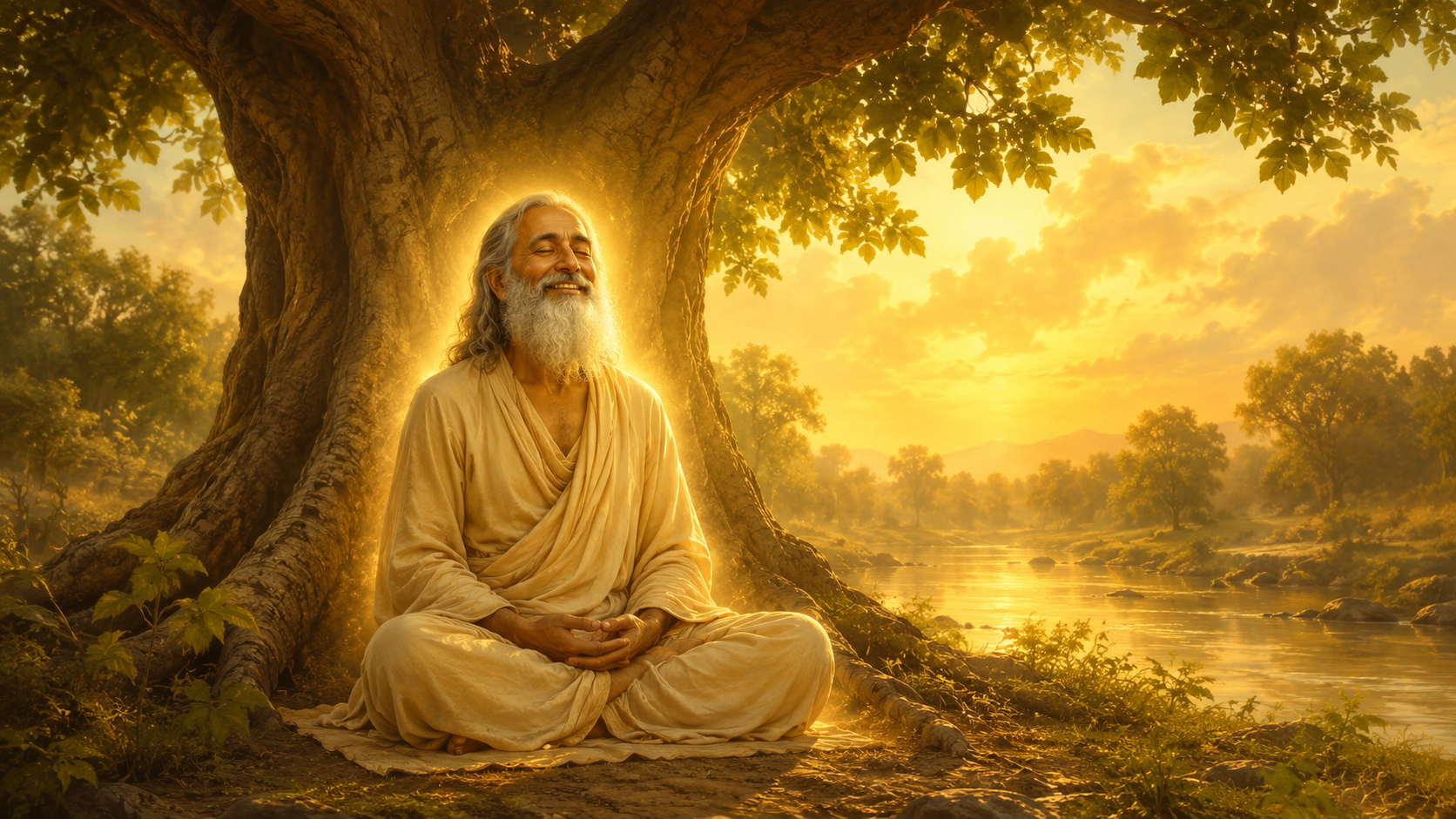
Atmaram (आत्माराम | Ātmarāma) literally means "one who delights in the Atma."
The Sanskrit expression is:
ātmani ramate iti ātmarāmaḥ
"One who delights in the Atma."
Since the Vedas use the word Atma for both the individual soul and Shri Krishna, the word Atmaram also carries both meanings.
In many scriptural contexts, Atma refers to the individual soul (Jeev). In this sense, Atmaram describes one who delights in the self rather than in worldly pleasures. Such a person is detached from material enjoyments, seeks no external gratification, and is established in self-realization.
However, Atma also means "that which pervades" (vyāpaka) and is used by the Vedas to refer to Shri Krishna, the Supreme all-pervading reality. In this sense, Atmaram refers to one who delights in Shri Krishna Himself, the Supreme Atma. This is the state of a Jeev after Bhagavadprapti.
The intended meaning is determined by the scriptural context. Both usages are found in the Vedic tradition because they arise from the two principal meanings of the word Atma.
Relationship to Atma
The meaning of Atmaram depends upon the meaning of Atma.
- When Atma refers to the individual soul, Atmaram means one who delights in the self.
- When Atma refers to Shri Krishna, Atmaram means one who delights in the Supreme Lord.
See Main Entry
👉 Atma
Related Concepts
Alternate Spellings: Atmaram, Atma Ram, Atma-Ram, Aatmaram, Aatma Ram
Reference
- Narad Bhakti Sutra, Lecture 6