Where Varnashram Dharma Fits on the Spiritual Path
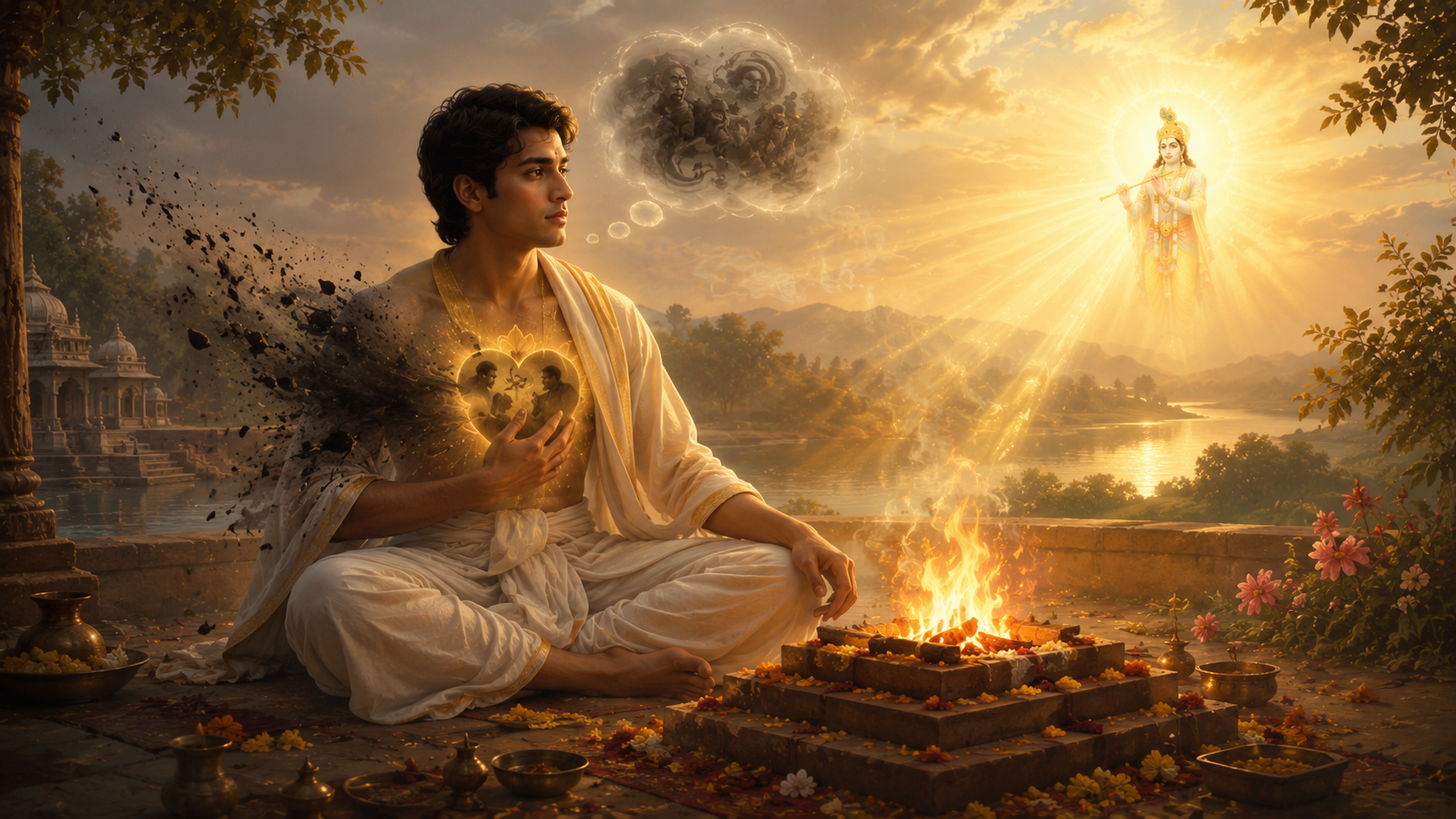
Varnashram Dharma has an important place within the Vedic tradition, yet it is not the highest dharma. Shri Maharaj Ji explains the distinction between Apar Dharma and Par Dharma, showing why Bhakti remains supreme and how Varnashram Dharma fits within the spiritual journey.
📍 Where You Are in the Inquiry
In the previous discussion, we examined the distinction between Karma Yog and Karma Sannyas.
Karma Yog combines devotion with prescribed Vedic actions. Karma Sannyas involves renouncing such actions and dedicating oneself exclusively to God.
At this point, an important question naturally arises.
If the scriptures prescribe Varnashram Dharma and various spiritual obligations, how can Karma Sannyas be valid?
Can a seeker simply abandon scriptural duties?
And if Bhakti alone leads to God Realization, what role does Varnashram Dharma still play?
To answer these questions, we must understand the distinction between Par Dharma and Apar Dharma.
The Apparent Contradiction
The scriptures teach that every human being is born with obligations.
They describe duties connected with one's Varna and Ashram. They also speak of spiritual debts owed to the celestial powers, sages, and ancestors.
From this perspective, Vedic actions appear mandatory.
If spiritual progress requires fulfilling these obligations, then how can renunciation of karma be acceptable?
How can Bhakti be independent?
How can a devotee abandon Vedic duties and still attain God?
This apparent contradiction is resolved by Ved Vyas in the Bhagavatam.
Ved Vyas Resolves the Problem
Ved Vyas explains that the ordinary rules governing Vedic obligations do not bind the devotee who has taken complete refuge in God.
This does not mean that the scriptures contradict themselves.
Rather, it means that the scriptures describe two distinct kinds of dharma.
Without understanding this distinction, the relationship between Varnashram Dharma, Karma Yog, and Karma Sannyas remains confusing.
Par Dharma and Apar Dharma
The scriptures describe dharma in two broad categories.
Apar Dharma
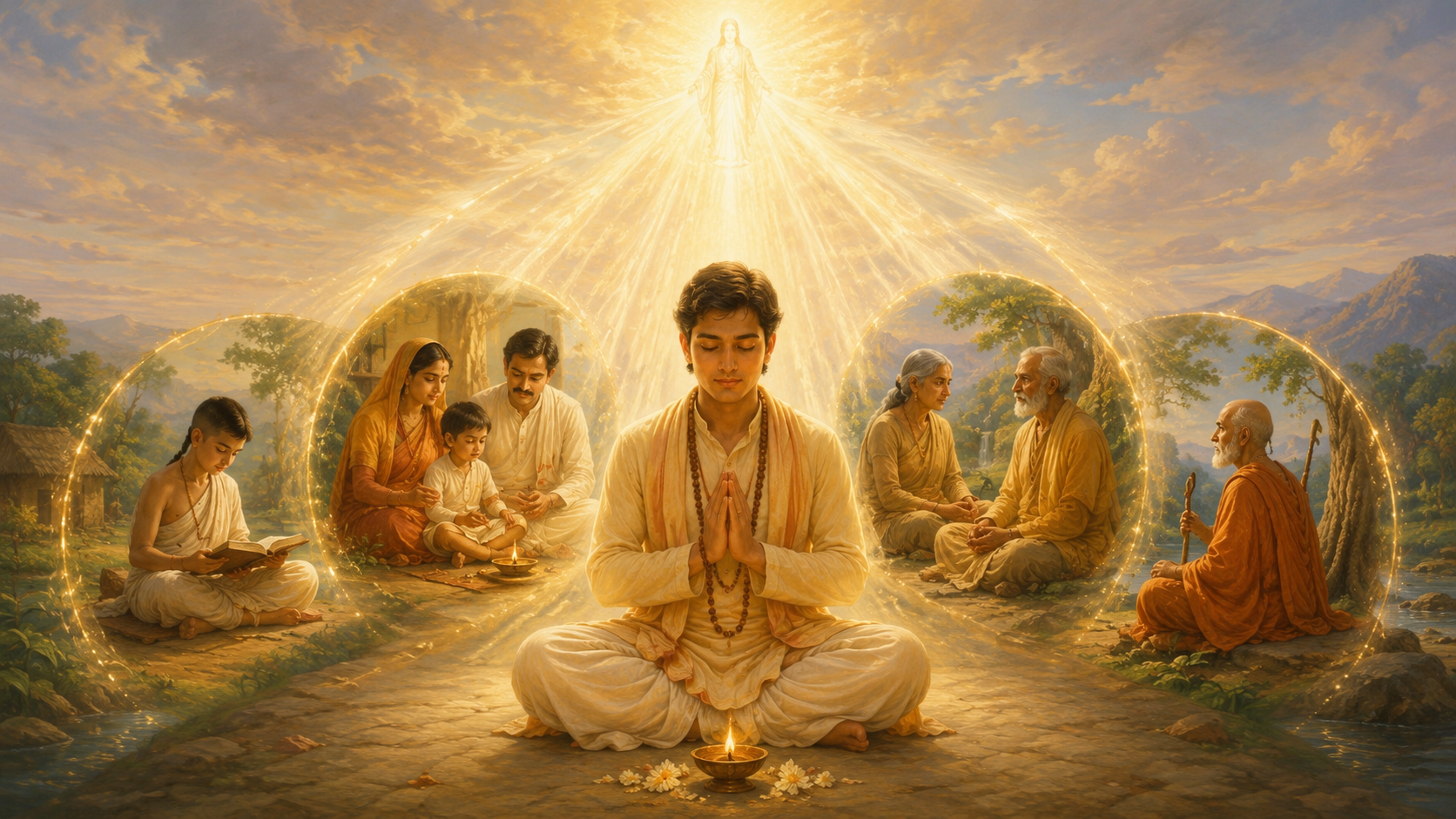
Apar Dharma consists of the duties prescribed within Varnashram Dharma.
These duties vary according to:
- Varna (Brahman, Kshatriya, Vaishya, Shudra)
- Ashram (Brahmacharya, Grihastha, Vanaprastha, Sannyas)
The prescribed actions of a student differ from those of a householder.
The responsibilities of a householder differ from those of a renunciate.
Thus Apar Dharma changes according to one's bodily position and stage of life.
Par Dharma
Par Dharma is loving devotion to God.
It is the eternal function of the soul.
Unlike Varnashram Dharma, it does not change according to age, social position, occupation, or stage of life.
The soul remains eternally related to God.
For this reason, Bhakti is called Par Dharma—the higher dharma.
Why Par Dharma Is Higher
The distinction between Par Dharma and Apar Dharma is not arbitrary.
Apar Dharma relates to the embodied condition of the soul.
Varna belongs to the body.
Ashram belongs to the body.
These identities change throughout life and across births.
Par Dharma relates to the soul itself.
The soul's relationship with God never changes.
Therefore Apar Dharma changes while Par Dharma remains constant.
Apar Dharma serves the temporary condition of embodied existence.
Par Dharma serves the eternal welfare of the soul.
For this reason, Par Dharma is superior.
Bhakti Is Required in Every Ashram
The scriptures do not reserve devotion for a particular stage of life.
A Brahmachari should practice Bhakti.
A Grihastha should practice Bhakti.
A Vanaprasthi should practice Bhakti.
A Sannyasi should practice Bhakti.
The external practices associated with each Ashram may differ, but devotion remains necessary in every stage.
Thus Bhakti accompanies all of life, while the practices of Apar Dharma change according to circumstance.
What Is Karma Yog?
When devotion is practiced alongside the actions prescribed by Varnashram Dharma, it becomes Karma Yog.
The actions themselves may appear unchanged.
However, their purpose changes.
They are no longer performed merely for worldly welfare, heavenly rewards, or fulfillment of obligations.
They become connected with devotion to God.
In this way, Bhakti transforms karma into Karma Yog.
Why Varnashram Dharma Alone Is Not Enough
Although Varnashram Dharma has value, it cannot independently solve the soul's problem.
The soul seeks Divine Happiness.
Yet the mind remains covered by Maya and continues searching for that happiness within the material world.
No amount of Vedic action, social responsibility, or religious observance can by itself remove that covering of Maya. For this reason, the scriptures repeatedly declare that Bhakti is indispensable.
Without Bhakti, Apar Dharma can produce temporary results.
With Bhakti, spiritual progress becomes possible.
Is Karma Sannyas a Rejection of Scripture?
The previous discussion introduced Karma Sannyas.
This immediately raises another objection.
If Varnashram Dharma is prescribed by the scriptures, then does Karma Sannyas amount to rejecting scriptural authority?
The answer depends upon the motive.
A person may neglect scriptural duties due to attachment, laziness, ego, or personal preference.
Such a person has not transcended Apar Dharma.
He has merely rejected it.
This is condemned by the scriptures.
However, there is another kind of renunciation.
A devotee whose mind has become absorbed in God may abandon all other concerns because devotion has become the governing principle of life.
Such renunciation is not born from attachment to the world.
It is born from attachment to God.
Externally the actions may appear similar.
Internally they are completely different.
This is why the scriptures praise exclusive devotion while simultaneously condemning selfish disregard for scriptural authority.
Where Varnashram Dharma Still Has a Place
The scriptures do not reject Varnashram Dharma.
It continues to serve an important purpose.
It remains valuable for:
- those who lack faith in Divine teachings,
- those who desire celestial rewards,
- and those who remain deeply attached to worldly life.
Through Vedic discipline, such people develop self-control, restraint, and respect for scriptural authority.
In this way, Apar Dharma helps refine worldly tendencies and gradually prepares the mind for higher spiritual understanding.
However, even in these circumstances, Bhakti remains essential.
The Example of the Gopis
The highest example of Par Dharma is found in the Gopis of Braj.
From an external perspective, they transcended both worldly and Vedic considerations.
Yet everything they did was motivated solely by love for Krishna.
Their actions were not driven by selfish desire.
They were driven by complete absorption in God.
For this reason, Krishna praises them as the highest devotees.
The Gopis demonstrate that the ultimate purpose of all scripture is not merely the performance of action, but the awakening of exclusive Divine Love.
What This Resolves
Varnashram Dharma belongs to Apar Dharma.
It has value.
It has purpose.
It helps regulate life and prepare many seekers for spiritual progress.
When joined with devotion, it becomes Karma Yog.
Yet it is not the final goal.
Bhakti alone belongs to Par Dharma.
Bhakti alone remains constant in every stage of life.
Bhakti alone leads the soul beyond Maya and toward Divine Love.
Therefore the spiritual value of Varnashram Dharma ultimately depends upon its connection with Bhakti, while Par Dharma stands supreme as the eternal path of the soul.
Understand This More Deeply
Related Clarifications
- Repay Spiritual Debt or Embrace Devotion?
- Why Pursue Pure Bhakti?
- How Bhakt and Gyani Forsake the World Differently
Related Terms
Continue the Inquiry
(Part 6 of 8 — Karma — The Path of Vedic Action)
The scriptures prescribe numerous karmic actions and even forms of atonement to reduce the effects of sinful actions.
If karma can generate punya, grant heavenly rewards, and even remove certain sins, why is it still unable to free the soul from Maya?
Why is Bhakti still necessary?
- ⬅️ Previous: What Gives Spiritual Value to Karma?
- ➡️ Next: Why Karma Cannot Purify the Mind by Itself
- 🔙 Back to Hub: Karma — The Path of Vedic Action