
Karm Yog in Daily Life
Karm Yog does not require abandoning worldly duties. Its essence is simple: keep the mind attached to God while the body continues to perform its responsibilities.

Karm Yog does not require abandoning worldly duties. Its essence is simple: keep the mind attached to God while the body continues to perform its responsibilities.

The Vedas prescribe karma and atonement to address specific sins, yet the deeper problem remains. Without purification of the mind through Bhakti, karmic bondage continues and liberation remains impossible.

Bhakti gives spiritual value to karma. Without devotion, actions create bondage; with devotion, they lead toward God.

Karm Yog is not the abandonment of action but the practice of performing worldly duties while keeping the mind continuously attached to God. Learn why Shri Krishn taught Arjun to perform Karm Yog and how bhakti transforms action into a path toward God realization.

People imitate external behavior, not inner devotion. Discover why this leads Shri Krishn to praise Karm Yog as superior.

Good actions produce beneficial results within Maya, but they do not grant liberation. Merit and sin both create consequences the soul must experience.

A foundational explanation of karm, vikarm, akarm, and karm sannyas, showing how different kinds of action affect spiritual progress differently.
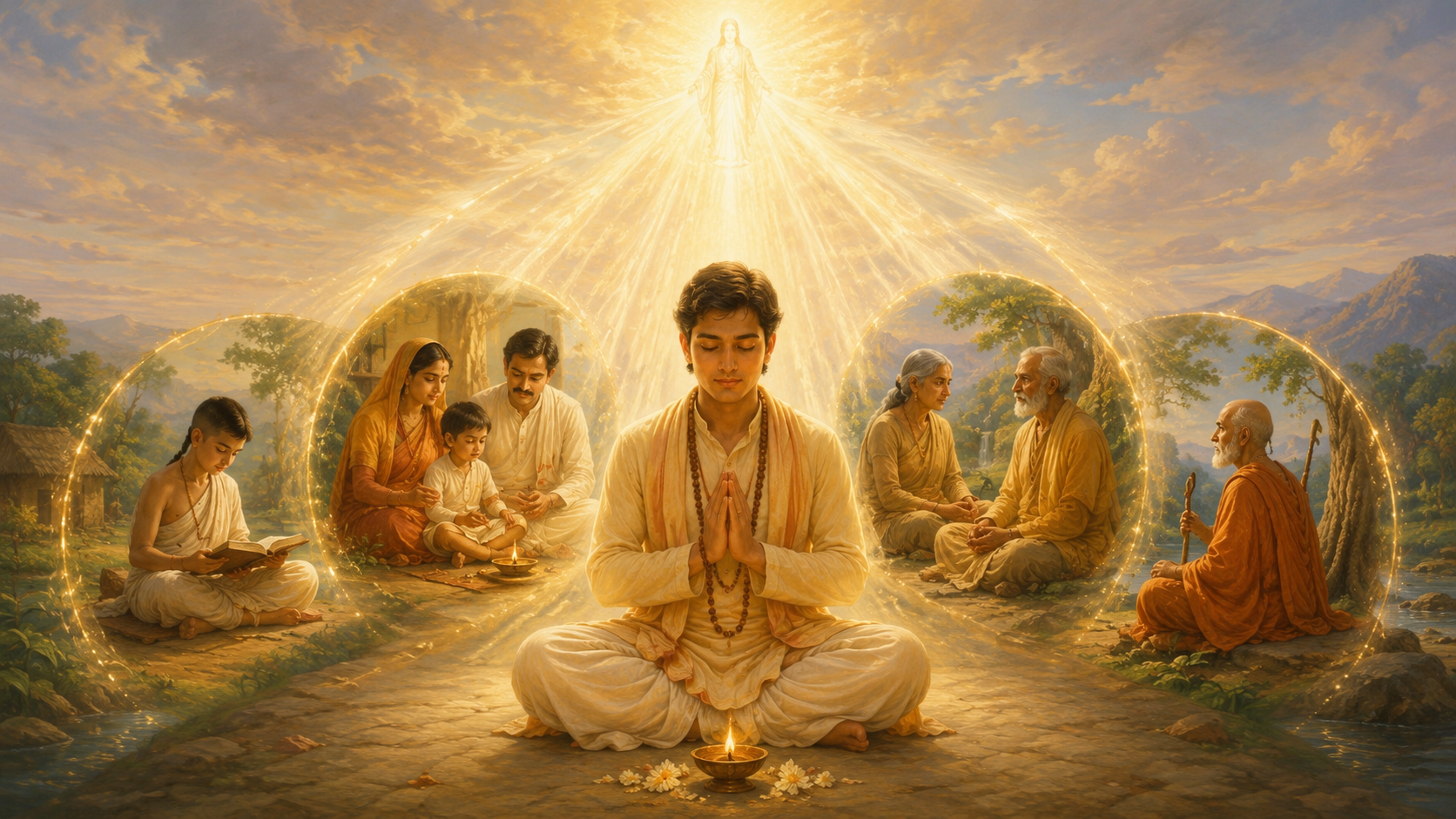
Varnashram Dharma has an important place within the Vedic tradition, yet it is not the highest dharma. Shri Maharaj Ji explains the distinction between Apar Dharma and Par Dharma, showing why Bhakti remains supreme and how Varnashram Dharma fits within the spiritual journey.

The Question That Arises Once a true Saint is recognized, a natural question follows: Which path should be followed to attain God? The scriptures describe multiple approaches. But they are not all equal. To understand this clearly, we must first understand what “action” really means. Understanding Action All actions fall

Sin is the most despicable theme of religious philosophies all over the world. In Sanatan Dharm , which is commonly known as Hinduism, Dharma defines the ethics and morals of leading a human life. Transgressing from dharma is called adharma and is considered a sin. The intent to follow dharma is

Indian scriptures state that there are four stages of life, which are known as ashram (Devanagari: आश्रम ISO15919: āśrama ). The root of the word ashram is shram (Devanagari: श्रम ISO15910: śrama ), which means effort. Thus, ashram can be defined as a place where we strive to reach the

The word karma (कर्म | karma ) is used in a couple of different ways * Every action human beings perform is called karma . These actions bear fruits in present life and also carries over to future lives. * The path of karma called karma marg (Devanagari: कर्म मार्ग ISO15919: