God's Names and Forms Are Unlimited
If scripture names certain Avatars, are God's forms limited to those forms—and must a devotee worship only one of them?
📍 Where You Are in the Inquiry
We have established that every Avatar is complete. God is not divided into greater and lesser portions when He takes different forms. The special significance of Shri Ram and Shri Krishna arises from the greater revelation of their leelas and the help those leelas provide in attaching the mind to God—not because other Avatars possess less of God.
But this raises another question. Are God's forms limited to the familiar Avatars described in the scriptures? If the scriptures speak of 10 or 24 principal descensions, what if a devotee wishes to worship God in some other form?
The answer reveals how unlimited God's forms—and even His names—really are.
God's Descensions Are Uncountable
Ved Vyas states:
अवतारा ह्यसंख्येया हरेः सत्त्वनिधेर्द्विजाः।
avatārā hyasaṅkhyeyā hareḥ sattvanidherdvijāḥ
(Bhagavatam 1.3.26)
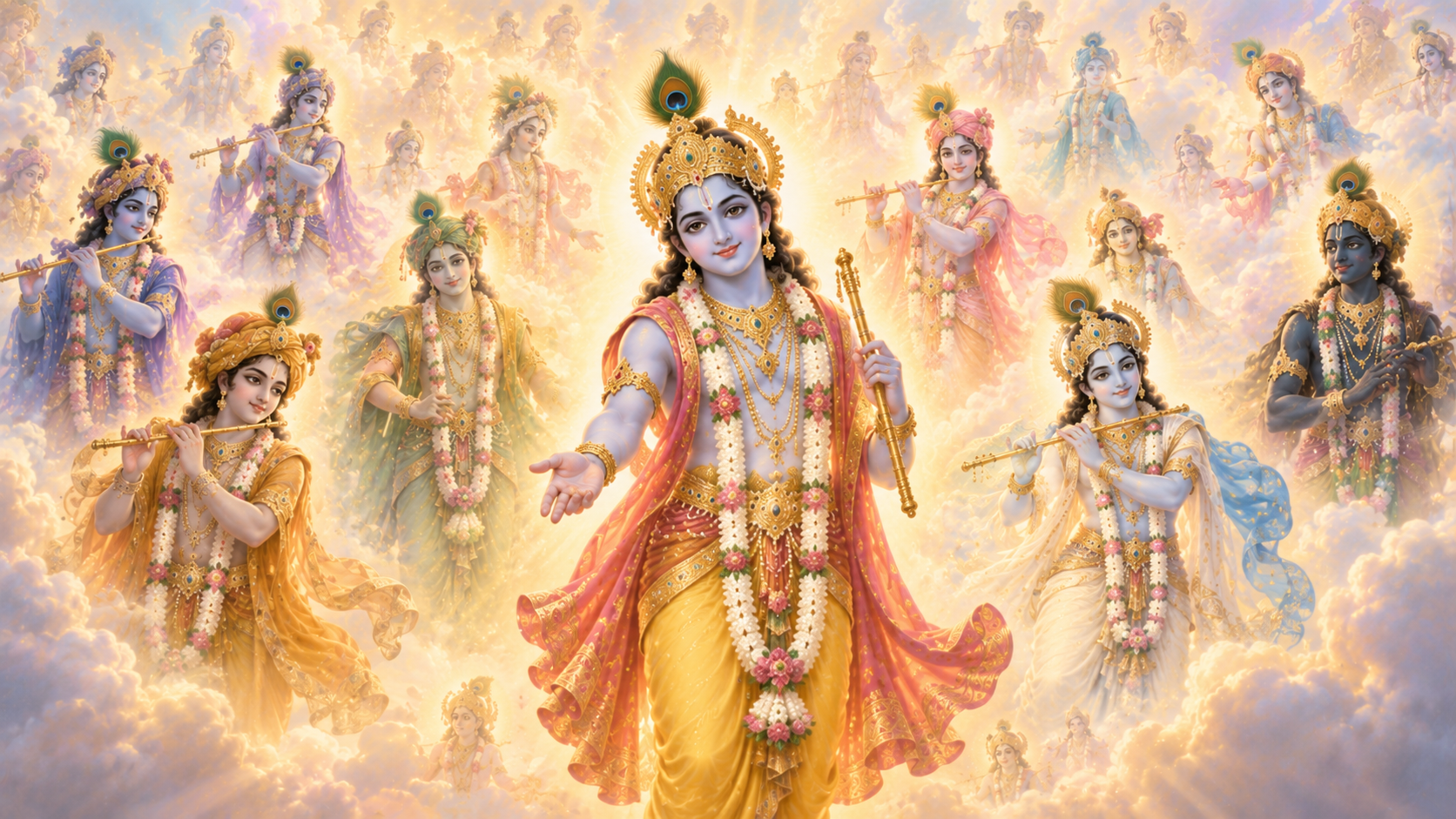
God's descensions are uncountable.
The 10 or 24 Avatars described prominently in the scriptures do not place a limit upon God. Uncountable descensions of God take place every moment in uncountable Brahmandas (ब्रह्माण्ड | brahmāṇḍa).
So what if someone says:
I would prefer a twenty-fifth form. What should I do?
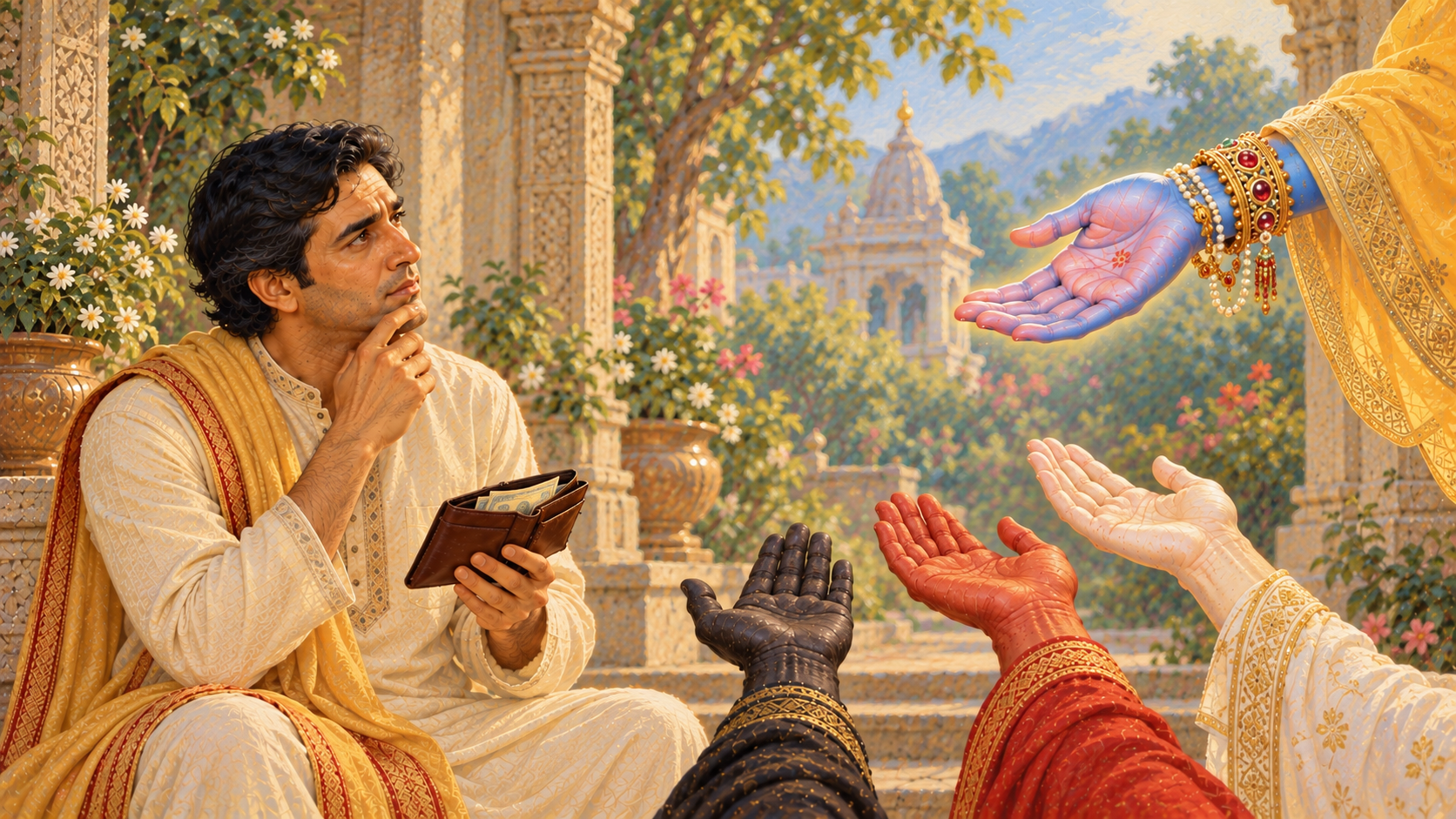
There is no difficulty. A devotee may worship God in whatever form he desires.
Even if someone conceives a form in which God has never previously appeared, he may worship God in that form, and God can come to him in the form he worships. Taking a form requires no effort from God.
The devotee therefore has complete freedom to conceive God in the form and complexion that is most pleasing to him. God, out of compassion, has imposed no fixed restrictions in this regard.
He is Anant-Nam-Rupaya (अनन्त नाम रूपाय | ananta-nāma-rūpāya)—the One with uncountable names and forms.
To place a limit upon God's unlimited power is our ignorance.
And if there is no limit upon His forms, neither is there a limit upon His names.
No Name of God Is Greater or Lesser
A devotee may call God according to his language, country, or personal preference. God has placed no restriction upon His names.
Nor is one name of God greater and another lesser.
To regard one of God's names as superior and another as inferior is Namaparadh, a grave spiritual transgression.
The loving names given to Shri Krishna make this principle particularly easy to see.
His childhood friends called Him Kanhaiya. Mother Yashoda called Shri Krishna and Balram Kanua, Balua, or simply Lala.
The Gopis went much further. They called Shri Krishna a thief and a flirt—chor-jar. Yet Shyam Sundar eagerly listened to these loving taunts.
In Dwarika, Shri Krishna is lovingly called Ranchor, literally the coward who ran away from the battlefield. His bhaktas gave Him this name after He left His battle with Jarasandh and went to Dwarika.
These names would hardly seem exalted if their greatness depended upon the literal meaning of the words.
Their sweetness comes from something else.
Love Gives Sweetness to God's Names
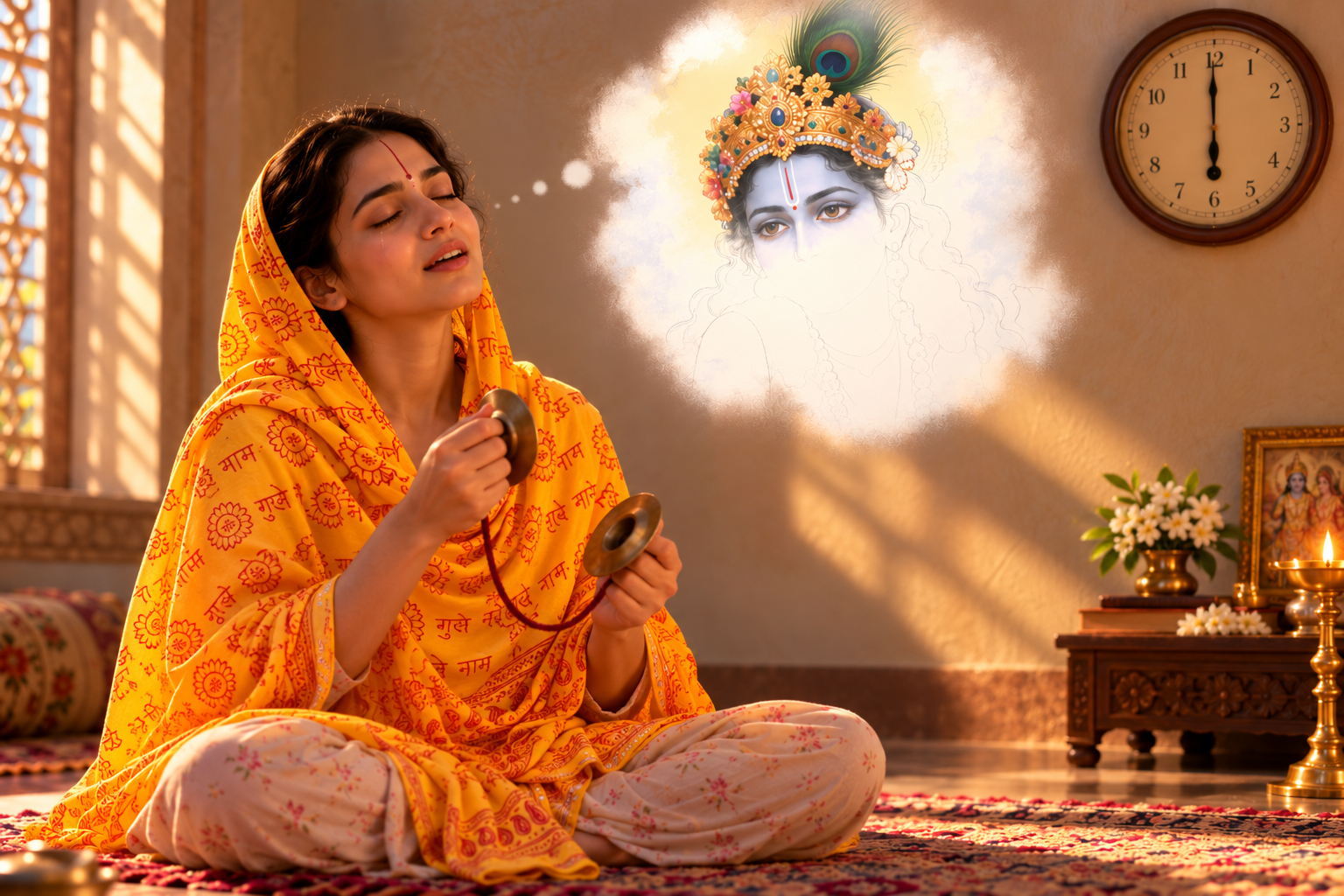
Names arising from God's different leelas become a source of loving Bliss for both God and His devotees when there is an intimate loving relationship between them.
Without love, merely having names and forms is of no use.
Therefore, a devotee should not think:
This name of God is superior to the others.
Nor should one believe:
If I use this particular name, I will attain God more quickly.
The issue is not finding the objectively “best” name. It is love.
This also explains why not every manifestation of God's greatness is equally loving to a particular devotee.
Arjun Did Not Want the Virat Roop
Shri Krishna revealed His awe-inspiring universal form, the Virat Roop, to Arjun.
It displayed God's almighty majesty. Yet Arjun did not respond by asking Shri Krishna to remain in that form.
He folded his hands and prayed for Shri Krishna to return to His original two-armed form—the form that was loving to him.
This reveals an important distinction.
A form may reveal God's almighty majesty, but that does not necessarily make it the form in which a devotee finds the greatest sweetness.
Names and forms associated with God's loving leelas and boundless compassion are especially sweet because they allow the devotee to remember His love for His bhaktas.
Consider the Gopis again. An illiterate Gopi can reprimand Shri Krishna, calling Him a thief and a flirt, while Shri Krishna becomes absorbed in her love and adores her sweet scolding.
The sweetness lies in the loving relationship.
Where This Inquiry Leads
God cannot be confined to the 10 or 24 Avatars prominently described in scripture. Ved Vyas establishes that His descensions are uncountable, occurring in uncountable Brahmandas. God has given the devotee complete freedom to worship Him in the form most pleasing to the heart.
His names are equally unrestricted. A devotee may call Him according to language, country, or loving preference. No name of God is intrinsically greater or lesser than another, and considering one of His names superior to another is Namaparadh.
Kanhaiya, Lala, Chor-Jar, and Ranchor reveal something deeper: the sweetness of a name does not arise merely from the word itself. It arises from the love between God and His devotee. Arjun's response to the Virat Roop similarly shows why a form displaying God's majesty need not be the form most loving to a particular devotee.
God's names and forms are therefore unlimited, and the devotee is free to remember Him through those that awaken love.
But names and forms are only part of what the devotee remembers. God's leelas themselves are also said to be unlimited.
Can His leelas ever be exhausted—or could a devotee even conceive a leela that God has never performed?
That is where the inquiry turns next.
Go Deeper
 JKP Literature
 JKP Literature
 JKP Literature
 JKP Literature
 JKP Literature
Continue the Inquiry
Part 3 of 7 — Avatar
God's names and forms are unlimited, and the devotee is free to remember those that awaken love. But names and forms are only part of devotional remembrance: God's leelas and Divine virtues also draw the mind toward Him. Are these limited to those already known and recorded in scripture?
- ⬅️ Previous: All Descensions of God Are Complete and Equal
- ➡️ Next: God's Leelas and Virtues Are Unlimited
- 🔙 Back to Hub: Avatar Tattva — The Descent