Are Divine Abodes and Saints Also One?
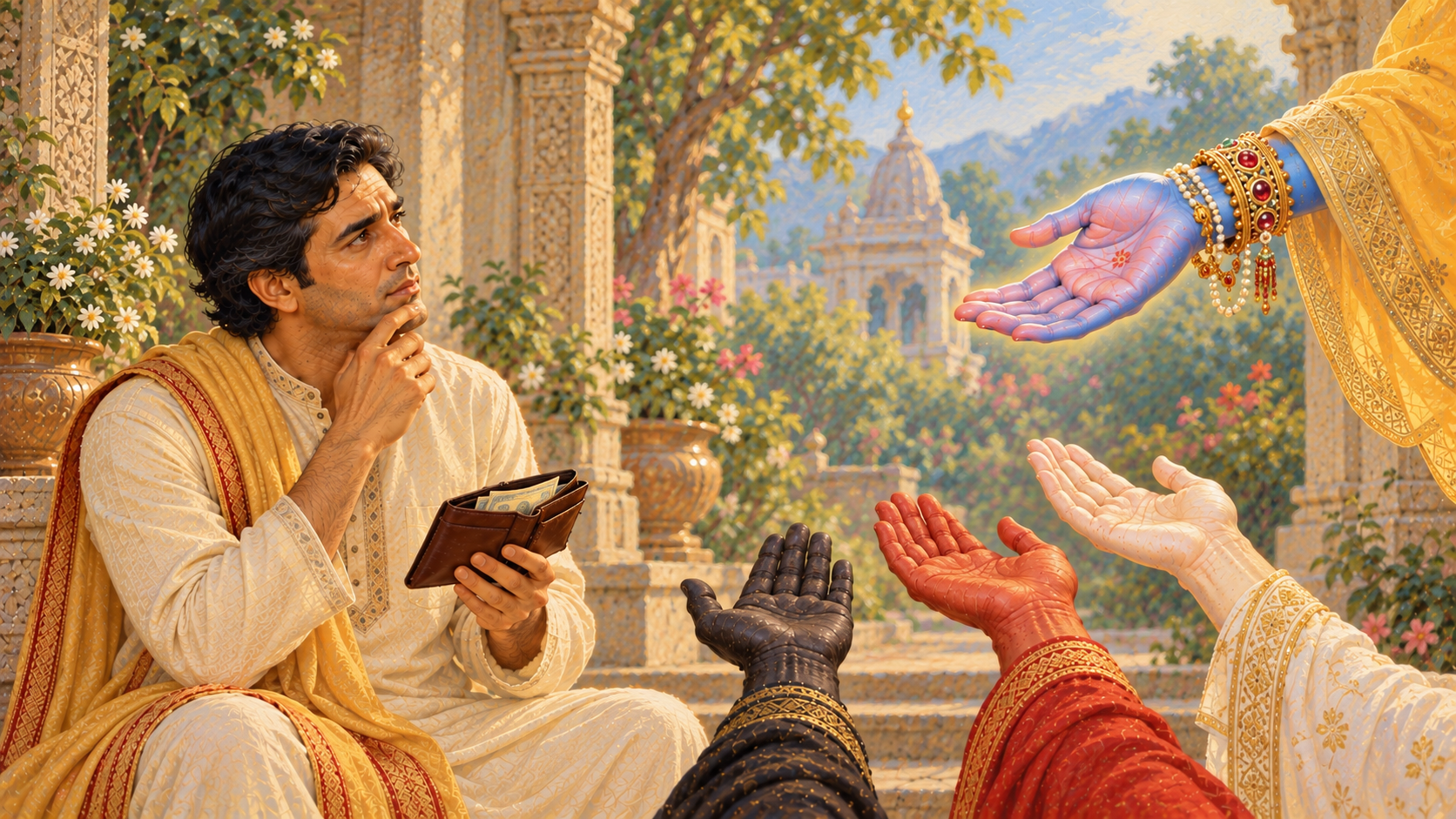
If God is present everywhere, can one Divine abode—or one Saint or acharya—truly be considered higher than another?
📍 Where You Are in the Inquiry
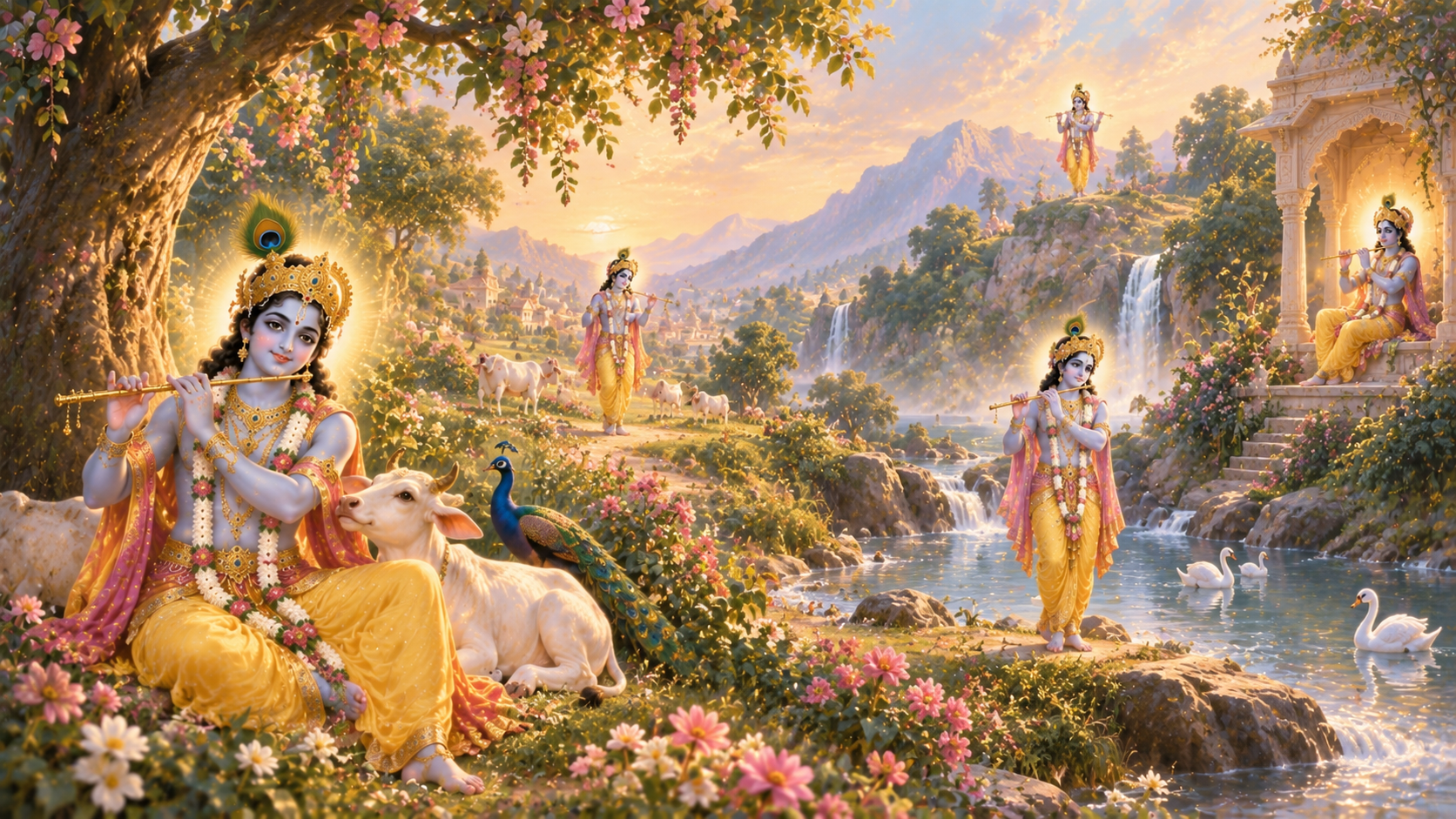
God's names and forms are unlimited. His leelas are unlimited and ever new, and His Divine virtues are limitless. A devotee may therefore remember the name, form, leela, or virtue that is most loving to the heart without considering another to be inferior.
But the same question extends further. God is worshipped in different Divine abodes, and seekers take shelter of different Saints and acharyas. Should distinctions of higher and lower be made among them?
Shri Maharaj Ji now extends the principle beyond God's names, forms, leelas, and virtues to His Divine abodes and Saints.
All Divine Abodes Are One
All Divine abodes are one. A devotee may choose whichever abode appeals to the heart.
This follows from a more fundamental truth: God can be found anywhere because there is no place that is not His abode.
Just as God's form is Divine, His names, virtues, leelas, and abodes are also Divine.
The Ramayan states:
प्रभु व्यापक सर्वत्र समाना । प्रेम ते प्रकट होहिं मैं जाना ॥
prabhu vyāpaka sarvatra samānā । prema te prakaṭa hohiṁ maiṁ jānā ॥
(Ramayan)
“God remains equally present everywhere; through love He reveals Himself.”
God is equally present everywhere.
But this raises an important point. Someone might understand omnipresence only in an abstract sense and wonder whether God's special personal form must therefore be confined to one place.
Shri Maharaj Ji makes the distinction explicit: if someone wishes to see God in a special personal form, even that personal form can remain omnipresently everywhere.
God's personal form does not cease to be omnipresent because it possesses form.
Therefore, a devotee may lovingly remember whichever Divine abode is most appealing without making distinctions between the Divine abodes.
What About Different Saints and Acharyas?
The same principle extends to the descended Saints, or acharyas (आचार्य | ācārya).
A devotee may accept and follow a particular acharya. That personal relationship does not require ill feeling toward another acharya.
Shri Maharaj Ji then brings the entire progression together.
God's:
- uncountable names,
- uncountable forms,
- uncountable virtues,
- uncountable leelas,
- uncountable abodes, and
- uncountable Saints
are all one.
They all reside within one another, and God can be attained by taking shelter of any one of them.
This is why personal devotional preference and spiritual differentiation are not the same thing. A person should devote himself according to where his interest lies, but should not then use the intellect to create distinctions among these Divine realities.
Criticism Becomes a Spiritual Transgression
The consequence is significant.
If God's Divine names, forms, virtues, leelas, abodes, and Saints are all one, criticizing any of them is a spiritual transgression.
The devotee is not being asked to cultivate equal personal attraction toward everything. One may have a particular name one loves to chant, a particular form one loves to meditate upon, a particular leela one loves to remember, a particular Divine abode one longs for, or a particular acharya whose shelter one has accepted.
The instruction is simpler:
Follow where your devotional interest lies, but do not turn preference into distinction or criticism.
Where This Inquiry Leads
All Divine abodes are one, and God is equally present everywhere. Even His special personal form can remain omnipresently everywhere. A devotee may therefore remember whichever Divine abode is most pleasing without considering another Divine abode inferior.
The principle extends still further. God's uncountable names, forms, virtues, leelas, abodes, and Saints are all one and reside within one another. One may take shelter according to one's own devotional interest, but criticizing any of them is a spiritual transgression.
This establishes a clear principle.
Yet it immediately produces a difficult question.
If criticizing or making such distinctions is a mistake, why do the Puranas themselves sometimes appear to criticize one Divine form while praising another?
That apparent contradiction must now be resolved.
Go Deeper
 JKP Literature
 JKP Literature
Continue the Inquiry
Part 5 of 7 — Avatar
God's Divine abodes are one, and His uncountable names, forms, virtues, leelas, abodes, and Saints are all one. A devotee may follow what is personally loving without making distinctions or criticizing another. But if this is so, why do the Puranas and Rasik Saints sometimes appear to criticize one Divine form while praising another?
- ⬅️ Previous: God's Leelas and Virtues Are Unlimited
- ➡️ Next: Why Do Scriptures Appear to Criticize Other Divine Forms?
- 🔙 Back to Hub: Avatar Tattva — The Descent