Fact vs. Fiction: Can We Believe the Vedic Scriptures?
Explore why Vedic miracles like fetal transplants and superhuman longevity seem impossible today and how spiritual evolution across the Yugas explains these feats.
Navadha Bhakti (नवधा भक्ति | navadhā bhakti) refers to the nine forms of devotion through which a devotee expresses love for God. * nava — nine * bhakti — devotion These nine forms are described in the Śrīmad Bhāgavatam and represent the principal ways devotion is practiced. The Nine Forms of Devotion 1. Shravanam
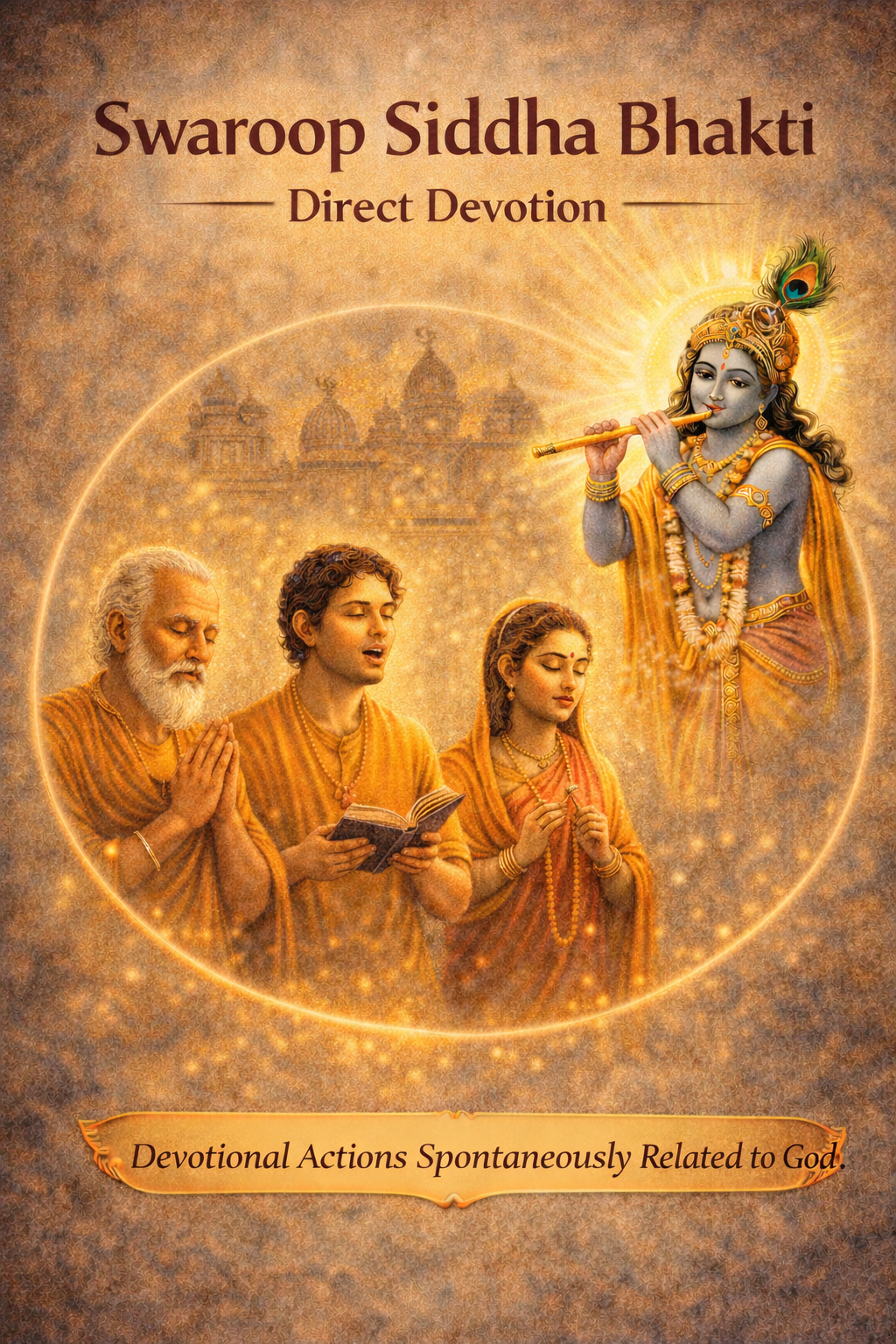
Arop Siddha Bhakti refers to Vedic-prescribed actions that are not originally intended for attaining God, but are regarded as bhakti when performed without desire for results and offered to Him. * āropa — attribution or superimposition * siddhā bhakti — established devotion What It Means In Arop Siddha Bhakti: * A practitioner performs Vedic
Documented foundational themes examined in the Kanpur 1956 engagement associated with Jagadguruttam Shri Kripalu Ji Maharaj.
Kripā (कृपा | kr̥pā) means grace. What It Means Kripā is: performing actions exclusively to uplift another, without wanting anything in return True Grace Such grace can be bestowed only by those who: * desire nothing from anyone * possess something that does not diminish by giving Only God and God-
devlok (देवलोक | dēvalōka) means refers to the "Abode of the Dev." Since the term Dev can denote * either the celestial deities (devi-devata) or * the Supreme Lord Shri Krishna, Consequently, Devlok may refer to * either the celestial heaven (swarg) or * the supreme divine abode (Golok). Further
Sang Siddha Bhakti refers to action prescribed by Vedas for path of Karma or path of Gyan are performed for fulfilling personal desires. * saṅga — association or mixture * siddhā bhakti — established devotion What It Means In Sang Siddha Bhakti: * A seeker follows Vedic injunctions, such as: * Karma (Vaidhi Bhakti / Karmakāṇḍ) * Gyan
Documented foundational questions discussed during the Chitrakoot 1955 scholarly assembly.
Karmendriya refers to the five organs of action through which the embodied soul interacts with the material world: speech, grasping, movement, excretion, and reproduction.
Is God one or many? Discover why Ram, Krishna, and Vishnu are all called Bhagavan. Learn about the 3 aspects of Truth: Brahma, Paramātmā, and Bhagavān.
One Actor, Infinite Roles Have you ever wondered why the Supreme Lord appears in so many different ways? Sometimes He is the playful cowherd in Vrindavan, other times the majestic King of Dwarika, or even the white-complexioned Balarama. Are these different Gods, or just different "costumes" of
Vedic scriptures reveal Avatars are infinite. From Aveshavatar to Purnatam, discover how God descends to Earth to facilitate the deepest Divine Love.