
Vikarm (विकर्म)
Vikarm refers to actions contrary to scriptural guidance that increase suffering, bondage, and distance from spiritual progress.

Vikarm refers to actions contrary to scriptural guidance that increase suffering, bondage, and distance from spiritual progress.
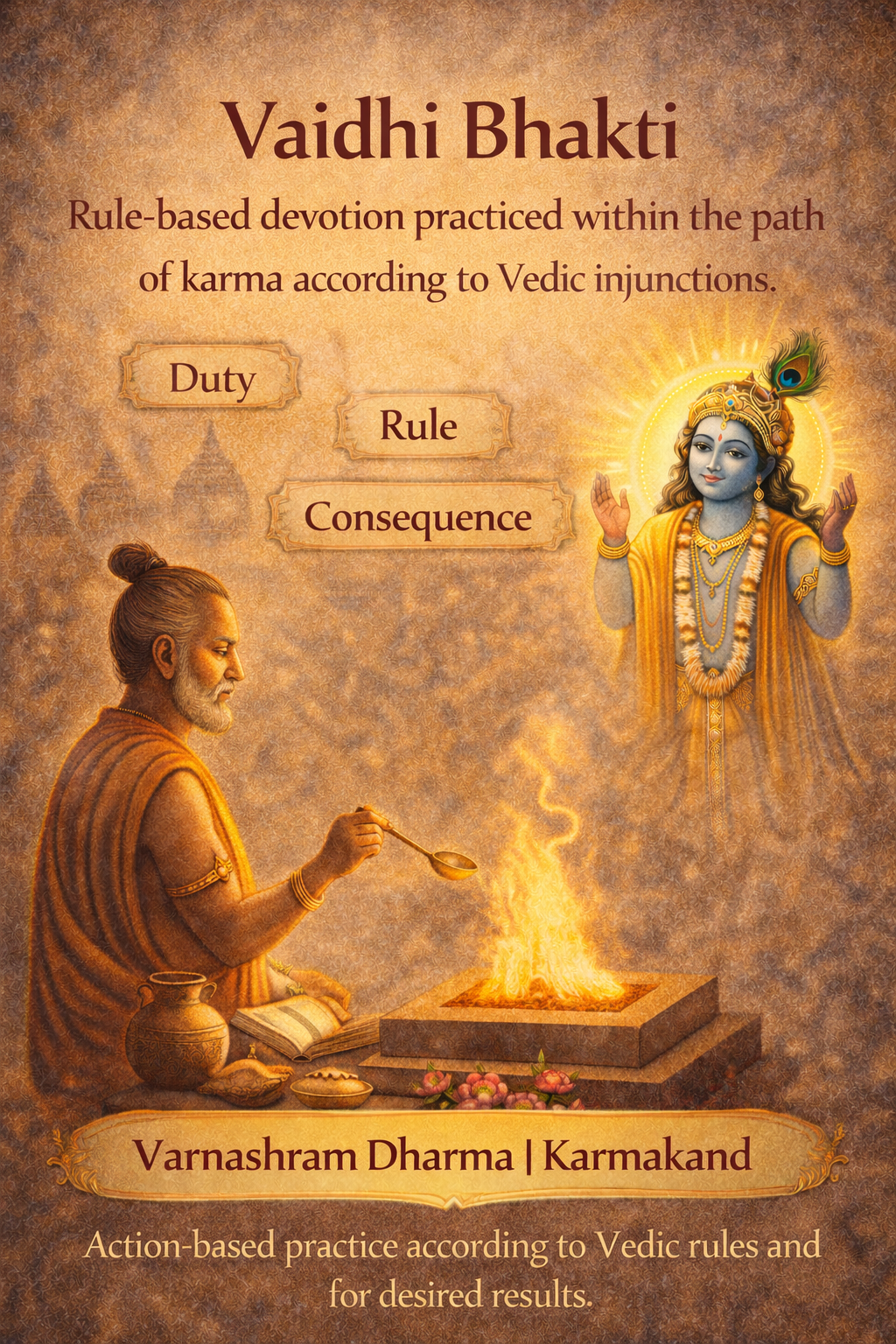
Vaidhi Bhakti (वैधी भक्ति | vaidhī bhakti) refers to rule-based devotion practiced according to Vedic injunctions. * vidhi — rule or method * bhakti — devotion What It Means In Vaidhi Bhakti: * A practitioner follows Vedic rules and disciplines, including: * Varnāśram Dharma * karmakāṇḍ (ritual practices) * Actions are performed: * in a strict, prescribed

There is a divine realm called Paravyom lok and there is material world. The two worlds are separated by Virja nadi (विरजा नदी | virajā nadī ). This is also called * Brahmdrav (ब्रह्मद्रव | brahmadrava ) * Karnarnav (कर्णार्णव | karṇārṇava) * Mahodar (महोदर | mahōdara) No material things can

Vibhinnansh refers to the individual souls, who are eternally distinct from Swansh and can never become divine expansions of God.

Vijatiya Bhed Shunya means Shri Krishna is non-different from His divine energies, though they differ from Him in nature.

Varnashram Dharma is the Vedic system of duties based on varna and ashram, designed to support society and spiritual growth.

During Satyug, human beings were spiritual, humble, co-operative and satisfied with life. But in the Tretayug, these qualities gradually started diminishing. In order to have the society continue to function in a coordinated manner with everyone owning the accountability for their work, the Vedas recommend that human beings be
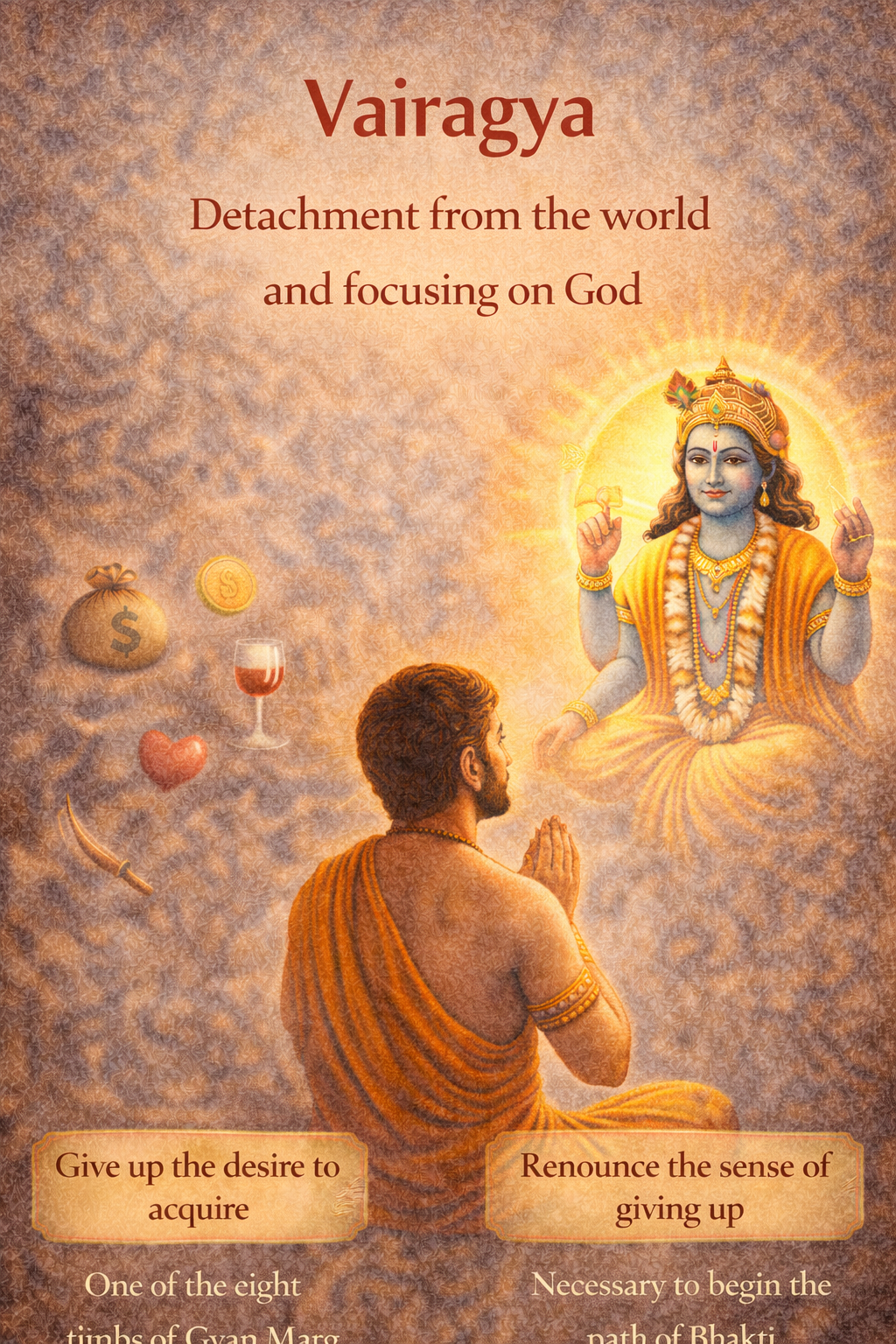
Vairāgya (वैराग्य | vairāgya) refers to detachment from worldly objects and the absence of attachment even to their renunciation. * vigata (विगत) — absence * rāga (राग) — attachment What It Means Vairāgya requires two conditions: * Giving up the desire to acquire worldly objects * Renouncing even the sense of having

Vasana (Devanagari: वासना; ISO 15919: vāsanā) refers to deep-rooted material desires or latent mental impressions. The Binding Force Unlike a fleeting thought, a Vasana is an intense, ingrained inclination toward the material world. These subconscious impressions are formed by the thoughts (Karmas) harbored by the jiva specifically in

Veda (वेद; veda) refers to eternal divine knowledge. The Vedas are the eternal laws of the Supreme God (Brahm) and serve as the final authority on all matters of Sanatan Vedic Dharma. Divine Origin (Vinirgat Granth) The Vedas are not man-made. Before creation, while the Supreme Lord was

Vittaja Seva (वित्तजा सेवा | vittajā sevā) means serving God and Guru through one's wealth and material resources. Why Is Vittaja Seva Important? Material wealth can be deeply intoxicating. The more wealth a person possesses, the greater the opportunity to increase material comforts, pleasures, possessions, and