
Shabdik Gyan (शाब्दिक ज्ञान)
Shabdik Gyan is theoretical knowledge acquired through study, hearing, reading, and instruction. It provides essential understanding of spiritual truth, but by itself does not constitute realization.

Shabdik Gyan is theoretical knowledge acquired through study, hearing, reading, and instruction. It provides essential understanding of spiritual truth, but by itself does not constitute realization.
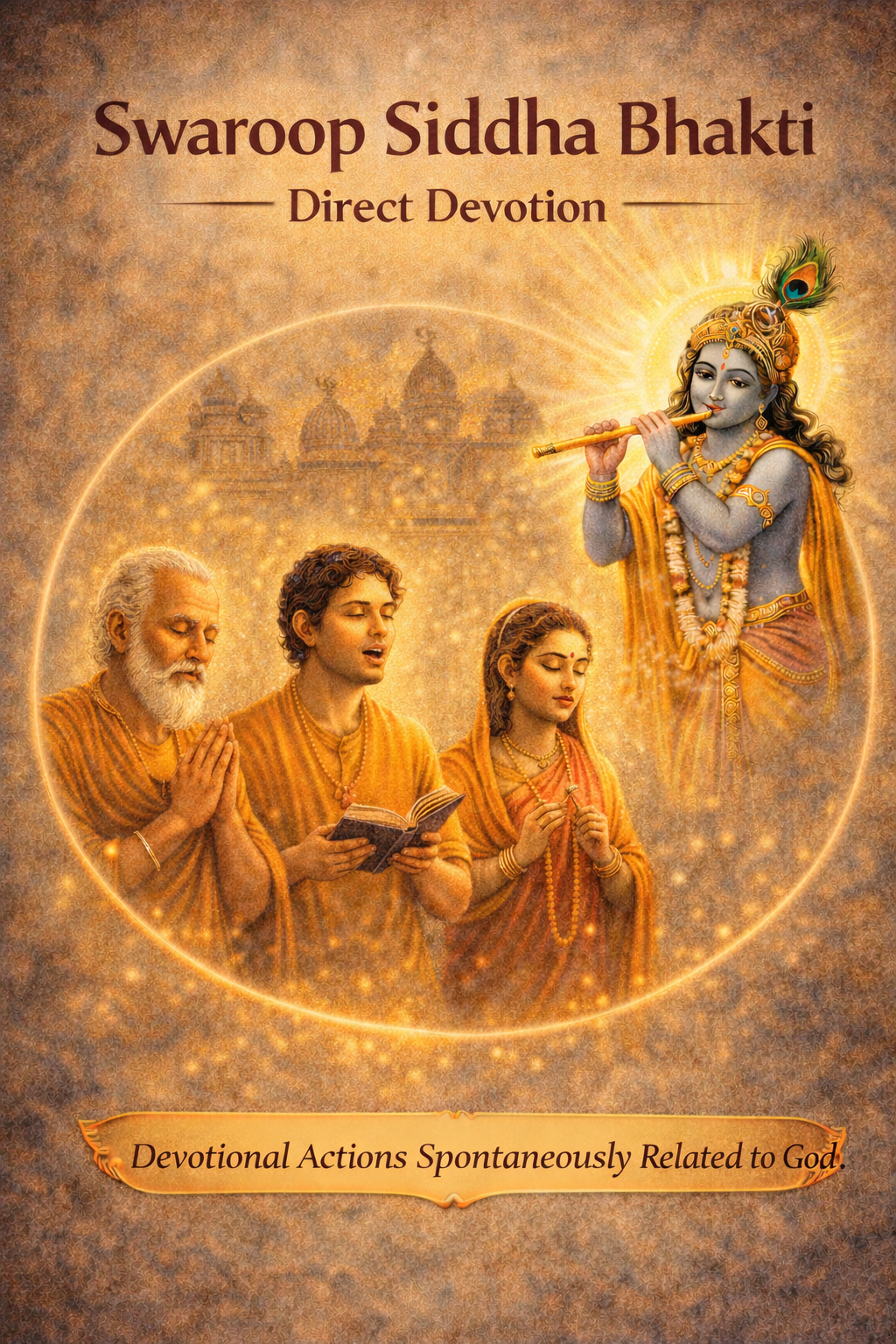
Svarupa siddha bhakti (स्वरूप सिद्धा भक्ति | svarūpa siddhā bhakti ) is devotion akin to the nature of the jiva (soul). * svarūpa — intrinsic nature * siddha — perfected / established This is bhakti is the purest form of devotion and scriptures give the proclaim that this form of bhakti is

Shakha (शाखा, śākhā) literally means "branch." In the context of Vedic literature, it refers to a specific concept. Further Reading and Reference * Related Concepts: Upanishad * Reference: Who am I? Who is Mine? Vol. 1, Ch. 2

Scholars of Sanatan Dharma used to debate on the shastra (scriptures) to deepen their understanding of the true meaning of the authentic Vedic scriptures. This debate is called shastrartha (शास्त्रार्थ | śāstrārtha). When done as a competition then the winner is recognized as a having more

Samaveda (सामवेद; sāmaveda) is one of the four Vedas compiled by Sage Ved Vyas, specifically defining the art of Sama Sangita (melodic chanting). To preserve the precise vibrational potency of its mantras, the text utilizes three distinct tonal accents—Udatta (high), Anudatta (low), and Swarita (middle)—ensuring the
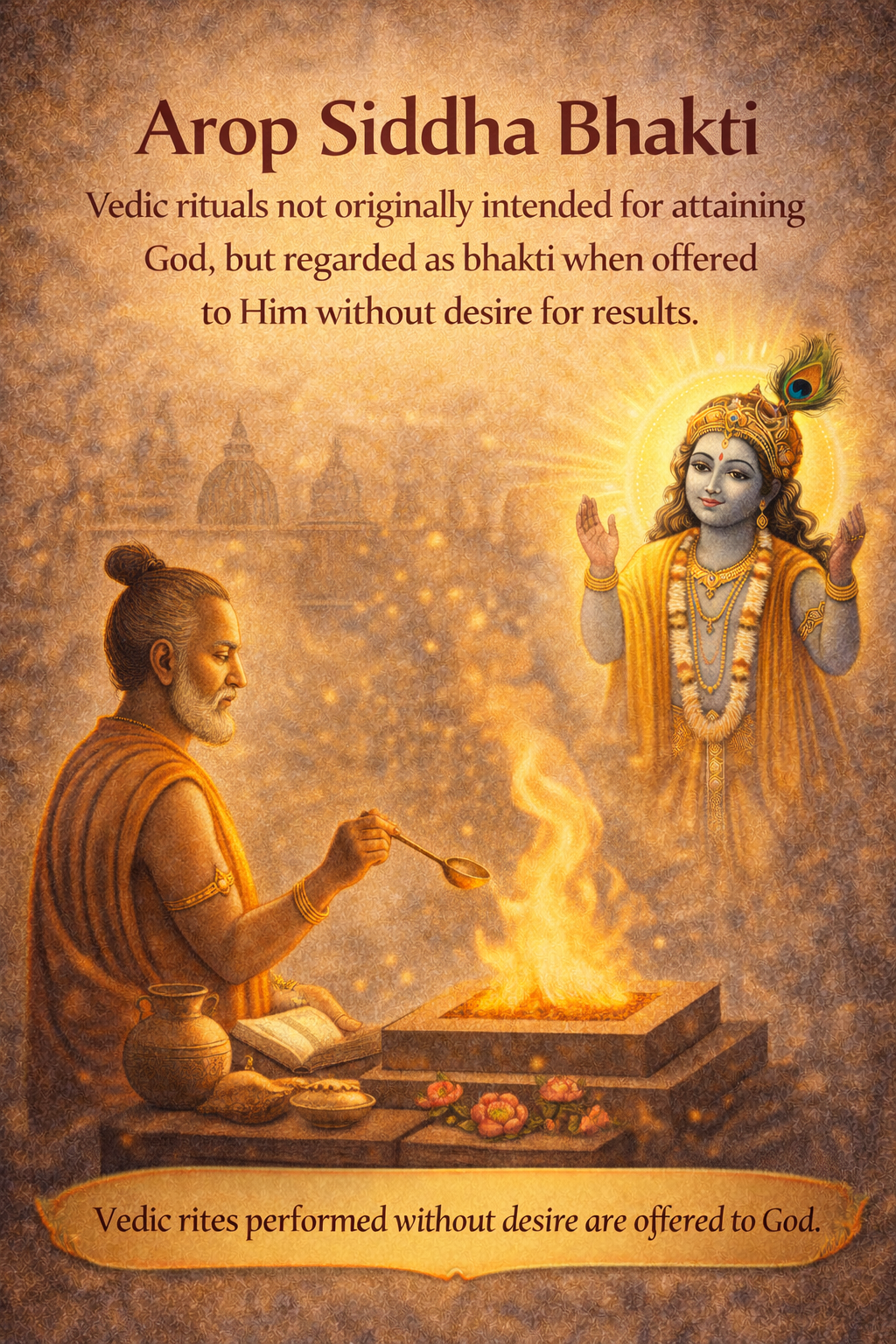
Arop Siddha Bhakti refers to Vedic-prescribed actions that are not originally intended for attaining God, but are regarded as bhakti when performed without desire for results and offered to Him. * āropa — attribution or superimposition * siddhā bhakti — established devotion What It Means In Arop Siddha Bhakti: * A practitioner performs Vedic
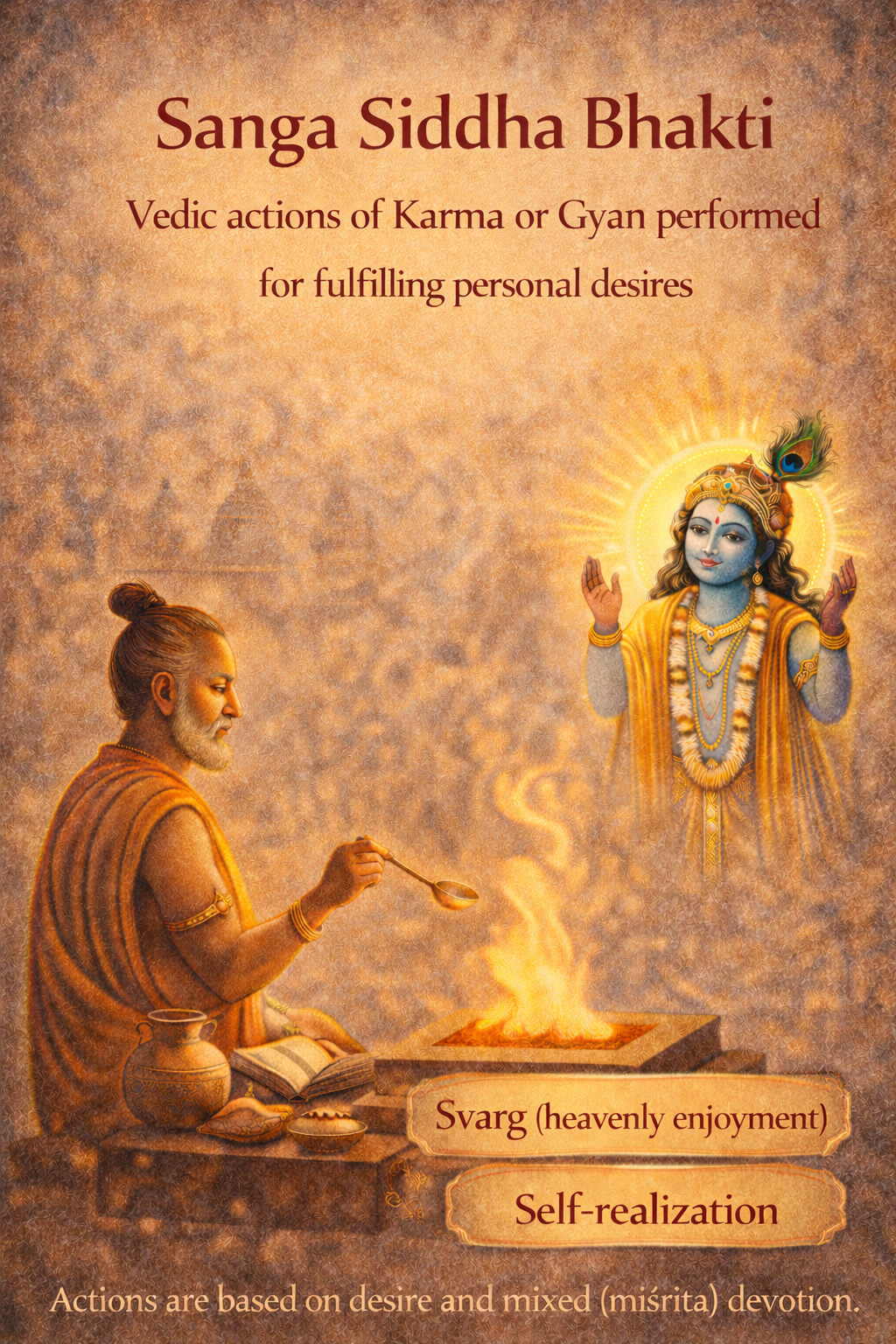
Sang Siddha Bhakti refers to action prescribed by Vedas for path of Karma or path of Gyan are performed for fulfilling personal desires. * saṅga — association or mixture * siddhā bhakti — established devotion What It Means In Sang Siddha Bhakti: * A seeker follows Vedic injunctions, such as: * Karma (Vaidhi Bhakti / Karmakāṇḍ) * Gyan

This Samaveda Veda defines the samsangeet (साम संगीत, sāma saṁgīta). Each Veda mantra it set to precise tonal accents called svara (Devanagari: स्वर ISO15919: svara). These are used to preserve the correct pronunciation and intonation. These are crucial in Vedic chanting to maintain the original meaning.

Sannyasi (संन्यासी; saṁnyāsī) refers to a renunciant or monk who has completely abandoned material attachments to pursue God-realization, typically living a life of celibacy. Eligibility and Warning Scriptural law states that anyone, regardless of age or caste, may renounce their worldly duties the moment they develop

This is opposite of parakiya bhav.

Sanchit Karma refers to the accumulated storehouse of karmas from previous human births whose consequences remain unexperienced.

sthiti (Devanagari: स्थिति ISO15919: sthiti ) means maintaining the material creation. This is a part of the cyclical process of creation. See srishti . LEARN MORE * Maya-Cosmic Power * Srishti-Srishti — Shrishti * Pralaya - Dissolution * Sansar-The material world * Brahmand - Cosmic egg * Tridev REFERENCE Prema Rasa Siddhanta - Philosophy of Divine Love,