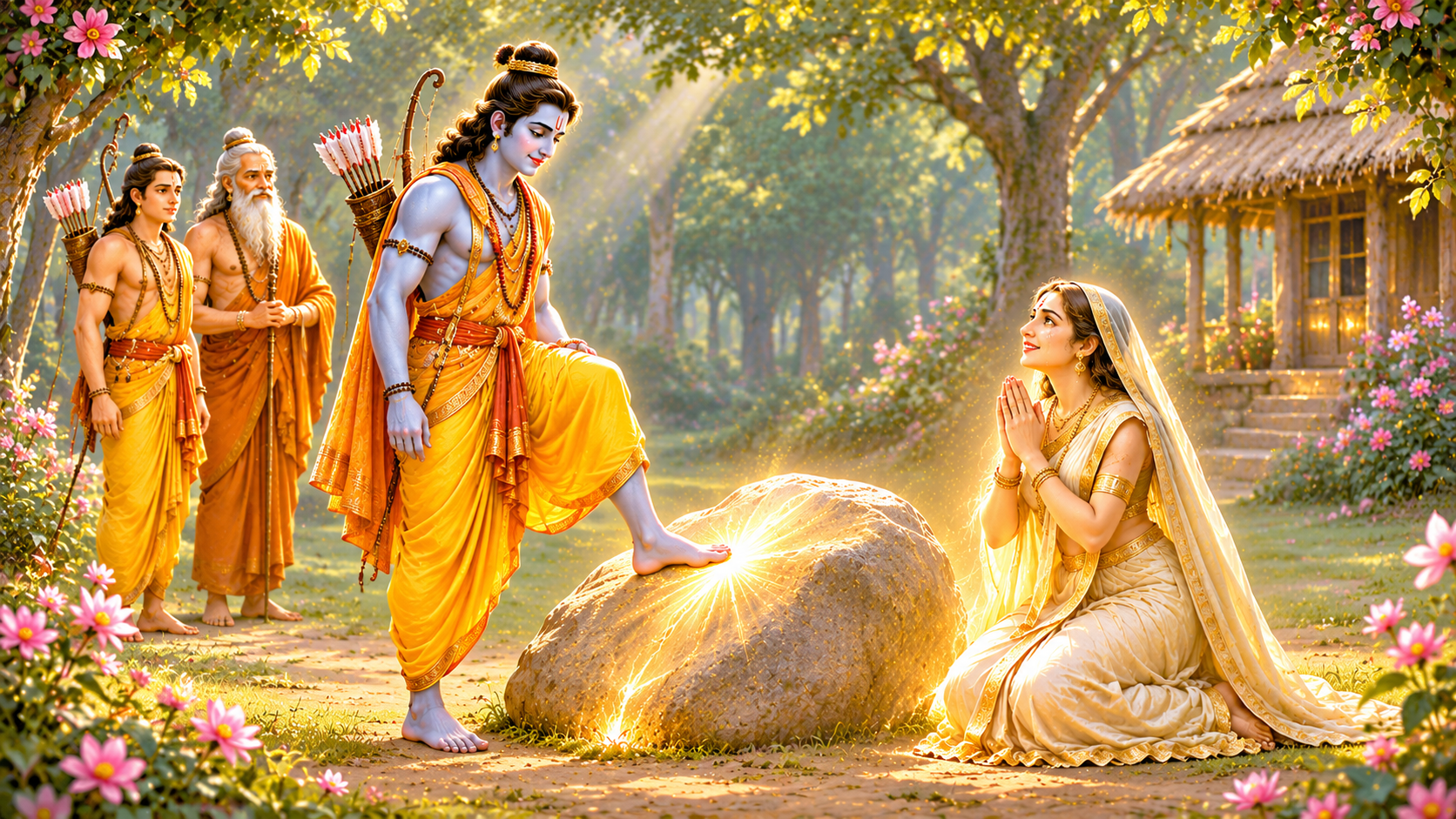
Prastar Yoni (प्रस्तर योनि)
A form of immovable life in which a Jeev inhabits a stone, even though the stone shows no outward signs of life.

A form of immovable life in which a Jeev inhabits a stone, even though the stone shows no outward signs of life.
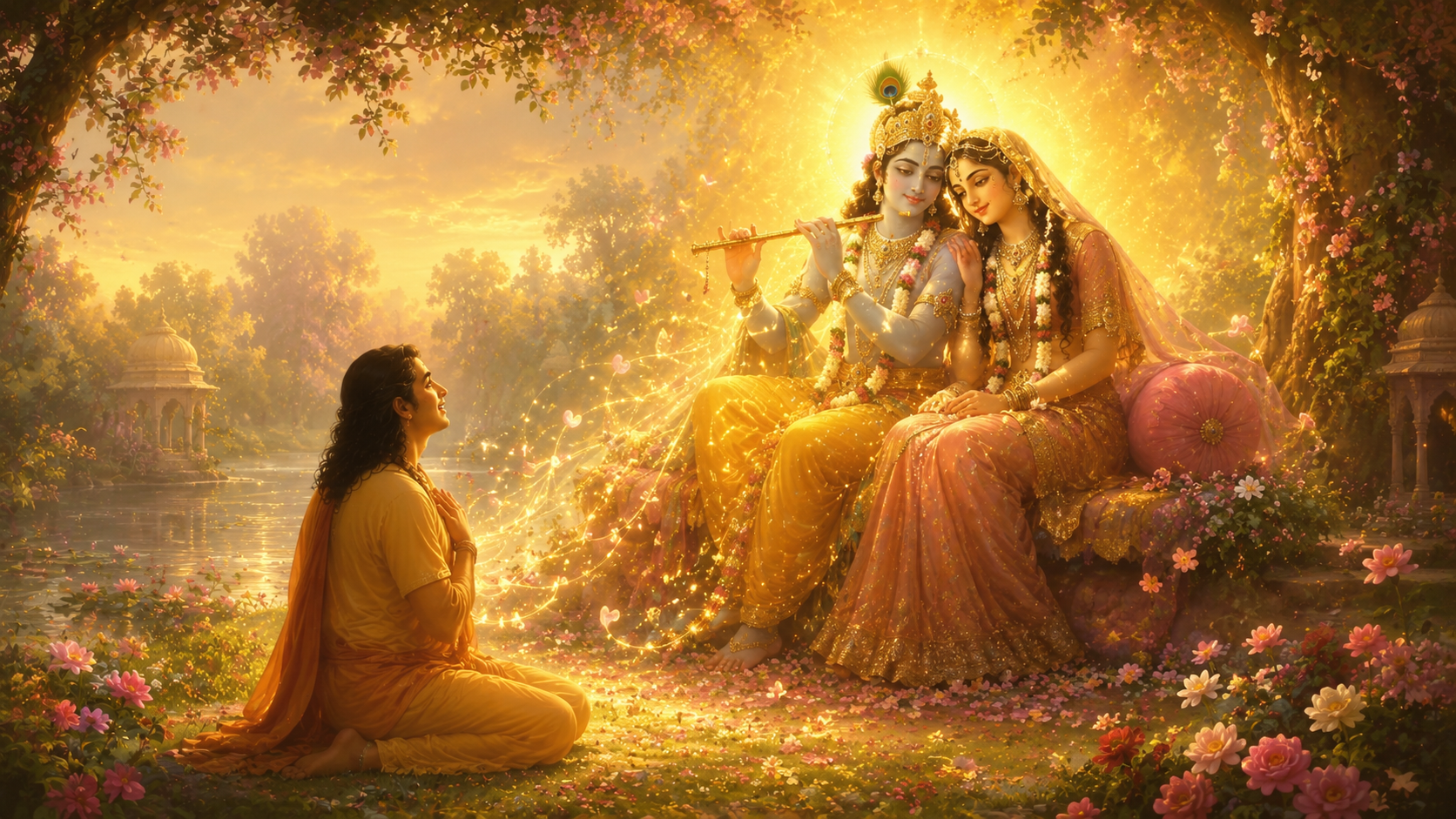
Premanand is the eternal bliss of divine love experienced through realization of Bhagavan by His Divine Grace.

Parinamavada (परिणामवाद, pariṇāmavāda) refers to the philosophy of Actual Transformation. Often discussed in Vedantic philosophy alongside Advaita Vedanta, this theory proposes that Brahm (God) literally transformed Himself to become the material world. The Milk Analogy This concept is illustrated using the example of milk turning into yogurt

Pranipaat is superlative spiritual form of the initial act of paat, representing a distinct hierarchy in humility and surrender to your Guru. 1. Paat (पात , pāta) - a sign of physical humility, but the mind lacks true feeling of submission. 2. Nipaat (निपात, nipāta) - firm determination that this

Puranas (पुराण, purāṇa ) convey the knowledge of the Vedas through stories that highlight universal values, such as non-violence, charity, penance, compassions, and so on. Like the Vedas, Puranas are also eternal scriptures. Puranas have 1 Billion hymns. In Kaliyug people don't have a vast memory
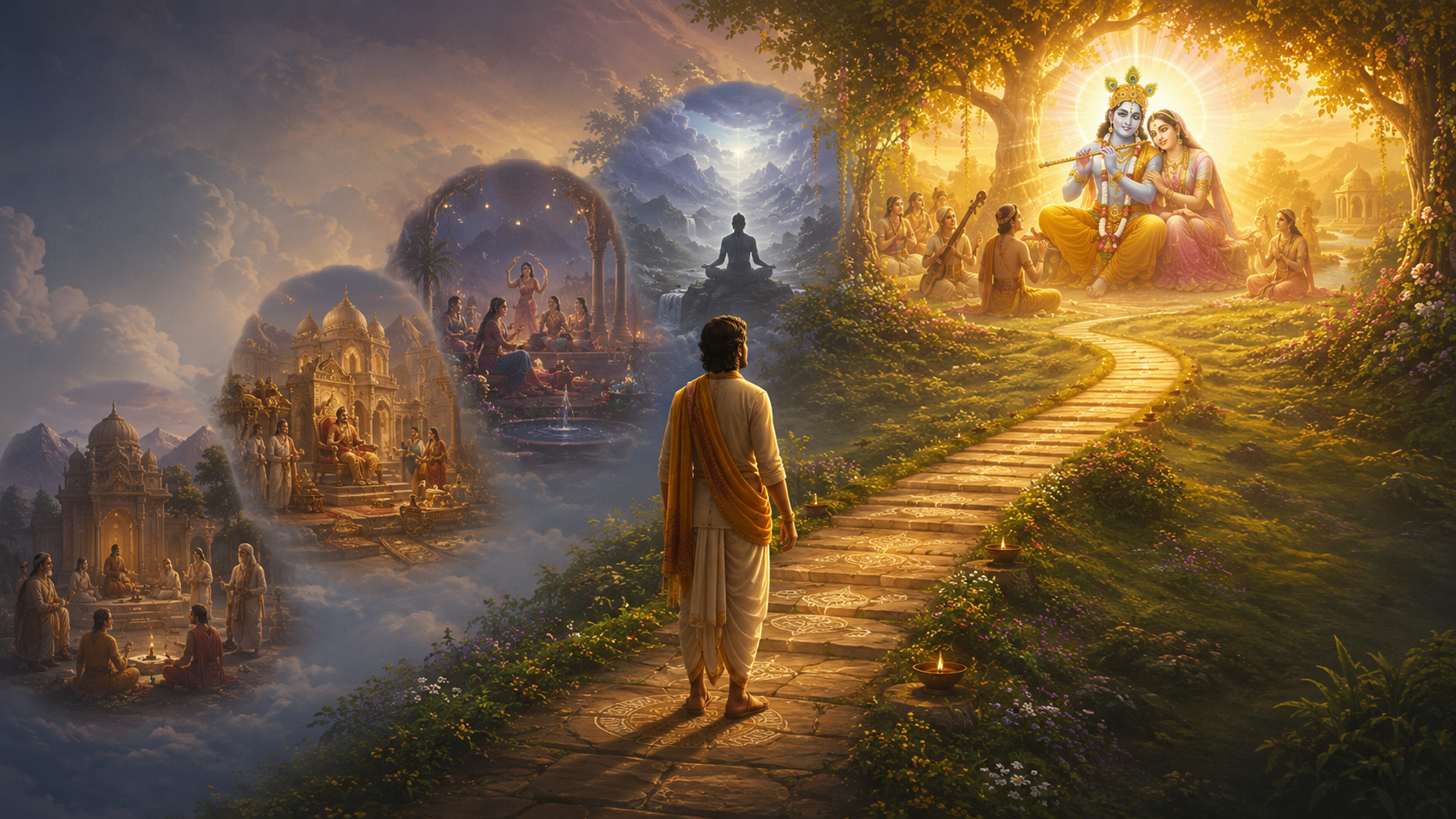
Pancham Purushartha is the fifth and highest goal of life taught in the Vedic tradition—the attainment of Divine Love and the full realization of the soul's eternal relationship with Shri Krishna.
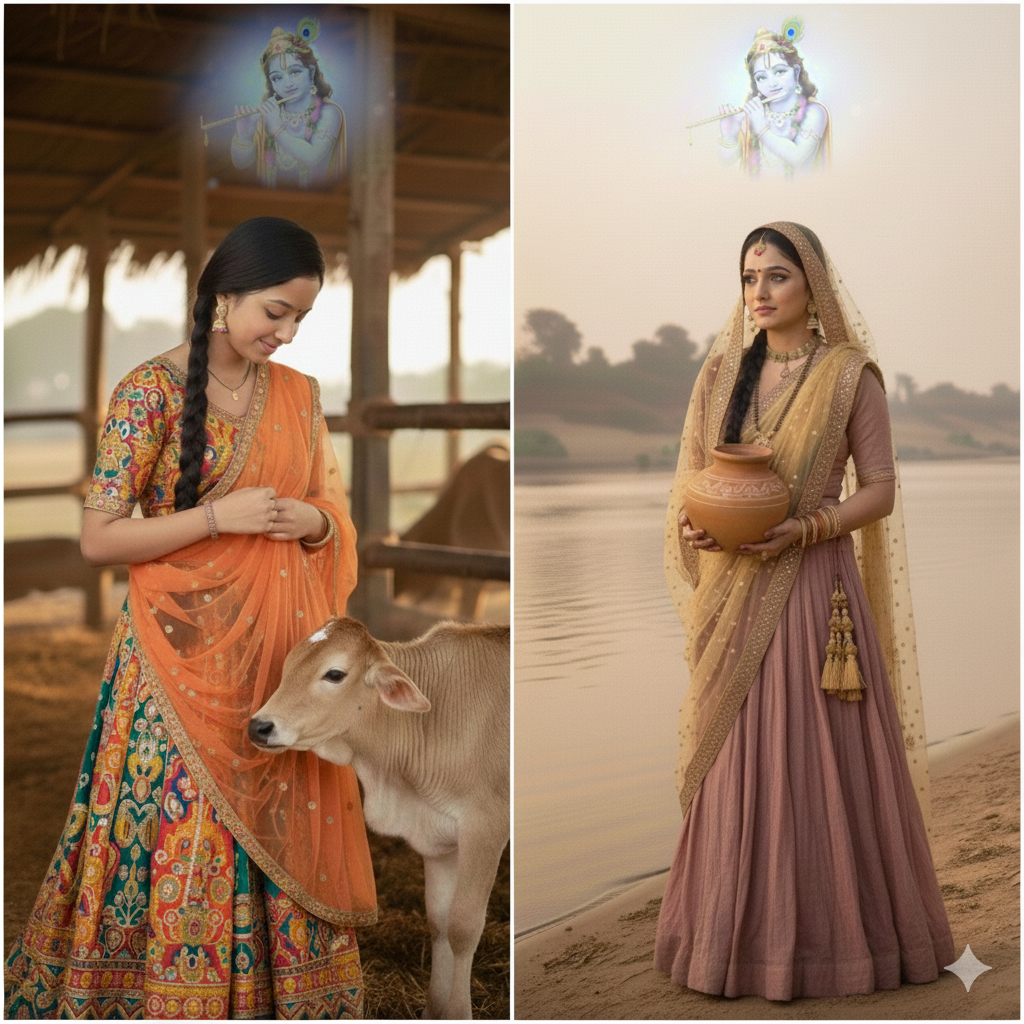
Parakiya Bhava (परकीया भाव, parakīyā bhāva) refers to the devotional sentiment of a married woman who loves Shri Krishna as her beloved, despite being married to another. Svakiya Bhava (स्वकीया भाव, svakīyā bhāva), in contrast, refers to the sentiment of those who are His lawful

Pralay (प्रलय | pralaya) means dissolution or cessation. In Maharaj Ji's teachings, the term is used in several contexts: * Dissolution of creation: The dissolution of part or all of the material creation. * Other forms of cessation: Pralay also includes states such as dreamless sleep and liberation, as described

At the time of creation tamas guna of Maya creates five subtle elements. Together these are call panchtanmatra (Devanagari: पंचतन्मात्रा ISO15919: paṁcatanmātrā ). Each of these elements creates one of the Panch mahabhoot . The originating subtle element becomes the quality of the originated gross element. The five

par dharma (पर धर्म | para dharma) is the unchanging eternal duty of every jeev. Par means superior. The superior dharma every jeev is to serve God. This is also referred to by many other names. * gunatita dharma (धर्म | dharma ) means duty which is beyond the three gunas of

Panchmahabhoot are the five primary gross elements from which the material world and material body are made.

Cessation of all activities is called pralaya (Devanagari: प्रलय ISO15919: pralaya ). The Sanskrit word pralay means dissolution or annihilation. There are many types of pralay . Naityik Pralay Vedas say when God embraces the jeev . That embrace is so full of bliss that it overwhelms the mind. Mind cannot bear