
Karm Yog (कर्मयोग)
Karm Yog means performing duties while keeping the mind attached to God, transforming action into a path of bhakti.

Karm Yog means performing duties while keeping the mind attached to God, transforming action into a path of bhakti.

God-realization is the attainment of God, when the jeev can directly perceive His divine form through all five senses.

Namaparadh means an offence against God, His names, forms, virtues, leelas, abodes, or Saints that deprives one of the fruits of devotion.

Bhāv (भाव | bhāva) refers to inner state, sentiment, or meaning, depending on context. What It Means Bhāv is used in different senses: 1. Devotional Sentiment The inner attitude of love toward God. Jeev, being the eternal servant of God, is permitted to serve Him in different devotional sentiments: * Dāsya

Yogmaya shakti (योगमाया शक्ति | yogamāyā śakti) is the all-powerful internal power of God. This power grants Him the complete ability to enact His will (doing what He wants and not doing what He doesn't want) and makes the impossible possible. 🌟 Examples of Yogamaya'

Anarth (अनर्थ | anartha) refers to spiritual transgressions or unwanted tendencies that obstruct devotion. * anartha — that which is not beneficial for the soul These include actions, attitudes, and tendencies that distract the mind from God and weaken spiritual practice. Key Insight Anarth is not limited to obvious wrongdoing. Even seemingly
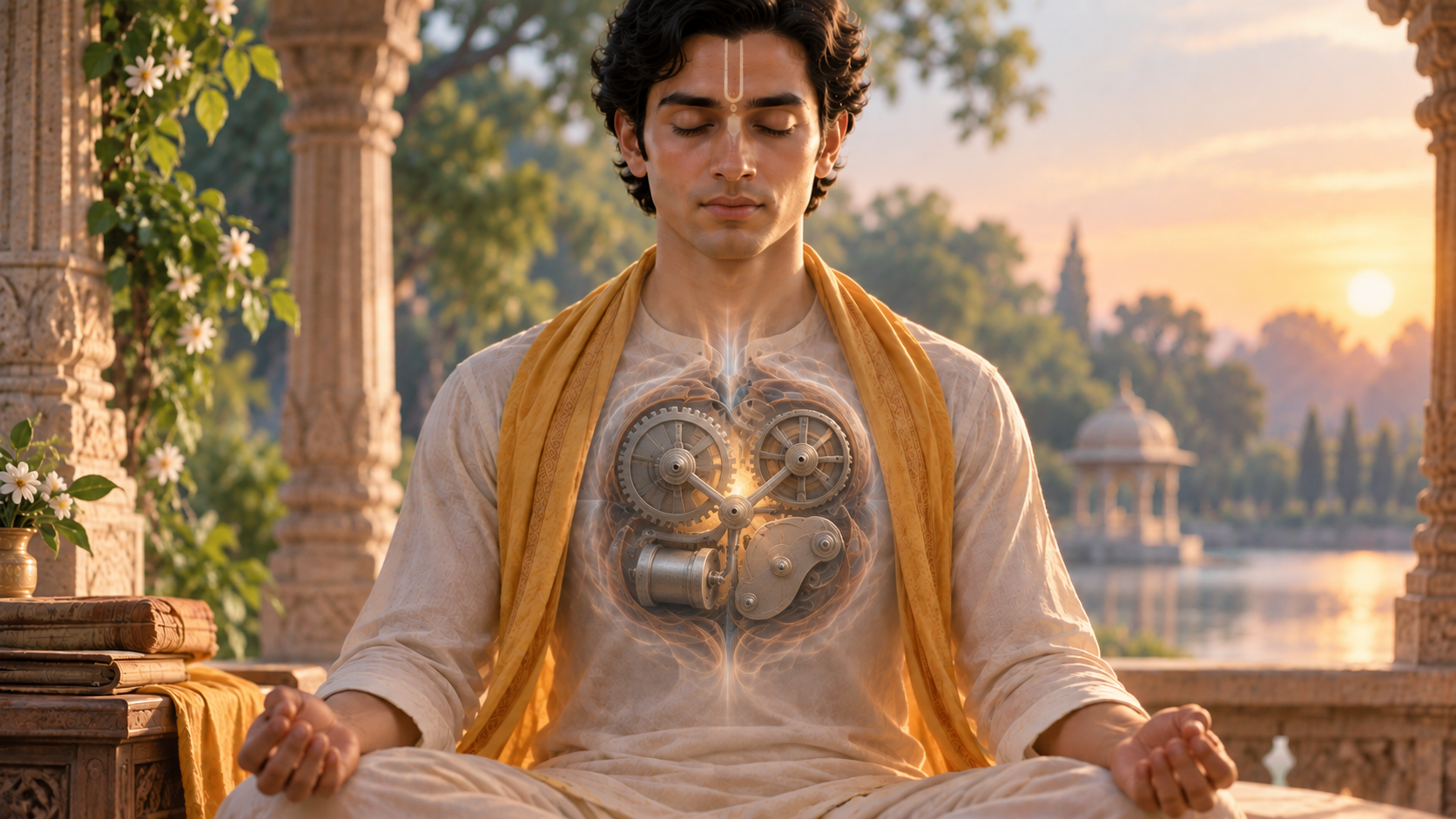
Antahakarana is the inner machinery whose functions include the mind, intellect, Chitta, and Ahankaar.

Atma (आत्मा) means “that which pervades.” The term is used for both the individual soul and Shri Krishna, but its fullest meaning belongs to Shri Krishna alone.

Gyan Marg is the path of spiritual knowledge that leads a qualified seeker toward Atma-Gyan, the realization that he is the eternal soul distinct from the body and mind. It is one of the traditional paths described in the Vedic scriptures.

The supreme divine dance of Shri Radha Krishna with the Gopis of Braj, bestowing extraordinary bliss beyond Maya.

Mukti (मुक्ति | mukti) means freedom or liberation. Just as a person released from prison becomes free to move without restriction, Mukti refers to the soul becoming free from bondage. In the spiritual sense, the jeev (soul) has been caught in the cycle of birth and death (sansar) since
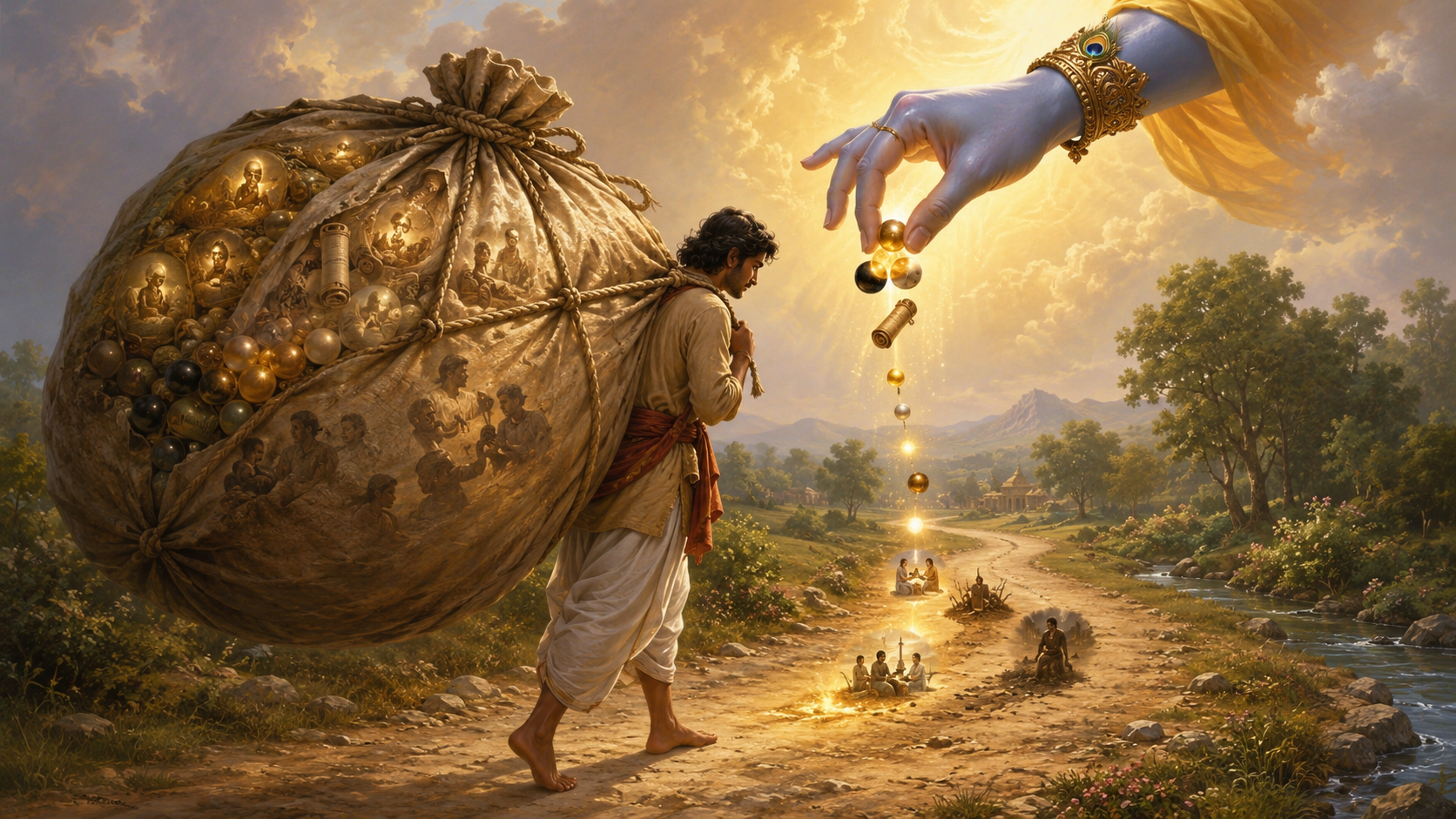
Prarabdha Karma is the portion of Sanchit Karma selected by God to bear fruit during the present lifetime.