Maharaas (महारास)
The supreme divine dance of Shri Radha Krishna with the Gopis of Braj, bestowing extraordinary bliss beyond Maya.

Maharaas (महारास | mahārāsa) is the supreme divine dance of love performed by Shri Radha Krishna with the Gopis of Braj.
Maharaas is the grandest form of Raas. During this pastime, Shri Krishna manifests Himself in numerous forms, dancing individually with each Gopi. They form an immense circle, with Shri Radha and Shri Krishna dancing at its center.
Shri Radha is the presiding Deity of Maharaas.
Everything in this pastime—the participants, the dance, and the surroundings—is divine and completely beyond Maya. Its bliss is beyond the comprehension or imagination of material beings.
Maharaas takes place once in every Kalpa (4.32 billion years).
Go Deeper
 JKP Literature
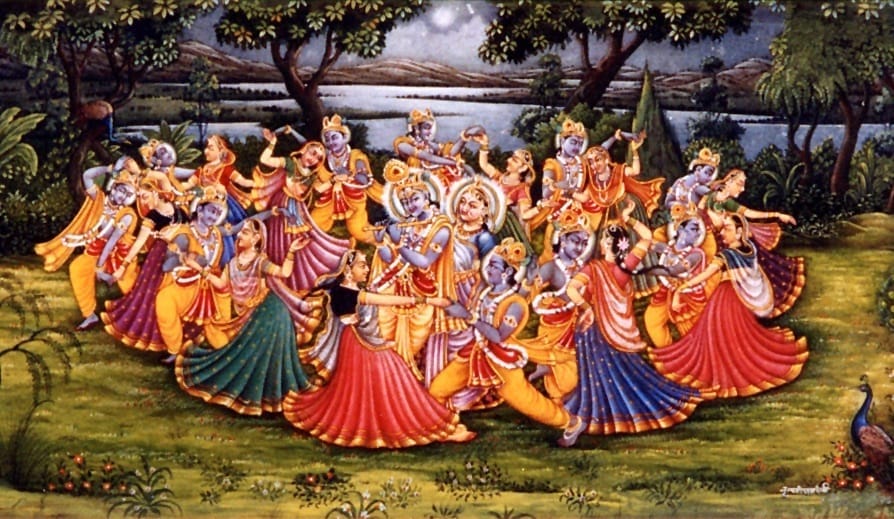
Discover the extraordinary nature of this divine pastime, including why Lord Shankar assumed the form of a Gopi to participate.
 JKP Literature
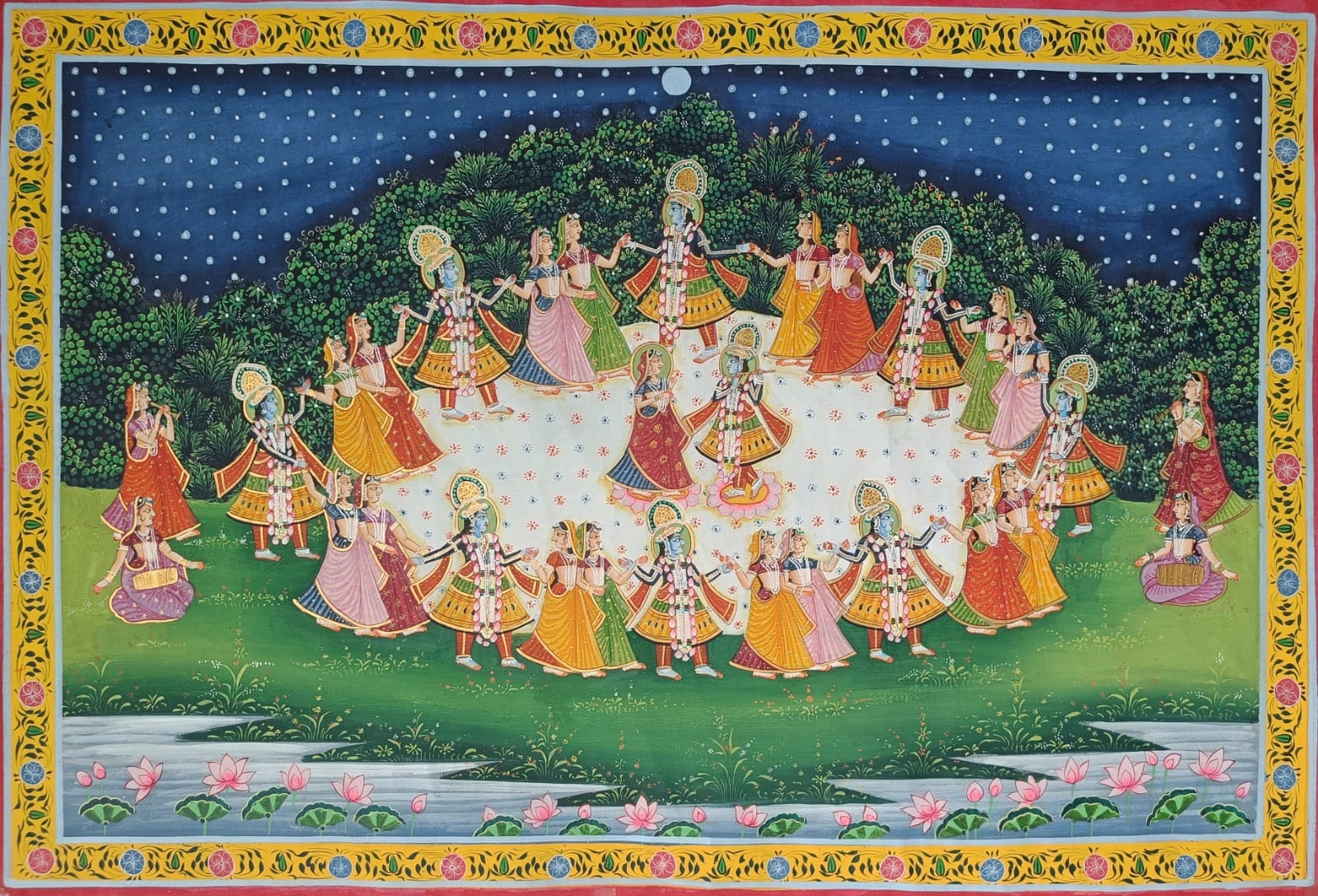
Understand who is eligible to participate in Maharaas, the highest devotional love required, and whether a human being can attain this bliss.
 JKP Literature
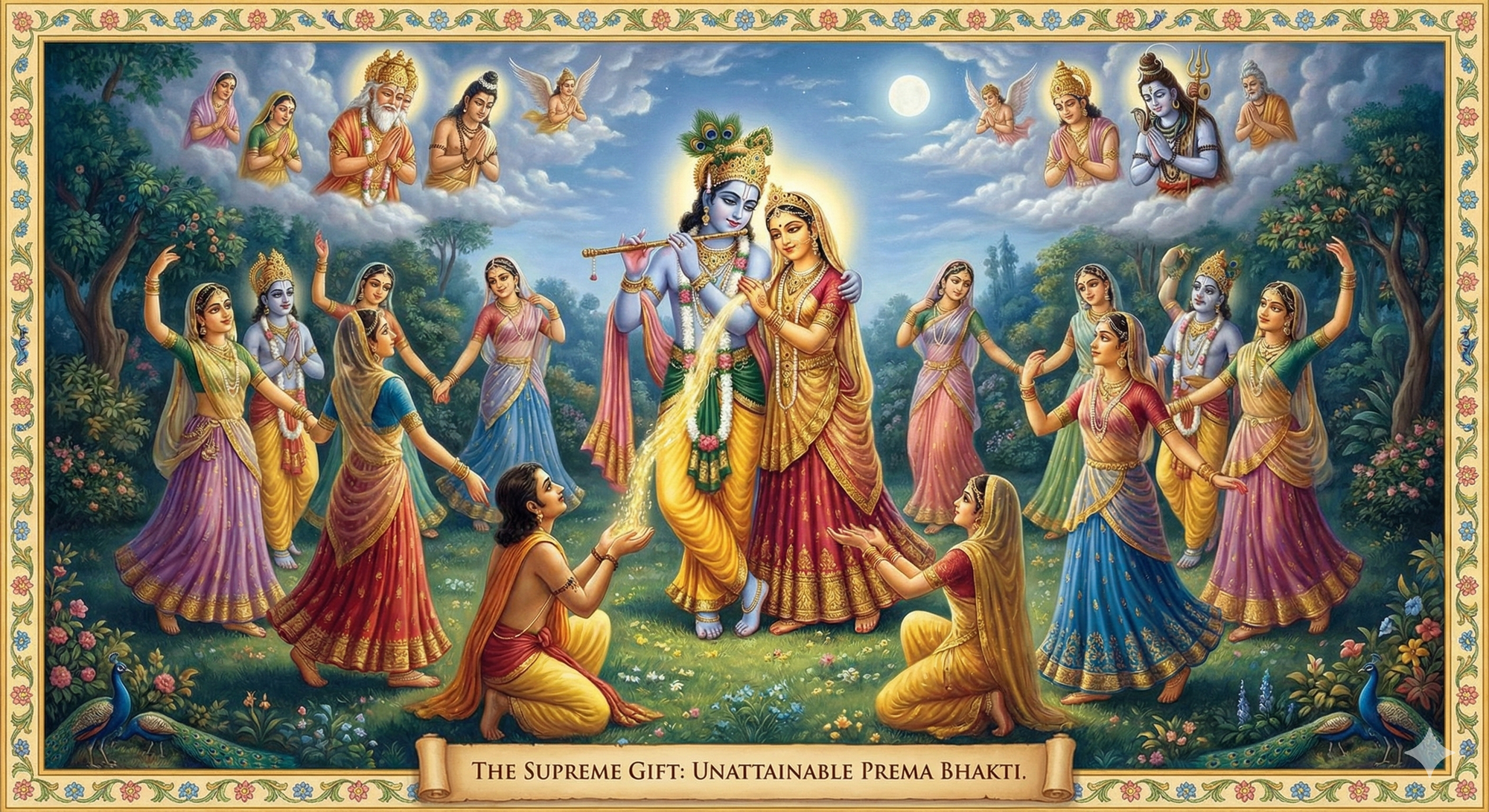
Explore why the divine love bestowed by Shri Radha Krishna is uniquely extraordinary and how it differs from the bliss available through other forms of worship.
Reference
Prema Rasa Madira - The Intoxicating Bliss of Divine Love, Vol. 1, Ch. 4