
Atma-Gyan (आत्मज्ञान)
Atma-Gyan is realization of the soul as distinct from the body, mind, intellect, and senses. It is the attainment sought on the path of Gyan Marg and reveals the true spiritual identity of the self.

Atma-Gyan is realization of the soul as distinct from the body, mind, intellect, and senses. It is the attainment sought on the path of Gyan Marg and reveals the true spiritual identity of the self.

Anubhavatmak Gyan is knowledge gained through direct experience and realization. Unlike theoretical understanding, it is knowledge that has become personally experienced and forms the foundation of true spiritual attainment.
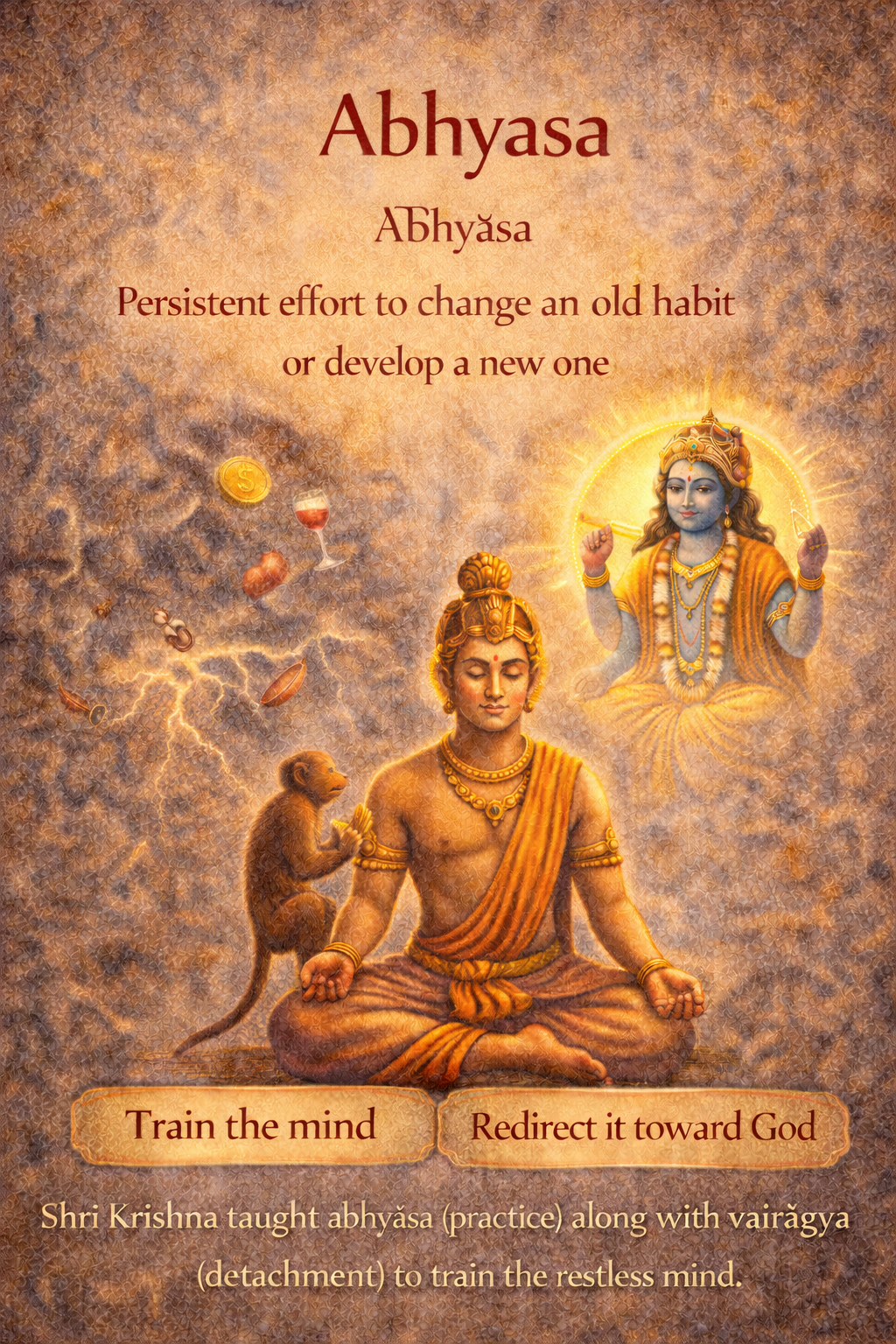
Abhyas (अभ्यास | abhyāsa) means practice. It refers to a concerted and persistent effort to change an old habit or develop a new one. What It Means Abhyāsa is the repeated effort to: * train the mind * redirect it from old tendencies * establish it in a new direction Key Insight

Akshaypatra (अक्षयपात्र, akṣayapātra) refers to the inexhaustible vessel or divine bowl. The term is derived from Akshaya (un-decaying/inexhaustible) and Patra (vessel). In the Mahabharata, this vessel was gifted by the Sun God (Surya) to the Pandavas during their exile. It provided an unlimited supply of

Atharvaveda (अथर्ववेद, atharvavēda) is one of the four parts of the Vedas consisting of 50 branches (shakha), comprising verses for averting calamities and bodily afflictions, and for performing religious rites. Further Reading and References * Also written as Atharva Veda, Atharv Ved * Further Reading: rigveda, saamved, yajurveda, When and
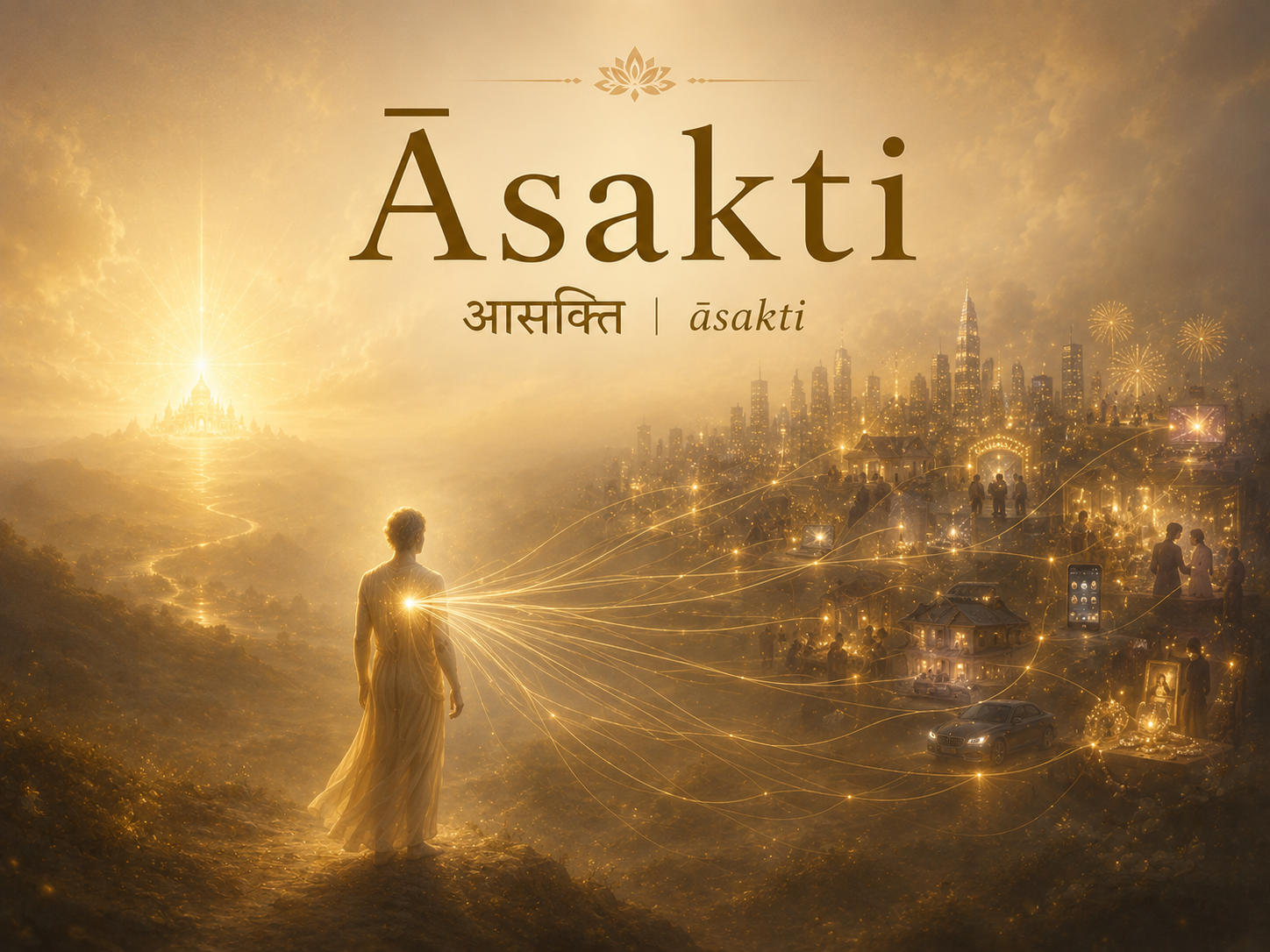
Āsakti refers to worldly attachment through which the jīva becomes emotionally bound to temporary objects, relationships, desires, and experiences, strengthening bondage under Māyā.

Same as jad.

Advait vedanta (अद्वैत वेदान्त, advaita vedānta ) is the philosophy of non-dualism. This is one of the philosophies of advaita. The primary Acharya and propagator of this school of philosophy is Adi Jagadguru Shri Shankaracharya. This is also called Mayavada. According to this doctrine there

Akash (आकाश | ākāśa) is commonly understood as sky or space, but in Vedic terminology it carries deeper meanings depending on context. At the material level, Ākāśa is one of the panch mahabhoot (five gross elements). It represents space—the subtlest of the material elements—and is the first gross

Anshavatara (अंशावतार | aṁśāvatāra ) means avatar of God where only a few powers are revealed. God is perfect and unchanging. All of His avatars are also God and have all of His powers. Yet, the need of the hour determines how many powers are exhibited by the avatar.

Akarm means action performed without egoistic attachment to doership or desire for personal reward. Such action does not bind the soul in karmic reaction.

Asampragyat Samadhi (असंप्रज्ञात समाधि | asaṁprajñāta samādhi ) is a state of God-realization of the yogis . The impressions from past lives called sanskars along with the seeds of sanskars burn eternally and they become free from Maya . Those who pursue the jnanayog do so with the