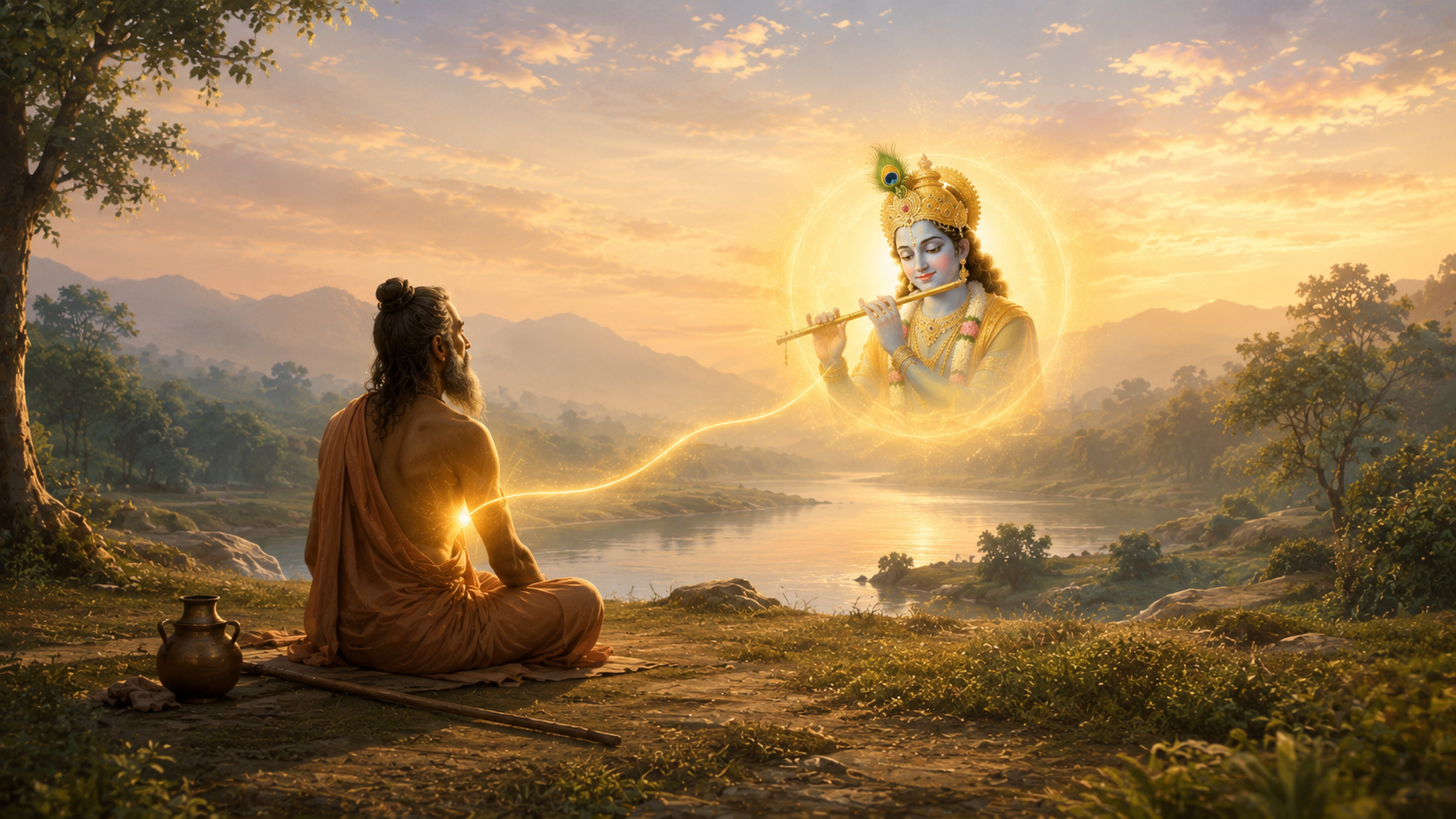
Karm Sannyas (कर्म संन्यास)
Karm Sannyas is the path of bhakti of God after renouncing Varnashram duties, while remaining free from karmic bondage.

Karm Sannyas is the path of bhakti of God after renouncing Varnashram duties, while remaining free from karmic bondage.
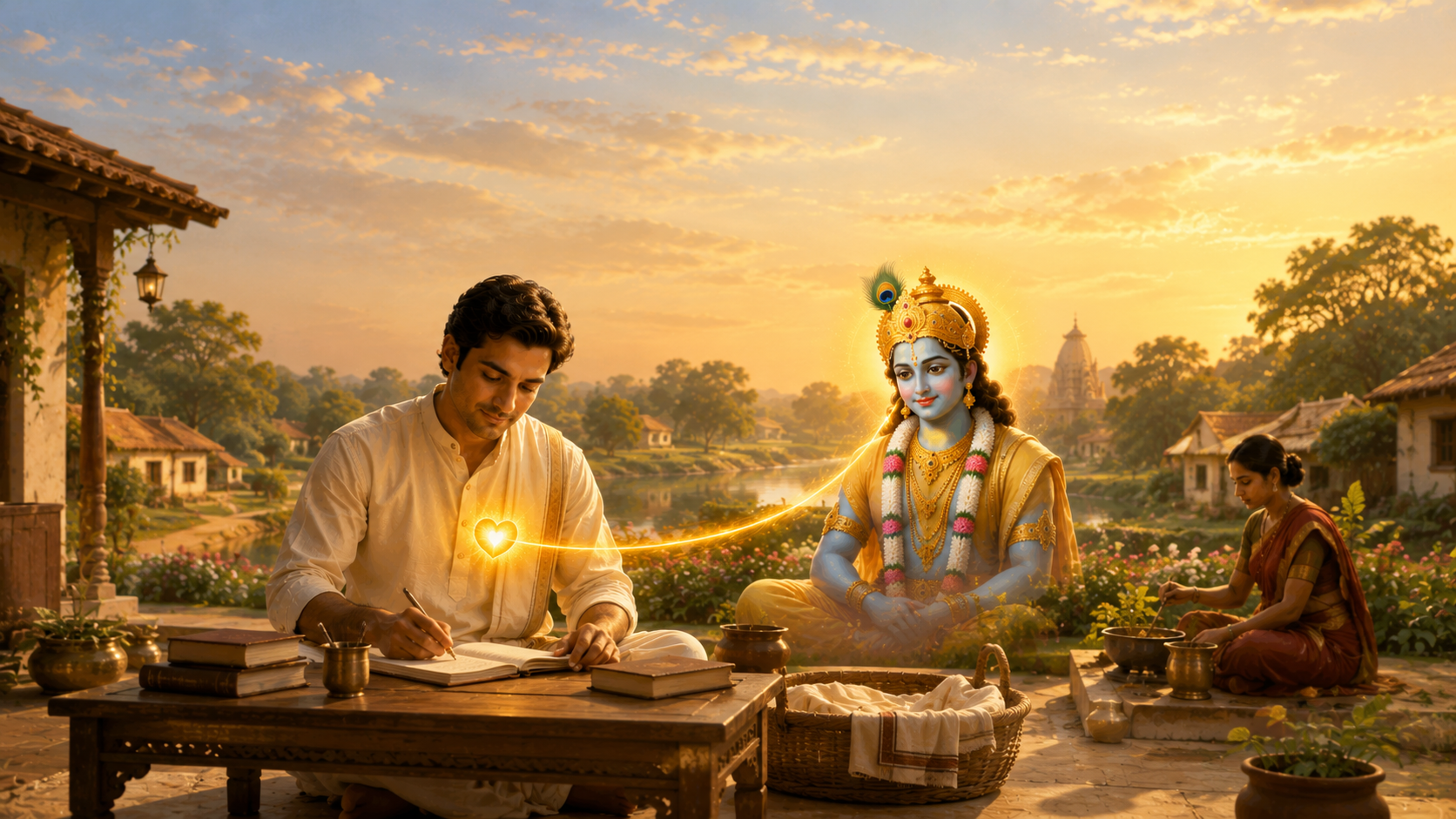
Karm Yog means performing duties while keeping the mind attached to God, transforming action into a path of bhakti.

Sanchit Karma refers to the accumulated storehouse of karmas from previous human births whose consequences remain unexperienced.

sthiti (Devanagari: स्थिति ISO15919: sthiti ) means maintaining the material creation. This is a part of the cyclical process of creation. See srishti . LEARN MORE * Maya-Cosmic Power * Srishti-Srishti — Shrishti * Pralaya - Dissolution * Sansar-The material world * Brahmand - Cosmic egg * Tridev REFERENCE Prema Rasa Siddhanta - Philosophy of Divine Love,

At the time of creation tamas guna of Maya creates five subtle elements. Together these are call panchtanmatra (Devanagari: पंचतन्मात्रा ISO15919: paṁcatanmātrā ). Each of these elements creates one of the Panch mahabhoot . The originating subtle element becomes the quality of the originated gross element. The five

Bhagavadprapti ( भगवद्प्राप्ति | bhagavadprāpti) means attaining God. We are endowed with the sensory capabilities to see , to touch , to hear , to smell and to taste the material objects. For all mayabadha jeev these five senses are made by Maya . Some people’s senses are more acute than

Leela (लीला | līlā) refers to the Divine actions and pastimes of God and God-realized Saints. God's Leelas may appear contrary to His inherent Divine nature. God is beyond Maya and is not subject to material hunger, thirst, fatigue, sleep, or other material limitations. Yet when He

Ahaituki (अहैतुकी | ahaitukī) means causeless or without motive. The term is used in two related contexts: * Kripa (Grace): Grace bestowed without requiring any qualifying criterion in the recipient. * Bhakti: Loving God solely for His happiness, without seeking one's own happiness in return. In the context of

raddhanta (राद्धांत | rāddhāṁta ) means goal. Jeev (soul) has one and only one goal: to attain anand (eternal divine, unlimited bliss). That anand is God. So, the ultimate goal or param charam raddhant (परम चरम राद्धांत | parama carama rāddhāṁta ) of every jiva is to attain

Apratihata (अप्रतिहता | apratihatā) means unhindered or uninterrupted. In Bhakti, apratihata describes devotion that is not allowed to be interrupted by any obstacle. The devotee's remembrance of God and Guru continues without a break. The scriptures compare this continuity to a steady stream of oil. Unlike water,

akarta (अकर्ता | akartā ) means the non-doer. Every jiva is akarta but it has been given an eternal servant called mind. Jeev wants limitless, everlasting, ever-increasing ananda . So, mind keeps striving to find ananda . Since, mind is material it performs tamasik , rajasik , sattvik karma and keeps getting entangled

yoga (Devanagari: योग ISO15919: yoga ) has a couple of meaning * union e.g. jiva attains yoga with Bhagawan by doing bhakti . * The eight fold process outlined by Sage Patanjali in his Yoga Sutras . LEARN MORE * Yogmarg — Yogmarg * ashtanga yoga REFERENCE Prema Rasa Madira - The Intoxicating Bliss of Divine Love,