Devata (देवता)
A celestial deity with extraordinary material powers and duties, who remains bound by Maya and is not the Supreme God.

Devata (देवता | devatā) refers to a celestial being entrusted by God with specific duties in governing the material creation.
Devatas are jeevs who possess extraordinary material powers and knowledge. Examples include Indra, the lord of rain and thunder, and Agni, the lord of fire.
Although Sattva guna (the mode of goodness) predominates in them, Devatas remain under Maya and are not free from mental afflictions.
Their celestial bodies are meant for enjoying the fruits of past virtuous deeds (punya). Unlike humans, they cannot perform bhakti to advance spiritually while occupying these celestial forms.
Devatas are not the Supreme God. Their powers and positions are limited, and their celestial existence is temporary.
A distinction in terminology: The word Deva is also used for Shri Krishna in certain Vedic passages. Therefore, its meaning must be understood from the context.
Alternate names: Devta, Dev, Deva, Devi-Devata, देवता, dēvatā
Go Deeper
 JKP Literature
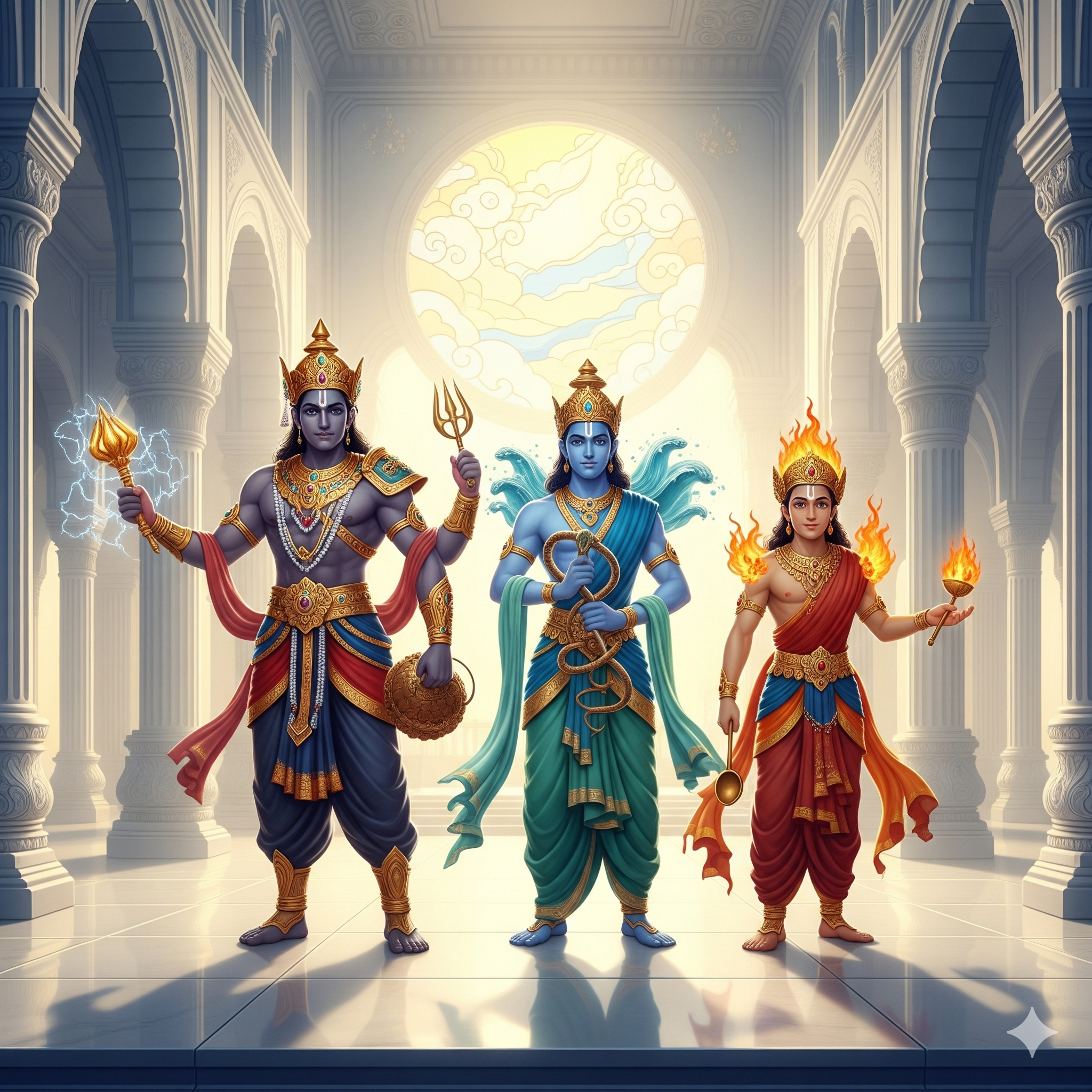
Understand the difference between celestial deities and the Supreme God, including their powers, limitations, and bondage under Maya.
 JKP Literature