What If God Tells You to Go Back?
Discover how Shri Krishna tested the Gopis’ pure love before granting the ultimate bliss of Maharaas, the supreme Divine pastime of selfless devotion.

Most seekers expect obstacles on the path to God.
Family may object. Society may criticize. Duties may pull in another direction. Fear may arise. A seeker may even wonder whether pursuing God so intensely is the right thing to do.
But what if, after overcoming all of that, God Himself tells you to go back?
This is what happened to the Gopis of Braj on the night Shri Krishna was to perform Maharaas with them.
Maharaas is not an ordinary Divine pastime. It is among the most exquisite experiences of Divine love, a privilege bestowed upon only a select few even among God-realized saints.
And before it began, Shri Krishna subjected the Gopis to an extraordinarily severe test.
He Called. They Came.
On the night of Sharad Poornima, Shri Krishna played His flute.
Only the Gopis qualified to attain Maharaas heard it.
Some were milking cows. Some were serving food. Some were feeding children. Some were engaged in household duties. They left what they were doing and rushed toward Shri Krishna. Even relatives who tried to stop them could not turn them back; the Bhagavat describes their hearts as having been stolen by Govinda.
They reached Him in the forest.
Shri Krishna welcomed them:
श्रीभगवानुवाच
स्वागतं वो महाभागाः प्रियं किं करवाणि वः ।
व्रजस्यानामयं कच्चिद् ब्रूतागमनकारणम् ॥
śrī-bhagavān uvāca
svāgataṁ vo mahā-bhāgāḥ priyaṁ kiṁ karavāṇi vaḥ
vrajasyānāmayaṁ kaccid brūtāgamana-kāraṇam
“O most fortunate ones, welcome. What can I do to please you? Is everything well in Braj? Tell Me why you have come.”
— Bhagavat 10.29.18
Then Shri Krishna began telling them why they should leave.
“This Forest Is Dangerous. Go Back.”
His first argument was simple: fear.
It was the middle of the night. The forest was dangerous. Wild creatures roamed there. It was not a place for women to remain.
रजन्येषा घोररूपा घोरसत्त्वनिषेविता ।
प्रतियात व्रजं नेह स्थेयं स्त्रीभिः सुमध्यमाः ॥
rajany eṣā ghora-rūpā
ghora-sattva-niṣevitā
pratiyāta vrajaṁ neha
stheyaṁ strībhiḥ su-madhyamāḥ
“This night is frightening and inhabited by fearsome creatures. Return to Braj. This is not a place for you to remain.”
— Bhagavat 10.29.19
They did not leave.
So Shri Krishna raised the stakes.
“Your Family Is Looking for You.”
What about the people they had left behind?
Their mothers and fathers would be searching for them. Their husbands, brothers and children would be worried.
मातरः पितरः पुत्रा भ्रातरः पतयश्च वः ।
विचिन्वन्ति ह्यपश्यन्तो मा कृढ्वं बन्धुसाध्वसम् ॥
mātaraḥ pitaraḥ putrā
bhrātaraḥ patayaś ca vaḥ
vicinvanti hy apaśyanto
mā kṛḍhvaṁ bandhu-sādhvasam
“Your mothers, fathers, sons, brothers and husbands are searching for you. Do not cause anxiety to your family.”
— Bhagavat 10.29.20
Still they remained.
So Shri Krishna reminded them of the duties waiting at home.
तद् यात मा चिरं गोष्ठं शुश्रूषध्वं पतीन् सतीः ।
क्रन्दन्ति वत्सा बालाश्च तान् पाययत दुह्यत ॥
tad yāta mā ciraṁ goṣṭhaṁ
śuśrūṣadhvaṁ patīn satīḥ
krandanti vatsā bālāś ca
tān pāyayata duhyata
“Return to the cowherd village without delay. Serve your husbands. Your babies and calves are crying; go feed them.”
— Bhagavat 10.29.22
Fear had not sent them back.
Perhaps responsibility would.
It did not.
“Serving Your Husband Is Your Dharma.”
Shri Krishna now made the argument much stronger.
This was no longer merely about worried relatives or unfinished work. He invoked dharma.
भर्तुः शुश्रूषणं स्त्रीणां परो धर्मो ह्यमायया ।
तद्बन्धूनां च कल्याण्यः प्रजानां चानुपोषणम् ॥
bhartuḥ śuśrūṣaṇaṁ strīṇāṁ
paro dharmo hy amāyayā
tad-bandhūnāṁ ca kalyāṇyaḥ
prajānāṁ cānupoṣaṇam
“The highest religious duty of a woman is to sincerely serve her husband, care properly for his family and maintain her children.”
— Bhagavat 10.29.24
And He did not stop there.
दुःशीलो दुर्भगो वृद्धो जडो रोग्यधनोऽपि वा ।
पतिः स्त्रीभिर्न हातव्यो लोकेप्सुभिरपातकी ॥
duḥśīlo durbhago vṛddho
jaḍo rogy adhano ’pi vā
patiḥ strībhir na hātavyo
lokepsubhir apātakī
Even if a husband is ill-tempered, unfortunate, old, unintelligent, sick or poor, a woman who desires the higher worlds should not abandon him—provided he is not a pātakī.
— Bhagavat 10.29.25
The Gopis had left their homes to come to Shri Krishna.
Now Shri Krishna Himself was telling them that their dharma required them to return.
Their hearts were burning. Still they did not go.
“What Will the World Say About You?”
Then came another fear.
Character. Reputation. Society.
What would become of women from respectable families who secretly went into the forest at night to meet another man?
Shri Krishna told them:
अस्वर्ग्यमयशस्यं च फल्गु कृच्छ्रं भयावहम् ।
जुगुप्सितं च सर्वत्र ह्यौपपत्यं कुलस्त्रियाः ॥
asvargyam ayaśasyaṁ ca
phalgu kṛcchraṁ bhayāvaham
jugupsitaṁ ca sarvatra
hy aupapatyaṁ kula-striyāḥ
Such conduct for a woman of a respectable family is condemned: it obstructs attainment of swarg, destroys reputation, and brings difficulty and fear.
— Bhagavat 10.29.26
Consider what was now being placed before them.
Family.
Duty.
Dharma.
Reputation.
The possibility of being condemned as women of bad character.
Even the prospect of losing the spiritual benefit associated with virtuous conduct.
Yet none of it could make them leave Shri Krishna.
Then He gave them perhaps the hardest argument of all.
“You Can Love Me From Home.”
Shri Krishna acknowledged their love.
Perhaps, He said, they had come because of their great love for Him. That was certainly commendable—after all, all beings naturally have affection for Him.
But why did they need to remain physically near Him?
श्रवणाद् दर्शनाद् ध्यानान्मयि भावोऽनुकीर्तनात् ।
न तथा सन्निकर्षेण प्रतियात ततो गृहान् ॥
śravaṇād darśanād dhyānān
mayi bhāvo ’nukīrtanāt
na tathā sannikarṣeṇa
pratiyāta tato gṛhān
Love for Me develops through hearing, seeing, meditating upon Me and singing My glories—not merely through physical proximity. Therefore, go back to your homes.
— Bhagavat 10.29.27
Think about the severity of that test.
They had not wandered into the forest looking for Shri Krishna.
He had called them.
They had abandoned everything and run to Him.
And now their beloved was telling them that they did not need to be with Him.
They could love Him from home.
Their Hearts Broke—but They Did Not Leave
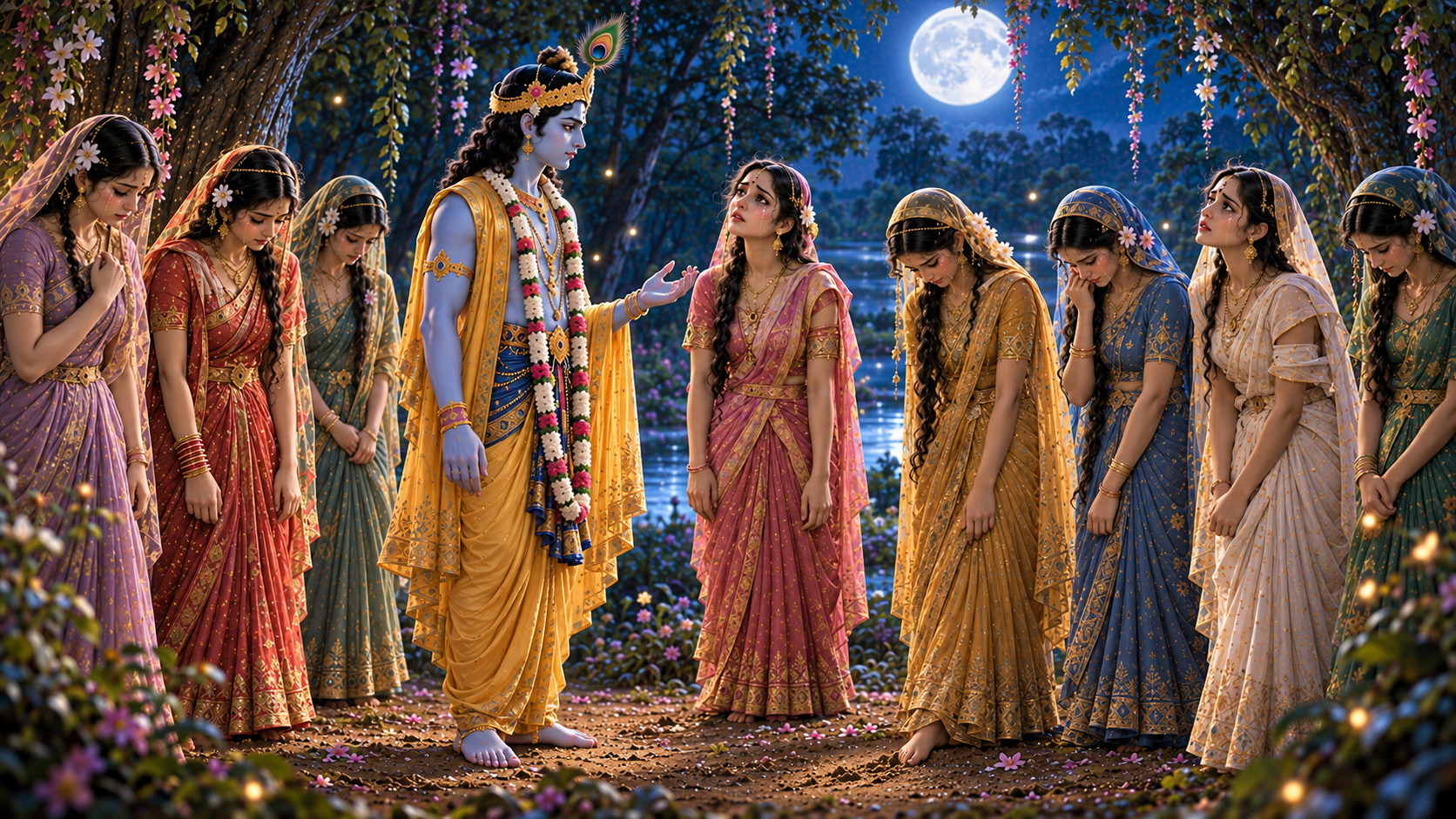
The Bhagavat does not portray the Gopis as unaffected by Shri Krishna's words.
Quite the opposite.
इति विप्रियमाकर्ण्य गोप्यो गोविन्दभाषितम् ।
विषण्णा भग्नसङ्कल्पाश्चिन्तामापुर्दुरत्ययाम् ॥
iti vipriyam ākarṇya
gopyo govinda-bhāṣitam
viṣaṇṇā bhagna-saṅkalpāś
cintām āpur duratyayām
Hearing these painful words from Govinda, the Gopis became despondent. Their hopes seemed shattered, and they were overcome by unbearable anguish.
— Bhagavat 10.29.28
Their heads dropped.
They sighed heavily.
They scratched the earth with their toes.
Their tears washed the kajal from their eyes.
And for a time, they stood silently before Him under the weight of their sorrow.
Imagine the heart of a lover in that moment.
The beloved called.
You came.
You left everything behind.
And now the very beloved for whom you abandoned everything appears completely stone-hearted and says:
Go back.
The Gopis Answer
The Gopis had listened to everything Shri Krishna said.
Now they answered Him.
मैवं विभोऽर्हति भवान् गदितुं नृशंसं
सन्त्यज्य सर्वविषयांस्तव पादमूलम् ।
भक्ता भजस्व दुरवग्रह मा त्यजास्मान्
देवो यथादिपुरुषो भजते मुमुक्षून् ॥
maivaṁ vibho ’rhati bhavān gadituṁ nṛśaṁsaṁ
santyajya sarva-viṣayāṁs tava pāda-mūlam
bhaktā bhajasva duravagraha mā tyajāsmān
devo yathādi-puruṣo bhajate mumukṣūn
“O stubborn Beloved, such harsh words do not suit You. We have left behind all worldly entanglements and come only for Your shelter. The Vedas you quote exist solely to direct souls to Your lotus feet. Now that we have arrived, why send us away? You have stolen our hearts—give them back if You truly want us to leave!”
— Bhagavat 10.29.31
They addressed Him as Vibhu—the Almighty Lord. Yet in the same breath, they told Him that it did not befit Him to speak so cruelly—nṛśaṁsam.
Shri Krishna had also told them that serving their husbands, children and relatives was their dharma.
The Gopis did not deny what He had said.
यत्पत्यपत्यसुहृदामनुवृत्तिरङ्ग
स्त्रीणां स्वधर्म इति धर्मविदा त्वयोक्तम् ।
अस्त्वेवमेतदुपदेशपदे त्वयीशे
प्रेष्ठो भवांस्तनुभृतां किल बन्धुरात्मा ॥
yat paty-apatya-suhṛdām anuvṛttir aṅga
strīṇāṁ sva-dharma iti dharma-vidā tvayoktam
astv evam etad upadeśa-pade tvayīśe
preṣṭho bhavāṁs tanu-bhṛtāṁ kila bandhur ātmā
You have told us that a woman's dharma is to serve her husband, children and relatives. We accept what You say. But You are the ultimate object of that instruction, for You are the dearest friend, relative and very Self of every living being.
— Bhagavat 10.29.32
Every true relationship of the jeev is with God. The worldly relationships we call husband, wife, mother, father or child belong to the body.
The Gopis had reached the One to whom the jeev eternally belongs.
Shri Maharaj Ji illustrates their answer with a story.
A devoted wife would never eat before serving her husband. When her husband had to travel for several months, he gave her a clay image of himself and instructed her to serve it every day just as she served him.
She obeyed faithfully.
Months later, her husband returned and knocked at the door.
Now she faced a dilemma.
Should she continue serving the clay husband—or leave it and attend to the husband who was actually standing at her door?
The Gopis put the question back to Shri Krishna:
You decide. What should the wife do?
Naturally, when the real husband is present, there is no need to continue serving the clay representation.
That was precisely their point.
Until now, they had served their worldly husbands. But now the true husband of every jeev stood before them.
Why should they return to the clay representations when the real One was before them?
And Shri Krishna Himself had given a qualification when speaking of a wife's duty toward her husband: apātakī—provided he was not a pātakī (sinner).
Their husbands had tried to stop them from reaching Shri Krishna.
The Gopis turned Shri Krishna's own argument back to Him: what greater pāp could there be than preventing a soul from going to God?
Why, then, should He send them back?
“O Lord, quench our thirst with the nectar of Your love.”
“How Can We Go Back?”
There was another problem with Shri Krishna's command.
He was telling them to walk back to Braj.
But the mind required to do so was no longer theirs.
चित्तं सुखेन भवतापहृतं गृहेषु
यन्निर्विशत्युत करावपि गृह्यकृत्ये ।
पादौ पदं न चलतस्तव पादमूलाद्
यामः कथं व्रजमथो करवाम किं वा ॥
cittaṁ sukhena bhavatāpahṛtaṁ gṛheṣu
yan nirviśaty uta karāv api gṛhya-kṛtye
pādau padaṁ na calatas tava pāda-mūlād
yāmaḥ kathaṁ vrajam atho karavāma kiṁ vā
Our minds, which once found happiness in our homes, have been stolen by You. Our hands no longer engage in household duties. Our feet will not move even one step away from Your lotus feet. How can we return to Braj?
— Bhagavat 10.29.34
Shri Krishna had stolen their minds through the sound of His flute.
The senses cannot act independently. They work under the direction of the mind.
Their minds were now with Shri Krishna.
So how could their feet carry them away from Him?
How could they go back?
Then Shri Krishna Smiled
Shri Krishna had placed one obstacle after another before them.
Fear.
Family.
Responsibility.
Dharma.
Character.
Reputation.
The promise of spiritual benefit from virtuous conduct.
And finally even this:
You can love Me without remaining with Me. Go home.
The Gopis did not leave.
Then the Bhagavat says:
इति विक्लवितं तासां श्रुत्वा योगेश्वरेश्वरः ।
प्रहस्य सदयं गोपीरात्मारामोऽप्यरीरमत् ॥
iti viklavitaṁ tāsāṁ
śrutvā yogeśvareśvaraḥ
prahasya sa-dayaṁ gopīr
ātmārāmo ’py arīramat
Hearing their anguished words, Shri Krishna—the Lord of all masters of Yoga—smiled upon the Gopis with daya and began to enjoy with them, although He is ever self-satisfied.
— Bhagavat 10.29.42
Sadayam.
The apparent stone-heartedness was over.
Maharaas was about to begin.
Why Was the Test So Severe?
Because what was to be given was so exquisite.
Maharaas is not an experience ordinarily bestowed even upon God-realized saints. Only a select few receive this privilege.
The severity of the test has to be seen beside the extraordinariness of what followed.
Go Deeper
 JKP Literature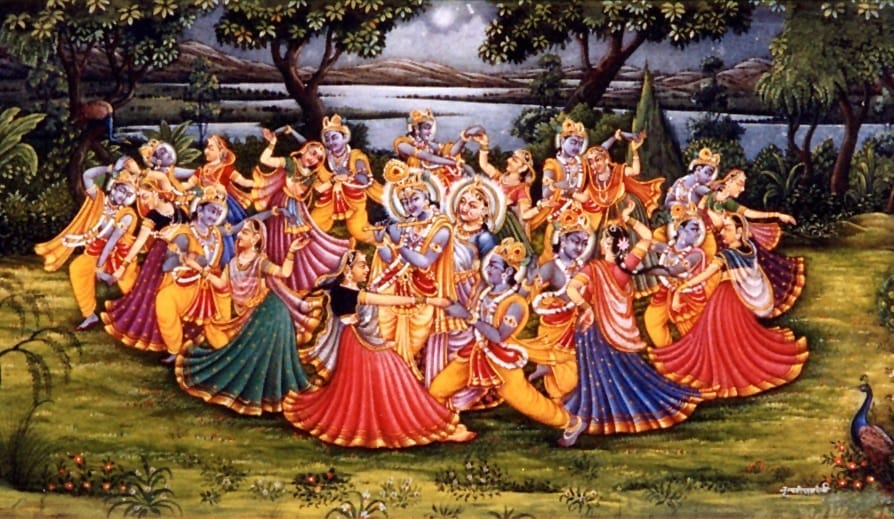
 JKP Literature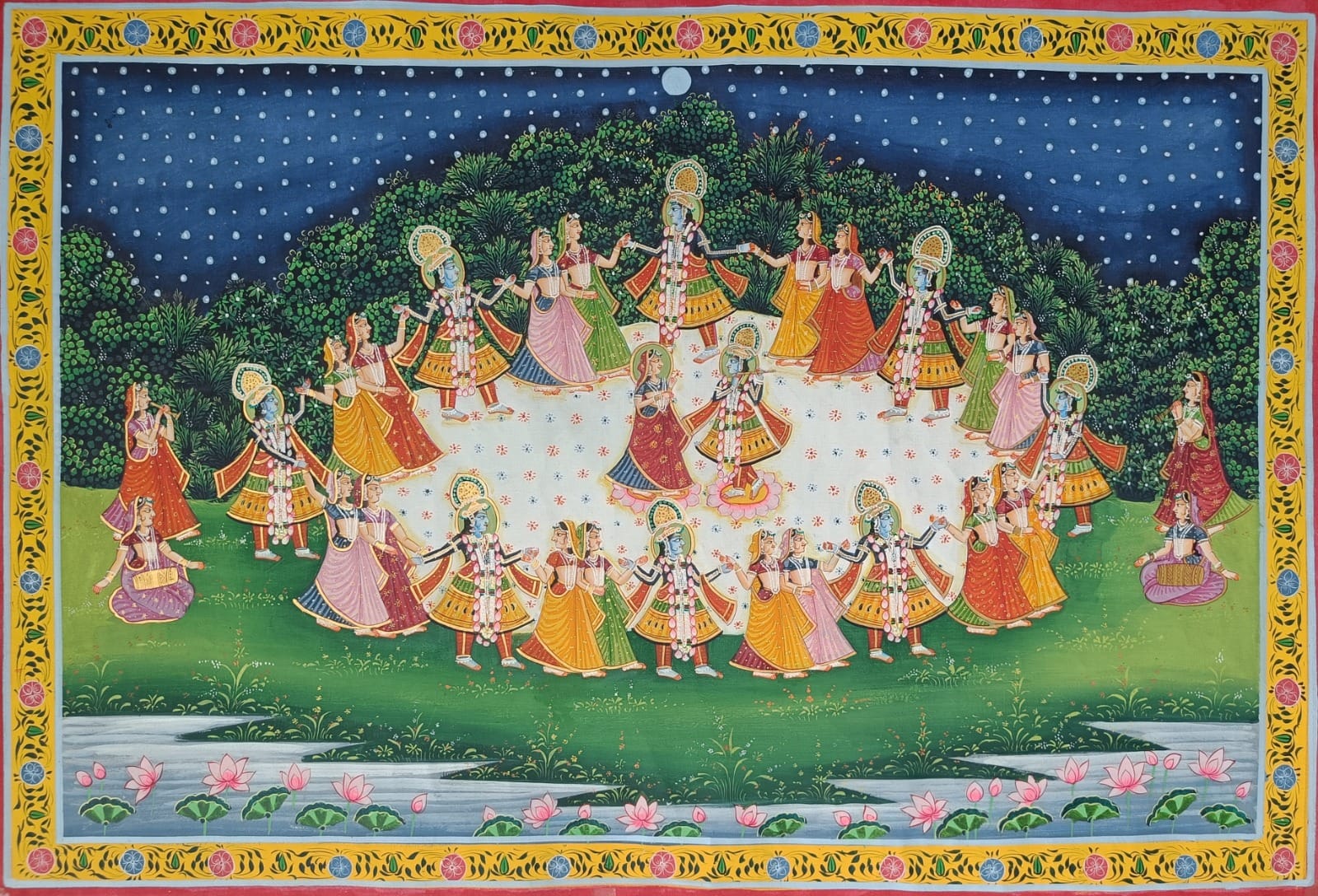
 JKP Literature
Reference
 RGPS
RGPS