Living in Harmony Makes Devotion Easier
When Bharat is offered the kingdom of Ayodhya, his response reveals how love and selflessness can preserve harmony within a family.
Living in Harmony Makes Devotion Easier
Brothers and sisters sometimes quarrel over the smallest things, even toys. But can you imagine willingly giving up an entire kingdom for your brother?
Thousands of years ago, the Supreme Lord descended on Earth as Shri Ram, the eldest son of King Dashrath of Ayodhya.
King Dashrath had four sons. Shri Ram was born to his first queen, Kaushalya; Bharat to his second queen, Kaikeyi; and Lakshman and Shatrughan to his third queen, Sumitra.
As was customary, the four princes received their education at an ashram. After completing their studies, they returned to their father's palace.
Shri Ram, being the eldest and fully qualified to govern, was the rightful heir to the throne.
When King Dashrath turned forty and noticed his first grey hair, he was reminded of the impermanence of the human body. He decided that the time had come to relinquish his royal responsibilities and devote himself to God.
He consulted Sage Vashishtha about an auspicious time for Shri Ram's coronation. The earliest suitable time was the very next day.
Although Shri Ram was only sixteen, King Dashrath's desire for renunciation was so strong that he announced the coronation without delay.
A Mother's Demand Changes Everything
At the time, Bharat and Shatrughan were visiting their maternal grandparents.
Meanwhile, Kaikeyi fell under the influence of her maid, Manthara, who persuaded her that Bharat should become king instead of Shri Ram.
Kaikeyi remembered that King Dashrath had once promised her two boons after she saved his life in battle.
She now demanded that he fulfill those promises: Bharat must be crowned king, and Shri Ram must be sent into exile for fourteen years.
King Dashrath was devastated. Yet, unwilling to break his promise, he agreed to her demands.
Shri Ram accepted His father's command without hesitation.
"I will gladly obey my father's command," He told Kaikeyi. "I would go even if you had ordered Me to do so."
When Mother Sita learned of Shri Ram's exile, she pleaded to accompany Him.
"As shadow to substance, so wife to husband," she reminded Him. "Is it not a wife's dharma to remain by her husband's side? Let me walk ahead of You and smooth the path for Your feet."
Shri Ram agreed.
Lakshman, although under no obligation to leave Ayodhya, also chose to accompany Shri Ram and Mother Sita into the forest.
Unable to bear the pain of separation from his beloved son, King Dashrath eventually left his mortal body.
Bharat Refuses the Throne
When Bharat returned and learned what his mother had done, he was deeply distressed. He had never desired the kingdom at the expense of his elder brother.
He went into the forest to find Shri Ram and begged Him to return.
"The eldest must rule," Bharat reminded Him. "Please return to Ayodhya and take Your rightful place as king."
But Shri Ram would not go against His father's command.
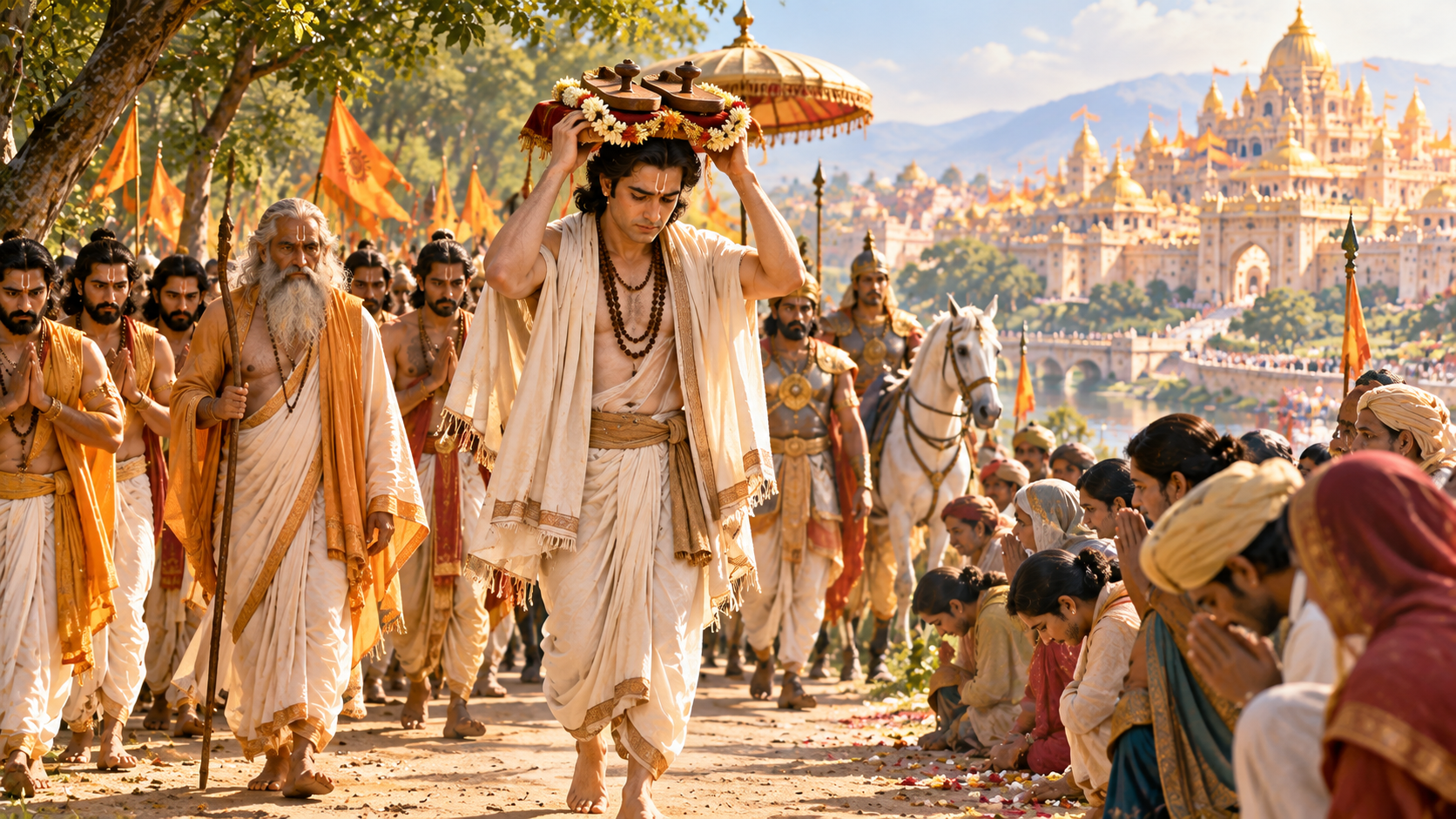
Bharat then accepted Shri Ram's decision. Rather than claim the throne for himself, he asked for Shri Ram's wooden sandals.
"I shall place these sandals upon the throne as symbols of Your authority. I shall govern only on Your behalf while You are away. Every day, I shall place my offerings at Your lotus feet, my Lord. When the fourteen years are over, I shall joyfully return the kingdom to You."
Shri Ram was deeply pleased by Bharat's selflessness.
As Bharat prepared to leave, Shri Ram said, "I should have known that you would gladly renounce what most people spend lifetimes learning to give up."
Bharat returned toward Ayodhya carrying Shri Ram's sandals in reverence. Although he would administer the kingdom, he would never regard himself as its rightful ruler.
He had relinquished his claim to royal privilege and would carry out his responsibilities in a spirit of renunciation, devotion, and service to Shri Ram.
Takeaway
The Ramcharitmanas offers inspiring examples of how to fulfill our responsibilities toward our family while upholding dharma.
Shri Ram willingly accepted His father's command, without question or objection.
Mother Sita, though raised as a delicate princess, chose to accompany Her husband into the hardships of forest life, demonstrating Her steadfast devotion and commitment to Her dharma as a wife.
Bharat demonstrated extraordinary love and respect for his elder brother. Unmoved by the attraction of the throne, he willingly gave up the kingdom and followed Shri Ram's instructions with complete devotion.
King Dashrath, too, upheld the promise he had made to Kaikeyi, even though doing so caused him unbearable sorrow and ultimately cost him his life.
These examples teach us to obey our parents, respect our elder siblings, and show love and affection toward those younger than ourselves.
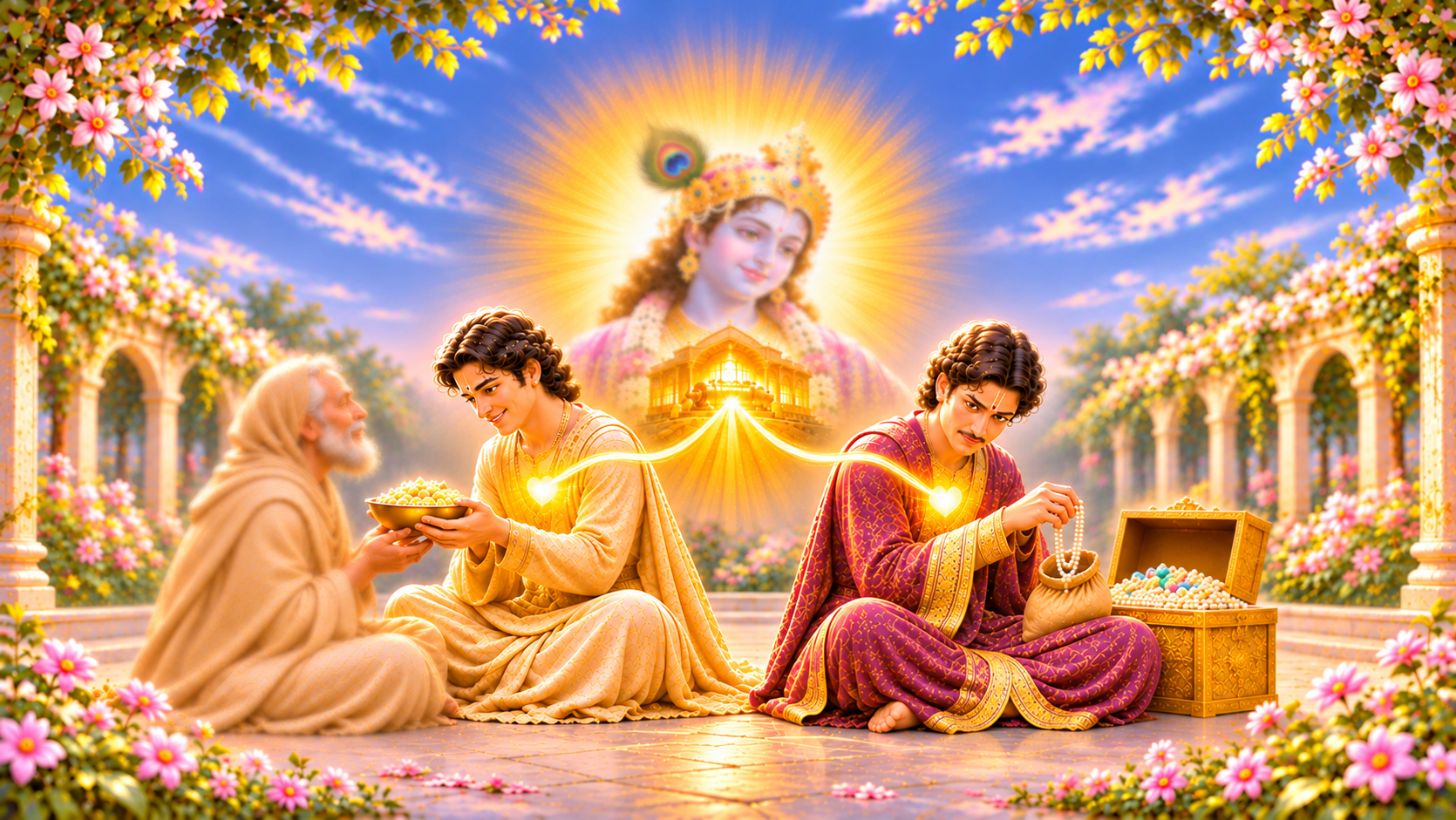
When family members are willing to set aside their personal interests, support one another, and make sacrifices for each other's welfare, they create an atmosphere of peace and harmony.
Such an atmosphere makes it easier to practice devotion to God.
Mutual love, respect, and selflessness not only bring joy and satisfaction to family life but also help create the conditions in which devotion can flourish.
Go Deeper
 JKP Literature
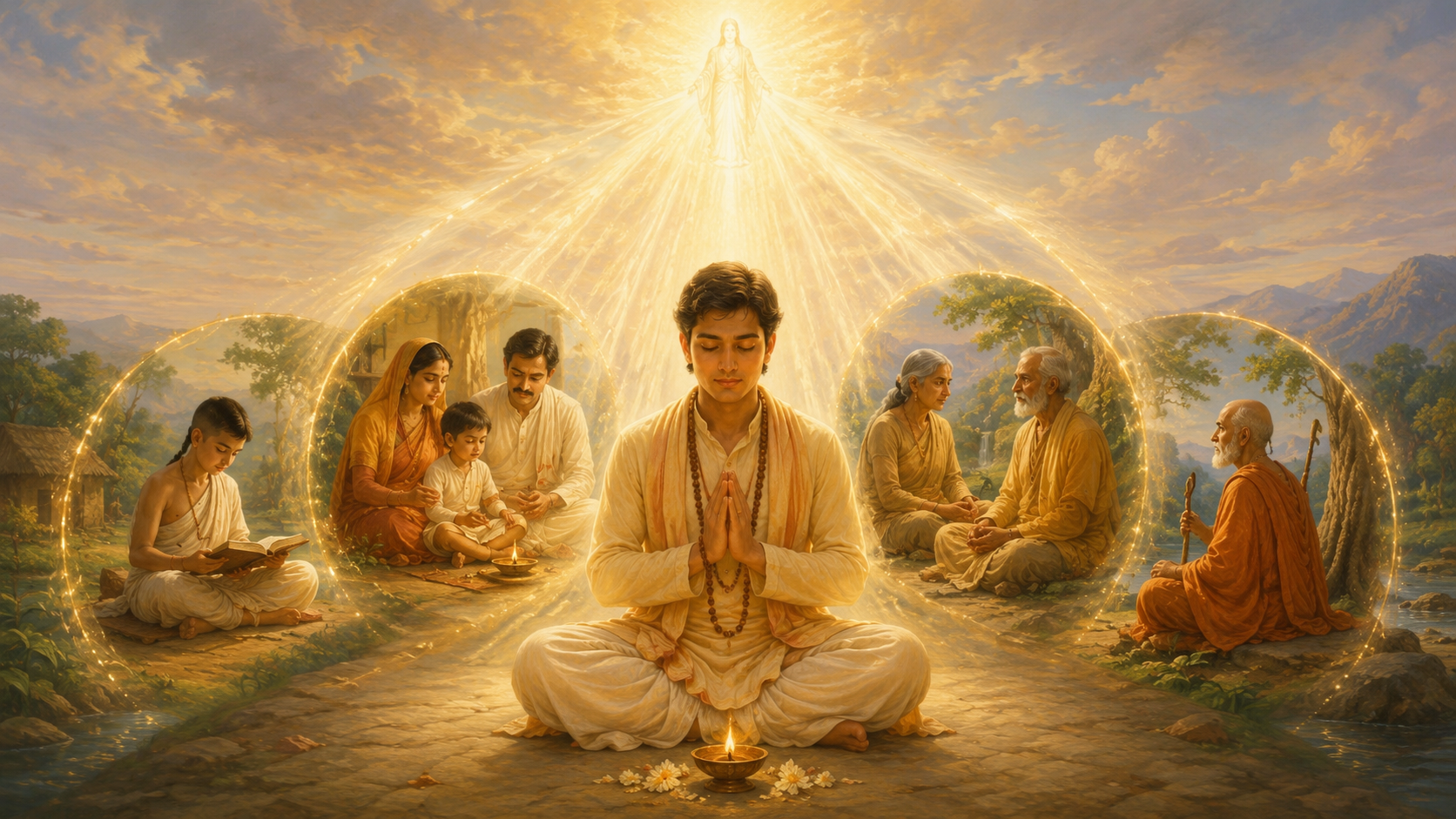
How do our worldly duties relate to the eternal duty of the soul?
 JKP Literature

Should we imitate everything Shri Ram does?
 JKP Literature
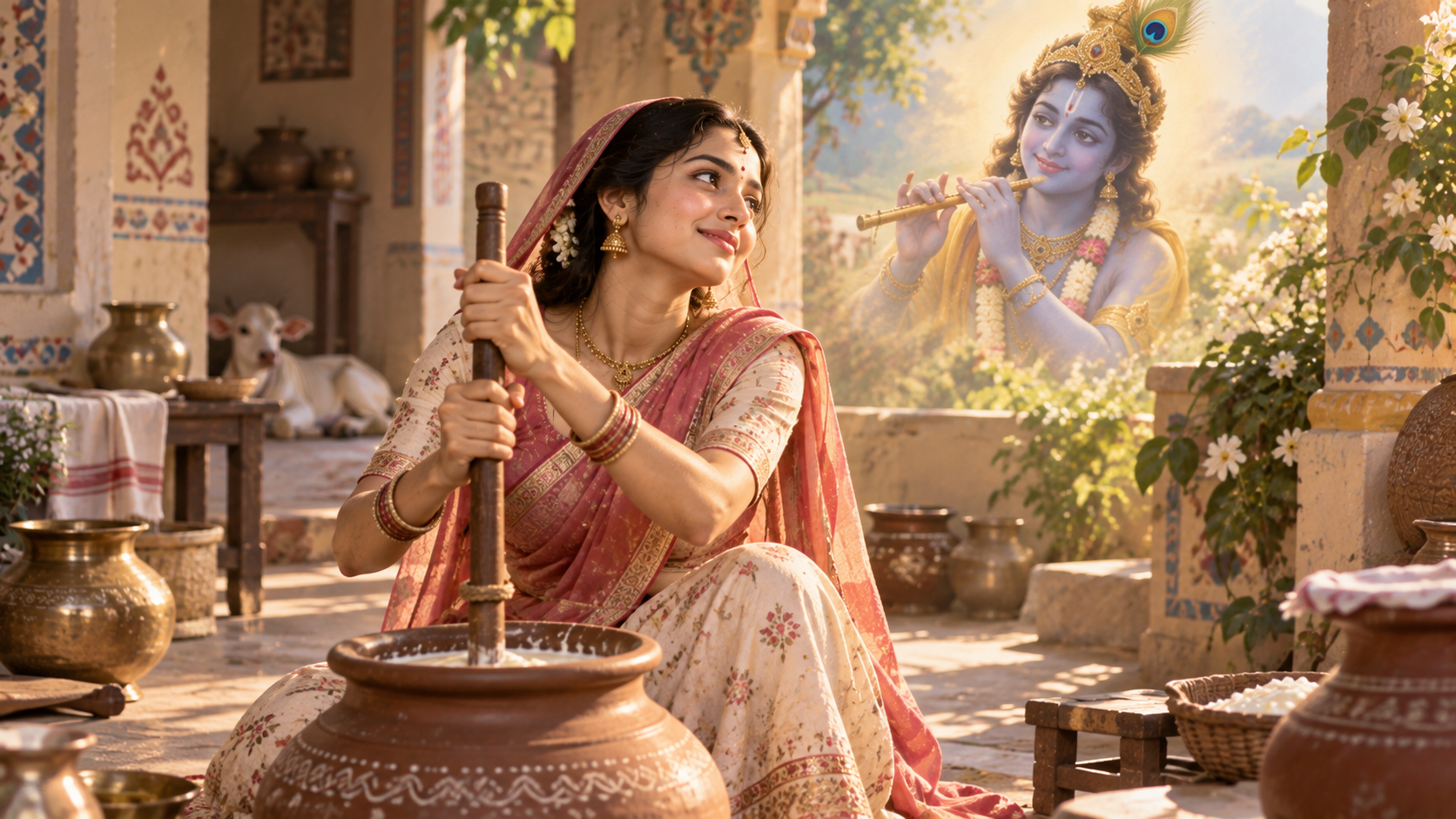
Can we fulfill our family responsibilities while keeping our love centered on God?