Grace That Arrives Unannounced
When grace comes without announcing itself, will we recognize the opportunity—and how will we choose to respond?

What if God came to your door without telling you who He was? Would you recognize Him—or realize that an ordinary encounter was about to change the course of your life?
This is the story of Srinivasa Nayak, a wealthy moneylender whose life changed after an unknown poor Brahmin appeared at his door.
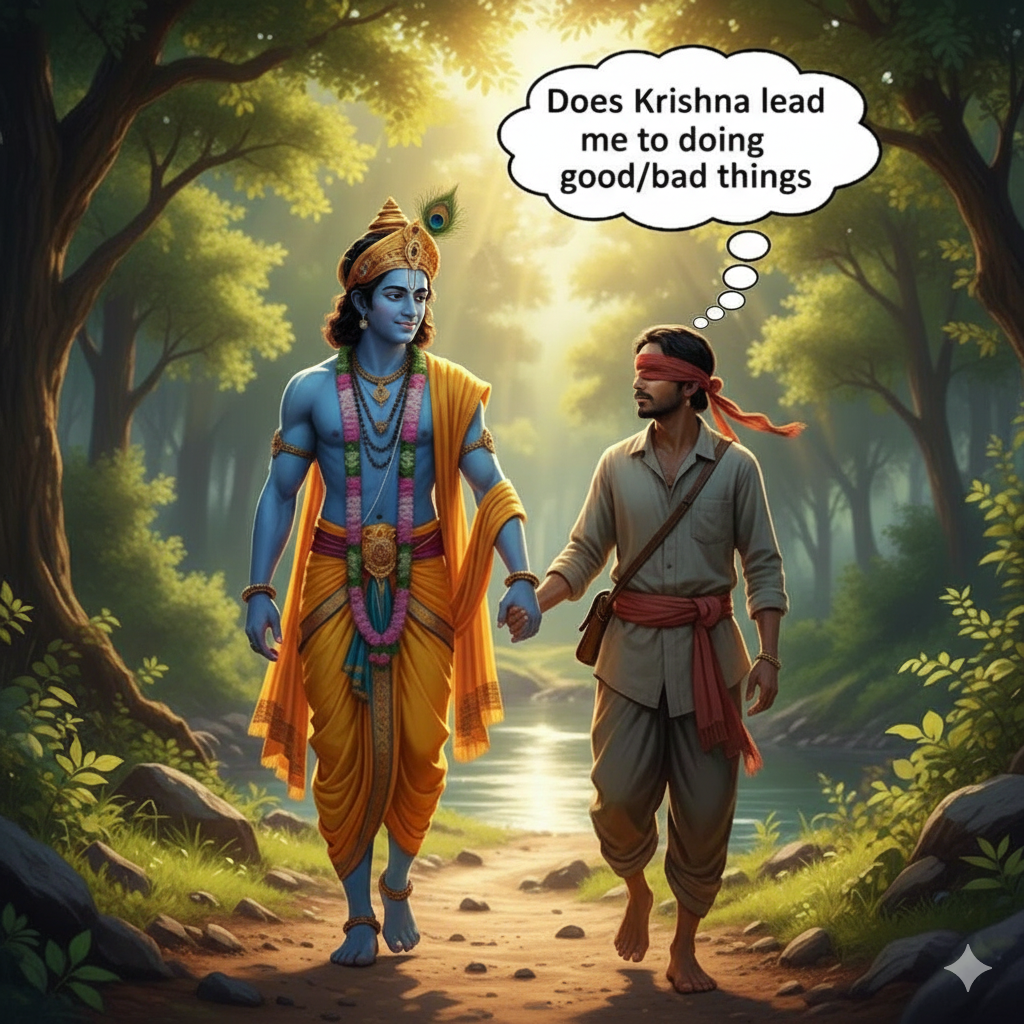
Because of the devotion he had cultivated in his past lives and his wife’s amiable nature, Srinivasa was very dear to Lord Krishna. The Lord, the embodiment of mercy, sought to deliver him from his material attachment and awaken the dormant devotion in his heart.
So, Shri Krishna took the form of a poor Brahmin and approached Srinivasa Nayak, asking for money to perform his son's thread ceremony. Days turned into weeks, and weeks into months, but Nayak gave him nothing. The Brahmin, however, did not give up. After six months of persistent visits, a fed-up Nayak decided to get rid of him. He poured a collection of worthless, worn-out coins onto his counter and told the Brahmin to take one and never come back. The Brahmin went away, seemingly crestfallen.
The Brahmin, knowing the compassionate heart of Nayak’s wife, went directly to her. He narrated his story and how her husband had sent him away with nothing. Appalled by her husband’s behavior, Saraswati wanted to help but felt helpless since she couldn't give anything without her husband’s permission. The Brahmin then asked if she had anything given by her parents, which she could give without his consent. She agreed and gave him the diamond nose-stud her parents had given her.
The Brahmin took the ornament straight to Nayak’s shop. When Nayak grew angry with him for returning, the Brahmin calmly explained he was there not to beg, but to get a loan by pledging an ornament. Nayak was skeptical, but when he saw the ornament, he was perplexed—it was his wife’s nose-stud. When questioned, the Brahmin said it was a gift from a benefactor.
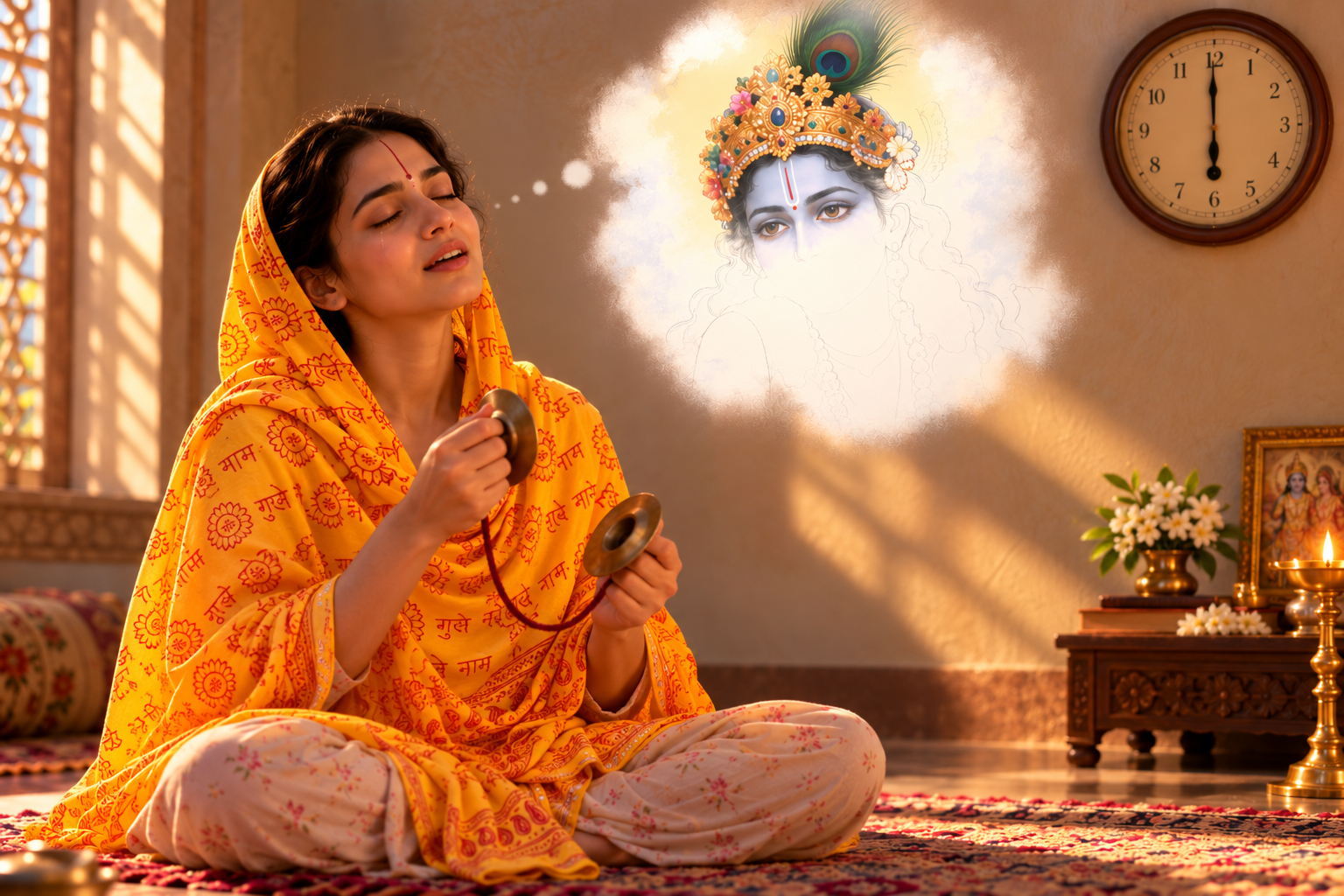
Telling the Brahmin to return the next day, Nayak safely locked the ornament in a box and went home. When he saw his wife without her nose-stud, he angrily demanded to see it immediately. Saraswati, terrified, stalled and then, in desperation, prayed to Shri Krishna for help.
With no answer, she decided to take her own life rather than face her husband's wrath. She poured poison into a cup, but just as she lifted it to her lips, she heard a metallic sound. She looked into the cup, and there, at the bottom, was her nose-stud.
Filled with a wonder and gratitude, she rushed to her husband and gave him the ornament. Nayak was astounded, for it was the very same ornament he had locked in his shop. He ran back and found the box empty.
Completely dumbfounded, he returned to his wife and pressed her to tell him the whole story. She narrated everything that had transpired. This revelation put his mind into turmoil.
After deep thought and divine inspiration, he came to the conclusion that the Brahmin was none other than God Himself. He was disgusted with his own miserliness, which had caused him to mistreat the Lord.
He immediately gave away all of his wealth, with the Lord's name on his lips. He became a Haridasa, a devotee of Lord Hari, and dedicated his life to singing the Lord's glories. He went on to compose over 400,000 spiritual songs and became famously known as "Karnataka Sangeeta Pitaamaha Bhakt Purandardasa."
Key Takeaways
Bhakti Is Never Lost: Bhakti performed by the Jeev is never destroyed. Even if God-realization is not attained in this life, the bhakti already performed remains and can bear fruit in the future.
God's Grace May Come Unannounced: God does not need to announce Himself before bestowing grace. He may quietly provide an opportunity that helps the Jeev—but the Jeev must still use its free will to respond.
Special Grace Follows Bhakti: God is the eternal well-wisher of every Jeev and continuously bestows general grace. When a Jeev does bhakti, God bestows special grace and provides further opportunities for spiritual progress.
Do Not Judge Grace by Appearances: Shri Krishna appeared as an ordinary poor Brahmin, accomplished His purpose, and disappeared without revealing who He was. Divine grace may not arrive in the form we expect.
Go Deeper
 JKP Literature
 JKP Literature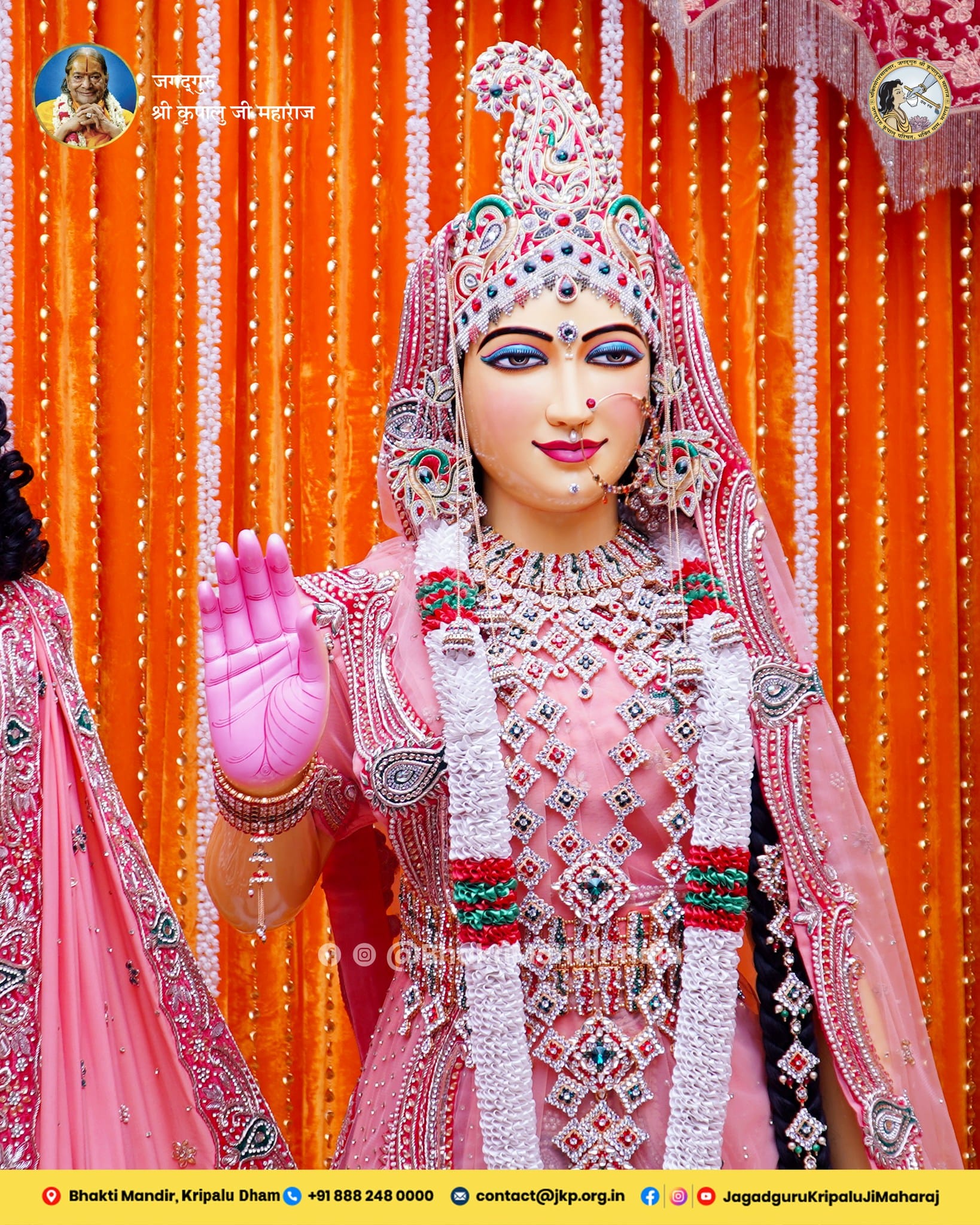
 JKP Literature
 JKP Literature